
data + articles · 5 listed
newest 2025spec sheet13 rows
Clopidogrel is an oral antiplatelet medicine of the thienopyridine class that blocks the P2Y12 ADP receptor on platelets to make the blood less likely to clot [1][4]. Sold chiefly as Plavix, it is used to prevent heart attacks, strokes and other clot-related events in people with cardiovascular disease, and it is given alongside aspirin after coronary stent placement [1]. It is a prodrug that the liver must convert to its active form, and it appears on the World Health Organization's list of essential medicines [1][3].
- Blocks the P2Y12 receptor to keep platelets from clumping
- Guards against heart attacks and ischemic strokes
- Keeps coronary stents clear alongside aspirin
- A cornerstone of dual antiplatelet therapy
- On the World Health Organization essential medicines list
- Simple once daily dosing, fast with a loading dose
- Easy bruising and bleeding, such as nosebleeds
- Higher risk of gastrointestinal or other bleeding, especially when combined with aspirin
- Indigestion, diarrhoea or abdominal pain
Overview
Clopidogrel is a platelet aggregation inhibitor, a type of antithrombotic drug commonly called a blood thinner, belonging to the thienopyridine family [1]. Rather than acting on the clotting proteins targeted by drugs such as warfarin, it works on platelets, the small cell fragments that clump together to start a clot, reducing their tendency to stick to one another [1][4]. Because it is a prodrug, clopidogrel itself is inactive when swallowed and must be chemically transformed in the liver before it can act [4].
The molecule was patented in 1982 and was developed by the French pharmaceutical company Sanofi; it received approval in the United States in 1997 and went on to become one of the best-selling drugs in the world under the brand name Plavix, also sold as Iscover [1]. After the expiry of its patents it has become widely available as a low-cost generic and is included on the World Health Organization Model List of Essential Medicines [1].
Clopidogrel is prescribed to lower the risk of heart attack, stroke and death from cardiovascular causes in people who have atherosclerotic disease, including those who have already had a heart attack or ischaemic stroke or who have peripheral artery disease [1]. It is a cornerstone of treatment for acute coronary syndromes and is routinely combined with aspirin as dual antiplatelet therapy after a coronary stent is placed, a regimen that helps keep the stent from clotting [1][5]. For patients who cannot tolerate aspirin, clopidogrel is often used as an alternative [1].
A distinctive feature of clopidogrel is that its effectiveness depends on how well an individual's liver activates it [4][5]. The conversion to the active metabolite relies heavily on the enzyme CYP2C19, and a substantial minority of people carry reduced-function versions of the CYP2C19 gene [2][5]. Studies have shown that these poor metabolisers generate less active drug, achieve weaker platelet inhibition and face a higher rate of adverse cardiovascular events, including stent thrombosis, than people with normal enzyme activity [2][3][5]. This has prompted interest in genetic testing to guide therapy, although the routine use of such testing remains a subject of debate [5].
As with all drugs that reduce clotting, the main risk of clopidogrel is bleeding, ranging from easy bruising and nosebleeds to more serious gastrointestinal or other haemorrhage, and the risk rises when it is combined with aspirin [1]. Other reported effects include indigestion, diarrhoea and rash, and a rare but serious blood disorder called thrombotic thrombocytopenic purpura has been described [1]. It is a prescription-only medicine taken as oral tablets [1].
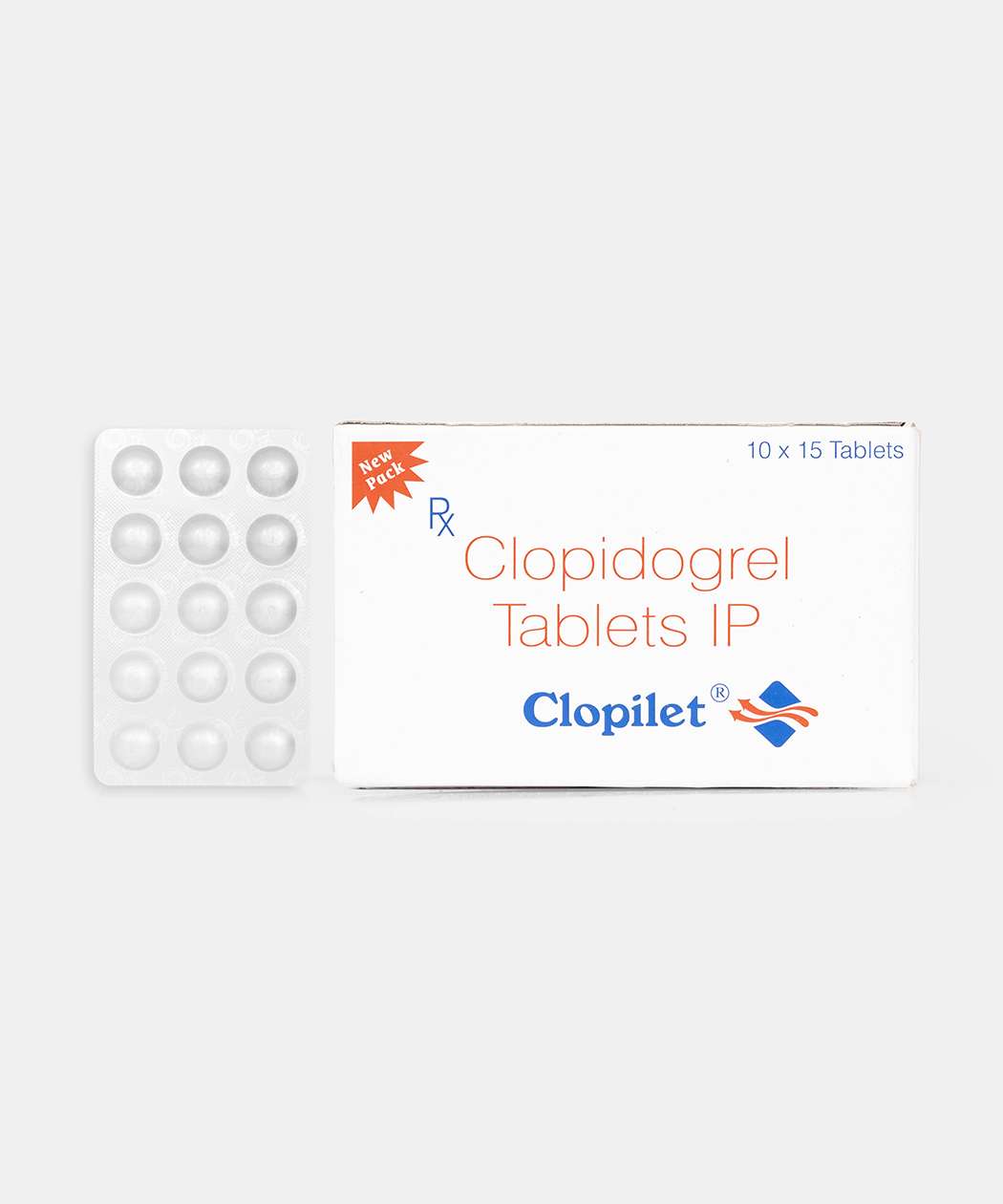
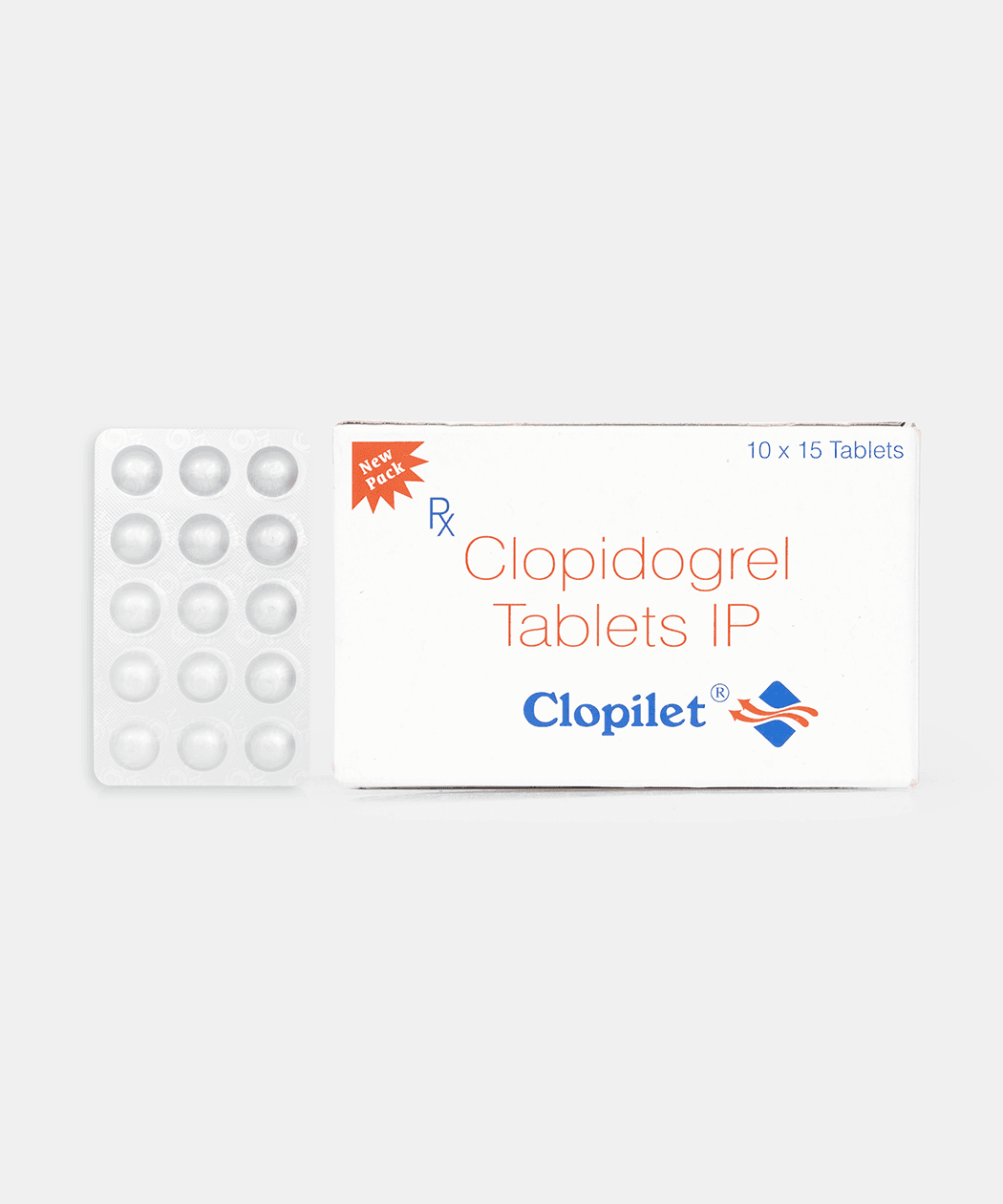
- Sold as Plavix, clopidogrel was for many years one of the best-selling drugs in the world.
- It is an inactive prodrug; the large majority of the absorbed drug is broken down before a small fraction is converted into the metabolite that actually blocks platelets.
- Its permanent, one-way blockade of each platelet lasts for that platelet's roughly week-long lifespan, so its effect fades only as the body makes new platelets.
Mechanism
Clopidogrel is a that becomes active only after being processed by the liver in two oxidative steps carried out by cytochrome P450 enzymes, with CYP2C19 playing the leading role [4][5]. The resulting active , a short-lived thiol-containing compound, binds to the P2Y12 subtype of ADP receptor on the surface of platelets and blocks it irreversibly [4].
ADP is one of the key signals that platelets use to recruit and activate one another, so by disabling this receptor the drug prevents ADP-driven platelet activation and the amplification of clot formation [1][4]. Because the block is permanent for each platelet affected, the antiplatelet effect lasts for the roughly week-long lifespan of the platelet and only fades as new platelets are produced [1]. The dependence of this activation pathway on CYP2C19 explains why people with reduced-function forms of the enzyme respond less well to the drug [2][5].
receptor fingerprint
Platelet P2Y12 ADP receptorantagonist
ADP-mediated platelet activationinhibits
Glycoprotein IIb/IIIa activationblocks
Overall platelet aggregationinhibits
CYP2C19 enzymeactivates
Dosingtypical ranges, not medical advice
interested in protocols and clinical dosages? make an account to see them! ^_^
Safetyrisks and cautions, not medical advice
Clopidogrel is prescription only. Its main risk is bleeding, from easy bruising and nosebleeds to more serious gastrointestinal or intracranial bleeds, and this rises when it is combined with aspirin, anticoagulants, or NSAIDs. It is usually paused before surgery. Because it needs CYP2C19 to work, people who are poor metabolizers of that enzyme get less protection, and strong CYP2C19 inhibitors such as the acid-reducer omeprazole can blunt its effect, so an alternative acid reducer is often chosen. Other effects include rash and, rarely, a serious clotting disorder called TTP. It is used cautiously in active bleeding and severe liver disease.
Interactionsdocumented pairs only, not exhaustive
Clopidogrel is a prodrug that needs CYP2C19 to generate its active thiol metabolite, so anything blocking that enzyme blunts the antiplatelet effect. Omeprazole and esomeprazole are the documented offenders, lowering active metabolite concentrations and measured platelet inhibition; pantoprazole and most other proton pump inhibitors interfere far less. The same logic applies to CYP2C19 poor metabolizers, in whom the drug simply works less well.
Bleeding risk is additive with anticoagulants, aspirin and NSAIDs, and with SSRIs and SNRIs, which impair platelet serotonin uptake.
Clopidogrel is itself a potent CYP2C8 inhibitor and raises repaglinide exposure several-fold, with hypoglycemia the consequence.
Morphine and other opioids slow gastric emptying and delay clopidogrel absorption, which matters specifically in acute coronary syndromes where speed of onset is the entire point.
Checking a whole stack? Run it through interactions + stacks.
History
Clopidogrel was discovered by the French pharmaceutical company Sanofi as a successor to the earlier thienopyridine ticlopidine, which suffered from serious blood-cell side effects. Developed through the late 1980s and 1990s, clopidogrel offered comparable antiplatelet action with a much better safety profile, and the large CAPRIE trial published in 1996 established its benefit against atherothrombotic events.
It received United States approval in 1997 and was marketed as Plavix by Sanofi and Bristol-Myers Squibb, going on to become one of the best-selling medicines in the world. It is a prodrug that the liver must convert to its active form, chiefly through the CYP2C19 enzyme, and it earned a place on the World Health Organization list of essential medicines. Recognition that reduced-function variants of CYP2C19 blunt the drug's effect later prompted a regulatory boxed warning highlighting this pharmacogenetic vulnerability.
Reputation
Clopidogrel is regarded as a cornerstone antiplatelet drug and a workhorse of cardiovascular medicine, underpinned by one of the largest evidence bases of any oral antiplatelet agent. It is valued as the standard partner to aspirin after coronary stent placement and in acute coronary syndromes, and its availability as an inexpensive generic has made it broadly accessible. Its reputation is honest about a key limitation; because it must be activated by the liver, patients who carry poorly functioning forms of the CYP2C19 enzyme derive less protection, which has driven interest in genotype-guided therapy. In some acute settings it has been partly supplanted by newer agents such as ticagrelor and prasugrel that do not depend on this activation step. Even so, it remains a trusted, well-characterized foundation of antiplatelet treatment.
Subjective profileweighing the evidence above
A workhorse that clearly earns its place after a stent or an ischemic stroke, and one of the better-evidenced drugs in cardiology. Prescription-only, and the bleeding risk is real, more so with aspirin or NSAIDs. If you are a CYP2C19 poor metabolizer you get less protection, which is worth raising with your doctor.
Where to buy
1 other outlet
Suppliers
Vendors carrying Clopidogrel, with live product details and codes. Links are affiliate links that support the wiki at no cost to you.
PCT.Zone
Clopidogrel
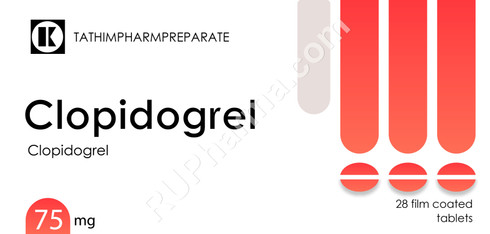
RUPharma🌐
Clopidogrel
Research
- 2002first citedStructure and stereochemistry of the active metabolite of clopidogrel.
- 2025most recentPromising clopidogrel analogs may overcome clopidogrel resistance: 2025 update.
- 1.Promising clopidogrel analogs may overcome clopidogrel resistance: 2025 update.
- 2.Cytochrome p-450 polymorphisms and response to clopidogrel.
- 3.Genetic determinants of response to clopidogrel and cardiovascular events.
- 4.Structure and stereochemistry of the active metabolite of clopidogrel.
- 5.Pharmacogenetics of clopidogrel.
5 listed here; entry last updated August 2026
Reviews
My notesprivate to this device
FAQ
Is clopidogrel a blood thinner?
It is an antiplatelet, which makes platelets less sticky; people call that a blood thinner, but it works differently from anticoagulants like warfarin.
Why is it taken with aspirin?
The two block different platelet pathways, so together they give stronger protection after stents and heart attacks for a set period.
Does genetics affect how it works?
Yes; people who poorly activate it through the CYP2C19 enzyme get less benefit and may need a different antiplatelet.
Can I take omeprazole with it?
Omeprazole can weaken clopidogrel by blocking the same enzyme it needs; doctors often pick a different acid reducer such as pantoprazole.
Should I stop it before surgery?
Usually yes, several days ahead to reduce bleeding, but never stop on your own, since that can trigger a clot; follow your doctor's plan.
Adverse effects
- Easy bruising and bleeding, such as nosebleeds
- Higher risk of gastrointestinal or other bleeding, especially when combined with aspirin
- Indigestion, diarrhoea or abdominal pain
- Rash or itching
Notes and cautions
- Rare thrombotic thrombocytopenic purpura, a serious blood disorder