
spec sheet12 rows
Warfarin is an oral anticoagulant of the coumarin family that acts as a vitamin K antagonist, reducing the blood's ability to form clots. It is used to prevent and treat conditions caused by unwanted clotting, including deep vein thrombosis, pulmonary embolism, and strokes related to atrial fibrillation or mechanical heart valves. First developed in the 1940s as a rodenticide, warfarin later became a mainstay of anticoagulation; its effect is monitored with a blood test called the INR, and it interacts with many foods and drugs.
- Prevents and treats deep vein thrombosis, pulmonary embolism and strokes
- Still the right drug for mechanical heart valves
- Works in antiphospholipid syndrome where newer anticoagulants do not substitute
- Its effect is reversible with plain vitamin K
- Cheap, with eighty years of clinical track record
- INR testing keeps the dose precisely where it should be
- Bleeding is the main risk, and it rises when the INR is too high
Overview
Warfarin is a synthetic derivative of coumarin and the most widely used of the oral vitamin K antagonists, a group of drugs that lower the blood's clotting ability [1]. It is prescribed to prevent and treat abnormal blood clots, and it works not by thinning the blood in a literal sense but by reducing the production of several clotting factors [1]. Because its effect depends on the body's vitamin K supply, its action is closely tied to diet and to the many substances that alter its metabolism [1].
The principal medical uses of warfarin are the prevention and treatment of venous thromboembolism, meaning deep vein thrombosis and pulmonary embolism, and the prevention of stroke and systemic embolism in people with atrial fibrillation or with mechanical heart valves [2]. It has long been a standard therapy in these settings, although newer direct oral anticoagulants have become alternatives that do not require routine blood monitoring and are now often preferred for several indications [2][4]. Warfarin nonetheless remains important, including for mechanical heart valves and for some patients in whom the newer agents are less suitable [2][4].
Warfarin originated from investigation of a bleeding disease in cattle that had eaten spoiled sweet clover, which led to the isolation of the anticoagulant dicoumarol and then to the synthesis of a more potent compound [1]. That compound was first marketed as a rat poison, and its name reflects the Wisconsin Alumni Research Foundation that supported the work; only later was it recognized as safe and useful in people and adopted as a medicine [1]. It appears on the World Health Organization's list of essential medicines and is available as an inexpensive generic drug [2].
A notable feature of warfarin is that the dose needed varies widely between individuals and even over time within the same person, influenced by diet, other medications, illness, and genetic differences in the enzymes that handle the drug and its target [3]. For this reason treatment is guided by a blood test, the prothrombin time expressed as the international normalized ratio (INR), which is checked regularly and used to keep the level of anticoagulation within a target range [3]. Dosing algorithms, including some incorporating genetic information, have been developed to help predict requirements, though they explain only part of the variability [3].
The main risk of warfarin is bleeding, which can range from minor to severe, and the likelihood rises when the INR is too high [1]. Its narrow margin between too little and too much effect is complicated by numerous interactions: many drugs, herbal products, and foods rich in vitamin K, such as leafy green vegetables, can raise or lower its activity, so consistency of diet and careful attention to new medications are important [1]. Warfarin is avoided in pregnancy because it can harm the developing fetus, and excessive anticoagulation or bleeding can be reversed with vitamin K and, when urgent, with clotting factor products [1][2].
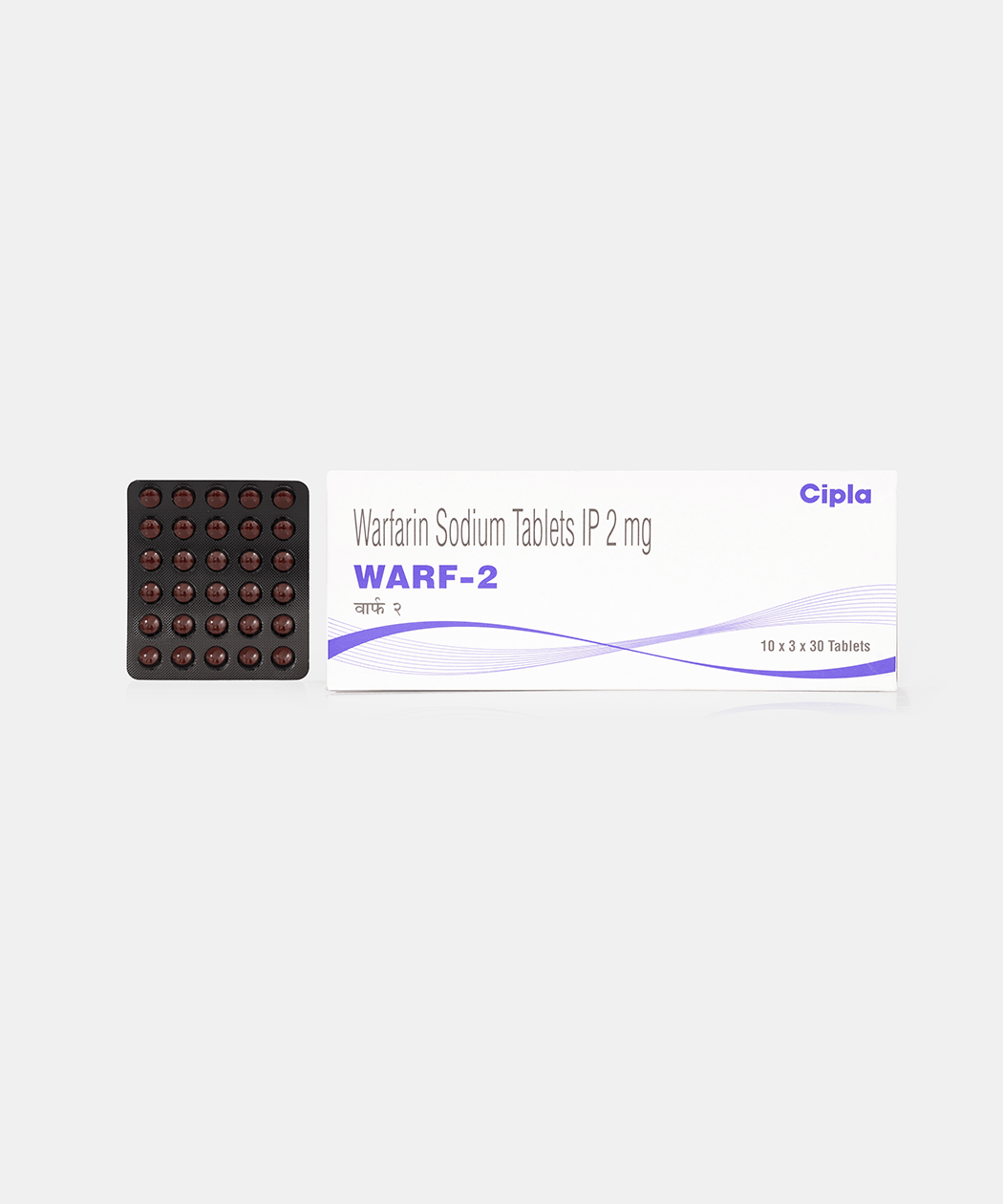
- Warfarin was discovered by investigating why cattle bled to death after eating spoiled sweet clover hay.
- Its name comes from WARF, the Wisconsin Alumni Research Foundation that funded the research, combined with the ending of coumarin.
- It was first sold as a rat poison in 1948, and its shift to human medicine was spurred after someone survived a warfarin overdose thanks to vitamin K.
Mechanism
Warfarin produces its anticoagulant effect by interfering with the recycling of vitamin K [1]. Several clotting factors, namely factors II, VII, IX, and X, together with the regulatory proteins C and S, must undergo a vitamin K-dependent modification in the liver before they can function [1]. Carrying out this modification oxidizes vitamin K, which then has to be regenerated to its active form by the enzyme vitamin K epoxide reductase; warfarin inhibits this enzyme, so the supply of active vitamin K falls and the liver produces clotting factors that are underactive [1].
Because the clotting factors already in the circulation must be cleared before the effect is fully seen, the anticoagulant action develops over several days rather than immediately [1]. The degree of effect depends heavily on genetic variation in vitamin K epoxide reductase and in the liver enzyme CYP2C9 that metabolizes warfarin, which is a major reason different people need very different doses and why the response is monitored with the INR [3]. This same reliance on the vitamin K cycle explains why vitamin K intake from the diet directly opposes the drug's action [1].
receptor fingerprint
Vitamin K epoxide reductase (VKORC1)inhibits
Prothrombin (factor II)modulates
Factors VII, IX and Xmodulates
Proteins C and Smodulates
CYP2C9 enzymemodulates
Dosingtypical ranges, not medical advice
interested in protocols and clinical dosages? make an account to see them! ^_^
Safetyrisks and cautions, not medical advice
Warfarin is prescription only and demands respect because bleeding is a real and sometimes serious risk. It interacts with a long list of drugs and foods; antibiotics, amiodarone and many others can raise the INR, while big swings in leafy green vegetables can lower it. Rare effects include skin necrosis early in treatment and the so called purple toe syndrome. It causes birth defects and is generally avoided in pregnancy. Safe use depends on regular INR testing and a steady routine, and serious bleeds are reversed with vitamin K and clotting factors.
Interactionsdocumented pairs only, not exhaustive
Warfarin has more clinically significant interactions than almost any other drug, and the reason is structural: a narrow therapeutic index, hepatic clearance through CYP2C9, and an effect that depends on dietary vitamin K.
Inhibitors of CYP2C9 raise levels of the more potent S-warfarin enantiomer and push INR upward; amiodarone, fluconazole and the other azoles, metronidazole, trimethoprim-sulfamethoxazole and fluvoxamine are the reliable offenders. Inducers pull the other way: rifampin, carbamazepine, phenobarbital and St John's wort lower INR and raise thrombotic risk.
A second class shifts bleeding risk without touching INR at all. Aspirin, clopidogrel, NSAIDs and SSRIs impair platelet function or gastric mucosal integrity, so bleeding rises while the number on the lab report still looks reassuring. That gap is what makes these combinations dangerous.
Broad-spectrum antibiotics can also potentiate warfarin by depleting the gut flora that produce vitamin K, and swings in dietary vitamin K, from leafy greens or from supplements, move INR in the opposite direction.
Checking a whole stack? Run it through interactions + stacks.
History
Warfarin's origins lie in an agricultural mystery of the 1920s, when cattle in the American Midwest and Canada died of internal bleeding after eating spoiled sweet clover hay. In the 1930s and 1940s the biochemist Karl Paul Link and his team at the University of Wisconsin identified the culprit as dicoumarol, an anticoagulant produced when the clover's natural coumarins fermented, and went on to synthesize more potent related compounds.
One of these was named warfarin, blending the acronym of the Wisconsin Alumni Research Foundation (WARF), which funded and patented the work, with the -arin ending of coumarin. It was first marketed in 1948 as a rodenticide, and its adoption as a human medicine was encouraged after a case in which a person who attempted suicide with warfarin recovered fully with vitamin K. Approved for medical use in the early 1950s, it famously became the anticoagulant given to public figures and remains a mainstay of anticoagulation more than seventy years later.
Reputation
Warfarin is one of the most historically important medicines in cardiovascular care, having protected countless patients from strokes, deep vein thrombosis, and pulmonary embolism over more than half a century of use. Its effectiveness is well established, it is inexpensive, and, uniquely among the older anticoagulants, its action can be precisely monitored with the INR blood test and rapidly reversed with vitamin K when bleeding threatens.
It remains the anticoagulant of choice for patients with mechanical heart valves and certain other conditions where newer agents have not been validated. Managing it demands care, since its effect is influenced by diet, by many other drugs, and by inherited differences in the enzymes that activate vitamin K and metabolize the drug, which is why dosing is individualized and closely followed. Even in the era of newer oral anticoagulants, warfarin's long record and reversibility keep it a trusted and irreplaceable tool.
Subjective profileweighing the evidence above
Still the right drug for mechanical heart valves and antiphospholipid syndrome, where newer anticoagulants do not substitute, and it is cheap and reversible with vitamin K. The cost is real: bleeding is the main hazard, INR testing is constant, and the food and drug interaction list is long. Not a set-and-forget medicine.
Where to buy

Suppliers
Vendors carrying Warfarin, with live product details and codes. Links are affiliate links that support the wiki at no cost to you.
PCT.Zone
Warfarin
Research
- 2010first citedPredicting warfarin dose
- 2024most recentAnticoagulation in Patients with Chronic Kidney Disease
- 1.Old and new oral anticoagulants: Food, herbal medicines and drug interactions
- 2.Management of Atrial Fibrillation in Patients 75 Years and Older: JACC State-of-the-Art Review
- 3.Predicting warfarin dose
- 4.Anticoagulation in Patients with Chronic Kidney Disease
- 5.Clinical Pharmacogenetics Implementation Consortium (CPIC) Guideline for Pharmacogenetics-Guided Warfarin Dosing: 2017 Update
- 6.Warfarin pharmacogenetics
6 listed here; entry last updated August 2026
Reviews
My notesprivate to this device
FAQ
What is INR and why does it matter?
INR measures how fast your blood clots; warfarin dosing is adjusted to keep it in a target range, usually 2 to 3.
Do I have to avoid green vegetables?
You do not have to avoid them, but keep your intake steady, since sudden changes in vitamin K affect your INR.
What happens if I bleed badly?
Vitamin K plus clotting factor concentrates can reverse warfarin quickly in an emergency.
Can I take painkillers with it?
Avoid aspirin and anti-inflammatory drugs like ibuprofen; paracetamol is usually the safer choice.
Is warfarin safe in pregnancy?
Generally no, because it can harm the baby; other blood thinners are used instead during pregnancy.
Adverse effects
- Bleeding is the main risk, and it rises when the INR is too high
Notes and cautions
- Interacts with many drugs, herbs, and vitamin K-rich foods
- Avoided in pregnancy because it can harm the fetus