
spec sheet12 rows
Ursolic acid is a pentacyclic triterpenoid found in the waxy peel of apples and in herbs like rosemary, basil, and holy basil. In rodents it enhances skeletal muscle IGF-1/insulin signaling through Akt, blunts atrophy genes, increases brown fat, and improves glucose tolerance. It also has broad anti-inflammatory and antioxidant activity in cell and animal work. Human data are small and mixed, and oral bioavailability is genuinely poor.
- an apple peel triterpenoid that nudges the IGF-1/Akt pathway
- rodent data looks striking; human trials are still catching up
- quiets the atrophy genes atrogin-1 and MuRF1 in rodents
- raised brown fat and energy expenditure in mice
- small human trials hint at less body fat with training
- food derived, low risk and cheap to try alongside training
- Possible additive glucose-lowering with diabetes medication (theoretical)
- Potential drug interactions via PXR/nuclear receptor modulation (theoretical)
Overview
Ursolic acid is a naturally occurring pentacyclic triterpenoid concentrated in the protective waxy cuticle of apples and present in many culinary and medicinal plants, including rosemary, thyme, basil, holy basil, and hawthorn. Interest in it as a muscle compound began with a computational screen: Kunkel and colleagues compared the mRNA signatures of atrophying human muscle (from fasting and spinal cord injury) against the Connectivity Map and found that ursolic acid produced a gene-expression pattern opposite to atrophy. In mice, ursolic acid reduced fasting- and denervation-induced muscle loss and stimulated hypertrophy, largely by enhancing insulin/IGF-I signaling and suppressing the atrophy-associated genes atrogin-1 (MAFbx) and MuRF1 [1].
A follow-up study in mice fed a high-fat diet showed that dietary ursolic acid increased skeletal muscle mass and grip strength while also raising brown adipose tissue and energy expenditure. The same animals had less diet-induced obesity, lower fasting glucose and insulin, reduced glucose intolerance, and less hepatic steatosis, an effect the authors linked to increased Akt activity in muscle and browning of fat [2]. Mechanistically, the muscle effects are attributed to ursolic acid enhancing ligand-dependent autophosphorylation of the IGF-I and insulin receptors, which propagates through PI3K/Akt to promote protein synthesis and glucose uptake while restraining FoxO-driven proteolysis [1][2].
Human evidence is limited and inconsistent. A small controlled study in resistance-trained men reported that ursolic acid during eight weeks of training raised serum irisin and IGF-1, reduced body fat percentage, and increased some measures of maximal strength, without changing lean mass [3]. Another small trial in low-activity men found ursolic acid raised irisin and lowered the inflammatory markers CRP, IL-6, and TNF-alpha during high-intensity resistance training [5]. In contrast, a placebo-controlled pilot in healthy men found no change in circulating TNF-alpha, IL-6, or IL-10 cytokines after eight weeks of supplementation with training [6]. These trials are small, short, and heterogeneous in design, so conclusions about body composition and performance in people remain tentative.
Beyond muscle, ursolic acid has a broad preclinical pharmacology. It suppresses NF-kB, AP-1, and NF-AT signaling and inhibits ERK and JNK phosphorylation in immune cells, which underlies much of its anti-inflammatory activity [4]. A systematic review and meta-analysis of animal studies concluded that ursolic acid consistently lowers inflammatory and oxidative markers across disease models, while noting the low quality and preclinical nature of the underlying data [7]. A recurring practical limitation across all of this work is pharmacokinetics: ursolic acid is a Biopharmaceutics Classification System class IV molecule with poor aqueous solubility and low intestinal permeability, so oral bioavailability is low and human exposure at typical supplement doses is uncertain [7].

- Ursolic acid was discovered by a computer, not a chemist hunting muscle drugs; researchers matched the gene signature of wasting human muscle against a database and it flagged a compound already sitting in your fruit bowl.
- It is the same waxy triterpenoid that makes apple skins feel slightly slick, and it is concentrated in the peel, so peeling your apple throws most of it away.
- In mice it did five things at once: more muscle, more brown fat, better glucose control, less obesity, and less fatty liver, which is exactly why the hype outran the human data.
- Rosemary, holy basil (tulsi), thyme, and oregano are all richer sources of ursolic acid than apples by weight.
Mechanism
ursolic acid's headline muscle mechanism is enhancement of /IGF-I receptor autophosphorylation, which drives / signaling; that raises protein synthesis and glucose uptake while suppressing the FoxO-controlled atrophy genes atrogin-1 (MAFbx) and MuRF1. in fat it promotes browning and energy expenditure, and in liver it reduces lipid accumulation. its anti-inflammatory arm works mainly by inhibiting NF-kB (via reduced IkB kinase and p65 activity) along with AP-1 and NF-AT, and by dampening ERK/JNK MAPK signaling. it also interacts with nuclear receptors including PPAR-alpha, LXR, FXR, and PXR, which ties into its lipid and hepatoprotective effects. most of this is established in cells and rodents, not confirmed at human oral doses.
receptor fingerprint
NF-kBInhibits (via IkB kinase and p65 suppression)
IGF-I / receptorEnhances ligand-dependent autophosphorylation
(PKB)Increases phosphorylation/activity
Atrogin-1 (MAFbx) / MuRF1Downregulates expression
AP-1 / NF-ATSuppresses activation
PPAR-alphaAgonist/modulator
TGR5 / brown fat thermogenesisPromotes browning and energy expenditure
Dosingtypical ranges, not medical advice
interested in protocols and clinical dosages? make an account to see them! ^_^
Safetyrisks and cautions, not medical advice
ursolic acid is a normal part of the diet (you eat it every time you eat an apple with the peel), and it has a long history of food-level exposure with no clear signal of harm. supplement trials at ~400 mg/day for 8 weeks reported no notable adverse effects, but these were small and short, so the human safety database is genuinely thin. high concentrations in cell studies can be cytotoxic (that's partly why it's studied in cancer), but those exposures don't reflect oral dosing. theoretical cautions: it affects glucose/insulin signaling, so if you're on diabetes medication, watch for additive effects; and it modulates drug-handling nuclear receptors (PXR), so interactions with medications are plausible though unquantified in people. pregnancy and breastfeeding: not studied, so skip it. as always with poorly absorbed triterpenoids, the practical risk is mostly that it does less than hoped, not that it harms you.
Where to buy
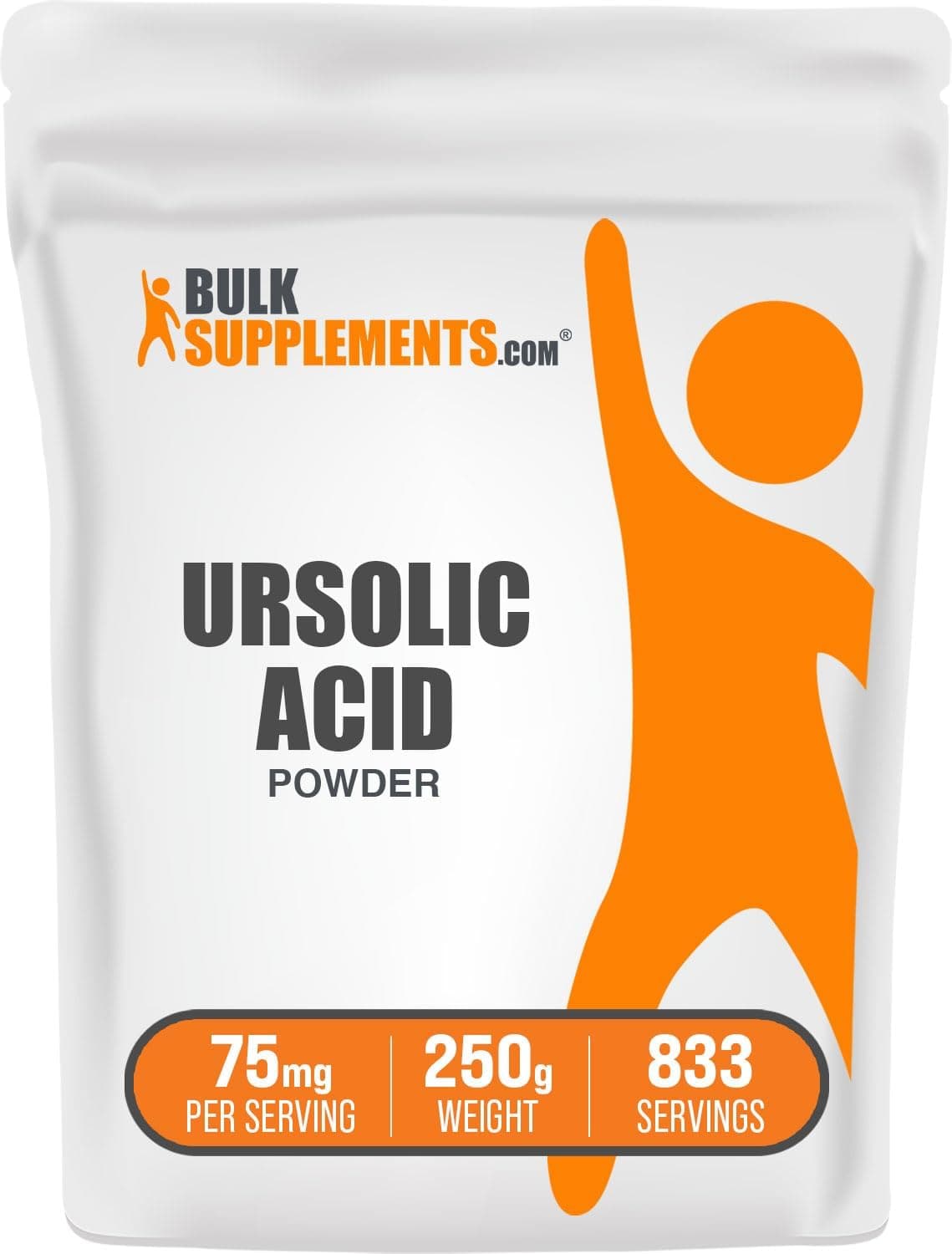
Suppliers
Vendors carrying Ursolic Acid, with live product details and codes. Links are affiliate links that support the wiki at no cost to you.
Amazon
Ursolic Acid
Research
- 2011first citedmRNA expression signatures of human skeletal muscle atrophy identify a natural compound that in…
- 2023most recentAnti-inflammatory and antioxidant activity of ursolic acid: a systematic review and meta-analys…
- 1.mRNA expression signatures of human skeletal muscle atrophy identify a natural compound that increases muscle mass
- 2.Ursolic Acid Increases Skeletal Muscle and Brown Fat and Decreases Diet-Induced Obesity, Glucose Intolerance and Fatty Liver Disease
- 3.Ursolic Acid-Induced Elevation of Serum Irisin Augments Muscle Strength During Resistance Training in Men
- 4.Potent anti-inflammatory activity of ursolic acid, a triterpenoid antioxidant, is mediated through suppression of NF-κB, AP-1 and NF-AT.
- 5.Synergism Effects of Ursolic Acid Supplementation on the Levels of Irisin, C-reactive Protein, IL-6, and TNF-α During High-intensity Resistance Training in Low Activity Men.
- 6.Ursolic acid does not change the cytokine levels following resistance training in healthy men: A pilot balanced, double-blind and placebo-controlled clinical trial
- 7.Anti-inflammatory and antioxidant activity of ursolic acid: a systematic review and meta-analysis
7 listed here; entry last updated August 2026
Reviews
My notesprivate to this device
FAQ
Will ursolic acid build muscle like it does in mice?
Probably not to the same degree. The rodent results are impressive, but ursolic acid absorbs poorly when swallowed, and the few small human trials show modest, inconsistent effects. Treat it as a possible minor add-on to training and protein, not a driver.
Is it better to just eat apples?
You get ursolic acid from apple peel, rosemary, and basil, but the amounts are small and it still absorbs poorly. Diet won't reach the doses used in supplement trials, though eating the peel is a free, low-effort source.
How should I take it to actually absorb some?
Take it with a meal that contains fat, since it is fat-soluble and poorly water-soluble. Solubilized, liposomal, or phospholipid-complex formulations are designed to improve uptake over raw powder.
Does it help with fat loss?
In mice it increased brown fat and reduced diet-induced obesity, and one small human trial reported lower body-fat percentage with training. The human evidence is too thin to promise fat loss on its own.
Is ursolic acid safe?
It is a normal dietary compound and short human trials at ~400 mg/day reported no notable problems, but long-term safety isn't well studied. If you take diabetes or other medications, check with a clinician because of theoretical glucose and drug-metabolism interactions.
Adverse effects
- Possible additive glucose-lowering with diabetes medication (theoretical)
- Potential drug interactions via PXR/nuclear receptor modulation (theoretical)
Notes and cautions
- Very poor oral absorption limits real-world effect
- Cytotoxic at high concentrations in vitro (not reflective of oral dosing)
- Human safety data are short-term and limited