
spec sheet12 rows
T3, sold generically as liothyronine, is a synthetic form of triiodothyronine, the most metabolically active thyroid hormone. It is prescribed for hypothyroidism and the severe state known as myxedema coma, to prepare thyroid-cancer patients for radioiodine treatment, and at times as an add-on to antidepressant therapy. Relative to the storage hormone thyroxine, it acts faster and more powerfully but for a shorter time.
- Metabolism shifts into a higher gear
- The most metabolically active thyroid hormone
- Serious firepower behind fat loss goals
- Faster and harder hitting than thyroxine
- Prescription thyroid hormone; doctor guided only
- Faster heart rate or palpitations
- Restlessness, anxiety, or trouble sleeping
- Symptoms resembling an overactive thyroid if levels run high
Overview
T3 is the pharmaceutical designation for triiodothyronine, one of the two principal hormones released by the thyroid gland. Chemically it is an iodine-bearing derivative of the amino acid tyrosine that carries three iodine atoms on its ring structure, and it is dispensed as the salt liothyronine sodium under brand names such as Cytomel. Within the body, T3 represents the active thyroid signal, whereas the more abundant thyroxine (T4) functions largely as a reservoir that peripheral tissues convert into T3 as required [1][4].
The primary medical use of liothyronine is hormone replacement in hypothyroidism, and because it acts quickly it is favored in myxedema coma, a life-threatening state of profound thyroid failure [1][2]. Its comparatively rapid clearance is also exploited before radioactive-iodine therapy for thyroid cancer, since a shorter hormone-withdrawal window is needed than with thyroxine [1]. Beyond thyroid disease, T3 has been studied as an augmenting agent in mood disorders; a meta-analysis of controlled trials found that adding it to tricyclic antidepressants tended to accelerate the treatment response, with the benefit being more pronounced among women [3].
Liothyronine entered clinical use in the 1950s and is supplied both as oral tablets and as an injectable preparation reserved for emergencies [1]. It is a prescription-only medicine in countries including the United States, the United Kingdom, and Canada, and is available as an inexpensive generic [1]. Product labeling warns against using thyroid hormone as a weight-loss aid in people with normal thyroid function, because excessive amounts can produce serious cardiac and metabolic toxicity, a hazard that is heightened when the hormone is combined with stimulant appetite suppressants [1]. Controlled single-dose studies confirm that its influence on the heart and on pituitary feedback follows the rise in circulating hormone by a matter of hours [4].
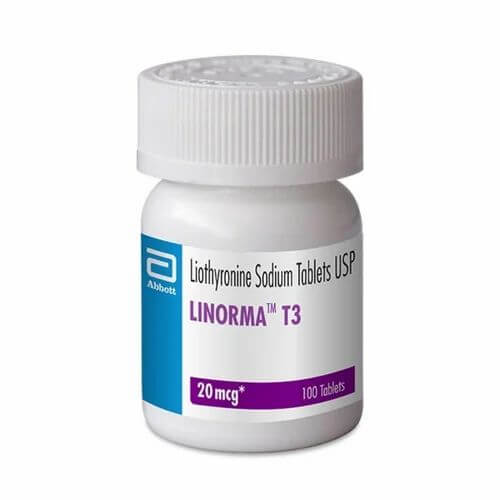
- Triiodothyronine was discovered in 1952 by Jack Gross and Rosalind Pitt-Rivers, revealing that thyroxine is largely a precursor to this more active hormone.
- Because T3 is already the receptor-active hormone, it does not require the conversion step that thyroxine must undergo, giving it a faster and stronger effect.
- Beyond thyroid disease, low-dose T3 has been used as an inexpensive add-on to antidepressants in treatment-resistant depression.
Mechanism
Triiodothyronine works mainly by entering cells and binding nuclear thyroid hormone receptors, which act as hormone-controlled regulators of gene transcription. Once T3 attaches, these receptors adjust the expression of numerous genes, thereby raising the basal metabolic rate, promoting protein turnover, and shaping how the body handles carbohydrates and fats [1][4]. A characteristic feature is that thyroid hormone increases the tissues' responsiveness to catecholamines such as adrenaline, a permissive action that helps explain the rise in heart rate and cardiac force seen when levels climb [1].
Because T3 is the receptor-active hormone, it does not require the conversion step that thyroxine must undergo, which accounts for its faster onset and greater potency [4]. Human dosing studies show that a rise in serum T3 is followed within hours by measurable increases in heart rate and, more gradually, by suppression of pituitary thyroid-stimulating hormone, illustrating the negative-feedback loop through which thyroid hormones govern their own secretion [4]. An excess of hormone pushes the body toward a hyperthyroid state, while too little slows metabolism throughout the tissues [1].
receptor fingerprint
Thyroid hormone receptorsactivates (potent)
Metabolic rateraises
Gene expression (T3-responsive)drives
Dosingtypical ranges, not medical advice
interested in protocols and clinical dosages? make an account to see them! ^_^
Safetyrisks and cautions, not medical advice
T3 (liothyronine) is a potent thyroid hormone, and excess quickly produces hyperthyroid effects: palpitations, arrhythmia, anxiety, tremor, heat intolerance, and weight loss, with bone loss on chronic overuse. It is especially risky in cardiac disease and requires medical supervision and lab monitoring.
Interactionsdocumented pairs only, not exhaustive
Thyroid hormone changes how several other drugs behave, and the anticoagulant interaction is the one that draws blood. T3 accelerates hepatic clearance of the vitamin K-dependent clotting factors, so warfarin and related coumarins become more potent as thyroid status shifts, and INR can drift upward for weeks after a change in hormone dose. Insulin and oral hypoglycemics move the other way, since restoring a euthyroid state raises metabolic demand and glucose requirements change with it.
Absorption is easy to block. Cholestyramine and colesevelam, calcium carbonate, ferrous sulfate, sucralfate and aluminum antacids bind liothyronine in the gut and cut how much reaches the circulation. That happens on contact in the lumen rather than through metabolism, so it depends entirely on timing. Proton pump inhibitors blunt absorption more modestly.
On the cardiac side, T3 adds to the chronotropic effect of sympathomimetics such as pseudoephedrine and albuterol, and it raises the arrhythmia risk of digoxin and of catecholamines given during anesthesia. Phenytoin, carbamazepine and rifampin induce hepatic metabolism and pull circulating hormone down.
Checking a whole stack? Run it through interactions + stacks.
History
Triiodothyronine, the hormone marketed generically as liothyronine, was identified in 1952 by Jack Gross and Rosalind Pitt-Rivers, who demonstrated that this triiodinated thyronine was a distinct and highly active thyroid hormone circulating alongside thyroxine. The discovery clarified that thyroxine served largely as a precursor that the body converts into the more potent T3, reshaping the understanding of thyroid physiology.
A synthetic form was subsequently developed for clinical use, providing the receptor-active hormone directly without the need for peripheral conversion. Over the following decades liothyronine found roles in the treatment of hypothyroidism and myxedema coma, in preparing thyroid-cancer patients for radioiodine therapy, and as an occasional augmenting agent in difficult-to-treat depression. Because of its faster onset and shorter duration compared with thyroxine, it has generally been used in more specialized situations than the widely prescribed storage hormone.
Reputation
T3 is respected as the most metabolically active thyroid hormone and as a fast-acting, potent option when a rapid or direct thyroid effect is desired. Endocrinologists value liothyronine in specific settings such as myxedema coma and the preparation of thyroid-cancer patients, and some patients who feel incompletely well on thyroxine alone report benefit from combination approaches. In psychiatry it has a long-standing and favorably regarded role as an inexpensive augmenting agent that can improve mood in some people with treatment-resistant depression. Its honest trade-offs follow from its very potency: it acts quickly and briefly, which can make steady dosing more demanding, and excess can push the body toward a hyperthyroid state with effects on heart rate. Used thoughtfully, it remains a valuable and time-tested tool within thyroid and mood medicine.
Subjective profileweighing the evidence above
Legitimate and effective when a thyroid actually needs it, and prescription territory with lab monitoring for good reason. Used for fat loss on a normal thyroid it buys a faster metabolism and the whole hyperthyroid picture with it: palpitations, arrhythmia, anxiety and bone loss over time.
Where to buy
Suppliers
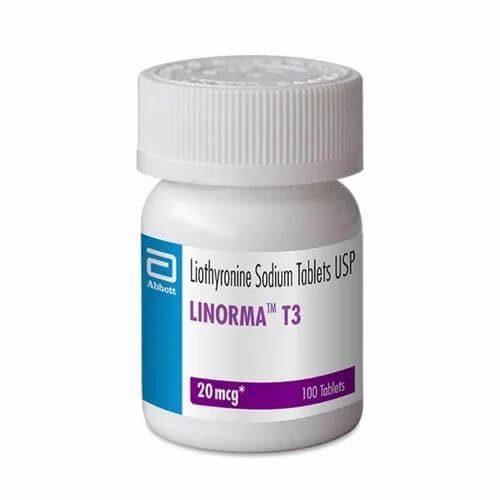
Vendors carrying T3, with live product details and codes. Links are affiliate links that support the wiki at no cost to you.
PCT.Zone
T3
Research
- 1996first citedTriiodothyronine augmentation in the treatment of refractory depression. A meta-analysis
- 2001meta-analysisDoes thyroid supplementation accelerate tricyclic antidepressant response? A review and meta-an…
- 2015most active year4 papers
- 2024most recentEvaluating the effectiveness of combined T4 and T3 therapy or desiccated thyroid versus T4 mono…
- 1.Hypothyroidism.
- 2.Thyroid emergencies.
- 3.Does thyroid supplementation accelerate tricyclic antidepressant response? A review and meta-analysis of the literature.
- 4.Single-dose T3 administration: kinetics and effects on biochemical and physiological parameters.
- 5.Benefits and Harms of Levothyroxine/L-Triiodothyronine Versus Levothyroxine Monotherapy for Adult Patients with Hypothyroidism: Systematic Review and Meta-Analysis
- 6.Thyroxine-triiodothyronine combination therapy versus thyroxine monotherapy for clinical hypothyroidism: meta-analysis of randomized controlled trials
- 7.Evaluating the effectiveness of combined T4 and T3 therapy or desiccated thyroid versus T4 monotherapy in hypothyroidism: a systematic review and meta-analysis
- 8.A Systematic Review and Meta-Analysis of Patient Preferences for Combination Thyroid Hormone Treatment for Hypothyroidism
- 9.Combined therapy with levothyroxine and liothyronine for hypothyroidism
- 10.Thyroxine alone or thyroxine plus triiodothyronine replacement therapy for hypothyroidism
- 11.Treatment of hypothyroidism with levothyroxine or a combination of levothyroxine plus L-triiodothyronine
- 12.Combined levothyroxine plus liothyronine compared with levothyroxine alone in primary hypothyroidism: a randomized controlled trial
21 listed here; entry last updated August 2026
Reviews
My notesprivate to this device
FAQ
What is T3?
It is the active form of thyroid hormone (liothyronine) that directly drives metabolic rate. It is used medically for thyroid conditions and sometimes for fat loss.
Why does it raise heart rate?
Thyroid hormone increases metabolic activity throughout the body, including the heart. This can cause a faster pulse and palpitations.
How does it differ from T4?
T3 is the active hormone, while T4 is a storage form the body converts into T3. T3 acts faster and more potently.
What is a risk of overuse?
Too much can strain the heart and lead to muscle loss and bone effects. Thyroid hormone use warrants medical supervision.
Adverse effects
- Faster heart rate or palpitations
- Restlessness, anxiety, or trouble sleeping
- Symptoms resembling an overactive thyroid if levels run high
Notes and cautions
- Heat intolerance and sweating
- Long-term overtreatment may reduce bone density