
spec sheet11 rows
Survodutide is an investigational once-weekly glucagon receptor and GLP-1 receptor dual agonist positioned at the frontier of next-generation metabolic therapeutics. By engaging two complementary pathways, it pairs powerful appetite suppression with increased energy expenditure to drive substantial weight reduction and striking improvements in liver health. In phase 2 and phase 3 trials it delivered double-digit body weight loss and reversed steatohepatitis in a majority of treated participants, marking it as one of the most closely watched dual agonists in development.
- Double-digit weight loss in clinical trials
- Two metabolic pathways hit at once
- Appetite drops while energy burn rises
- Liver fat cleared in treated participants
- GLP-1 power plus a glucagon kicker
- One of the most watched dual agonists
- Gastrointestinal effects such as nausea, diarrhea, and vomiting are the most common
- Reduced appetite and early satiety
- Risk of dehydration if vomiting or diarrhea is significant
Overview
Survodutide, also known by its development code BI 456906, is an investigational peptide therapeutic that acts as a dual agonist of the glucagon receptor and the glucagon-like peptide-1 (GLP-1) receptor. It was developed by Boehringer Ingelheim, using a molecule originating from Zealand Pharma, as a subcutaneous once-weekly injectable for the treatment of obesity and metabolic dysfunction-associated steatohepatitis (MASH) [1][3]. Structurally it is a synthetic peptide derived from the glucagon sequence and engineered with a fatty acid side chain that binds albumin to extend its circulating half-life, allowing weekly dosing [1].
The rationale for survodutide rests on combining two hormonal pathways in a single molecule. GLP-1 receptor activation curbs appetite and slows gastric emptying, while glucagon receptor activation is thought to raise energy expenditure and promote hepatic fat oxidation; together these actions aim to exceed the weight loss achievable with GLP-1 receptor agonism alone [6]. This places survodutide within a broader class of glucagon-containing multi-agonists that also includes agents such as mazdutide and the triple agonist retatrutide [6].
Clinically, survodutide advanced through a dose-finding phase 2 obesity trial and a phase 2 trial in biopsy-confirmed MASH, both of which reported positive results [1][3]. It subsequently progressed into the phase 3 SYNCHRONIZE program, including trials in adults with obesity with and without type 2 diabetes as well as a dedicated Japanese study [2][5]. As an investigational agent, survodutide has not received marketing approval and remains available only within registered clinical trials, where it is supplied as a sterile solution for subcutaneous injection [2].
- In its phase 2 liver trial, up to 62 percent of treated participants showed histologic improvement of steatohepatitis without worsening of fibrosis, compared with 14 percent on placebo.
- Survodutide activates the glucagon receptor as well as the GLP-1 receptor, a combination intended to burn more energy at rest in addition to reducing appetite.
Mechanism
Survodutide produces its metabolic effects through balanced co-agonism at two distinct receptors. Acting at the -1 receptor, it suppresses appetite and food intake through central pathways; imaging and c-Fos mapping in preclinical models show the accessing appetite-regulating circumventricular organs and adjacent hindbrain and hypothalamic nuclei, with the intake-suppressing effect being GLP-1 receptor dependent [4]. Simultaneous glucagon receptor agonism is thought to increase resting energy expenditure and stimulate hepatic lipid oxidation, a mechanism that distinguishes glucagon-containing multi-agonists from pure incretin drugs and that appears central to their enhanced fat loss, although much of the direct energy expenditure evidence derives from rodent models [6]. The net result is a dual action on energy balance: less energy in through reduced appetite, and more energy out through elevated expenditure.
The clinical benefits track this pharmacology. In a randomized, double-blind, placebo-controlled phase 2 obesity trial, participants receiving the higher survodutide doses lost up to roughly 15 percent of body weight by week 46, compared with about 3 percent on placebo [1]. In the phase 3 SYNCHRONIZE-1 trial in adults with obesity without diabetes, mean body weight fell by about 13 percent versus roughly 5 percent with placebo at week 76, and the majority of treated participants achieved at least 5 percent weight reduction [2]. Beyond weight, survodutide shows pronounced hepatic effects: in a phase 2 MASH trial, histologic improvement of steatohepatitis without worsening of fibrosis occurred in up to 62 percent of treated participants versus 14 percent on placebo, and liver fat content fell by at least 30 percent in a clear majority of treated groups [3]. Additional metabolic effects include improvements in glycemic measures and cardiometabolic risk factors, consistent with its incretin activity [2]. The dominant tolerability signal is gastrointestinal, chiefly nausea, diarrhea, and vomiting, reflecting the -1 component and the escalation of dose over time [3].
receptor fingerprint
-1 receptoragonist
Glucagon receptoragonist
Body weight / liver fatlowers
Dosingtypical ranges, not medical advice
interested in protocols and clinical dosages? make an account to see them! ^_^
Safetyrisks and cautions, not medical advice
Survodutide is an investigational GLP-1/glucagon dual receptor agonist, not yet approved, being studied for obesity and metabolic liver disease; its most common effects in trials are gastrointestinal, including nausea, vomiting, diarrhea, and constipation, often dose-related. As an incretin-class agent it carries cautions similar to GLP-1 drugs, including potential gallbladder disease, pancreatitis, and the rodent thyroid C-cell tumor class warning, while its added glucagon activity can raise heart rate and affect glucose metabolism. Its long-term safety is still being established.
History
Survodutide, also known by its development code BI 456906, is an investigational dual agonist created through a collaboration between Boehringer Ingelheim and Zealand Pharma. It belongs to a newer generation of metabolic peptides designed to activate two receptors at once, pairing GLP-1 receptor agonism with glucagon receptor agonism to combine appetite suppression with increased energy expenditure. The compound advanced through phase 2 studies in obesity and in metabolic dysfunction-associated steatohepatitis before entering the phase 3 SYNCHRONIZE program in obesity. As of this writing it remains investigational and has not received regulatory approval.
Reputation
Survodutide is among the most closely watched dual agonists in metabolic drug development, generating considerable interest for its striking results in both weight reduction and liver disease. Observers highlight that, beyond double-digit body weight loss, its phase 2 trial in steatohepatitis showed histologic improvement of the liver in a majority of treated participants, an outcome that has energized the field of metabolic liver therapeutics.
The glucagon component is often discussed as a distinguishing feature, since it is thought to raise energy expenditure rather than only curbing intake. Honest appraisal notes that survodutide is still investigational, that much of the energy-expenditure evidence comes from animal models, and that gastrointestinal effects such as nausea and vomiting are the dominant tolerability concern. Interest remains high while larger and longer trials continue.
Subjective profileweighing the evidence above
The liver result is the headline here, not just the weight loss, and reversing steatohepatitis in a majority of treated participants is a serious finding. It is investigational and unapproved, the dose is escalated slowly for a reason, and nausea, vomiting and diarrhea are common enough to plan around.
Where to buy

2 other outlets

Suppliers
Vendors carrying Survodutide, with live product details and codes. Links are affiliate links that support the wiki at no cost to you.
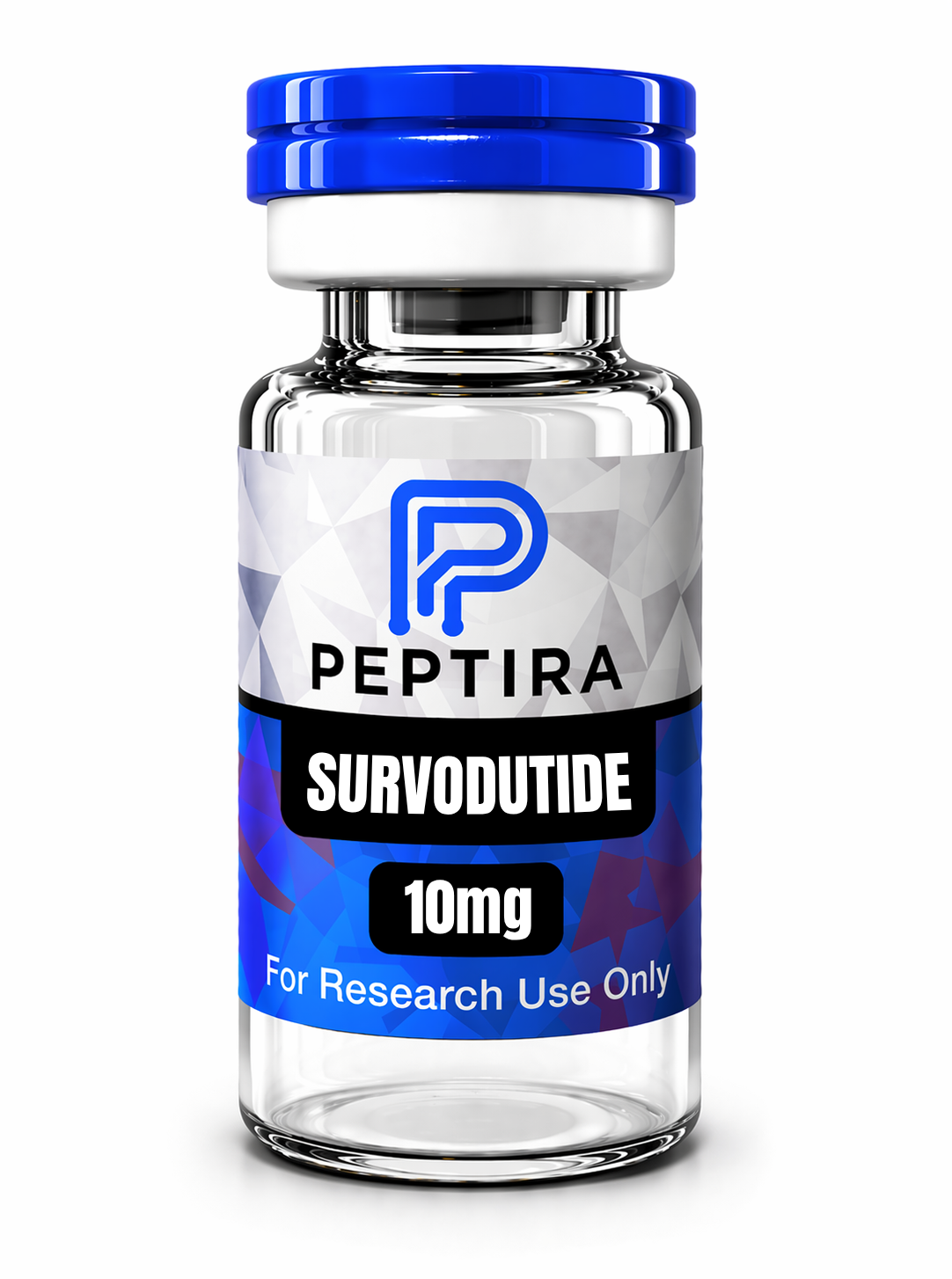
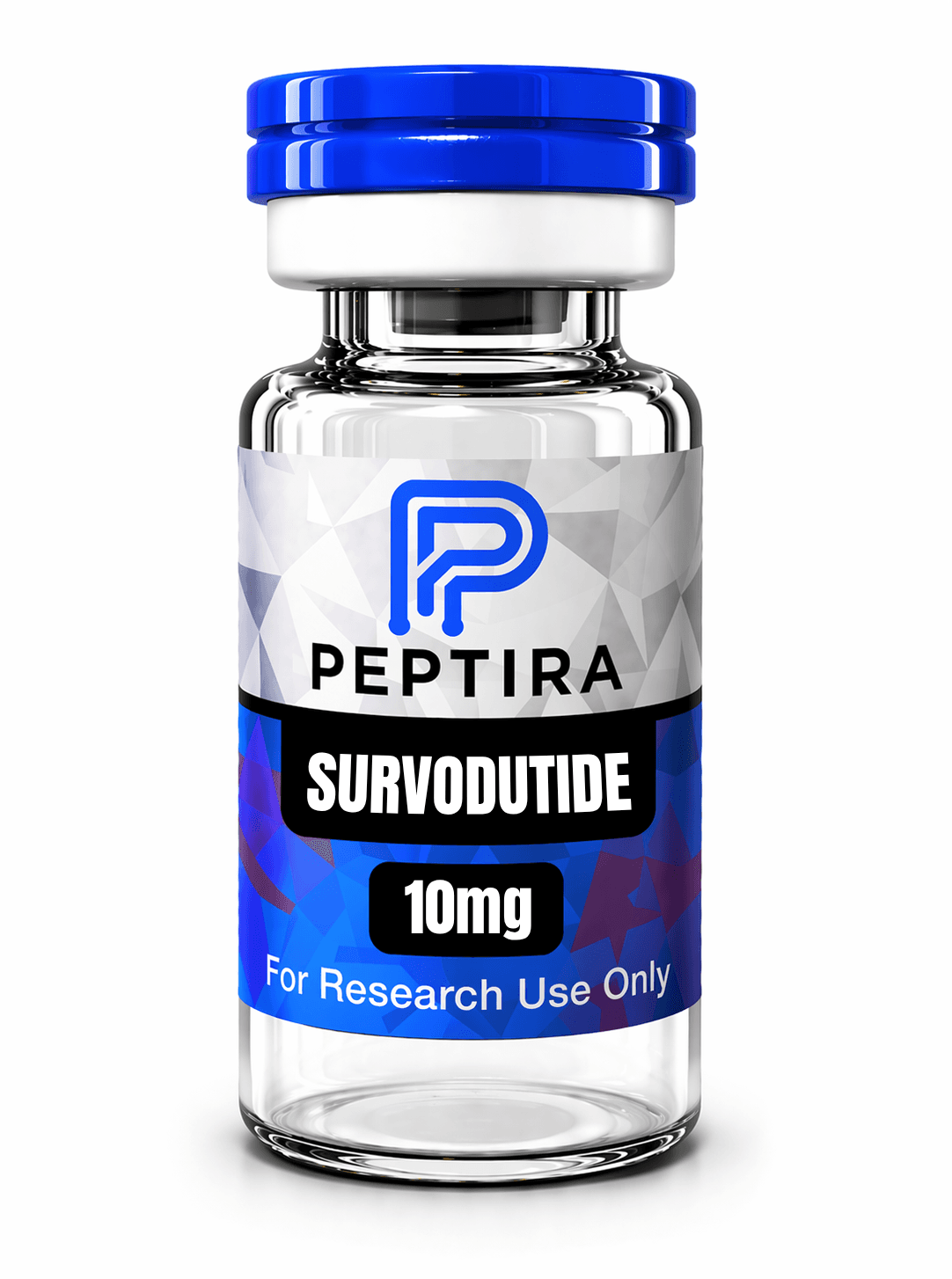
Peptira
Survodutide
RUO
Survodutide
Kimera Chems
Survodutide
Research
- 1.Glucagon and GLP-1 receptor dual agonist survodutide for obesity: a randomised, double-blind, placebo-controlled, dose-finding phase 2 trial
- 2.Survodutide Once Weekly for the Treatment of Adults with Obesity
- 3.A Phase 2 Randomized Trial of Survodutide in MASH and Fibrosis
- 4.Survodutide acts through circumventricular organs in the brain and activates neuronal regions associated with appetite regulation
- 5.Survodutide for treatment of obesity: Baseline characteristics of participants in a randomized, double-blind, placebo-controlled, phase 3 trial (SYNCHRONIZE-1)
- 6.IUPHAR review: From foe to friend: Repurposing glucagon to treat obesity and type 2 diabetes
6 listed here; entry last updated August 2026
Reviews
My notesprivate to this device
FAQ
What is survodutide?
It is a dual agonist activating GLP-1 and glucagon receptors, studied for weight loss and fatty liver disease. It is investigational.
Why include glucagon receptor action?
Glucagon activity can increase energy expenditure and influence liver fat. Combining it with GLP-1 is being studied for metabolic benefits.
Is it approved?
It has been evaluated in clinical trials and is not yet approved. It remains investigational.
What side effects are most common?
As with other incretin drugs, gastrointestinal effects like nausea are most frequent. They often ease over time.
Limitations of the evidence
- As an investigational agent, its long-term safety profile is still being established
Adverse effects
- Gastrointestinal effects such as nausea, diarrhea, and vomiting are the most common
- Reduced appetite and early satiety
- Risk of dehydration if vomiting or diarrhea is significant
Notes and cautions
- Gradual dose escalation is typically used to improve tolerability