
spec sheet11 rows
Mazdutide (IBI362, LY3305677) is an investigational once-weekly peptide that simultaneously activates the glucagon-like peptide-1 (GLP-1) and glucagon receptors, a dual-agonist design intended to combine appetite suppression and improved glycemic control from the GLP-1 arm with increased energy expenditure and hepatic lipid handling from the glucagon arm. In Chinese phase 3 obesity trials it produced substantial, dose-dependent weight loss, with the GLORY-2 study reporting roughly 16 percent mean body-weight reduction at the 9 mg dose, alongside favorable changes in blood pressure and lipids. In type 2 diabetes it lowered glycated hemoglobin and body weight more than the GLP-1 monotherapy dulaglutide, and it improved fatty liver and cardiometabolic markers. Gastrointestinal effects such as nausea, vomiting, and diarrhea are the most common adverse events, consistent with its incretin mechanism.
- roughly 16 percent mean weight lost at 9 mg, phase 3
- hits GLP-1 and glucagon at once, not appetite alone
- the glucagon arm may add real energy expenditure
- beat dulaglutide on blood sugar and weight in type 2 diabetes
- improved liver fat, blood pressure and lipids alongside weight
- a single injection a week keeps the schedule simple
- Nausea is common, especially early on
- Diarrhea can occur
- Appetite can fall enough to risk undereating
Overview
Mazdutide, also known by the development codes IBI362 and LY3305677, is an investigational once-weekly injectable peptide that acts as a dual agonist of the glucagon-like peptide-1 (GLP-1) receptor and the glucagon receptor [1][3]. It is being developed for chronic weight management and type 2 diabetes and is based on a mammalian oxyntomodulin scaffold, which distinguishes it from single-target GLP-1 receptor agonists by engaging glucagon signaling as well [2].
The clinical program has progressed through successive stages in adults with overweight or obesity. An early multiple-ascending-dose phase 1b study established tolerability and showed meaningful short-term weight loss at higher exposures [1]. A phase 2 randomized, placebo-controlled trial then demonstrated robust, clinically meaningful body-weight reduction over 24 weeks [2], and a further phase 2 study extended evaluation of a higher dose [4]. The pivotal GLORY-1 phase 3 trial in Chinese adults with obesity or overweight confirmed substantial weight loss with once-weekly treatment over 48 weeks [3]. Beyond weight, the compound is also studied for improvements in cardiometabolic risk factors and liver fat [2][3].
Mazdutide is an investigational drug rather than an approved supplement or medicine in most markets, and it has been developed principally through trials conducted in China [3]. Its interest lies in the dual-incretin approach: by adding glucagon-receptor activity to the appetite-suppressing effects of GLP-1, it aims to increase energy expenditure and thereby enhance weight loss and metabolic benefit relative to GLP-1-only agents [2][3].
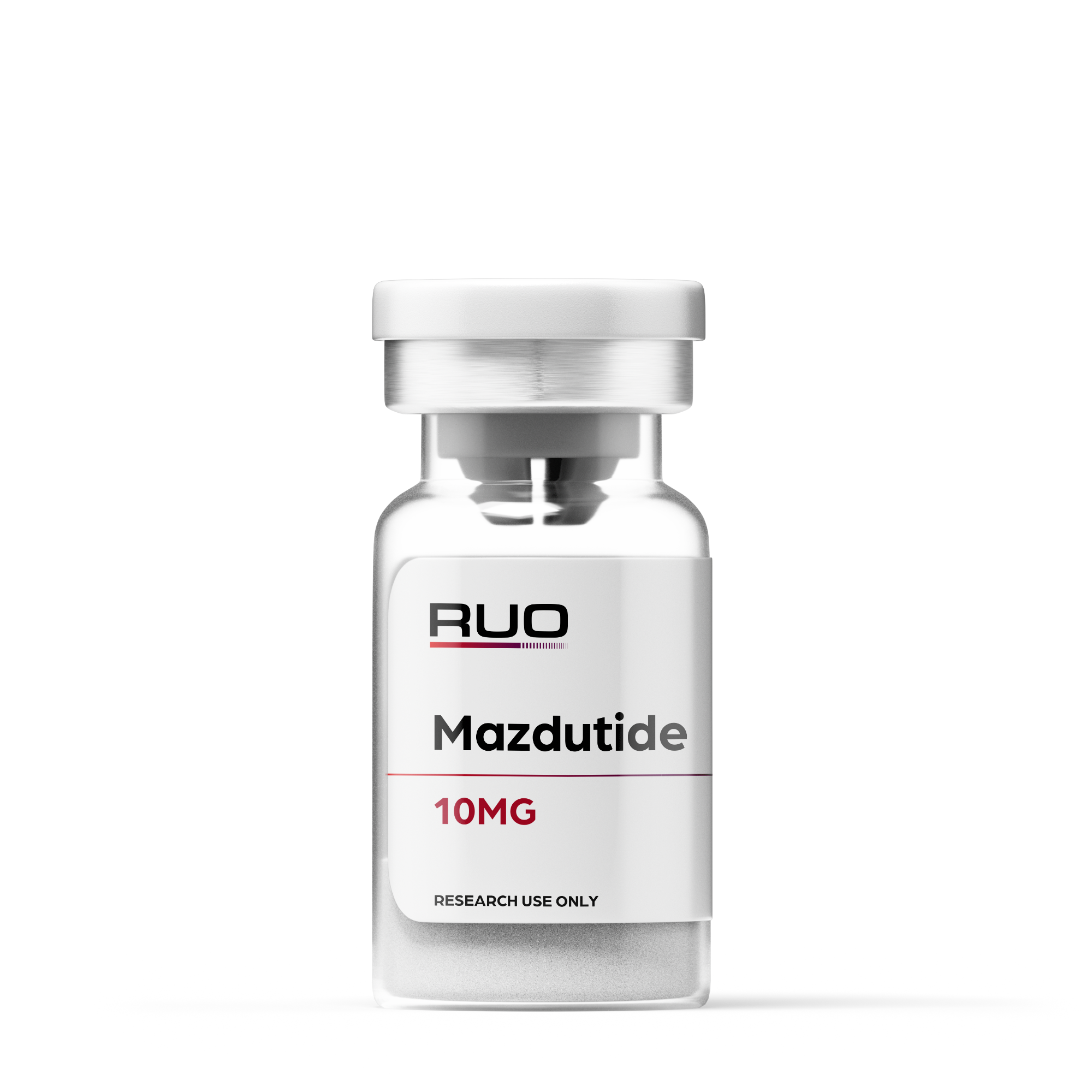
- Mazdutide is derived from oxyntomodulin, a natural gut hormone that the body itself uses to signal both the GLP-1 and glucagon receptors at once.
- In the GLORY-2 trial the 9 mg dose produced a mean body-weight reduction of about 16.7 percent over 60 weeks, among the largest reported for a peptide in a Chinese obesity population.
Mechanism
Mazdutide produces its effects by simultaneously activating two receptors. Through the -1 receptor it reproduces the incretin actions that make GLP-1-based drugs effective: it enhances glucose-dependent secretion, slows gastric emptying, and acts on appetite centers in the brain to reduce food intake, which lowers body weight and improves glycemic control [2][3]. Through the glucagon receptor it adds a distinct action, since glucagon-receptor agonism is thought to increase energy expenditure and promote hepatic fat metabolism, so the two mechanisms are intended to complement each other, with -1 reducing calorie intake and glucagon increasing calorie output [2].
The clinical results quantify this dual action. In the phase 2 trial, 24 weeks of treatment reduced body weight by up to about 11 percent, versus roughly a 1 percent gain on placebo [2]. In the GLORY-1 phase 3 trial, once-weekly mazdutide reduced body weight from baseline by about 11 to 14 percent by week 48 depending on dose, compared with essentially no change on placebo, and the great majority of treated participants achieved at least a 5 percent reduction, with accompanying improvements across cardiometabolic measures [3].
The glucagon component is also the basis for interest in liver fat, since increased hepatic lipid metabolism can reduce fat accumulation in the liver [2][3]. The side-effect profile follows directly from the -1 mechanism and the slowing of gastric emptying: gastrointestinal effects such as nausea, diarrhea, and vomiting are the most common adverse events and are generally mild to moderate and most prominent early in treatment [1][3].
receptor fingerprint
-1 receptorAgonist
Body weight regulationReduction
Glucagon receptorAgonist
Dosingtypical ranges, not medical advice
interested in protocols and clinical dosages? make an account to see them! ^_^
Safetyrisks and cautions, not medical advice
As a dual GLP-1/glucagon receptor agonist, mazdutide commonly causes gastrointestinal effects such as nausea, vomiting, diarrhea, and reduced appetite, especially during dose escalation, and it can raise heart rate. Class risks shared with incretin therapies include pancreatitis, gallbladder disease, and hypoglycemia when combined with insulin or sulfonylureas; rodent studies of this drug class have shown thyroid C-cell tumors, so a personal or family history of medullary thyroid carcinoma or MEN2 is a contraindication. It is a newer agent with a limited long-term human safety record.
History
Mazdutide originated as LY3305677, a GLP-1/glucagon dual agonist discovered by Eli Lilly and subsequently licensed to Innovent Biologics for development in China, where it carries the code IBI362. It is built on a mammalian oxyntomodulin scaffold, the naturally occurring gut hormone that activates both the GLP-1 and glucagon receptors, and it was engineered for once-weekly subcutaneous dosing. Clinical development advanced through phase 1 and 2 studies into a series of phase 3 trials known as the GLORY program, conducted in Chinese adults with obesity or type 2 diabetes. The GLORY-1 trial was published in the New England Journal of Medicine in 2025, and the higher-dose GLORY-2 trial followed in JAMA in 2026.
Reputation
Mazdutide is widely discussed as one of the most promising entrants in the dual-agonist class, notable for pairing GLP-1 appetite suppression with the added energy-expenditure and hepatic-lipid actions of glucagon-receptor agonism. Commentators highlight its consistent, dose-dependent weight loss, roughly 14 percent at 6 mg and about 16 percent at the 9 mg dose in phase 3, alongside favorable changes in blood pressure, lipids, and liver fat.
It became the first GLP-1/glucagon dual agonist to reach approval in China, which has amplified scientific interest in glucagon co-agonism as a weight-loss strategy. Enthusiasm is tempered by the recognition that its pivotal data come from Chinese populations and that gastrointestinal effects such as nausea and vomiting are common, especially early in treatment. As an incretin-based peptide it remains a prescription therapy rather than a casual supplement.
Subjective profileweighing the evidence above
One of the more promising incretin drugs in development, with phase 3 weight loss behind it and a glucagon arm that may genuinely add energy expenditure. It is still investigational for most readers, and it carries the full class package: heavy early nausea, pancreatitis and gallbladder risk, and a firm no with a medullary thyroid cancer history.
Where to buy
1 other outlet

Suppliers
Vendors carrying Mazdutide, with live product details and codes. Links are affiliate links that support the wiki at no cost to you.
Kimera Chems
Mazdutide
RUO
Mazdutide
Research
- 2022first citedSafety and efficacy of a GLP-1 and glucagon receptor dual agonist mazdutide (IBI362) 9 mg and 1…
- 2024most active year4 papers
- 2026most recentMazdutide 9 mg in Chinese adults with a body mass index ≥30 kg/m(2) but without diabetes: A pha…
- 1.Safety and efficacy of a GLP-1 and glucagon receptor dual agonist mazdutide (IBI362) 9 mg and 10 mg in Chinese adults with overweight or obesity: A randomised, placebo-controlled, multiple-ascending-dose phase 1b trial
- 2.A phase 2 randomised controlled trial of mazdutide in Chinese overweight adults or adults with obesity
- 3.Once-Weekly Mazdutide in Chinese Adults with Obesity or Overweight
- 4.Mazdutide 9 mg in Chinese adults with a body mass index ≥30 kg/m(2) but without diabetes: A phase 2 randomized controlled trial.
- 5.Treatment With 9-mg Mazdutide for Weight Reduction in Chinese Adults With Obesity: The GLORY-2 Randomized Clinical Trial.
- 6.Mazdutide versus dulaglutide in Chinese adults with type 2 diabetes.
- 7.Mazdutide versus placebo in Chinese adults with type 2 diabetes.
- 8.Efficacy and Safety of Mazdutide in Chinese Patients With Type 2 Diabetes: A Randomized, Double-Blind, Placebo-Controlled Phase 2 Trial.
- 9.Mazdutide Versus Dulaglutide for Weight Loss and Diabetes Management: Meta-Analysis of Randomized Clinical Trials.
- 10.Safety and efficacy of GLP-1 and glucagon receptor dual agonist for the treatment of type 2 diabetes and obesity: a systematic review and meta-analysis of randomized controlled trials.
- 11.Efficacy and safety of Mazdutide on weight loss among diabetic and non-diabetic patients: a systematic review and meta-analysis of randomized controlled trials.
- 12.Comparative efficacy of incretin drugs on glycemic control, body weight, and blood pressure in adults with overweight or obesity and with/without type 2 diabetes: a systematic review and network meta-analysis.
13 listed here; entry last updated August 2026
Reviews
My notesprivate to this device
FAQ
How is mazdutide different from semaglutide?
Semaglutide hits GLP-1 alone; mazdutide adds glucagon receptor activity, which in a head-to-head trial pointed to greater weight loss.
Is it approved?
It is investigational and has been studied mainly in China; treat any use as research only.
Why add glucagon activity?
Glucagon signaling is thought to raise energy expenditure and help the liver clear fat, on top of GLP-1 appetite effects.
Adverse effects
- Nausea is common, especially early on
- Diarrhea can occur
- Appetite can fall enough to risk undereating
- Occasional vomiting is possible
- Mild injection-site reactions can occur