
spec sheet12 rows
Lysine is an essential amino acid, meaning the human body cannot make it and must obtain it from food. In its biologically active L-form it is a building block of proteins and is needed for the cross-linking of collagen and for the production of carnitine. It is plentiful in meat, eggs, and legumes, is added to animal feed on a large scale, and is sold as a supplement, including for the popular but poorly supported use against cold sores.
- Essential amino acid your body simply cannot make
- A favorite cheap option for cold sore prone people
- Needed for collagen crosslinking and firm connective tissue
- Feeds carnitine production for fat burning energy transport
- Supports calcium absorption and everyday protein synthesis
- Pennies per serving and found in everyday foods
- Digestive upset such as nausea or diarrhea at high supplemental intake
- Caution advised with significant kidney impairment
Overview
Lysine is an alpha-amino acid with the formula C6H14N2O2 and a basic, positively charged side chain. The L-enantiomer is the form built into proteins, where it is specified by the genetic codons AAA and AAG. It is classified as an essential amino acid because humans lack the pathway to synthesize it and therefore depend entirely on dietary intake. Lysine was first isolated by Edmund Drechsel in 1889 from the milk protein casein, its name deriving from the Greek word lysis; its structure was confirmed by synthesis in the early 1900s.
Beyond serving as a protein building block, lysine has several specific biological roles. Its side chains are modified to hydroxylysine and then cross-linked by the enzyme lysyl oxidase to give collagen and elastin their tensile strength, and lysine is a metabolic precursor for carnitine, a molecule that helps shuttle fatty acids into mitochondria for energy. Lysine residues in proteins are also common sites for regulatory chemical modifications such as acetylation and methylation.
In the diet, lysine is abundant in animal foods such as meat, fish, eggs, and dairy, and in legumes including soybeans, beans, and peas. It is the limiting amino acid in cereal grains, so diets built heavily around wheat, rice, or maize can fall short unless balanced with legumes, a pairing reflected in many traditional cuisines.
Commercially, lysine is produced on a very large scale by bacterial fermentation, chiefly using Corynebacterium glutamicum, and most of it is used to fortify livestock feed. As a human supplement, L-lysine is best known for a claimed benefit against cold sores, based on the idea that lysine counteracts arginine, an amino acid the herpes simplex virus uses to replicate. The clinical evidence for this is weak: controlled trials failed to show a clear benefit for recurrent herpes labialis [1][2], and a Cochrane systematic review found no evidence that lysine prevents cold sores [3]. Lysine is otherwise recognized as a normal dietary nutrient and is sold as L-lysine hydrochloride.

Mechanism
As an essential amino acid, lysine is incorporated into new proteins during translation and supplies the reactive side chains that the body modifies for structural and metabolic purposes. Certain lysine residues are hydroxylated and then joined together by lysyl oxidase to form the cross-links that stabilize collagen and elastin fibers, and lysine also feeds the biosynthesis of carnitine, which transports fatty acids for energy production. The proposed antiviral action rests on the balance between lysine and arginine: because herpes simplex replication favors arginine, raising lysine intake is thought to compete with and limit arginine availability, an effect seen in laboratory settings. In practice this mechanism has not produced reliable clinical benefit against recurrent cold sores in controlled trials [1][2][3].
receptor fingerprint
Arginine balancecompetes with
Collagen cross-linkingsupports
Calcium absorptionenhances
Carnitine synthesisprovides substrate
Dosingtypical ranges, not medical advice
interested in protocols and clinical dosages? make an account to see them! ^_^
Safetyrisks and cautions, not medical advice
Lysine is generally very safe at typical doses; high doses can cause GI upset like cramps or diarrhea. Very high long-term intake is not well studied and could theoretically stress kidneys in people with existing kidney disease. It is otherwise low risk.
Interactionsdocumented pairs only, not exhaustive
Lysine has a thin interaction profile, and saying so plainly is more useful than padding it out. Note also that ibuprofen lysine, a neonatal injectable, is a different substance; its interaction profile is ibuprofen's and does not transfer to lysine as a supplement.
The one interaction with a clear mechanism is with arginine. The two share the cationic amino acid transport system in the gut and at the renal tubule, so each competitively reduces uptake of the other; taken together in quantity they blunt one another. That matters mostly when arginine is being taken for a specific purpose of its own.
Lysine also increases intestinal calcium absorption and reduces urinary calcium loss, so in theory it adds to high-dose calcium and vitamin D. Reports of clinical hypercalcemia from that combination are absent. A suggested potentiation of aminoglycoside nephrotoxicity is likewise theoretical, resting on shared renal handling rather than on any case series.
Checking a whole stack? Run it through interactions + stacks.
Subjective profileweighing the evidence above
Great cheap option for cold-sore-prone people and a solid essential amino acid; not exciting for everyone else.
Where to buy
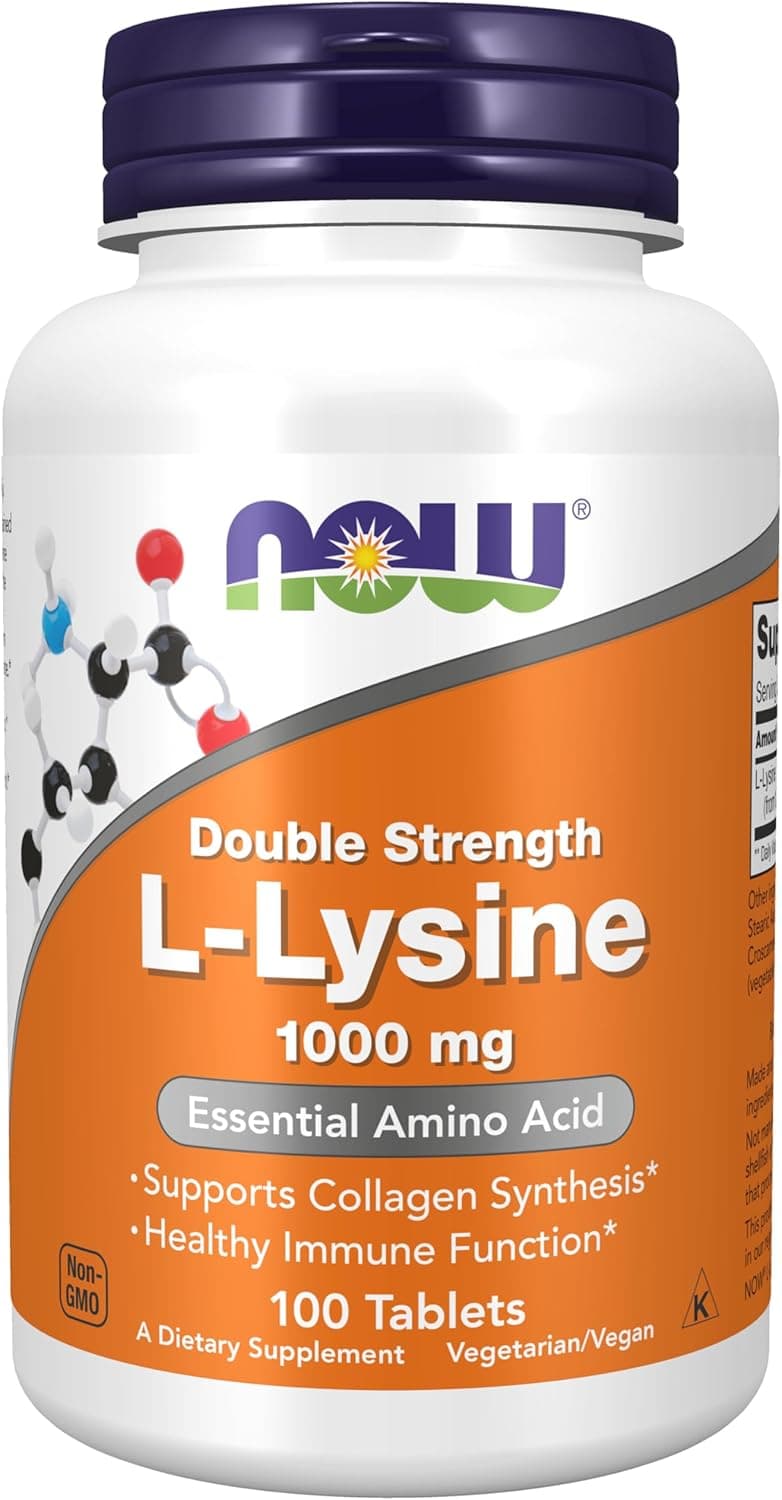
Suppliers
Vendors carrying Lysine, with live product details and codes. Links are affiliate links that support the wiki at no cost to you.
Amazon
Lysine
Research
- 1978first citedFailure of lysine treatment in recurrent herpes simplex labialis
- 2015most recentInterventions for prevention of herpes simplex labialis (cold sores on the lips)
- 1.Failure of lysine treatment in recurrent herpes simplex labialis
- 2.Failure of lysine in frequently recurrent herpes simplex infection. Treatment and prophylaxis
- 3.Interventions for prevention of herpes simplex labialis (cold sores on the lips)
3 listed here; entry last updated August 2026
Reviews
My notesprivate to this device
FAQ
Does lysine really help cold sores?
For many people it reduces frequency, especially taken consistently; results vary though.
Why avoid arginine with cold sores?
The virus favors arginine, so tilting the balance toward lysine can help suppress it.
Do I need to supplement if I eat meat?
Probably not; animal proteins are rich in lysine.
Can I take it long-term?
Modest doses appear fine; very high doses over long periods are less studied.
Empty stomach or with food?
Empty stomach is preferred for cold sore prevention to improve uptake.
Adverse effects
- Digestive upset such as nausea or diarrhea at high supplemental intake
- Caution advised with significant kidney impairment
Notes and cautions
- Generally well tolerated from food