
spec sheet12 rows
Huperzine A is a naturally occurring alkaloid isolated from the Chinese club moss Huperzia serrata, a plant long used in traditional Chinese medicine. It is a potent, selective, and long-acting reversible inhibitor of acetylcholinesterase, and it additionally acts as a non-competitive antagonist of the NMDA glutamate receptor at one of the polyamine binding sites, a combination that has made it of interest for memory, dementia, and neuroprotection. In China it is used as an approved drug, whereas in the United States it is sold as a dietary supplement.
- An approved memory drug in China, sold as a supplement here
- Keeps acetylcholine high for hours, the memory neurotransmitter
- Noticeably sharper recall and focus from microgram doses
- Also blocks NMDA at the polyamine site, a neuroprotective angle
- Real clinical trials behind it, rare on a supplement shelf
- Long acting; a few days on and off is enough
- Nausea
- Stomach upset or diarrhea
- Muscle twitching
Overview
Huperzine A is a Lycopodium alkaloid, more specifically a sesquiterpene alkaloid, first isolated in 1983 from the firmoss Huperzia serrata, a club moss traditionally used in Chinese folk medicine and known by names such as qian ceng ta [1]. It also occurs in smaller amounts in other Huperzia species [1]. The purified compound is valued for its ability to enter the brain and act on the cholinergic system.
Its defining pharmacological property is potent, highly selective, and reversible inhibition of acetylcholinesterase, the enzyme that breaks down the neurotransmitter acetylcholine [1][3]. By slowing this breakdown, huperzine A raises acetylcholine levels in the brain, an action that places it in the same broad category as the cholinesterase-inhibiting drugs used for Alzheimer's disease [3]. It also crosses the blood-brain barrier readily and shows a relatively long duration of action [4].
Most clinical research has centered on cognitive disorders. Systematic reviews of randomized trials, many conducted in China, have reported that huperzine A can improve measures of cognition, daily functioning, and global clinical status in people with Alzheimer's disease, while consistently cautioning that the methodological quality of most trials was poor and the findings should be viewed with care [2][3]. A Cochrane review reached a similar conclusion, noting apparent benefits but judging the evidence insufficient to make firm recommendations [3]. Interest has also extended to vascular dementia and to healthy cognition, though robust data in non-dementia settings are limited [2].
Beyond acetylcholinesterase inhibition, huperzine A has been described as a weak antagonist at the NMDA glutamate receptor and as having neuroprotective properties in laboratory models, including protection of cells against various forms of injury [1]. These properties have prompted investigation of the compound as a possible protective pretreatment against organophosphate nerve-agent poisoning [1]. Such uses remain experimental.
Regulatory status differs by country: huperzine A is approved and used as a pharmaceutical for memory disorders in China, whereas in the United States and many other markets it is sold as an over-the-counter dietary supplement rather than a licensed drug [1]. Reported side effects are generally mild and reflect its cholinergic activity, including nausea, gastrointestinal upset, and, less commonly, muscle twitching or excess salivation [3]. It is available as isolated huperzine A in capsules and tablets and as club moss extracts standardized to a stated huperzine A content.

Mechanism
Huperzine A's principal mechanism is inhibition of , the enzyme responsible for degrading the neurotransmitter in the cleft [1][3]. It binds the enzyme in a potent, highly selective, and reversible manner, and because it competes with the natural substrate, its blockade is described as linearly competitive [3]. By preventing the breakdown of , huperzine A prolongs and amplifies cholinergic neurotransmission, which is thought to underlie its effects on memory and attention and its rationale in Alzheimer's disease, a condition marked by loss of cholinergic neurons [3].
The compound crosses the and has a comparatively long elimination profile, features that support central activity [4]. In addition to its cholinergic action, huperzine A acts as a weak of the subtype of receptor, which may limit excitotoxic damage from excessive glutamate signaling, and laboratory studies attribute to it neuroprotective effects against , beta-amyloid toxicity, and ischemia [1]. These additional actions have been proposed to complement its symptomatic cholinergic effects, though their clinical significance is not established [1].
receptor fingerprint
inhibits
receptorsnon-competitive antagonist
Mitochondria / beta-amyloid stressprotects against
Dosingtypical ranges, not medical advice
interested in protocols and clinical dosages? make an account to see them! ^_^
Safetyrisks and cautions, not medical advice
Huperzine A is legal and widely sold as a supplement in most countries; it isn't scheduled. Avoid it if you have a seizure disorder (it can lower the seizure threshold through its cholinergic action), asthma or COPD (it can increase bronchial secretions and tighten airways via muscarinic activation), a slow heart rate, or heart conduction issues. Stacking it with other cholinesterase inhibitors (donepezil, rivastigmine, galantamine) risks piling on cholinergic toxicity (slow heart rate, drooling, muscle weakness, fainting). Anticholinergic drugs like diphenhydramine or scopolamine will cancel it out. And because it hangs around for about 10 to 14 hours, taking it every day without cycling builds up and tips you into cholinergic excess; this is the one to cycle.
History
Huperzine A was isolated in the 1980s by Chinese scientists from Huperzia serrata, a club moss known in traditional Chinese medicine as Qian Ceng Ta and used for centuries for ailments including swelling, bruising, poisoning and memory complaints. Chinese pharmacologists identified it as a reversible, potent and selective acetylcholinesterase inhibitor and advanced it through clinical evaluation, and it became available in China as a treatment aimed at Alzheimer's disease and age-related memory decline. In the West it did not follow a drug-approval path but instead spread as a dietary supplement and nootropic, sold as either a plant extract or synthesized material. It has continued to be studied for cognitive and neuroprotective effects, including US-based Alzheimer's trials, without gaining formal drug approval outside China.
Subjective profileweighing the evidence above
Genuinely potent for something sold as a supplement, with real clinical work behind it, and worth a trial for memory and focus. Respect the long half-life: cycle a few days on and off rather than dosing daily, and avoid it entirely with a seizure disorder, asthma, COPD or a slow heart rate.
Where to buy
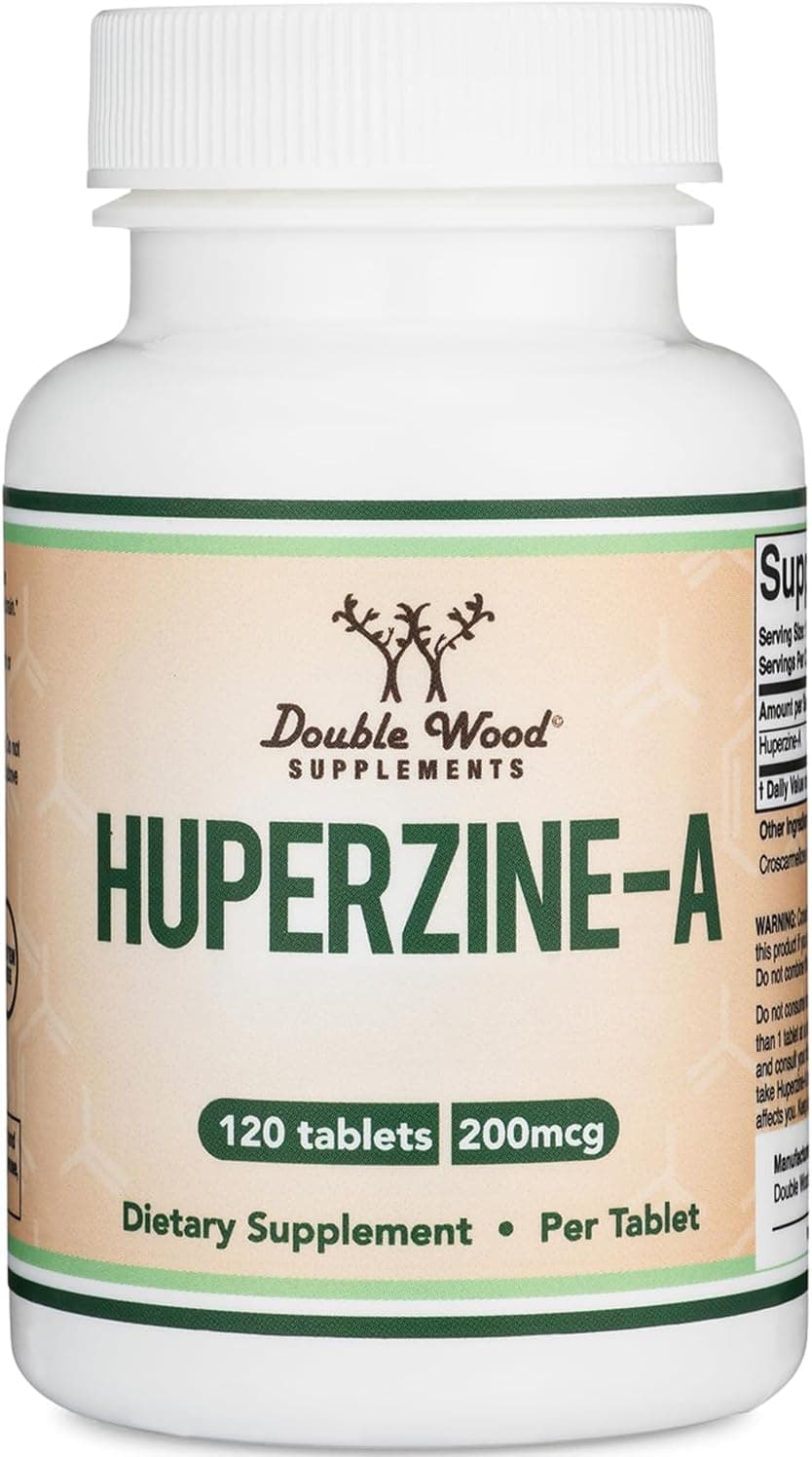
1 other outlet

Suppliers
Vendors carrying Huperzine A, with live product details and codes. Links are affiliate links that support the wiki at no cost to you.
Amazon
Huperzine A
iHerb
Huperzine A
Research
- 1991first cited[Drug evaluation of huperzine A in the treatment of senile memory disorders]
- 2002most active year4 papers
- 2013meta-analysisHuperzine A for Alzheimer's disease: a systematic review and meta-analysis of randomized clinic…
- 2020most recentDifferent Doses of Pharmacological Treatments for Mild to Moderate Alzheimer's Disease: A Bayes…
- 1.The pharmacology and therapeutic potential of (-)-huperzine A
- 2.Huperzine A for Alzheimer's disease: a systematic review and meta-analysis of randomized clinical trials
- 3.Huperzine A for Alzheimer's disease.
- 4.Pharmacokinetics of huperzine A following oral administration to human volunteers
- 5.Structure of acetylcholinesterase complexed with the nootropic alkaloid, (-)-huperzine A
- 6.X-ray structures of Torpedo californica acetylcholinesterase complexed with (+)-huperzine A and (-)-huperzine B: structural evidence for an active site rearrangement
- 7.Huperzine A, a nootropic alkaloid, inhibits N-methyl-D-aspartate-induced current in rat dissociated hippocampal neurons
- 8.Spermidine antagonizes the inhibitory effect of huperzine A on [3H]dizocilpine (MK-801) binding in synaptic membrane of rat cerebral cortex
- 9.A phase II trial of huperzine A in mild to moderate Alzheimer disease
- 10.Efficacy of tablet huperzine-A on memory, cognition, and behavior in Alzheimer's disease
- 11.[Clinical efficacy and safety of huperzine Alpha in treatment of mild to moderate Alzheimer disease, a placebo-controlled, double-blind, randomized trial]
- 12.[Drug evaluation of huperzine A in the treatment of senile memory disorders]
18 listed here; entry last updated August 2026
Reviews
My notesprivate to this device
FAQ
How does it raise acetylcholine?
It inhibits acetylcholinesterase, the enzyme that breaks down acetylcholine. This keeps more of the neurotransmitter available.
Why is cycling recommended?
Because it's potent and long-acting, effects can build up with continuous use. Many people take periodic breaks.
What causes the vivid dreams?
Higher acetylcholine activity can influence REM sleep and dreaming. Some users report unusually vivid dreams.
Is it a natural compound?
It's derived from a club moss plant, Huperzia serrata. It's sold as a purified extract.
Adverse effects
- Nausea
- Stomach upset or diarrhea
- Muscle twitching
- Excess salivation
- Slowed heart rate at high intake