
spec sheet11 rows
HGH Fragment 176-191 is the C-terminal lipolytic region of human growth hormone, isolated to keep the fat-burning action while shedding the hormone's growth and blood-sugar effects [1][2]. In obese animal models this fragment, developed clinically as AOD9604, reduces body weight and body fat, boosts fat oxidation, and stimulates lipolysis without raising blood glucose or acting through the growth hormone receptor [1][2][3]. It is this clean separation of fat metabolism from classic GH signaling that has made the fragment a focused research tool for obesity [3][4].
- The fat-burning region of growth hormone, isolated
- Torches stored fat in research models
- Leaves IGF-1 untouched in studies
- No reported hit to insulin sensitivity
- Fat oxidation up, fat storage down
- Developed clinically as AOD9604
- Injection site reactions are possible with subcutaneous use
Overview
HGH Fragment 176-191 is a synthetic peptide corresponding to the C-terminal (carboxy-terminal) region of the human growth hormone (hGH) molecule, spanning roughly amino acids 176 to 191. This short segment was identified as the part of growth hormone responsible for its lipolytic, or fat-mobilizing, activity, distinct from the regions that drive skeletal growth and insulin-like actions. The best-studied representative of this lipolytic domain is AOD9604, a stabilized analog carrying an added N-terminal tyrosine, developed by researchers at Monash University and later advanced as a candidate anti-obesity drug [1][2][3].
The defining scientific interest in the fragment is that it appears to reproduce growth hormone's effect on fat metabolism while avoiding its other consequences. In obese (ob/ob) and Zucker rodent models, chronic treatment with the fragment reduced body weight gain, increased in vivo fat oxidation, and raised plasma glycerol, an index of lipolysis, yet, unlike intact hGH, it did not cause hyperglycemia or suppress insulin secretion [1][3]. Notably, the fragment does not compete for the growth hormone receptor and does not stimulate cell proliferation the way full-length hGH does, supporting the idea that growth hormone can behave as a pro-hormone whose fragments carry separable activities [1].
Because of this profile, the fragment attracted attention as a potential obesity therapeutic and reached clinical development under the AOD9604 designation, appearing in reviews of anti-obesity drug pipelines [4][5]. It has also been explored beyond fat loss, including intra-articular use in an animal osteoarthritis model where it was associated with enhanced cartilage regeneration [6]. AOD9604 is recognized in sports anti-doping frameworks and is monitored by mass-spectrometry-based testing methods, reflecting its status as a performance-adjacent peptide [7]. It is not an approved medicine and is handled as a research peptide.
- AOD9604 was designed to reproduce only the final sixteen amino acids of growth hormone, the part responsible for fat metabolism, while deliberately leaving out the growth-promoting portion.
- In obese Zucker rats, a daily oral dose reduced body-weight gain by more than 50 percent without the harm to insulin sensitivity caused by intact growth hormone.
Mechanism
HGH Fragment 176-191 works by isolating the fat-metabolizing function of growth hormone from its growth-promoting and metabolic side effects. Full-length human growth hormone has both anabolic actions, mediated largely through the GH receptor and downstream , and a separate lipolytic action attributed to its C-terminal region. The fragment reproduces this C-terminal lipolytic activity, stimulating the breakdown of stored triglycerides and increasing the oxidation of fat for energy, while measurements show it does not bind the growth hormone receptor or trigger the cell proliferation that intact hGH produces [1]. This receptor-independence is the mechanistic key: it explains why the can promote fat loss without the resistance and elevated blood glucose that accompany growth hormone itself [1][3].
One proposed pathway involves the beta-3 receptor, the dominant lipolytic receptor on fat cells. Chronic treatment with growth hormone or the fragment raises the expression of beta-3 adrenergic receptor RNA in obese mice back toward the levels seen in lean animals, which may enhance lipolytic sensitivity. However, the fragment's lipolytic and fat-oxidizing effects are not exerted directly through the beta-3 receptor, because the still increased energy expenditure and fat oxidation in beta-3 receptor knock-out mice, pointing to additional mechanisms [2].
The functional benefits observed follow from this biology. In obese Zucker rats, treatment with the fragment reduced body weight gain by more than 50 percent relative to controls and increased lipolytic activity in adipose tissue, all without the adverse effect on sensitivity seen with intact hGH as measured by euglycemic clamp [3]. In obese mice, the fragment increased fat oxidation and stimulated lipolysis while reducing body weight gain, again sparing glucose control [1]. Together these results define the fragment's appeal: a targeted lipolytic effect that mimics one specific action of growth hormone while leaving its growth and diabetogenic signaling largely untouched [1][3].
receptor fingerprint
Adipocyte lipolysis pathwaysStimulates breakdown of stored fat
Lipogenesis in adipose tissueReduces new fat storage
Beta-3 signalingUpregulates fat-mobilizing receptors
Safetyrisks and cautions, not medical advice
HGH Fragment 176-191 is a synthetic fragment of growth hormone marketed for fat loss; robust human safety data are lacking, and most claims (including that it spares GH's effects on blood sugar) come from limited or preclinical work. Reported effects are generally mild, such as injection-site reactions, but long-term safety and the purity of research-grade material are uncharacterized. It should be regarded as an unapproved research peptide.
History
HGH Fragment 176-191 corresponds to the last sixteen amino acids at the C-terminal end of human growth hormone, the region long associated with the hormone's fat-metabolizing activity. The stabilized synthetic analogue known as AOD9604 was characterized by Frank Ng and colleagues at Monash University in Australia, who reported its metabolic actions in obese Zucker rats in 2000 [1]. The compound was subsequently developed by the Australian company Metabolic Pharmaceuticals as an orally administered anti-obesity candidate and advanced into human clinical trials during the 2000s. Although it did not reproduce its striking animal weight-loss results in those later human trials, AOD9604 was granted generally-recognized-as-safe (GRAS) status in the United States and remains a focused research tool for the lipolytic actions of growth hormone.
Reputation
The fragment is regarded as one of the more elegant attempts to isolate a single useful action of growth hormone; the fat-burning C-terminal signal, while leaving behind the growth-promoting and blood-sugar effects of the intact hormone. Researchers value the clean mechanistic story, since measurements show it stimulates lipolysis and fat oxidation without binding the growth hormone receptor or impairing insulin sensitivity. In peptide and body-composition circles it is discussed favorably as a targeted approach to fat loss. Honesty requires noting the main limitation: the most impressive results come from obese-animal models, and human trials did not confirm meaningful weight loss compared with placebo, so its appeal rests more on its clever biology than on proven clinical efficacy.
Subjective profileweighing the evidence above
Developed as AOD9604 and never approved, which tells you most of what the human data looks like. The mechanism is elegant and the animal fat-loss results are real, but robust human evidence is lacking and research-grade purity is uncharacterized, so the money goes further almost anywhere else.
Where to buy



Suppliers
Vendors carrying HGH Fragment 176-191, with live product details and codes. Links are affiliate links that support the wiki at no cost to you.
| supplier | size | price | $/mg |
|---|---|---|---|
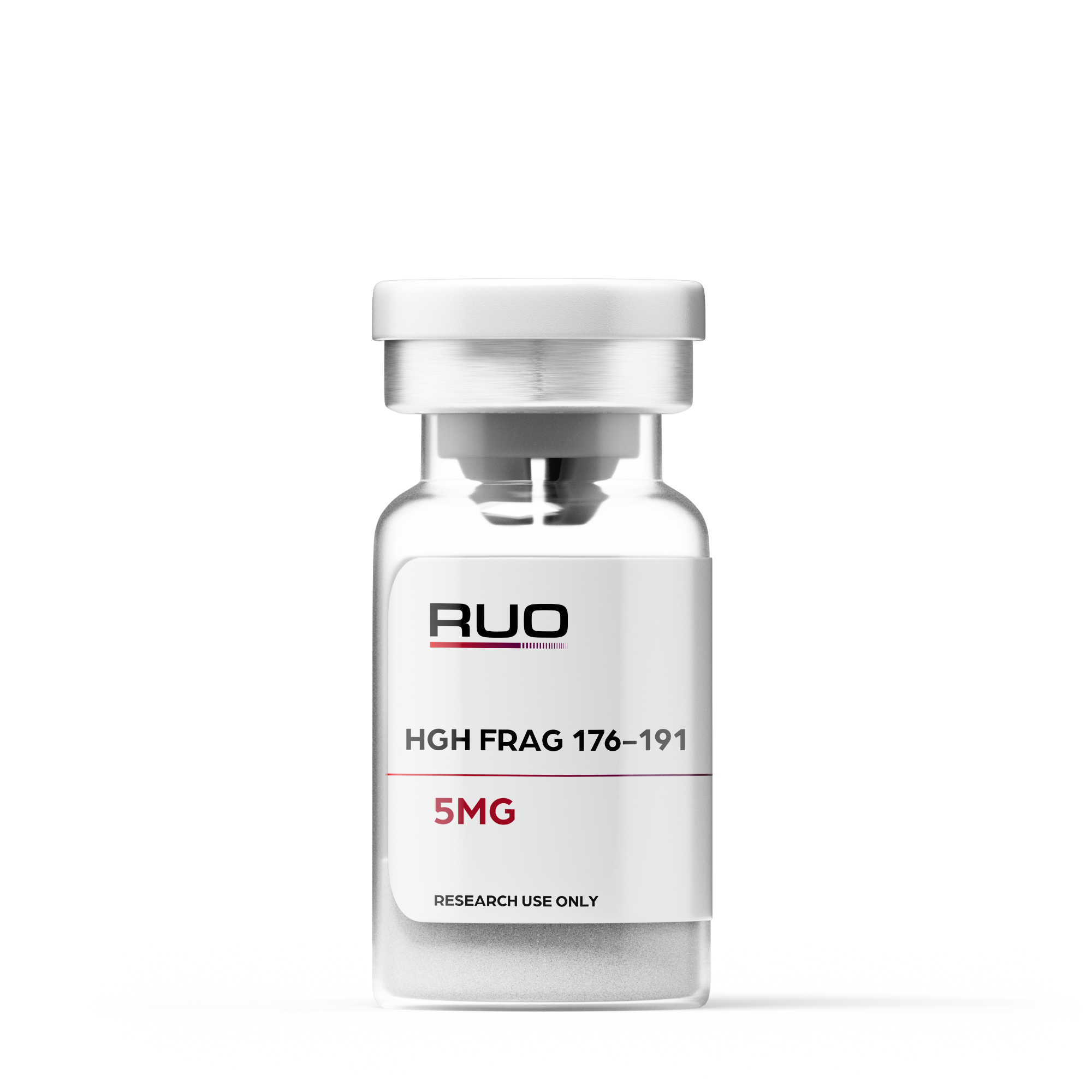
| RUOlowest | 5mg | $32.00 | $6.40/mg |
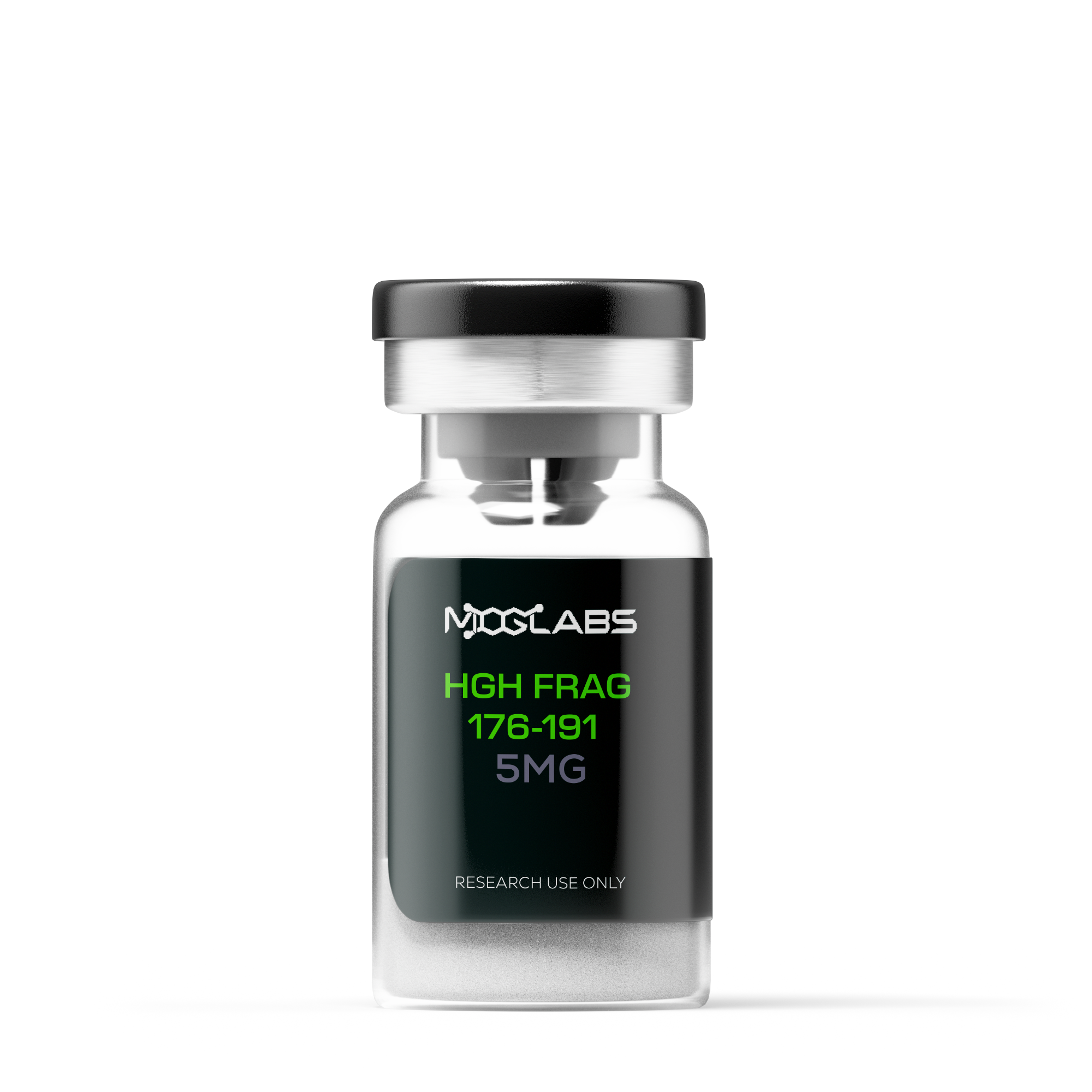
| Moglabs | 5mg | $38.00 | $7.60/mg |
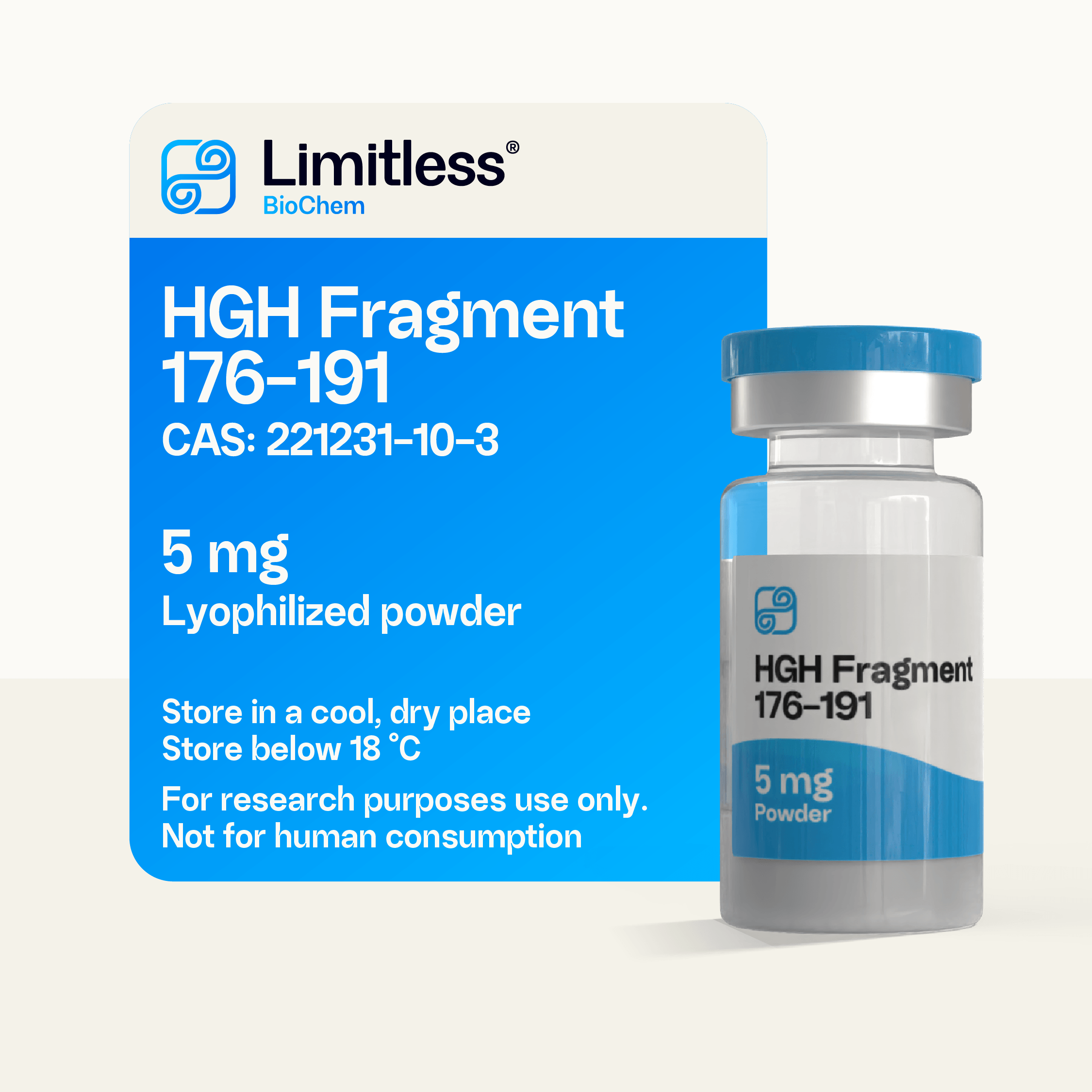
| Limitless Biochem | 5mg | $53.50 | $10.70/mg |
RUO
HGH Fragment 176-191
Moglabs
HGH Fragment 176-191
Kimera Chems
HGH Fragment 176-191
Limitless Biochem🌐
HGH Fragment 176-191
Research
- 2000first citedMetabolic studies of a synthetic lipolytic domain (AOD9604) of human growth hormone.
- 2015most recentEffect of Intra-articular Injection of AOD9604 with or without Hyaluronic Acid in Rabbit Osteoa…
- 1.Increase of fat oxidation and weight loss in obese mice caused by chronic treatment with human growth hormone or a modified C-terminal fragment.
- 2.The effects of human GH and its lipolytic fragment (AOD9604) on lipid metabolism following chronic treatment in obese mice and beta(3)-AR knock-out mice.
- 3.Metabolic studies of a synthetic lipolytic domain (AOD9604) of human growth hormone.
- 4.Obesity drugs in clinical development.
- 5.Current updates in the medical management of obesity.
- 6.Effect of Intra-articular Injection of AOD9604 with or without Hyaluronic Acid in Rabbit Osteoarthritis Model.
- 7.Detecting peptidic drugs, drug candidates and analogs in sports doping: current status and future directions.
7 listed here; entry last updated August 2026
Reviews
My notesprivate to this device
FAQ
How is this different from full growth hormone?
It is only the fat-metabolism tail of the molecule, so in research it drives lipolysis without the growth, IGF-1 or blood-sugar effects of whole GH.
Is it the same as AOD-9604?
Closely related; AOD-9604 is an optimized, more stable analog built from this natural fragment.
Does it actually work in people?
Human data is thin and the related analog failed to hit weight-loss endpoints in trials, so claims should be read cautiously.
Limitations of the evidence
- Unlike full growth hormone, it did not raise blood glucose in animal studies
- Development as an obesity drug did not result in approval
Adverse effects
- Injection site reactions are possible with subcutaneous use
Notes and cautions
- Generally reported as well tolerated in the studies conducted
- Not an approved medicine, and long-term human safety data are limited