
spec sheet12 rows
Fenbendazole is a benzimidazole anthelmintic with a decades-long record of safe, effective, low-cost deworming in animals, and it has become one of the most talked-about drug-repurposing stories in cancer biology. Its ability to bind tubulin and destabilize the microtubule scaffolding that dividing cells depend on has driven a genuinely active body of preclinical cancer research across cell lines and animal models. For those drawn to bold, well-documented repurposing candidates, fenbendazole is remarkably accessible and sits at the center of an exciting investigational field.
- Decades of proven, low cost deworming power in animals
- Strong safety record across its long established veterinary use
- Binds tubulin and destabilizes the scaffolding dividing cells rely on
- One of the most talked about drug repurposing stories in biology
- An active preclinical research field across cell lines and animal models
- Remarkably cheap and easy to find
- Liver injury has been reported in people self-medicating
Overview
Fenbendazole is a broad-spectrum benzimidazole carbamate anthelmintic, chemically methyl N-(6-phenylsulfanyl-1H-benzimidazol-2-yl)carbamate, introduced for veterinary use in the 1970s. It carries an extensive safety and tolerability record as a dewormer in dogs, livestock, and other animals, and its low cost and easy availability are central to its popularity [4].
As an antiparasitic the compound works by inhibiting microtubule polymerization in susceptible worms, which also blocks their glucose uptake and depletes their glycogen and ATP stores [4]. That same anti-tubulin activity is the reason fenbendazole crossed over into oncology research; laboratory work shows it binds mammalian tubulin with moderate affinity and disrupts the mitotic spindle in cancer cells [1].
Its research applications now span a wave of preclinical cancer studies. Investigators have reported that fenbendazole kills cancer cells by acting on several pathways at once, including microtubule disruption, mitochondrial translocation of p53, and impaired glucose metabolism [1]; reviews of benzimidazole anthelmintics catalog antitumor signals such as apoptosis, cell-cycle arrest, and anti-angiogenesis across many tumor types [2]; and focused studies have documented G2/M arrest and mitotic catastrophe in canine melanoma cells [3]. Public attention grew sharply after widely shared anecdotal cancer accounts, a phenomenon the literature has itself examined under the label of fenbendazole fever [4].
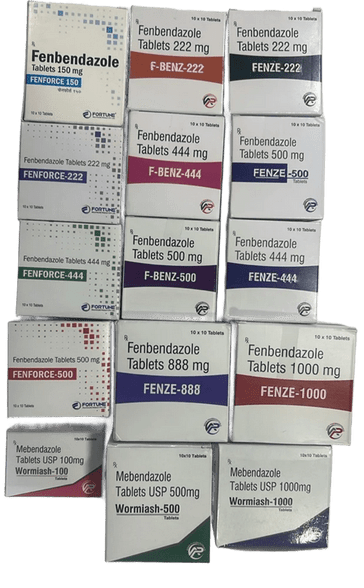
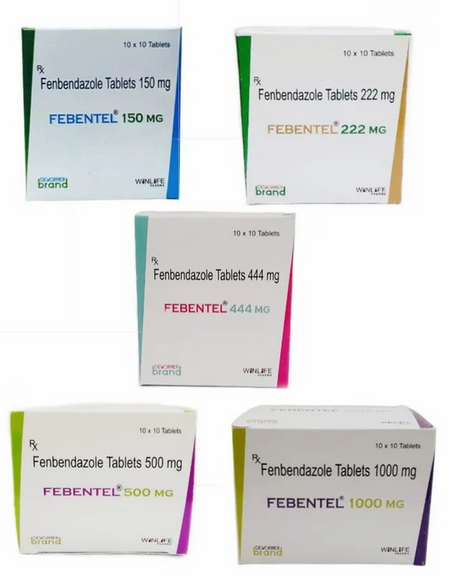
Importantly, fenbendazole is a veterinary product with no approved human indication, and no controlled human trials have established anticancer benefit. Its human safety profile is not well mapped, and at least one case of drug-induced liver injury has been reported in a patient self-administering it after reading social-media reports [5]. It is sold as tablets, granules, and oral suspensions intended for animals.
- Fenbendazole has been a workhorse veterinary dewormer since the 1970s, with a safety margin wide enough that it is used across species from fish to elephants.
- Its cancer chapter began by accident, when research mice receiving the drug for pinworms showed altered growth of implanted tumors.
- It shares a tubulin-targeting logic with established human chemotherapy agents, though it binds mammalian tubulin far more weakly than those drugs.
Mechanism
The excitement around fenbendazole rests on a simple, well-supported idea; a cheap, low-toxicity dewormer that also interferes with the machinery cancer cells rely on to divide. Its established benefit is genuine deworming, achieved by binding parasite beta-tubulin and collapsing the worm's microtubule network and energy supply [4]. Its investigational appeal is that the same class of action extends, in the laboratory, to mammalian cancer cells.
In cell and animal studies fenbendazole behaves as a moderate microtubule-destabilizing agent; it shows measurable affinity for mammalian tubulin and is cytotoxic to human cancer cells at micromolar concentrations [1]. Beyond disrupting the spindle, it triggers translocation of the tumor-suppressor p53 and suppresses glucose uptake by down-regulating GLUT transporters and the glycolytic enzyme hexokinase II, cutting off a fuel source many tumors depend on [1]. Fed orally, it also slowed the growth of human tumor xenografts in nude mice [1]. Reviews describe a convergent set of antitumor actions shared across benzimidazoles, including apoptosis induction and G2/M cell-cycle arrest [2], and mechanistic work in canine melanoma lines traced that arrest to mitotic slippage followed by post-slippage cell death [3].
The honest limitation is that every one of these anticancer findings is preclinical; they come from cultured cells and animal models rather than controlled human trials, and human benefit remains unproven [4]. The compound's real-world track record is as an effective, well-tolerated veterinary antiparasitic, and its oncology story, while legitimately active and fascinating, is still research rather than medicine [5].
receptor fingerprint
Parasite beta-tubulinBinds and blocks microtubule formation in worms
Mammalian tubulin / microtubulesModerate destabilization in cancer cell studies
Glucose uptake and GLUT transportersReduces glucose uptake in cancer cells in the lab
Dosingtypical ranges, not medical advice
interested in protocols and clinical dosages? make an account to see them! ^_^
Safetyrisks and cautions, not medical advice
Fenbendazole is a veterinary benzimidazole antiparasitic with no approval or established safety data for human use; its off-label use for other purposes is unsupported by clinical trials. Case reports have linked human self-administration to drug-induced liver injury, and gastrointestinal upset is plausible from the class. Because human dosing, purity, and long-term effects are uncharacterized, it should be regarded as experimental and not a proven therapy.
History
Fenbendazole is a benzimidazole anthelmintic introduced by the German pharmaceutical company Hoechst in the mid-1970s for veterinary deworming. Marketed under names such as Panacur and Safe-Guard, it became one of the most widely used broad-spectrum dewormers in livestock, companion animals, and laboratory rodent colonies, valued for its exceptionally wide safety margin. Its potential anticancer activity was first noticed incidentally in the laboratory, when research mice given the drug to control pinworm infestations showed unexpected effects on the growth of implanted tumors, prompting formal investigation.
Subsequent cell and animal studies through the 2000s and 2010s characterized it as a moderate microtubule-destabilizing agent with measurable affinity for mammalian tubulin. Public interest surged in the late 2010s following widely shared anecdotal reports of cancer benefit, making it one of the most discussed drug-repurposing stories of the decade. To date, its anticancer use in humans remains investigational and unapproved.
Reputation
Fenbendazole enjoys an unusually strong reputation on two very different fronts; as a genuinely effective, low-cost, well-tolerated veterinary dewormer, and as one of the most talked-about repurposing candidates in cancer biology. Its established antiparasitic track record spans decades and countless animals, giving it a well-documented safety profile that draws people to the more speculative story.
In the laboratory it shows a legitimately active and mechanistically rich set of antitumor actions, disrupting the mitotic spindle, triggering p53, and cutting off the glucose supply that many tumors depend on. For those fascinated by bold, accessible repurposing candidates, it sits at the center of a genuinely exciting investigational field. Intellectual honesty requires stressing that every anticancer finding to date comes from cultured cells and animal models; human benefit remains unproven, and its real, approved role is deworming.
Subjective profileweighing the evidence above
Interesting preclinical biology, but nobody should be self-dosing it for cancer. There is no human anticancer evidence, no human dosing, and case reports of drug-induced liver injury in people who tried. A cheap, safe animal dewormer is not the same thing as a cancer drug.
Where to buy


Suppliers
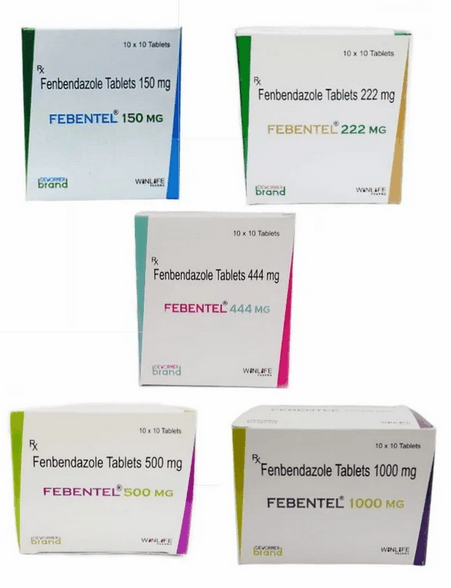
Vendors carrying Fenbendazole, with live product details and codes. Links are affiliate links that support the wiki at no cost to you.
RUPharma🌐
Fenbendazole
RUPharma🌐
Fenbendazole
Kimera Chems
Fenbendazole
Research
- 2018first citedFenbendazole acts as a moderate microtubule destabilizing agent and causes cancer cell death by…
- 2022most recentExceptional Repositioning of Dog Dewormer: Fenbendazole Fever
- 1.Fenbendazole acts as a moderate microtubule destabilizing agent and causes cancer cell death by modulating multiple cellular pathways
- 2.The Antitumor Potentials of Benzimidazole Anthelmintics as Repurposing Drugs
- 3.G2/M arrest and mitotic slippage induced by fenbendazole in canine melanoma cells
- 4.Exceptional Repositioning of Dog Dewormer: Fenbendazole Fever
- 5.Drug-Induced Liver Injury in a Patient with Nonsmall Cell Lung Cancer after the Self-Administration of Fenbendazole Based on Social Media Information
- 6.Benzimidazoles Downregulate Mdm2 and MdmX and Activate p53 in MdmX Overexpressing Tumor Cells
6 listed here; entry last updated August 2026
Reviews
My notesprivate to this device
FAQ
Does fenbendazole cure cancer?
There is no human evidence that it does. The excitement comes from lab and mouse studies plus viral anecdotes; those do not establish that it treats cancer in people, and it is not approved for it.
Is it safe to take?
It has a good safety record as an animal dewormer, but that does not translate to human off-label anticancer use, where liver injury has been reported. This is not a low-risk experiment.
Why is it so popular online?
A widely shared personal story and some intriguing petri-dish findings spread fast. Popularity is not proof; the actual clinical evidence in humans is missing.
Limitations of the evidence
- No established human anticancer benefit yet
- Human dosing and drug interactions are not well mapped
Adverse effects
- Liver injury has been reported in people self-medicating
Notes and cautions
- A veterinary product, so off-label human use carries real risk