
spec sheet7 rows
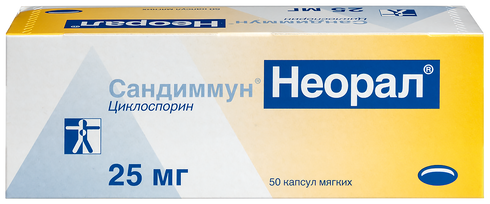
Ciclosporin is a calcineurin inhibiting immunosuppressant used to stop transplant rejection and to control severe psoriasis, atopic dermatitis and rheumatoid arthritis when other treatments have failed.
- Calne's 1978 Lancet series of seven cadaveric renal allografts was the first human use of ciclosporin and already identified both its efficacy and its nephrotoxicity and hepatotoxicity in the same paper [1]; it opened the modern transplant era.
- Ciclosporin is a prodrug of a protein-protein interface: Handschumacher identified cyclophilin as its cytosolic receptor [2], and Liu showed the resulting complex, not the drug alone, inhibits calcineurin [4].
- Because ciclosporin-cyclophilin and tacrolimus-FKBP12 converge on the same phosphatase, the two drugs share a mechanism and a nephrotoxicity profile despite unrelated chemistry [4].
- Myers' 1984 NEJM report of cyclosporine-associated chronic nephropathy in cardiac transplant recipients established that the renal injury is structural and often irreversible, not merely a haemodynamic effect [3].
- Lichtiger's small NEJM randomised trial showed intravenous ciclosporin rescued 9 of 11 patients with steroid-refractory severe ulcerative colitis versus 0 of 9 on placebo, making it a colectomy-sparing rescue option [5].
- Modified (microemulsion) and non-modified formulations are not bioequivalent and cannot be substituted milligram for milligram without supervision and trough monitoring.
Mechanism
It binds cyclophilin, and that complex inhibits calcineurin so NFAT never reaches the nucleus to drive interleukin 2 transcription. T cell activation is blunted at the first step rather than downstream.
receptor fingerprint
Cyclophilin A (PPIA, peptidyl-prolyl cis-trans isomerase A)High-affinity binding partner; forms the pharmacologically active drug-immunophilin complex
Calcineurin (PPP3CA/PPP3R1, Ca2+/calmodulin-dependent protein phosphatase 2B)Inhibited by the ciclosporin-cyclophilin complex
P-glycoprotein (ABCB1) and CYP3A4Inhibitor and substrate
Cyclophilin D and the permeability transition poreInhibitor
NFAT (nuclear factor of activated T cells) dephosphorylation and nuclear importBlocked downstream of calcineurin
Safetyrisks and cautions, not medical advice
systemic transplant immunosuppressant that requires trough blood level monitoring; it is nephrotoxic, raises blood pressure, and leaves the user open to opportunistic infection and lymphoma
Subjective profileweighing the evidence above
Treatment is guided by blood level rather than by symptom, and that fact settles most questions about who should be handling it. Too little loses a transplanted organ, too much destroys kidneys, and the window between is narrow enough that troughs are checked repeatedly; grapefruit juice and a long list of ordinary medicines shift that level substantially. The immunosuppression is deep, so opportunistic infection and lymphoma belong in the long term picture rather than in a footnote. Genuinely effective in severe psoriasis and atopic dermatitis, and still a specialist drug with a monitoring schedule attached rather than something to obtain privately.
Resources
No suppliers are provided for compounds like this. This entry is here for reference.
Research
- 1978first citedCyclosporin A in patients receiving renal allografts from cadaver donors
- 1994most recentCyclosporine in severe ulcerative colitis refractory to steroid therapy
- 1.Cyclosporin A in patients receiving renal allografts from cadaver donors
- 2.Cyclophilin: a specific cytosolic binding protein for cyclosporin A
- 3.Cyclosporine-associated chronic nephropathy
- 4.Calcineurin is a common target of cyclophilin-cyclosporin A and FKBP-FK506 complexes
- 5.Cyclosporine in severe ulcerative colitis refractory to steroid therapy
5 listed here; entry last updated August 2026
Reviews
My notesprivate to this device
Notes and cautions
- Ciclosporin carries BOXED WARNINGS: it should be prescribed only by physicians experienced in immunosuppressive therapy, and increased susceptibility to infection and to the development of lymphoma and other neoplasms, particularly skin cancer, may result.
- The label further warns that modified and non-modified formulations are not bioequivalent and must not be interchanged without physician supervision and blood-level monitoring, that psoriasis patients previously treated with PUVA, methotrexate, other immunosuppressants, UVB, coal tar or radiation are at increased risk of skin malignancy, and that renal impairment including structural kidney damage is an expected dose-related effect.
- Hypertension, hyperkalaemia, hypomagnesaemia, hyperlipidaemia, tremor, gingival hyperplasia, hirsutism and a posterior reversible encephalopathy syndrome are common; the intravenous Cremophor EL vehicle can cause anaphylaxis.
- Because it is a CYP3A4 and P-glycoprotein substrate and inhibitor, interactions are numerous and clinically dangerous, and grapefruit juice must be avoided.