
spec sheet7 rows
Zuclopenthixol is a first-generation thioxanthene antipsychotic used for schizophrenia and for agitation and aggression occurring within psychosis.
- Effective for severe psychosis in the right setting
- Control of agitation and aggression occurring within psychosis
- Three esters covering a day, a weekend or weeks
- High potency D1 and D2 antagonism
- A depot injection lasting weeks from one dose
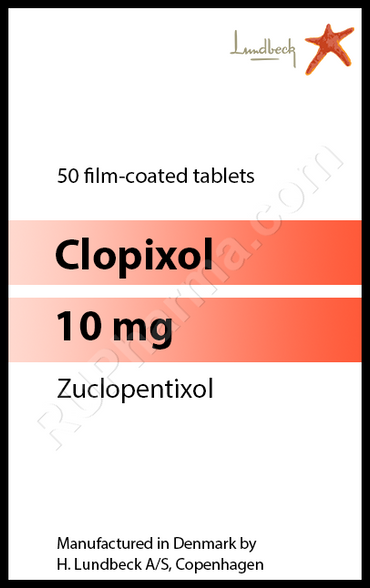
- Zuclopenthixol exists as THREE distinct products that must never be conflated. Zuclopenthixol dihydrochloride is the oral tablet. Zuclopenthixol ACETATE (Clopixol Acuphase) is a short-acting intramuscular preparation whose effect from a single dose lasts only about 72 hours; it is used for acute disturbance, not maintenance. Zuclopenthixol DECANOATE (Clopixol Depot) is a long-acting maintenance depot given every 2-4 weeks (PMID 11686965, PMID 10796607, PMID 26624987).
- The acetate is not a depot and giving it as one is a prescribing error. Cochrane found no evidence it controls aggressive or disorganised behaviour better than standard treatment, no evidence it reduces side effects, and no difference on 'no important improvement' in psychotic symptoms (OR 0.84, 95% CI 0.34-2.05). Its only demonstrated advantage was earlier and more intense sedation at 4 hours in a single study (OR 0.18, 95% CI 0.04-0.93), and it did not avoid the need for additional antipsychotic medication (OR 2.18, 95% CI 0.64-7.42) [2].
- The decanoate is the version with a real maintenance signal: across four trials against other depots, it prevented or postponed relapse with an NNT of 8 (95% CI 5-53) and reduced the need for anticholinergics (NNT 9, 95% CI 5-38), but it caused more adverse effects overall, NNH 5 (95% CI 3-31) [3].
- Against placebo, zuclopenthixol has almost no evidence at all. The 2015 Cochrane review found only 2 studies and 65 participants, both from 1968 and 1972, both testing only the dihydrochloride, and both of very low quality. There are NO placebo-controlled data whatsoever for the acetate or the decanoate [1].
- Zuclopenthixol is the most sedating of 32 antipsychotics in the largest network meta-analysis, with a sedation risk ratio versus placebo of 10.20 (95% CrI 4.72-29.41) [4].
- A real-world audit found high-dose zuclopenthixol acetate prescribing associated with adverse outcomes and led to cessation of its use in the emergency department at the audited service [6].
Mechanism
It is a high-potency at and receptors with additional and alpha-1 blockade. Sustained D2 blockade in the nigrostriatal pathway is what produces the extrapyramidal effects that define the class, and blockade in the tuberoinfundibular pathway raises prolactin. Three esters exist and they behave completely differently: the dihydrochloride is the oral tablet, the acetate marketed as Acuphase gives two to three days of cover from a single intramuscular dose, and the decanoate is a two to four weekly depot.
receptor fingerprint
receptor (DRD2)Antagonist
H1 receptor (HRH1) and alpha-1 adrenoceptor (ADRA1)Antagonist
receptor (DRD1)Antagonist
receptor (HTR2A)Antagonist
Safetyrisks and cautions, not medical advice
a first-generation antipsychotic with a high extrapyramidal burden; acute dystonia, parkinsonism and tardive dyskinesia are the defining risks and neuroleptic malignant syndrome is the rare catastrophic one
Where to buy
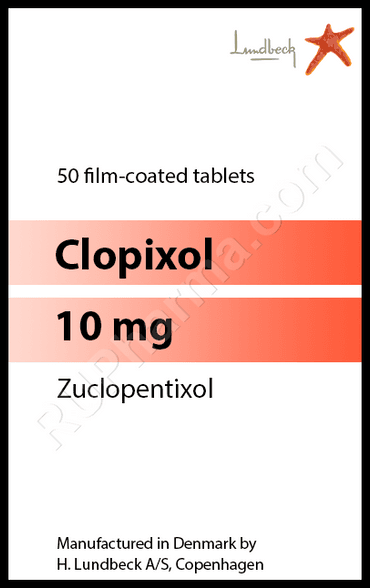
Suppliers
Vendors carrying Zuclopenthixol, with live product details and codes. Links are affiliate links that support the wiki at no cost to you.
RUPharma🌐
Zuclopenthixol
Research
- 1999first citedZuclopenthixol acetate (Clopixol Acuphase) for rapid sedation
- 2015meta-analysisZuclopenthixol versus placebo for schizophrenia
- 2023most recentQuality improvement through audit: Zuclopenthixol acetate prescribing, monitoring and patient o…
- 1.Zuclopenthixol versus placebo for schizophrenia
- 2.Zuclopenthixol acetate in the treatment of acute schizophrenia and similar serious mental illnesses
- 3.Zuclopenthixol decanoate for schizophrenia and other serious mental illnesses
- 4.Comparative efficacy and tolerability of 32 oral antipsychotics for the acute treatment of adults with multi-episode schizophrenia: a systematic review and network meta-analysis
- 5.Pharmacokinetic Characteristics of Long-Acting Injectable Antipsychotics for Schizophrenia: An Overview
- 6.Quality improvement through audit: Zuclopenthixol acetate prescribing, monitoring and patient outcomes in a regional health service
- 7.Zuclopenthixol acetate (Clopixol Acuphase) for rapid sedation
7 listed here; entry last updated August 2026
Reviews
My notesprivate to this device
Notes and cautions
- Zuclopenthixol carries the antipsychotic class warning for increased mortality in elderly patients with dementia-related psychosis.
- Its dominant hazard is profound sedation; the highest of any antipsychotic studied, roughly a tenfold increased risk versus placebo [4]; which is precisely why the acetate is misused as a chemical restraint, and why a health-service audit found high-dose acetate prescribing linked to adverse outcomes and stopped it being given in emergency departments [6].
- As a first-generation, D2-potent thioxanthene it also carries substantial extrapyramidal, tardive dyskinesia, hyperprolactinaemia and neuroleptic malignant syndrome risk, plus alpha-1-mediated orthostatic hypotension.
- The acetate must never be given intravenously; accidental IV administration is documented in the literature [7].
- A course of acetate is typically capped at around 400 mg total with injections no more frequent than every 2-3 days, and it should not be given to a neuroleptic-naive patient.