
spec sheet13 rows
Rifaximin is a semisynthetic, broad-spectrum antibiotic of the rifamycin family that is taken by mouth yet is barely absorbed from the gastrointestinal tract. Because it concentrates within the intestinal lumen while leaving blood levels negligible, it acts almost entirely on gut bacteria. It is used to prevent recurrent hepatic encephalopathy, to treat travelers' diarrhea caused by noninvasive strains of Escherichia coli, and to relieve diarrhea-predominant irritable bowel syndrome, and it is marketed chiefly under the brand name Xifaxan.
- Used to prevent recurrent hepatic encephalopathy
- Treats travelers' diarrhea from noninvasive E. coli strains
- Relieves diarrhea-predominant irritable bowel syndrome
- Stays in the gut with negligible blood levels
- About as well tolerated as antibiotics get
- Few drug interactions, sold as Xifaxan
- Nausea
- Bloating or gas
- Abdominal discomfort
Overview
Rifaximin is an orally administered antibiotic produced by chemical modification of rifamycin, the natural product family that also gives rise to rifampicin. Its defining pharmacological property is extremely low systemic absorption, so that after a tablet is swallowed the drug stays almost entirely within the gut, reaching very high concentrations in the intestinal contents and stool while blood levels remain minimal [2]. This gut-restricted behavior underlies both its therapeutic profile and its favorable tolerability, since little of the compound circulates through the rest of the body [1].
The compound was first approved in Italy in the late 1980s and has since been registered in many countries for a range of gastrointestinal conditions. In the United States it is a prescription-only medicine sold as Xifaxan, with regulatory clearances that expanded over time to cover travelers' diarrhea, reduction in the recurrence of overt hepatic encephalopathy, and irritable bowel syndrome with diarrhea [1]. It is also known under names such as Normix and Zaxine in other markets.
In liver disease, rifaximin is given to lower the burden of ammonia-forming intestinal bacteria and thereby reduce episodes of hepatic encephalopathy, a use supported by randomized trials and meta-analyses that show fewer recurrences and hospitalizations compared with placebo [3]. Research has extended to other complications of cirrhosis, including trials examining whether the drug can prevent bacterial infection in advanced disease, although results here have been mixed [4]. In functional bowel disorders it is used as a short course for diarrhea-predominant irritable bowel syndrome, where it can improve bloating, abdominal discomfort, and stool consistency in a subset of patients [1].
Rifaximin is supplied as oral tablets. Because it exists in several crystalline forms that differ in solubility, the specific polymorph used in a product can influence how much of the drug remains in the gut, a factor relevant to how it is formulated [2].
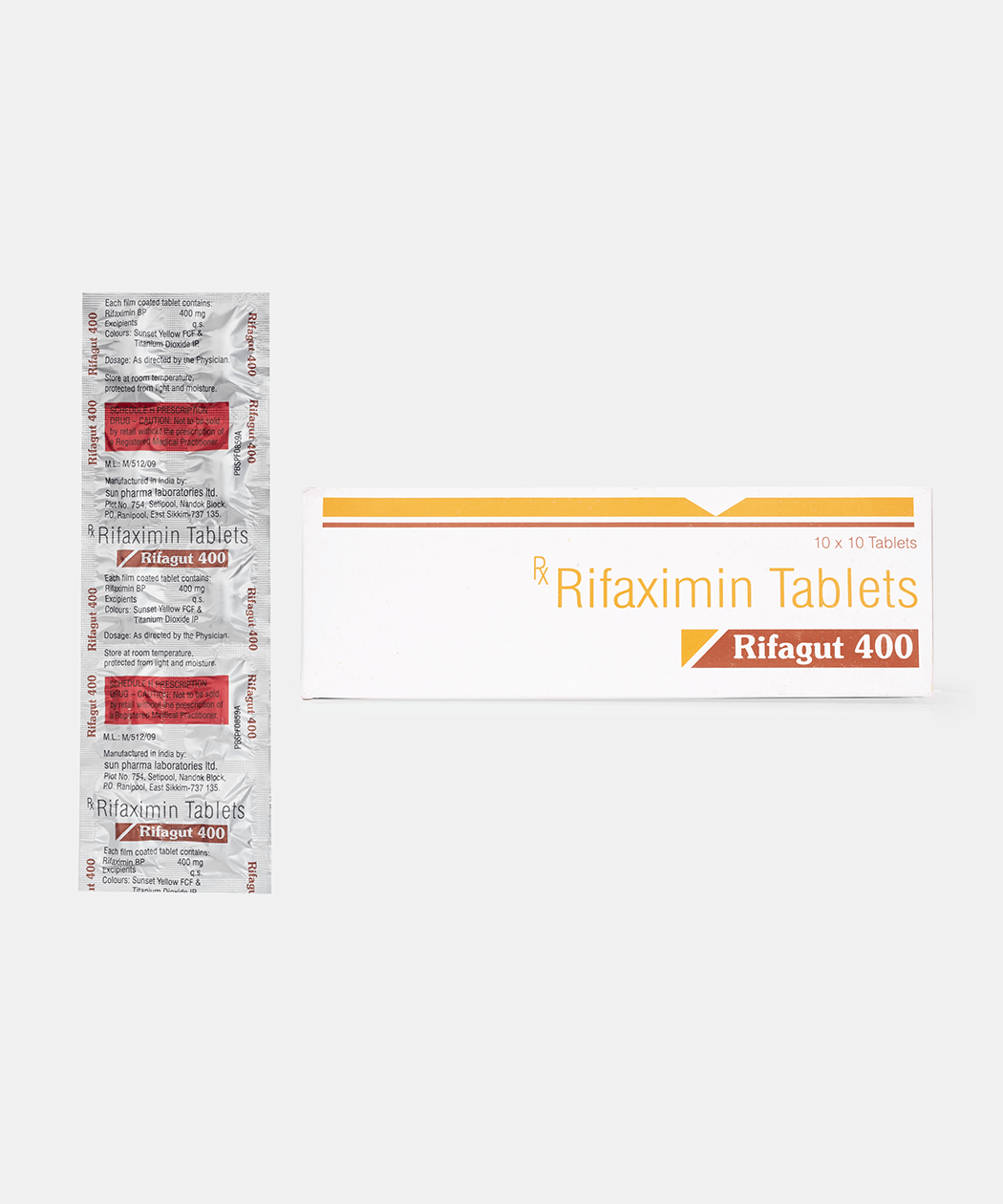

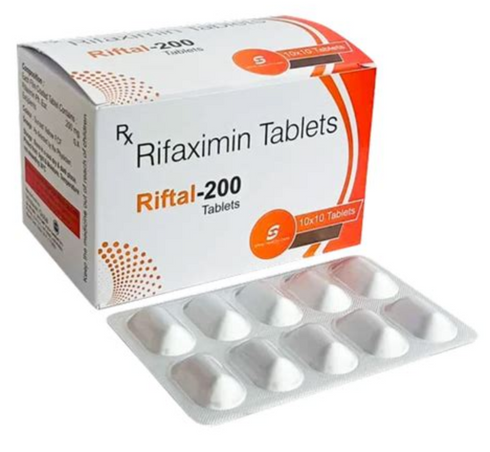
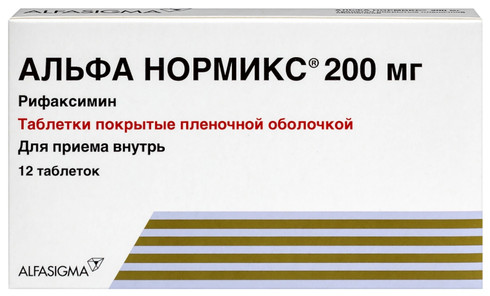
- Rifaximin is so poorly absorbed that less than one percent of an oral dose enters the bloodstream, which is why it acts almost entirely inside the gut.
- The single chemical tweak that separates rifaximin from its parent rifamycin, an added pyridoimidazole ring, is what turns a systemic antibiotic into a gut-selective one.
- Unlike most antibiotics used for chronic conditions, rifaximin has shown a relatively low tendency to drive durable resistance in the gut flora across repeated courses.
Mechanism
Rifaximin acts by binding to the beta subunit of bacterial DNA-dependent RNA polymerase, the enzyme that transcribes bacterial genes into RNA. By locking onto this enzyme it blocks the start of transcription, so susceptible bacteria can no longer produce the RNA and proteins they need to grow [1]. Its clinical effects follow directly from the fact that it stays in the intestine, where high local concentrations suppress a broad range of gram-positive and gram-negative organisms.
In hepatic encephalopathy this reduces the population of ammonia-producing gut flora and lowers the circulating ammonia that contributes to the neurological disturbance [3]. Beyond simple bacterial killing, rifaximin appears to shift the composition and activity of the gut microbiota and to influence the intestinal lining through the pregnane X receptor, effects that may help explain its benefit in irritable bowel syndrome [2].
receptor fingerprint
Bacterial RNA polymerase beta subunitinhibits
Bacterial RNA transcriptionblocks
Ammonia producing gut bacteriablocks
Enteric pathogens such as E. coliinhibits
Gut microbiota balancemodulates
Dosingtypical ranges, not medical advice
interested in protocols and clinical dosages? make an account to see them! ^_^
Safetyrisks and cautions, not medical advice
Rifaximin is prescription only and, because so little is absorbed, it is remarkably well tolerated. Common effects are mild; nausea, bloating, gas, abdominal discomfort and headache, and in people treated for hepatic encephalopathy some ankle swelling and dizziness. Serious problems are uncommon, though as with any antibiotic there is a small risk of Clostridioides difficile infection. In severe liver impairment a bit more of the drug can reach the blood, so caution is used there. It has few drug interactions thanks to its low absorption, but strong P glycoprotein inhibitors such as cyclosporine can raise its systemic levels.
Interactionsdocumented pairs only, not exhaustive
Rifaximin is barely absorbed, which is rather the point of it, and that keeps its interaction profile small. What little absorption occurs depends on P-glycoprotein and OATP transporters, and blocking them changes the picture dramatically: a single dose of cyclosporine raised rifaximin Cmax about 83-fold and AUC about 124-fold in healthy subjects. Absolute concentrations stay low, but that scale of increase carries more weight in people with impaired liver function, whose baseline absorption is already higher.
Unlike rifampin, rifaximin does not act as a meaningful systemic enzyme inducer at usual doses. A three-day course left the pharmacokinetics of ethinyl estradiol and norgestimate unchanged in healthy women, so the contraceptive failure risk that rifampin carries does not transfer to rifaximin.
Post-marketing reports describe INR changes, in both directions, in patients on warfarin who started rifaximin. The mechanism is unsettled, with in vitro CYP3A4 induction and altered gut flora both proposed, and coagulation monitoring is how the uncertainty is handled.
Checking a whole stack? Run it through interactions + stacks.
History
Rifaximin was developed by the Italian pharmaceutical company Alfa Wassermann, whose chemists synthesized it in 1982 as a semisynthetic derivative of rifamycin SV. The defining modification was the addition of a pyridoimidazole ring, a change that rendered the molecule almost entirely non-absorbable so that it would concentrate within the gut rather than enter the bloodstream. It was first approved in Italy and marketed there as Normix in 1987, initially for intestinal infections and related gastrointestinal conditions.
In the United States the compound was advanced by Salix Pharmaceuticals under the brand name Xifaxan, gaining FDA approval in 2004 for travelers' diarrhea caused by noninvasive Escherichia coli. Its indications later expanded to the reduction of recurrent hepatic encephalopathy in 2010 and to diarrhea-predominant irritable bowel syndrome in 2015, milestones supported by large controlled trials.
Reputation
Rifaximin is widely regarded as a distinctive antibiotic because it delivers strong local antibacterial action in the intestine while leaving systemic drug levels negligible, a profile that clinicians value for its favorable tolerability. In hepatic encephalopathy it has become a mainstay for preventing relapse, and many patients experience meaningfully fewer hospitalizations when it is added to standard care.
Its approval for irritable bowel syndrome broadened interest in the gut microbiome as a driver of functional bowel symptoms, and the short treatment courses it allows are appreciated by both patients and physicians. Researchers continue to study effects that appear to reach beyond simple bacterial killing, including shifts in microbial activity and signaling through the pregnane X receptor. It is not a cure for these chronic conditions, and symptoms can return, but its combination of efficacy and a clean safety record has earned it a durable place in gastroenterology.
Subjective profileweighing the evidence above
Unusually clean for an antibiotic, since almost none of it leaves the gut, and it does real work in hepatic encephalopathy, traveler's diarrhea and diarrhea-predominant IBS. Prescription and expensive, but tolerability is about as good as antibiotics get, rarely going past bloating and gas.
Where to buy

Suppliers
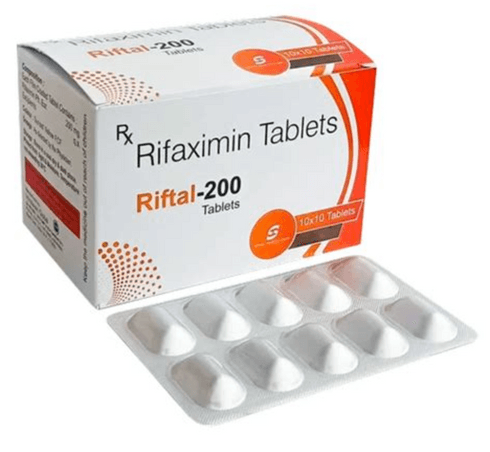
Vendors carrying Rifaximin, with live product details and codes. Links are affiliate links that support the wiki at no cost to you.
| supplier | size | price | $/mg |
|---|---|---|---|
| PCT.Zonelowest | 550MG | $7.94 | $0.014/mg |
| PCT.Zone | 400MG | $6.61 | $0.017/mg |
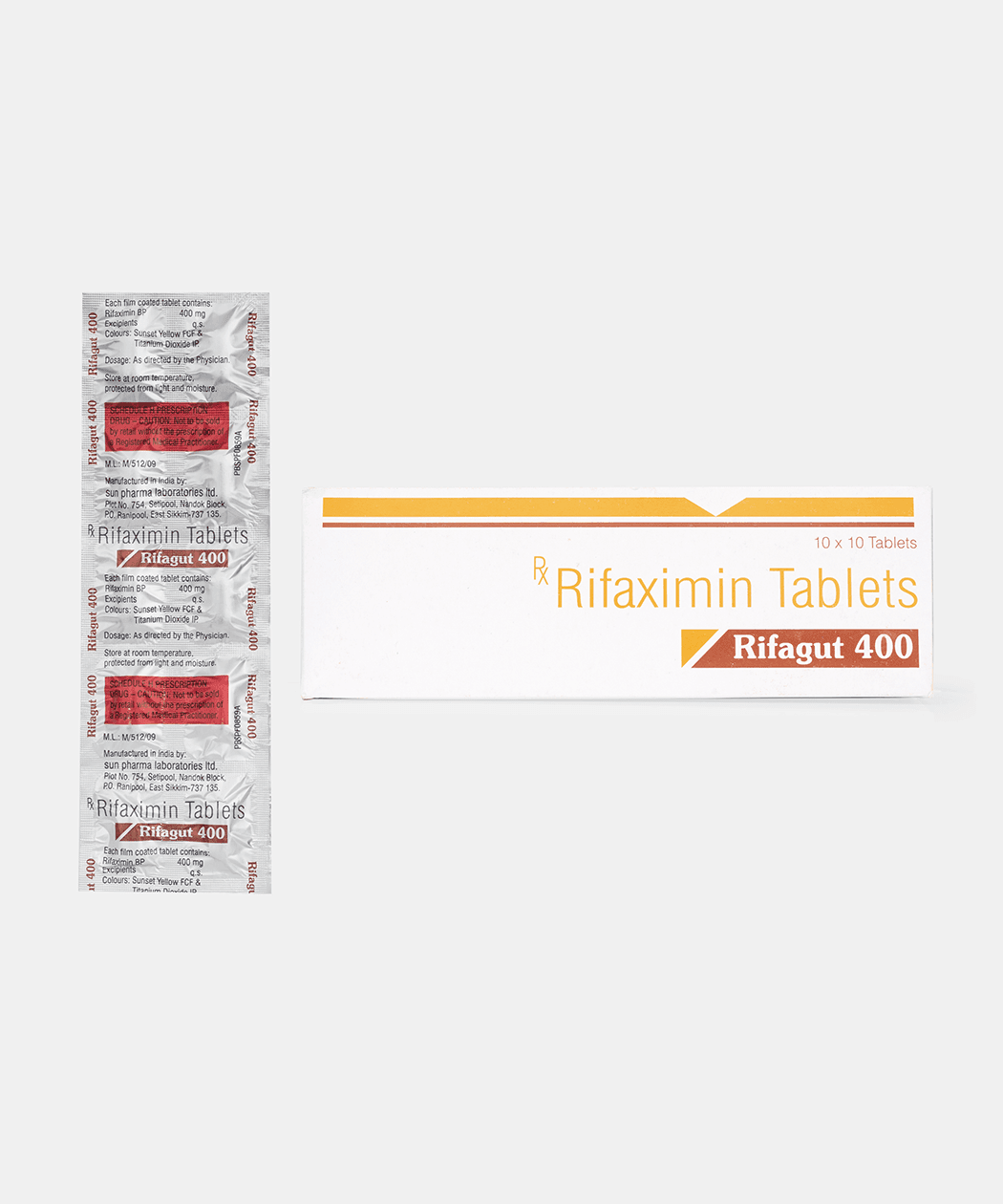
PCT.Zone
Rifaximin
PCT.Zone
Rifaximin
RUPharma🌐
Rifaximin
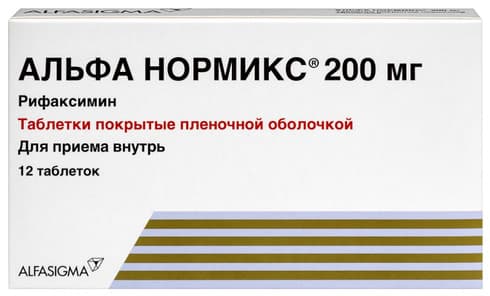
RUPharma🌐
Rifaximin
Research
- 2011first citedRifaximin therapy for patients with irritable bowel syndrome without constipation.
- 2025most recentEfficacy and safety of rifaximin in preventing hepatic encephalopathy: A systematic review and…
- 1.Rifaximin for the treatment of diarrhea-predominant irritable bowel syndrome.
- 2.The Use of Rifaximin in Patients With Cirrhosis.
- 3.Efficacy and safety of rifaximin in preventing hepatic encephalopathy: A systematic review and meta-analysis.
- 4.Effect of rifaximin in patients with severe cirrhosis and ascites: A randomized double-blind placebo-controlled trial.
- 5.Rifaximin therapy for patients with irritable bowel syndrome without constipation.
5 listed here; entry last updated August 2026
Reviews
My notesprivate to this device
FAQ
Why does rifaximin cause so few side effects?
Almost none of it is absorbed into the bloodstream, so it acts on gut bacteria while sparing the rest of the body.
How does it help liver disease?
It lowers the gut bacteria that make ammonia, and less ammonia means fewer episodes of the confusion called hepatic encephalopathy.
Can it treat traveler diarrhea?
Yes; it works well against the E. coli that cause most traveler diarrhea, though not for diarrhea with fever or blood.
Is it safe to repeat courses for irritable bowel?
Yes; the diarrhea predominant irritable bowel course can be repeated if symptoms return, and it is generally well tolerated.
Does it interact with many drugs?
Few, because so little reaches the blood, but strong P glycoprotein inhibitors like cyclosporine can raise its levels.
Adverse effects
- Nausea
- Bloating or gas
- Abdominal discomfort
- Headache
- Dizziness or fatigue
- Rare Clostridioides difficile infection