
spec sheet14 rows
Pramipexole is a non-ergoline dopamine agonist used mainly to treat Parkinson's disease and restless legs syndrome. It works by directly stimulating dopamine receptors in the brain, with a preference for the D3 subtype, standing in for the dopamine signalling that is lost in Parkinson's disease. First approved in the United States in 1997 and sold under names such as Mirapex, Mirapexin and Sifrol, it is available as immediate-release and extended-release tablets and has also been studied off-label for depression.
- Quiets tremor, rigidity and slowness
- Shuts down restless legs at night
- Stands in for dopamine the brain lost
- Prefers the D3 receptor subtype
- Extended release keeps it to once daily
- Sleep returns when the legs settle
- Nausea
- Daytime sleepiness and sudden sleep onset
- Dizziness on standing
Overview
Pramipexole is a synthetic, non-ergot (non-ergoline) dopamine agonist built around an aminothiazole structure. It activates the D2 family of dopamine receptors, binding most strongly to the D3 subtype while also engaging D2 and D4 receptors [1]. Because it is not derived from ergot, it lacks the tendency toward heart-valve and tissue fibrosis seen with older ergot agonists, and it is cleared by the kidneys rather than the liver's cytochrome P450 enzymes, which gives it comparatively few drug interactions [1].
The drug was brought to market by Pharmacia and Upjohn and gained United States approval in 1997; it later became a widely prescribed generic medicine sold internationally under names including Mirapex, Mirapexin, Sifrol and Oprymea. It is supplied both as immediate-release tablets taken several times a day and as a once-daily extended-release form.
In Parkinson's disease pramipexole is used on its own in earlier stages and alongside levodopa in more advanced disease, where it can smooth motor symptoms and is associated with a lower risk of dyskinesia than levodopa [1]. It is also a first-line option for moderate to severe restless legs syndrome; a meta-analysis comparing the two non-ergot agonists found pramipexole effective and somewhat better tolerated than ropinirole [2]. Interest in the dopaminergic basis of mood has additionally prompted off-label study in depression, and a placebo-controlled proof-of-concept trial reported an antidepressant effect in bipolar II depression [4].
Pramipexole is a prescription medicine. Alongside common effects such as nausea, drowsiness and low blood pressure on standing, it carries a well-recognised risk of impulse-control disorders, including compulsive gambling, hypersexuality and compulsive shopping or eating, which can arise even in people with no prior history and tend to be dose-related [3].
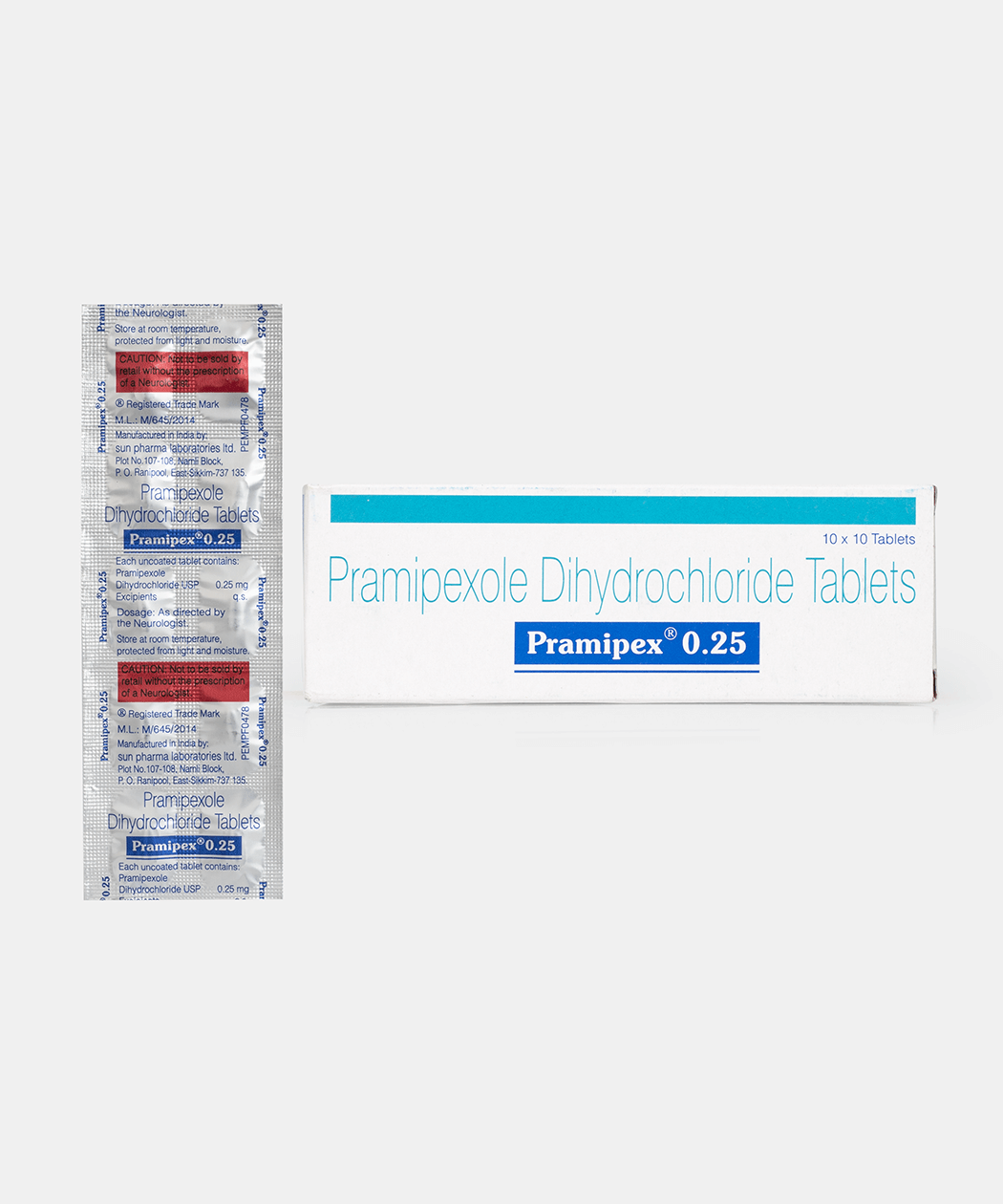
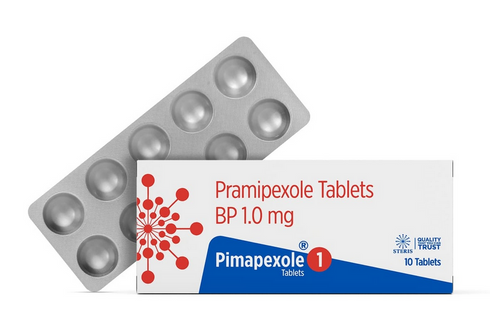
- Pramipexole binds most strongly to the dopamine D3 receptor subtype, a feature thought to underlie both its usefulness in restless legs syndrome and its mood effects.
- It has been studied off-label as an add-on for treatment-resistant bipolar depression, where short-term data are supportive.
- Because it is not metabolized through cytochrome P450 enzymes, it has notably few metabolic drug interactions.
Mechanism
Pramipexole is a direct-acting at receptors of the family, binding most strongly to the D3 subtype and also acting at D2 and D4 receptors [1]. In Parkinson's disease, where -producing neurons are progressively lost, it substitutes for the missing neurotransmitter by stimulating these receptors in the striatum, which eases rigidity, slowness and tremor [1].
As a non-ergot compound it avoids the -receptor-mediated fibrosis and valve damage linked to older ergot-derived agonists, and it is not processed through cytochrome P450, so it has few metabolic drug interactions [1]. Its pronounced D3 activity is thought to underlie both its usefulness in restless legs syndrome and its association with reward-related side effects such as impulse-control disorders [3]. Effects on dopaminergic mood circuitry have also led to its investigation as an antidepressant, particularly in bipolar II depression [4].
receptor fingerprint
D3 receptoragonist
receptoragonist
Nigrostriatal pathwayactivates
Pituitary lactotroph receptorsagonist
D4 receptoragonist
Dosingtypical ranges, not medical advice
interested in protocols and clinical dosages? make an account to see them! ^_^
Safetyrisks and cautions, not medical advice
Pramipexole is prescription only. Common effects are nausea, dizziness, drowsiness and low blood pressure on standing, and it can cause sudden sleep attacks, so driving needs caution until you know your response. A well documented risk is impulse control problems such as compulsive gambling, shopping, eating or hypersexuality, which usually ease when the dose is lowered. In restless legs it can cause augmentation, where symptoms creep earlier into the day. Hallucinations are possible, more so in older adults, and stopping abruptly can trigger a dopamine agonist withdrawal syndrome. It is cleared by the kidneys, so doses are reduced when kidney function is low, and dopamine blocking drugs cancel its benefit.
Interactionsdocumented pairs only, not exhaustive
Pramipexole augments the motor response to levodopa through a pharmacodynamic interaction; when combined, it increases finger-tapping speed and walking speed beyond what either drug achieves alone, and prolongs the duration of motor benefit from levodopa infusion while shortening time to "ON" response [24]. This augmentation comes with a cost: pramipexole significantly increases the severity of levodopa-induced dyskinesia, more than doubling peak dyskinesia scores when the two are combined compared to levodopa alone [24]. The augmentation effect is not merely additive but represents true pharmacodynamic synergy at the dopamine receptor level, suggesting careful balancing of doses is needed when combining these agents. Pramipexole has been compared as an active comparator in clinical trials with rotigotine and other dopamine agonists; rotigotine and pramipexole show roughly equivalent efficacy in reducing "off" time and motor symptoms, though individual patient responses vary.
Few other documented drug-drug interactions exist for pramipexole in the literature. Pharmacokinetic interactions with medications affecting renal clearance have not been systematically studied, despite pramipexole being primarily renally eliminated.
Checking a whole stack? Run it through interactions + stacks.
History
Pramipexole was developed as a non-ergoline dopamine agonist and brought to market through a collaboration involving Boehringer Ingelheim and Pharmacia and Upjohn, with the express aim of stimulating dopamine receptors directly while avoiding the fibrotic and cardiac-valve complications associated with older ergot-derived agonists. The United States Food and Drug Administration first approved it in 1997 for Parkinson's disease under the brand name Mirapex, and it later gained approval for moderate-to-severe restless legs syndrome in 2006.
It is marketed internationally under names including Mirapexin and Sifrol and is available in both immediate-release and once-daily extended-release formulations. Its pronounced affinity for the dopamine D3 receptor subtype distinguished it pharmacologically and prompted investigation beyond movement disorders, including off-label study in depression, particularly the depressive phase of bipolar II disorder. Over its clinical lifetime the drug has become a widely used generic and a standard option in both Parkinson's disease and restless legs syndrome.
Reputation
Pramipexole is a well-established and genuinely useful medication that has helped large numbers of people manage the rigidity, slowness, and tremor of Parkinson's disease and the distressing nocturnal symptoms of restless legs syndrome. As a non-ergot agonist it sidesteps the valve and fibrosis risks of the older ergot compounds, and its lack of cytochrome P450 metabolism gives it a favorable drug-interaction profile.
Its distinctive D3 preference has also made it a candidate of interest for treatment-resistant depression, where small studies have reported encouraging short-term results. Prescribers do watch it carefully, however: the same reward-related D3 activity is linked to impulse-control disorders such as compulsive gambling or shopping in a minority of patients, and sudden sleep onset can occur. Used thoughtfully and under medical supervision, it remains a respected and effective tool with a clear place in modern neurology and psychiatry.
Subjective profileweighing the evidence above
Effective and often a first-line option in Parkinson's and restless legs, useful well before levodopa is needed. Two things have to be taken seriously: sudden sleep attacks that make driving risky until you know your response, and impulse-control problems such as compulsive gambling, which are common on dopamine agonists.
Where to buy

1 other outlet
Suppliers
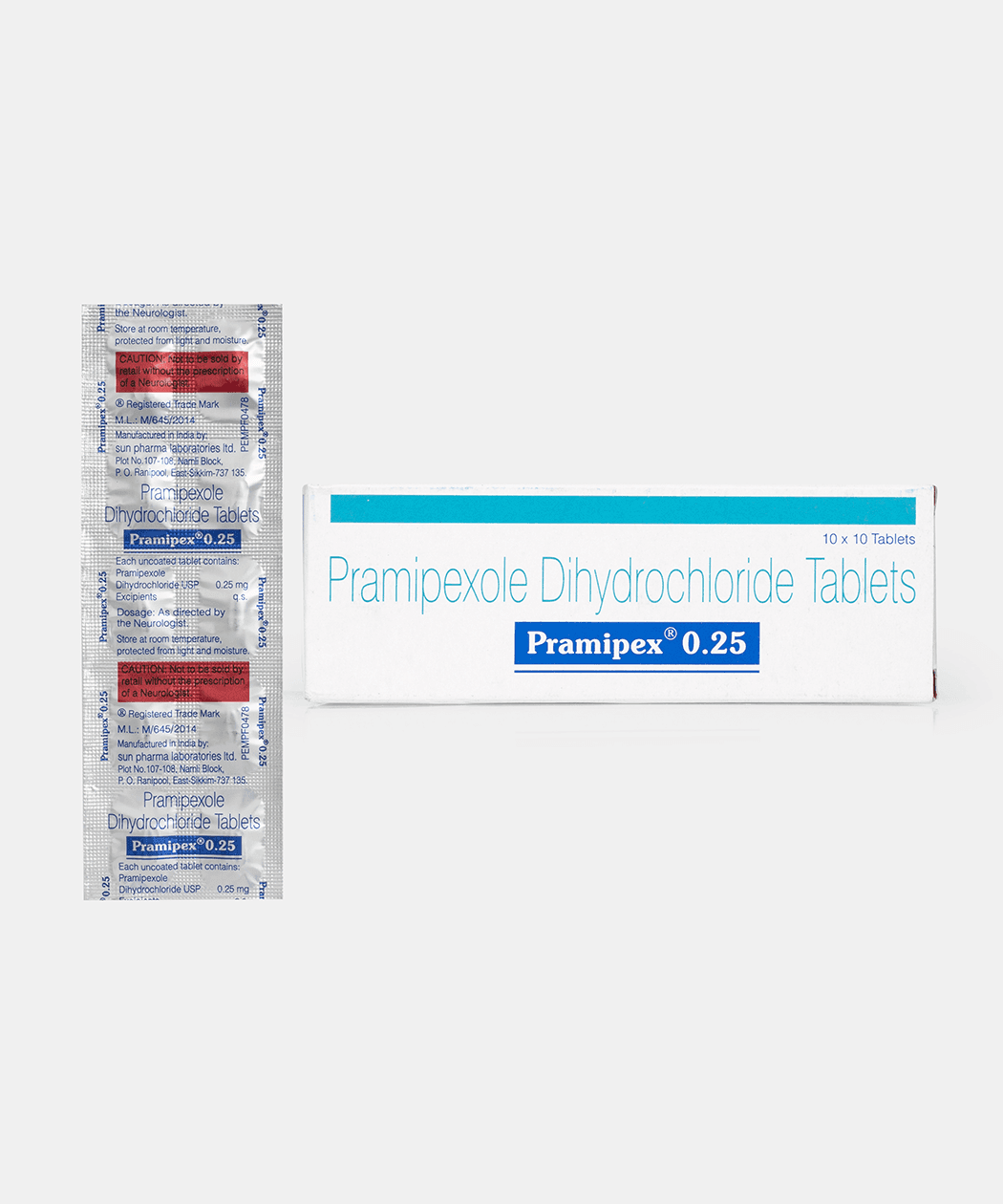
Vendors carrying Pramipexole, with live product details and codes. Links are affiliate links that support the wiki at no cost to you.
PCT.Zone
Pramipexole
RUPharma🌐
Pramipexole
Research
- 1997first citedSteady-state pharmacokinetic properties of pramipexole in healthy volunteers.
- 2008meta-analysisMeta-analysis of the efficacy and tolerability of pramipexole versus ropinirole in the treatmen…
- 2009most active year3 papers
- 2022most recentTreatment-Resistant Bipolar Depression: Therapeutic Trends, Challenges and Future Directions
- 1.A review of the receptor-binding and pharmacokinetic properties of dopamine agonists
- 2.Meta-analysis of the efficacy and tolerability of pramipexole versus ropinirole in the treatment of restless legs syndrome.
- 3.Frequency of new-onset pathologic compulsive gambling or hypersexuality after drug treatment of idiopathic Parkinson disease
- 4.Pramipexole for bipolar II depression: a placebo-controlled proof of concept study
- 5.Pharmacology of pramipexole, a dopamine D3-preferring agonist useful in treating Parkinson's disease.
- 6.D3 receptor agonist efficacy in restless legs syndrome.
- 7.Binding of pramipexole to extrastriatal dopamine D2/D3 receptors in the human brain: a positron emission tomography study using 11C-FLB 457.
- 8.A randomized controlled trial comparing pramipexole with levodopa in early Parkinson's disease: design and methods of the CALM-PD Study. Parkinson Study Group.
- 9.Long-term effect of initiating pramipexole vs levodopa in early Parkinson disease.
- 10.Impact of pramipexole on the onset of levodopa-related dyskinesias.
- 11.Risk factors for somnolence, edema, and hallucinations in early Parkinson disease.
- 12.Restless legs syndrome improved by pramipexole: a double-blind randomized trial.
24 listed here; entry last updated August 2026
Reviews
My notesprivate to this device
FAQ
Can pramipexole make me fall asleep without warning?
Yes; some people have sudden sleep attacks, so be careful driving until you know how it affects you.
Why did I start gambling or overspending on it?
Dopamine agonists can trigger impulse control disorders; tell your doctor promptly because lowering the dose usually helps.
What is augmentation in restless legs?
It is when symptoms begin earlier in the day and worsen over time on the drug; your clinician may adjust the dose or switch treatment.
Can I stop it suddenly?
No; taper under guidance, since stopping abruptly can cause a withdrawal syndrome with mood, pain and autonomic symptoms.
Does kidney function matter?
Yes; the drug is cleared by the kidneys, so the dose is lowered if your kidney function is reduced.
Adverse effects
- Nausea
- Daytime sleepiness and sudden sleep onset
- Dizziness on standing
- Hallucinations, mainly in older users
- Impulse-control problems such as compulsive gambling or shopping