
spec sheet13 rows
Amantadine is an adamantane-derived drug that was first introduced in the 1960s as an antiviral agent against influenza A and later found, by chance, to relieve the symptoms of Parkinson's disease. Today it is used mainly in neurology, particularly to treat the involuntary movements (dyskinesias) that can arise from long-term levodopa therapy, while its role against influenza has largely disappeared because of viral resistance. It acts through a combination of dopaminergic and glutamatergic effects on the brain [1][2].
- A neurology staple for movement control
- Long trusted in Parkinson's care
- Best known today for dyskinesia management
- Backed by decades of clinical use
- Dopamine and glutamate action in one drug
- Once daily extended release options exist
- Confusion, hallucinations, or dizziness, especially in older adults
- Ankle and leg swelling
- Dry mouth and difficulty sleeping
Overview
Amantadine is a small, cage-shaped molecule based on the adamantane framework, chemically 1-aminoadamantane. It is closely related to two other adamantane drugs, the antiviral rimantadine and the Alzheimer's medicine memantine [1]. Its rigid, fat-soluble structure allows it to cross into the brain, which underlies its effects on the nervous system.
The drug was first developed as an antiviral and was approved in the United States in the 1960s to prevent influenza A [2]. In 1968 a patient with Parkinson's disease noticed that her symptoms improved while she was taking amantadine for the flu; this chance observation prompted formal study and led, within a few years, to its approval as an antiparkinsonian medicine [2]. Decades later, an extended-release form was approved specifically for the treatment of levodopa-induced dyskinesia [3].
As an antiviral, amantadine works by blocking a protein of the influenza A virus called the M2 ion channel, a step the virus needs in order to replicate. Because this target is easily altered by a single mutation, resistant strains spread widely, and health authorities no longer recommend amantadine for the prevention or treatment of influenza [2]. It has no useful activity against influenza B.
In neurology, amantadine is valued for its dual action on the dopamine and glutamate systems. Randomized trials over the past several years have confirmed its usefulness in reducing levodopa-induced dyskinesia in Parkinson's disease, and it may also help smooth out motor fluctuations, although its benefit for drug-induced parkinsonism and other movement disorders is less well established [3]. It is used off-label for fatigue in multiple sclerosis and to promote recovery of consciousness and function after traumatic brain injury, though the supporting evidence there comes mostly from small studies [1][4]. Researchers continue to explore further uses, including in depression and other conditions [1].
Amantadine is well absorbed by mouth and is cleared largely unchanged by the kidneys, so doses must be lowered when kidney function is impaired [1]. It is a prescription medicine, available as immediate-release capsules and tablets, oral liquid, and extended-release formulations developed for Parkinson's disease [3].

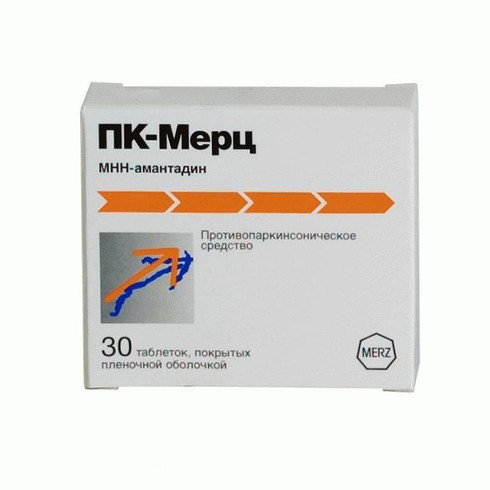
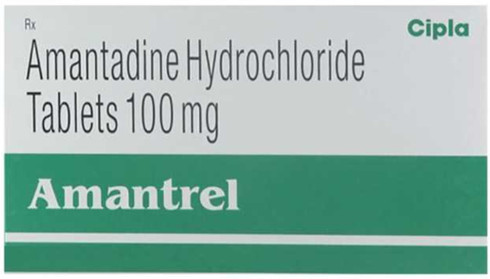
- Amantadine's usefulness in Parkinson's disease was discovered entirely by accident, after a patient taking it as flu prophylaxis reported her tremor and stiffness had eased.
- Its original job as an influenza A drug has largely disappeared because circulating viral strains carry resistance mutations in the M2 protein it targets.
- Amantadine started life as an antiviral; it was licensed to prevent and treat influenza A by plugging the virus's M2 proton channel, and fell out of use only after almost every circulating strain acquired resistance mutations [6].
- Its antiparkinsonian effect was found by chance in 1969, when a patient taking amantadine to fend off the flu noticed that her Parkinson's tremor and rigidity had eased [5].
- In a landmark New England Journal of Medicine trial, amantadine sped functional recovery in people who were vegetative or minimally conscious after severe traumatic brain injury [1].
- It is a close structural cousin of memantine; both are adamantane cage amines that block the NMDA receptor as fast, low-affinity, open-channel antagonists [7].
Mechanism
Amantadine (1-aminoadamantane) is a symmetric tricyclic cage amine that was first licensed not as a neurological drug but as an antiviral agent against influenza A. Its antiviral action is mechanistically precise: the molecule lodges in the lumen of the M2 protein, a tetrameric proton channel that spans the viral membrane and is essential for viral uncoating. Solid-state NMR of M2 reconstituted in phospholipid bilayers localized a single high-affinity amantadine molecule within the N-terminal channel pore, ringed by the very residues that mutate in drug-resistant strains, establishing that the drug physically occludes the channel rather than acting allosterically [6]. By blocking proton conductance, amantadine prevents acidification of the virion interior and arrests release of the viral genome into the host cell. The near-universal spread of the S31N mutation across circulating influenza A lineages later abolished this activity, and the adamantanes are no longer recommended for influenza; the same conserved pocket nonetheless remains a target for next-generation channel blockers.
The neurological career of amantadine began by accident in 1969, when a patient taking the drug for influenza prophylaxis reported unexpected relief of parkinsonian rigidity and tremor, prompting the first clinical report of antiparkinsonian benefit [5]. Two central pharmacological actions account for its effects on the brain. The first is dopaminergic facilitation: amantadine promotes presynaptic release, inhibits dopamine reuptake, and modestly increases postsynaptic dopamine-receptor responsiveness. This dopaminergic action underlies its mild symptomatic benefit in Parkinson's disease and its use for fatigue and blunted arousal.
The second, and increasingly regarded as its most important central mechanism, is antagonism of the N-methyl-D-aspartate () subtype of receptor. Amantadine and its close structural relatives act as uncompetitive, low-affinity, open-channel blockers; they enter the receptor-associated ion channel preferentially when it is excessively open and dissociate rapidly, dampening pathological signaling while largely sparing normal transmission. This fast off-rate distinguishes the adamantane class from high-affinity blockers such as MK-801 and accounts for its clinical tolerability [7]. Overactive corticostriatal transmission is a principal driver of levodopa-induced dyskinesia, which provides the rationale for amantadine's antidyskinetic use.
These converging actions map cleanly onto amantadine's modern indications. It is the only oral agent with consistent randomized evidence for reducing levodopa-induced dyskinesia in Parkinson's disease; an extended-release formulation significantly lowered Unified Dyskinesia Rating Scale scores while also reducing OFF time relative to placebo [2][3], and a network meta-analysis of 85 randomized trials ranked immediate-release amantadine the most effective oral medication for dyskinesia, behind only device-based interventions such as deep brain stimulation [4].
Beyond movement disorders, a landmark multicenter, placebo-controlled trial demonstrated that amantadine accelerated the pace of functional recovery in patients who were in a vegetative or minimally conscious state four to sixteen weeks after severe traumatic brain injury, an effect plausibly attributed to its combined dopaminergic and modulation of arousal networks [1]. Amantadine is also the pharmacological agent most frequently recommended for fatigue in multiple sclerosis, although the controlled evidence for that indication is limited and of modest quality [8].
receptor fingerprint
receptorantagonist
Influenza A M2 proton channelblocks
release and reuptakemodulates
receptorantagonist
Dosingtypical ranges, not medical advice
interested in protocols and clinical dosages? make an account to see them! ^_^
Safetyrisks and cautions, not medical advice
Amantadine is prescription only. Distinctive effects include livedo reticularis, a harmless lace-like mottling of the skin, and swelling of the ankles. It can also cause insomnia, dizziness, dry mouth, blurred vision and, especially in older people, confusion or hallucinations. It should not be stopped abruptly, since that can worsen parkinsonism or rarely trigger a serious reaction. It is removed by the kidneys, so the dose is cut in kidney impairment, and it should be used carefully alongside other anticholinergic drugs, alcohol or other medicines that act on the brain.
Interactionsdocumented pairs only, not exhaustive
Amantadine is routinely co-prescribed with levodopa and dopamine agonists in Parkinson disease treatment and enhances their therapeutic effects through a pharmacodynamic mechanism; amantadine's antiglutamatergic activity complements dopaminergic strategies [13]. Amantadine is renally cleared, and trimethoprim and other drugs that compete for renal tubular secretion theoretically increase amantadine levels, though specific controlled studies documenting this interaction are sparse in the published literature. Amantadine combined with intravenous morphine showed variable results across different studies depending on amantadine dosing, and a pharmacokinetic interaction was noted in some but not all randomized trials [14]. Drug interaction research for amantadine with most other antiviral, psychiatric, or cardiovascular agents remains limited.
Checking a whole stack? Run it through interactions + stacks.
History
Amantadine, an adamantane derivative, was first introduced in the 1960s as an antiviral agent against influenza A, receiving United States Food and Drug Administration approval for that purpose in 1966. Its role in neurology was discovered by chance at the end of that decade, when a patient with Parkinson's disease taking amantadine to prevent influenza noticed a marked improvement in her parkinsonian symptoms, a serendipitous observation that redirected the drug's career. Over the following decades its antiviral use faded as influenza strains developed resistance, while its neurological applications grew. In 2017 an extended-release formulation, Gocovri, became the first drug specifically approved in the United States to treat levodopa-induced dyskinesia.
Reputation
Amantadine has proven remarkably durable, remaining in common use by neurologists more than half a century after its serendipitous discovery in Parkinson's disease. It is particularly valued for its distinctive ability to reduce the involuntary movements, or dyskinesias, that arise from long-term levodopa therapy, a benefit supported by randomized controlled trials over the past decade and highlighted in a 2021 Lancet Neurology review. Its combination of dopaminergic and glutamatergic actions is considered pharmacologically unusual and underlies interest in additional uses such as fatigue and brain injury, though the evidence there is weaker. It is generally well tolerated, with side effects such as ankle swelling, livedo reticularis, and, in some patients, confusion or hallucinations.
Subjective profileweighing the evidence above
A genuinely useful old drug, cheap and still the standard answer for levodopa-induced dyskinesia, which little else touches. It is prescription only for good reason; confusion and hallucinations turn up in older adults, and the dose has to come down when kidneys are weak.
Where to buy
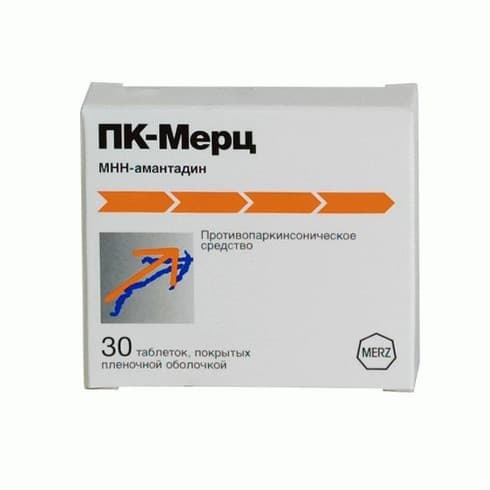

Suppliers
Vendors carrying Amantadine, with live product details and codes. Links are affiliate links that support the wiki at no cost to you.
PCT.Zone
Amantadine
RUPharma🌐
Amantadine
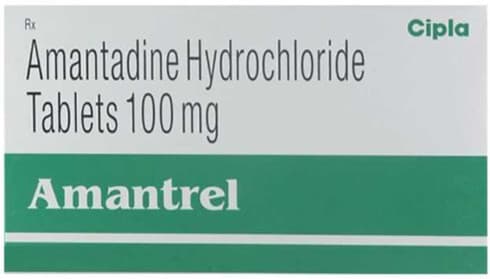
RUPharma🌐
Amantadine
Research
- 1969first citedAmantadine in the treatment of Parkinson's disease.
- 2017most active year3 papers
- 2025most recentTreatment for Dyskinesia in Parkinson's Disease: A Network Meta-analysis of Randomized Controll…
- 1.Amantadine: reappraisal of the timeless diamond, target updates and novel therapeutic potentials
- 2.Amantadine: the journey from fighting flu to treating Parkinson disease
- 3.Amantadine in the treatment of Parkinson's disease and other movement disorders
- 4.Amantadine and memantine: a comprehensive review for acquired brain injury
- 5.Placebo-controlled trial of amantadine for severe traumatic brain injury.
- 6.ADS-5102 (Amantadine) Extended-Release Capsules for Levodopa-Induced Dyskinesia in Parkinson Disease (EASE LID Study): A Randomized Clinical Trial.
- 7.Randomized, placebo-controlled trial of ADS-5102 (amantadine) extended-release capsules for levodopa-induced dyskinesia in Parkinson's disease (EASE LID 3).
- 8.Treatment for Dyskinesia in Parkinson's Disease: A Network Meta-analysis of Randomized Controlled Trials.
- 9.Amantadine in the treatment of Parkinson's disease.
- 10.Structure of the amantadine binding site of influenza M2 proton channels in lipid bilayers.
- 11.Open-channel block of N-methyl-D-aspartate (NMDA) responses by memantine: therapeutic advantage against NMDA receptor-mediated neurotoxicity.
- 12.Amantadine for fatigue in multiple sclerosis.
14 listed here; entry last updated August 2026
Reviews
My notesprivate to this device
FAQ
What is amantadine mainly used for now?
Parkinson disease and the involuntary movements that long-term levodopa can cause; its antiviral use has faded because flu is now largely resistant.
Why has my skin gone blotchy?
Amantadine can cause livedo reticularis, a harmless lace-like mottling usually on the legs that fades after stopping the drug.
Can I stop it suddenly?
No; stopping abruptly can worsen Parkinson symptoms or rarely cause a serious reaction, so it should be tapered under guidance.
Does it help against the flu?
Rarely now; most influenza strains are resistant to it, so it is no longer recommended for that purpose.
Why avoid taking it in the evening?
It can be stimulating and cause insomnia, so later doses are usually moved to the afternoon.
Adverse effects
- Confusion, hallucinations, or dizziness, especially in older adults
- Ankle and leg swelling
- Dry mouth and difficulty sleeping
- Effects can intensify with reduced kidney function
Notes and cautions
- Livedo reticularis, a mottled skin discoloration