
data + articles · 6 listed
newest 2022spec sheet13 rows
Cabergoline is a long-acting, ergot-derived dopamine agonist that acts mainly at the dopamine D2 receptor. It is used chiefly to treat conditions of excess prolactin, especially prolactin-secreting pituitary tumors (prolactinomas), and is also used in Parkinson disease and acromegaly. Because of its long duration of action it is usually taken only once or twice a week.
- Drives high prolactin firmly back down
- Long-acting dopamine agonist at the D2 receptor
- Works at the pituitary, where prolactin starts
- Cycles and fertility often return
- Outperforms older bromocriptine
- Stays active for days at a time
- Nausea
- Headache
- Dizziness or lightheadedness
Overview
Cabergoline is a semisynthetic ergot derivative that works as a potent, long-acting agonist of the dopamine D2 receptor. It was developed by researchers in Milan, first patented in 1980, and marketed from the early 1990s, reaching the United States as Dostinex after approval in 1996 [1][2]. A defining feature is its very long duration of action, which allows infrequent dosing compared with older dopamine agonists [2].
Its principal use is in disorders of prolactin excess. For hyperprolactinemia and prolactinomas, cabergoline is generally the preferred first-line dopamine agonist because it is more effective and better tolerated than the older drug bromocriptine; it normalizes prolactin levels in a large majority of patients and shrinks the tumor in most, with reviews reporting prolactin normalization in up to roughly 85% of cases and tumor shrinkage in up to about 80% [1][2]. It is used even for large or giant prolactinomas, often as first-line therapy [4]. In women planning pregnancy the choice of dopamine agonist is made carefully, and cabergoline is usually stopped once pregnancy is confirmed unless the tumor poses a risk [3].
Beyond prolactin disorders, cabergoline is used in Parkinson disease and to help control growth hormone in acromegaly. A recognized concern is that high doses, of the kind sometimes used in Parkinson disease, have been linked to heart valve problems, whereas the much lower doses typically used for prolactinomas appear not to be associated with clinically significant valve disease [1]. As with other dopamine agonists, it can occasionally provoke impulse-control behaviors such as compulsive gambling.
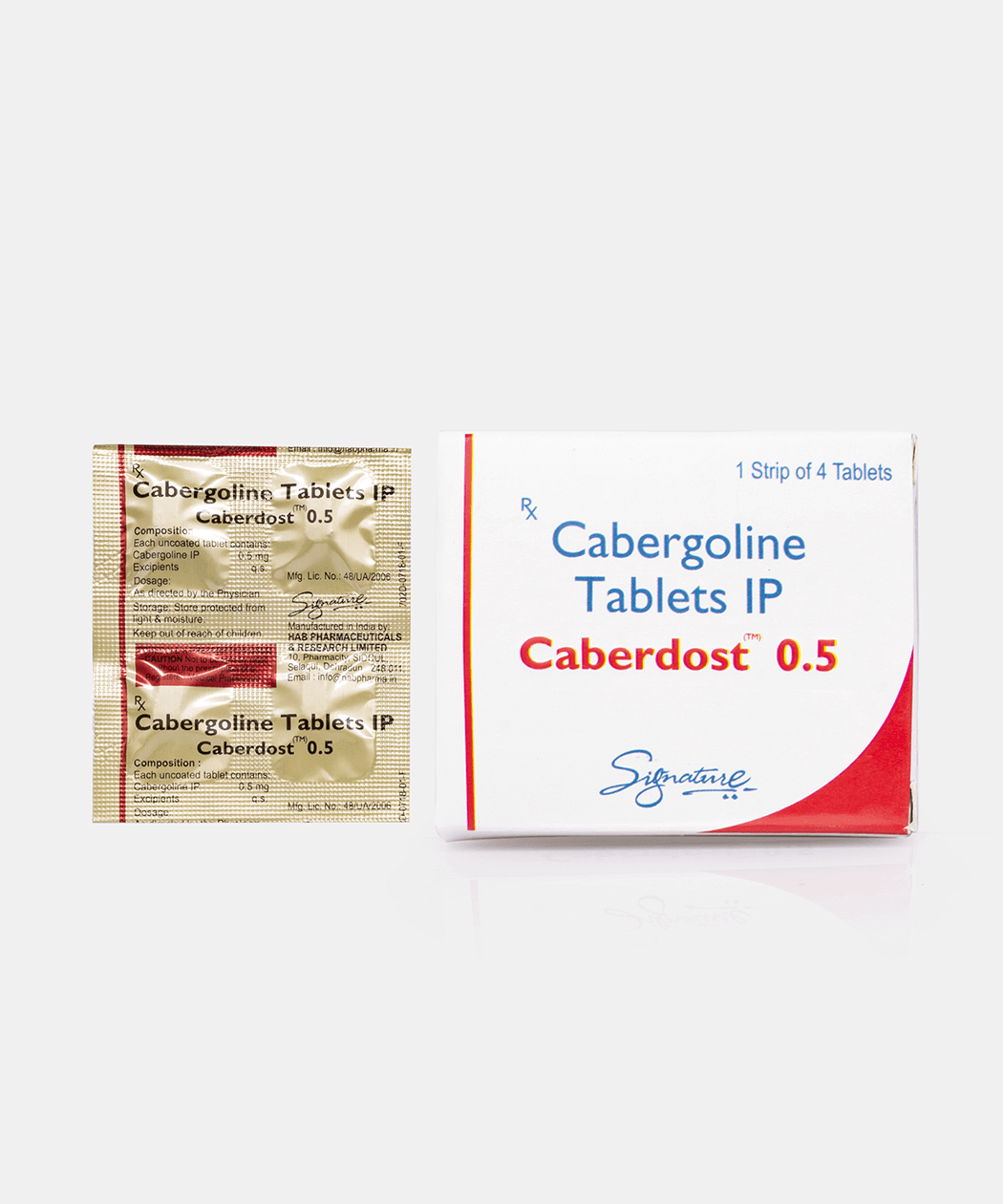
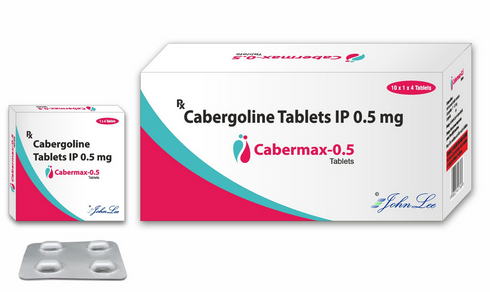
Cabergoline is a prescription medicine, available as oral tablets and sold under brand names including Dostinex and Cabaser, as well as generics. It is typically taken once or twice weekly because of its long half-life, and common side effects include nausea, headache, dizziness, and low blood pressure [1][2].

- Cabergoline binds its target so tightly and clears so slowly that a single dose can keep working for days, allowing many patients to take it just once or twice a week.
- The same drug used to treat pituitary tumors has been explored off-label for Cushing disease, where long-term monotherapy normalized cortisol in a subset of carefully selected patients.
Mechanism
Cabergoline is an ergot-derived with high selectivity and affinity for the receptor [1][2]. In the pituitary gland it directly stimulates receptors on lactotroph cells, mimicking the brain's natural signal that suppresses prolactin; this lowers prolactin secretion and, over time, can reduce the size of prolactin-secreting tumors [1][2]. Its unusually long duration of action, which permits dosing only once or twice a week, is attributed to strong, persistent binding at the receptor and slow elimination [2]. The same dopaminergic activity underlies its use in Parkinson disease, while its stimulation of receptors on heart valve tissue is thought to explain the valve changes seen at the high doses used outside prolactin disorders [1].
receptor fingerprint
receptoragonist
D3 receptoragonist
5-HT2B receptoragonist
5-HT1 receptorsagonist
alpha receptorsmodulates
Dosingtypical ranges, not medical advice
interested in protocols and clinical dosages? make an account to see them! ^_^
Safetyrisks and cautions, not medical advice
Cabergoline is prescription only. Common effects are nausea, headache, dizziness, and orthostatic low blood pressure, especially when starting; taking it with food or at bedtime helps. A specific concern is cardiac valve fibrosis, mainly with the large doses used for Parkinson's disease, so echocardiogram monitoring is advised in that setting; the much lower doses for hyperprolactinemia carry far less risk. Like other dopamine agonists it can trigger impulse control problems such as compulsive gambling, shopping, or hypersexuality, which patients and families should watch for. Rarely it causes sudden sleep onset or hallucinations. It is used cautiously in uncontrolled hypertension and stopped carefully around pregnancy planning.
Interactionsdocumented pairs only, not exhaustive
The interaction that most often causes trouble is pharmacodynamic. Dopamine D2 antagonists blunt or abolish the prolactin-lowering effect, so antipsychotics, metoclopramide, prochlorperazine and similar antiemetics work directly against cabergoline, and prolactin can climb back while the drug is still being taken.
Cabergoline is cleared largely by hydrolysis, but CYP3A4 contributes, and macrolides such as erythromycin and clarithromycin raise systemic exposure enough to matter; azole antifungals are expected to do the same. Higher exposure means more nausea, orthostatic hypotension and, at the extreme, the somnolence and impulse-control problems dopamine agonists are known for. The blood pressure effect is additive with antihypertensives and with alcohol.
Combining it with other ergot derivatives is avoided because vasoconstrictive and fibrotic effects stack. Cabergoline is itself a 5-HT2B agonist, the mechanism behind ergot-associated valve disease, and other 5-HT2B agonists add to that burden.
Checking a whole stack? Run it through interactions + stacks.
History
Cabergoline is an ergot-derived dopamine agonist developed by the Italian pharmaceutical company Farmitalia Carlo Erba, later part of Pharmacia and then Pfizer. It was designed for high selectivity and affinity at the dopamine D2 receptor and for an exceptionally long duration of action, and it received United States approval in 1996 under the brand name Dostinex. Its primary role has been the treatment of disorders of excess prolactin, especially prolactin-secreting pituitary tumors, where it often outperforms older agents. It has also been studied in Parkinson disease, acromegaly, and, in limited series, Cushing disease, broadening its clinical footprint.
Reputation
Cabergoline is highly regarded, often as the preferred dopamine agonist for prolactinomas, because it combines strong efficacy with unusually convenient once- or twice-weekly dosing. Endocrinologists value its ability to normalize prolactin and shrink tumors in many patients who tolerated older agonists poorly, and it is frequently better tolerated than bromocriptine. Its long, persistent receptor binding is both its signature advantage and the reason careful dosing matters, since high doses used for other conditions have been linked to heart-valve changes. At the modest doses used for prolactin disorders this risk appears low, and overall cabergoline is viewed as an effective, patient-friendly medicine with a well-defined safety profile.
Subjective profileweighing the evidence above
The strongest option available for high prolactin and prolactinomas, more effective than bromocriptine and convenient at twice a week. Prescription only for good reason: dopamine agonists can trigger impulse-control problems, and the high Parkinson's-range doses carry a heart valve risk that needs monitoring.
Where to buy

Suppliers
Vendors carrying Cabergoline, with live product details and codes. Links are affiliate links that support the wiki at no cost to you.
| supplier | size | price | $/mg |
|---|---|---|---|
| PCT.Zonelowest | 0.5MG | $8.57 | $17.14/mg |
| PCT.Zone | 0.5MG | $15.01 | $30.02/mg |
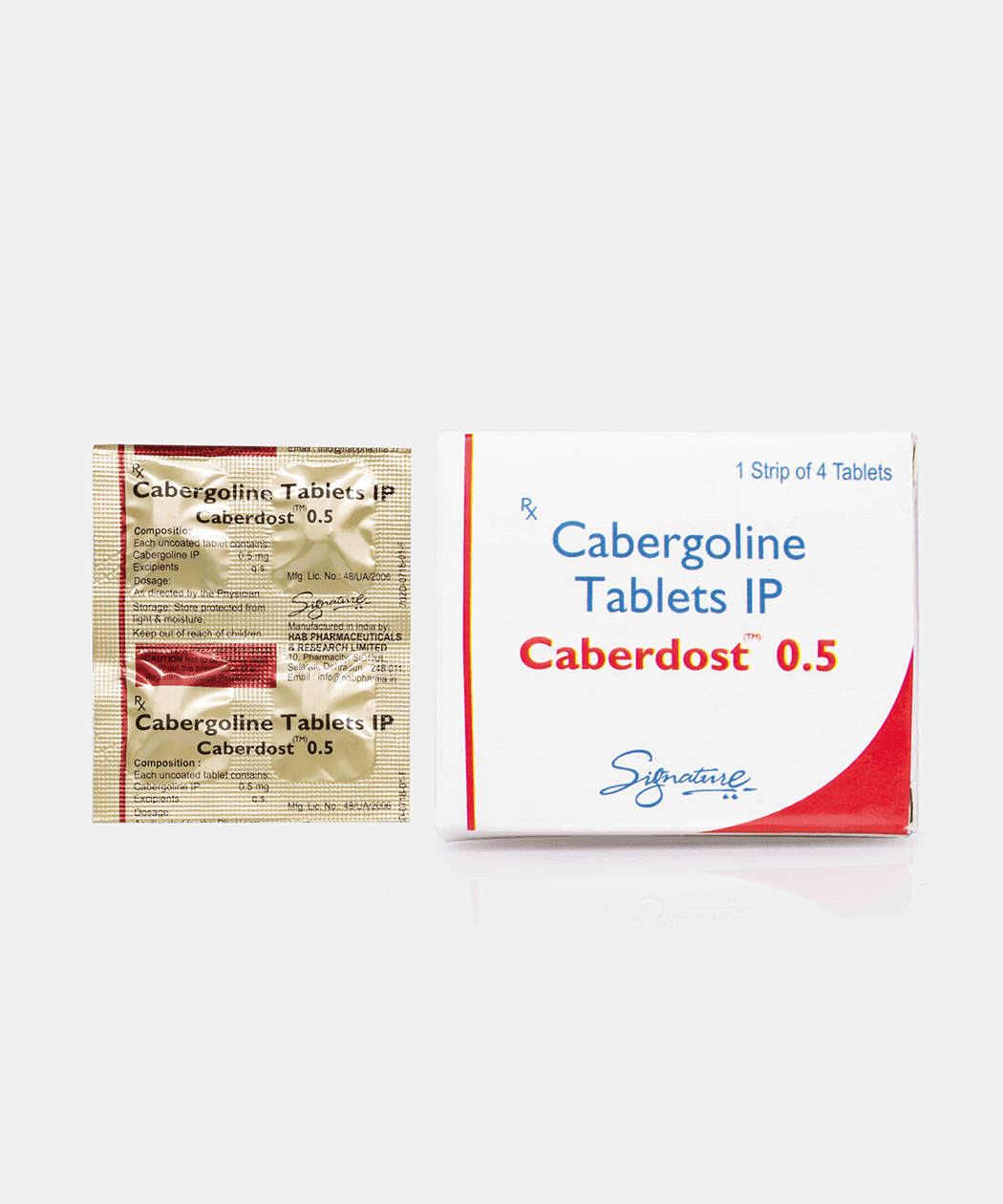
PCT.Zone
Cabergoline
RUPharma🌐
Cabergoline
PCT.Zone
Cabergoline

RUPharma🌐
Cabergoline
Research
- 2003first citedHyperprolactinemia: pathophysiology and management
- 2022most recentTreatment of Prolactinoma
- 1.Treatment of Prolactinoma
- 2.Hyperprolactinemia: pathophysiology and management
- 3.Managing Prolactinomas during Pregnancy
- 4.Giant prolactinomas: the therapeutic approach
- 5.Update in prolactinomas
- 6.Cabergoline monotherapy in the long-term treatment of Cushing's disease
6 listed here; entry last updated August 2026
Reviews
My notesprivate to this device
FAQ
How often do I take cabergoline?
For high prolactin it is usually just twice a week, thanks to its very long duration of action; that is a big convenience advantage.
Does it harm heart valves?
Valve thickening is mainly a concern at the high Parkinson's doses; the low doses for prolactin carry much less risk, though monitoring may still be advised.
Can it affect my behavior?
Yes. Like other dopamine agonists it can cause compulsive gambling, shopping, or hypersexuality; tell your doctor if urges change.
Will it help me get pregnant?
Often. By normalizing prolactin it can restore ovulation and fertility; discuss timing with your doctor since it is usually paused once pregnancy is confirmed.
Why take it with food or at bedtime?
It can cause nausea and a drop in blood pressure; food and bedtime dosing blunt those early side effects.
Adverse effects
- Nausea
- Headache
- Dizziness or lightheadedness
- Low blood pressure, especially on standing
- Rarely, heart valve changes with high long-term doses