
spec sheet10 rows
GB-115 is a cleverly designed dipeptide anxiolytic that eases anxiety while keeping the mind clear, a combination almost nothing else in its category manages. Rather than sedating, it blocks the cholecystokinin CCK-1 receptor, a pathway tied specifically to chronic anxiety and panic, and in a clinical study of generalized anxiety disorder it actually sharpened attention and reaction time while it worked. For those seeking calm without the fog, weakness, or dependence of classic sedatives, GB-115 is a genuinely intriguing research anxiolytic.
- Calm without the fog or sedation
- 70 percent responders versus 24.5 on placebo
- Sharpened attention and reaction speed
- Targets the CCK stress pathway directly
- No withdrawal, no abuse potential
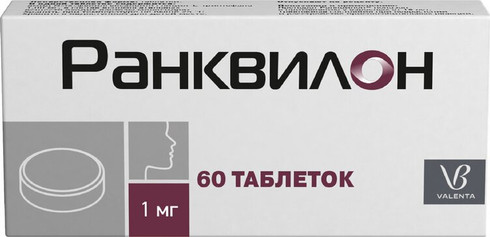
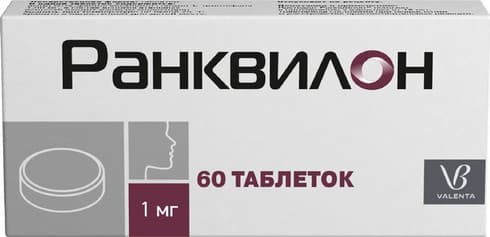
- Approved in Russia as Ranquilon
- Possible mild headache
Overview
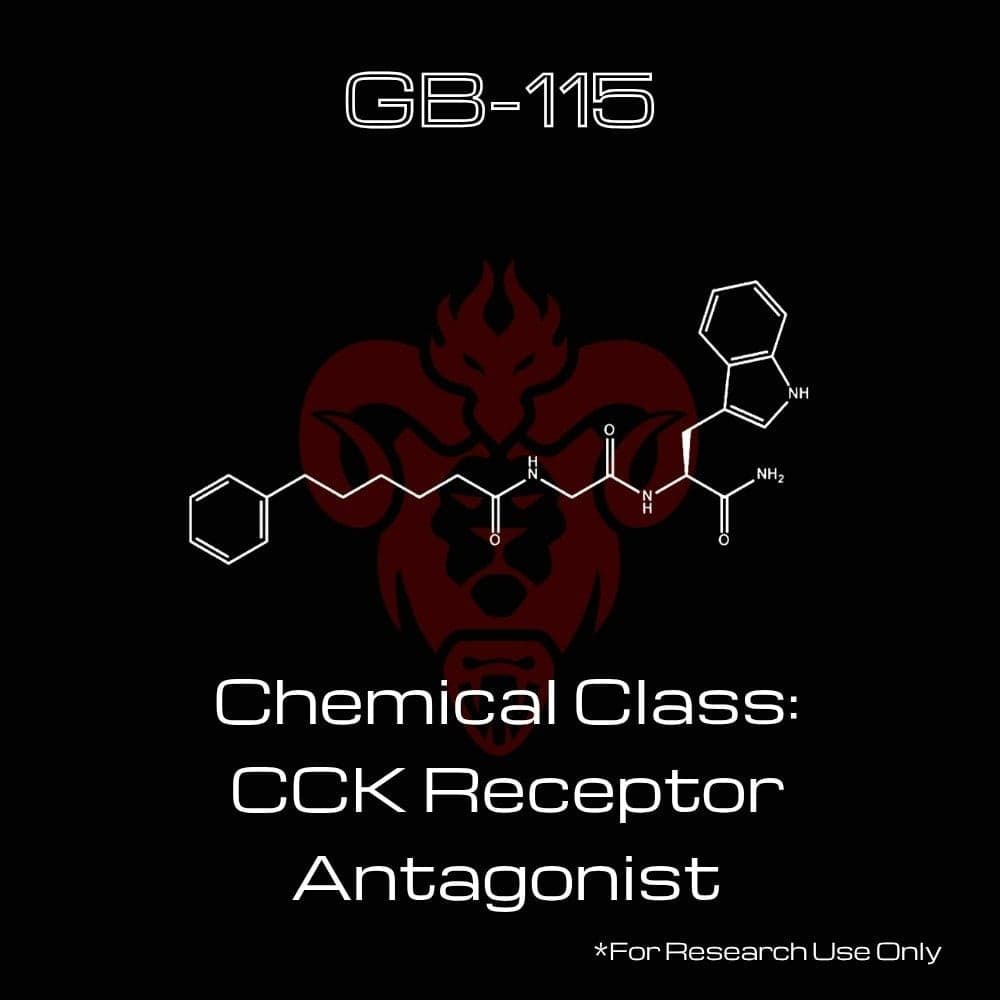
GB-115 is a synthetic dipeptide anxiolytic developed at the Zakusov Research Institute of Pharmacology in Moscow. Structurally it is a retro-analogue of the C-terminal tetrapeptide of cholecystokinin (CCK-4), built around an L-tryptophan-containing dipeptide scaffold, and it was designed to act as a low-affinity blocker of central cholecystokinin receptors [1][2].
The cholecystokinin system is a well-studied modulator of anxiety and panic, which is the rationale behind GB-115; by dampening central CCK signaling it aims to relieve anxiety without the sedation, muscle relaxation, or dependence associated with benzodiazepines [5][6]. Its research profile is notable for a phenotype-specific pattern, in which its effects depend on the animal's characteristic stress-response style [2].
Its research applications include a substantial preclinical program and early clinical evaluation. Animal studies established anxiolytic activity through the cholecystokinin system [2], confirmed that the effect persists after oral administration [3], demonstrated antidepressant-like activity independent of stress-response phenotype [4], and characterized an antinociceptive action involving interactions between the cholecystokinin and opioid systems [5]. A separate line of work showed that, unlike diazepam, chronic GB-115 produced neither tolerance nor a withdrawal syndrome on discontinuation [6]. In a clinical study of patients with generalized anxiety disorder, GB-115 in tablet form produced a fast-onset anxiolytic effect with favorable changes in attention, reaction time, and overall performance, and good tolerability [1].
GB-115 is not an approved medicine in the United States or Europe and remains investigational outside its country of origin; it is encountered as a research compound. Its evidence base is concentrated in the laboratories that developed it, and independent replication is limited.
- GB-115 was designed as a short dipeptide built to mimic the active fragment of a much larger natural signaling peptide, an approach the Zakusov Institute pioneered.
- In an early study of generalized anxiety disorder, it was reported to improve attention and reaction speed rather than slow them, the opposite of what sedatives do.
- Its analgesic effect appears to run partly through opioid pathways, since it was partly reversed by naloxone, whereas its anti-anxiety effect was not.
Mechanism
GB-115 is appealing precisely because of what it does not do; it calms anxiety without dulling the user, avoiding the sedation, weakness, and dependence that limit benzodiazepines. In its clinical study it eased anxiety while improving attention and reaction speed, an unusual and desirable combination [1].
The central mechanism is antagonism of the cholecystokinin CCK-1 receptor. Even though GB-115 has only low affinity there, it acts as a blocker of central cholecystokinin receptors, and because the cholecystokinin system helps set anxiety and panic tone, dampening it produces an anxiolytic effect [1][2]. Mechanistic animal work supports a receptor-specific action; activating CCK-4 type-2 receptors abolished the anti-anxiety effect of GB-115, and the compound prevented cholecystokinin-induced anxiety in animals with an active stress-response phenotype, indicating that GB-115 and cholecystokinin share a common pharmacological target [2]. Its analgesic activity, by contrast, appears to be relayed through spinal interactions with opioid systems, since it was partly reversible by naloxone while its anxiolytic effect was not [5].
The human evidence, though early, is encouraging in its texture. In a clinical study of 31 patients with generalized anxiety disorder treated over 21 days, GB-115 showed a fast onset of anxiolytic action with mild stimulating properties, benefit for sleep and autonomic symptoms, and, in contrast to first-line SSRIs and SNRIs, no initial overactivation or worsening of anxiety [1]. Across chronic dosing in rats it retained its anxiolytic effect without inducing tolerance, and its withdrawal produced none of the rebound anxiety, lowered aggression threshold, or convulsive readiness seen after diazepam [6]. It also carried antidepressant-like activity independent of emotional phenotype, hinting at combined anxiety and mood applications [4].
receptor fingerprint
Cholecystokinin (CCK-1) receptorantagonist
Anxiolytic / antidepressant tonesupports
BRS3 receptorantagonist (secondary role)
/ lowers cortisol
Kappa opioid receptor (KOR)engaged only at very high doses
Dosingtypical ranges, not medical advice
interested in protocols and clinical dosages? make an account to see them! ^_^
Safetyrisks and cautions, not medical advice
Across Phase 1, 2, and 3 trials the side effect profile was near-placebo. In Phase 3, 25.5 percent of the GB-115 group reported adverse events versus 14.6 percent on placebo, a difference the authors judged non-significant; every event was mild and no one dropped out. Unlike benzodiazepines, GB-115 does not relax muscles, and it lacks the abuse potential, toxicity, and dangerous withdrawal that define that class. Most data still come from Russian labs, so independent replication is the main open question. Not medical advice.
History
GB-115 is a synthetic dipeptide anxiolytic developed in Russia at the V. V. Zakusov Research Institute of Pharmacology, an institution known for its rational, structure-based approach to designing small peptide neuroactive molecules. It emerged from the research program of Tatiana Gudasheva and Sergei Seredenin, who pioneered the strategy of building short dipeptide mimetics that reproduce the active fragments of larger signaling peptides.
In the case of GB-115, the design target was the cholecystokinin system, and the molecule was conceived as a retro-analogue related to the cholecystokinin-4 fragment, intended to act on central cholecystokinin receptors that help set the brain's anxiety and panic tone.
Reported preclinical and early clinical work describes it as an anxiolytic that, unlike benzodiazepines, avoids sedation, muscle weakness, and dependence, and that in a small study of generalized anxiety disorder patients actually improved attention and reaction speed.
Because its development and much of its literature originate in the Russian pharmacological tradition, GB-115 is not indexed in mainstream English-language databases such as PubMed, and its documentation remains comparatively limited outside that body of work. It is best understood as a promising investigational research compound rather than an established medicine.
Reputation
GB-115 has an intriguing reputation as a rare example of an anxiolytic that appears to calm anxiety while keeping the mind clear, a combination that almost nothing in the classic sedative category manages. Rather than dulling the user, it targets the cholecystokinin CCK-1 receptor, a pathway tied specifically to chronic anxiety and panic, and in an early clinical study of generalized anxiety disorder it was reported to sharpen attention and reaction time even as it eased symptoms.
Animal work is encouraging in its texture, describing a fast onset, no development of tolerance across chronic dosing, and none of the rebound anxiety seen after benzodiazepine withdrawal. It also carried antidepressant-like activity in some models, hinting at combined mood and anxiety applications.
The honest limitation is that the human evidence is early and small, and the literature is concentrated in Russian-language sources that are not widely indexed internationally. For those seeking calm without fog, weakness, or dependence, it is a genuinely fascinating research anxiolytic.
Subjective profileweighing the evidence above
One of the more exciting anxiety compounds around, and a real benzodiazepine alternative. It is approved in Russia as Ranquilon on the strength of Phase 3 data, where 70 percent of patients responded versus 24.5 percent on placebo and everyone reached below-moderate anxiety by day 29. It eases anxiety while actually sharpening attention and reaction speed, with a placebo-like side effect profile and none of the muscle relaxation, dependence, or withdrawal of benzos. Especially worth a look for anxiety with ADHD overlap. The nasal spray is the practical route.
Where to buy
1 other outlet
Suppliers
Vendors carrying GB-115, with live product details and codes. Links are affiliate links that support the wiki at no cost to you.
RUPharma🌐
GB-115
Kimera Chems
GB-115
Research
- 2007first cited[Manifestations of the antinociceptive and anxiolytic properties of the compound GB-115: intera…
- 2025most recentInfluence of Retrodipeptide Analogue of Cholecystokinin Tetrapeptide (GB-115) and Phenazepam on…
- 1.[Results of a clinical study of a new anxiolytic, a blocker of central cholecystokinin receptors]
- 2.Role of the cholecystokinin system in anxiolytic activity of dipeptide GB-115
- 3.Anxiolytic activity of dipeptide GB-115 after oral administration
- 4.[Experimental study of antidepressant effects of GB-115 dipeptide]
- 5.[Manifestations of the antinociceptive and anxiolytic properties of the compound GB-115: interactions of cholecystokinin and opioid systems]
- 6.[The absence of tolerance and withdrawal syndrome after the treatment with the new L-tryptophane-containing dipeptide anxiolytic GB-115]
- 7.Influence of Retrodipeptide Analogue of Cholecystokinin Tetrapeptide (GB-115) and Phenazepam on the Behavior of Rhesus Monkeys under Isolation Conditions
- 8.The study of biologically active conformation of cholecystokinin-4 dipeptide analog GB-115
8 listed here; entry last updated August 2026
Reviews
- pretty nice for physical anxiety + rumination
Pretty solid for physical symptoms of anxiety for me. Also helped fairly modestly with my ruminatory thoughts, took around 2.5mg administered 3x a day for 6 weeks, and by around week 2 I had started to feel it. Feels smooth and nice, and I enjoy the physical anxiety shutdown thing, it's extremely nice. You can worry about things, but your body physically won't allow you to stress over it as hard. liked it quite a bit
0
My notesprivate to this device
FAQ
What does CCK have to do with anxiety?
Cholecystokinin (CCK) signaling in the brain is linked to anxiety and panic responses. GB-115 is designed to block certain CCK receptors.
How well studied is it?
Most published work comes from a small number of Russian labs, with limited independent replication. The overall evidence base is thin.
What is a dipeptide?
It's a molecule made of two linked amino acids. GB-115 was developed as a peptide-based drug candidate.
Is it a widely available medication?
No, it remains largely a research compound rather than an established, approved drug in most regions. Human data are limited.
Is GB-115 actually better than a benzodiazepine?
On the evidence so far, for anxiety it looks favorable. Phase 3 showed 70 percent responders versus 24.5 percent on placebo, it sharpened attention rather than dulling it, and it caused no muscle relaxation, dependence, or withdrawal. The caveat is that most data come from Russian labs and need independent replication.
Limitations of the evidence
- Human safety data still limited
Adverse effects
- Possible mild headache
Notes and cautions
- Occasional GI upset
- Most evidence comes from its originating laboratories