
data + articles · 3 listed
newest 2021spec sheet10 rows
Orexin-A fragment 17-33 is a shortened, C-terminal portion of the neuropeptide orexin-A, comprising the last seventeen of its thirty-three amino acids. It belongs to a group of truncated orexin peptides studied to map which parts of the parent molecule are needed to activate orexin receptors. Research on such fragments showed that the activity of orexin-A resides mainly in its C-terminal end, and the fragment is used chiefly as a laboratory tool for probing the orexin system rather than as a medicine.
- the business end of orexin A, mapped to 17 amino acids
- keeps OX1 leaning activity in a far smaller peptide
- a precise probe for the brain's arousal signaling
- selectivity toward OX1R makes it a clean lab tool
- a research instrument; no human track record yet
Overview
Orexin-A fragment 17-33 is a peptide corresponding to amino acids 17 through 33 of orexin-A, that is, the carboxy-terminal (C-terminal) portion of the full 33-residue neuropeptide [1][2]. Orexin-A, also called hypocretin-1, is one of two orexin peptides made in the hypothalamus that promote wakefulness and stimulate appetite, acting through the orexin type 1 and type 2 receptors [2]. Fragments like this one are produced by chemical synthesis to explore how much of the parent peptide is needed for it to work.
When researchers systematically shortened orexin-A from its amino end and tested the pieces on orexin receptors, they found that a C-terminal segment retains the ability to activate the receptor, identifying the minimum sequence and the key side chains needed for agonist activity [1]. This work established that the active end of orexin-A is its C-terminal region, of which fragment 17-33 is representative; the two disulfide bonds and the amino-terminal half of the full peptide, by contrast, are less essential for receptor activation [1]. Because it lacks the structural elements of the intact peptide, the fragment is generally less potent than full-length orexin-A but still behaves as an agonist at the receptors [1].
The fragment is essentially a research reagent. It is used in laboratory studies to probe orexin receptor pharmacology, to weigh the contributions of different parts of the orexin-A molecule, and to inform the design of synthetic orexin receptor agonists, a class of compounds of interest for treating narcolepsy and other disorders of excessive sleepiness [1][3]. It is not an approved medicine and is not used clinically; its value lies in helping to understand how the orexin system can be switched on.
Orexin-A fragment 17-33 is available as a synthetic peptide from suppliers that serve research laboratories, and it exists as a tool compound rather than a consumer product or therapeutic [1][3]. As with the parent peptide, its actions are tied to the orexin receptors, so its biological effects reflect the broader roles of orexin signaling in arousal and appetite [2].
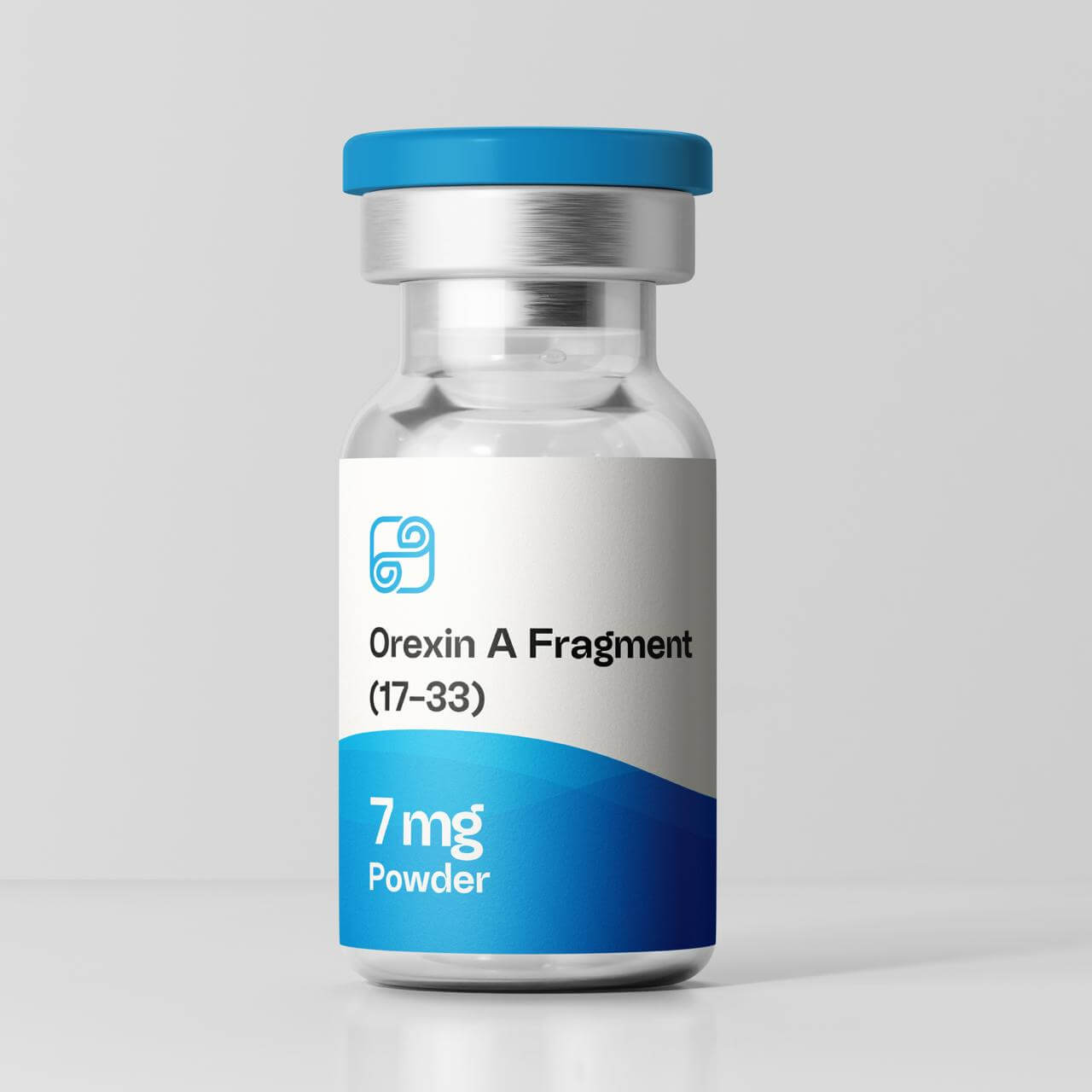
- Fragment 17-33 keeps only the last seventeen of orexin-A's thirty-three amino acids, yet it can still activate the orexin receptors, showing where the peptide's active core resides.
- It was designed as a research tool, never intended as a medicine, and is used mainly to help map how synthetic orexin agonists might be built.
- Studies of truncated peptides like this one were key to proving that the activity of orexin-A is concentrated in its C-terminal end.
Mechanism
-A fragment 17-33 acts on the same targets as the full , the orexin type 1 and type 2 receptors, which are G-protein-coupled receptors on nerve cells [2][3]. Structure-activity studies showed that the information needed to switch these receptors on is carried largely in the C-terminal part of -A, so a fragment representing that region can bind and activate the receptor and behave as an , generally with lower potency than the complete [1]. On binding, the receptors set off intracellular signaling, chiefly increases in calcium, that excites the target neurons, the same downstream events triggered by natural -A [1][2]. By reproducing part of the parent 's action, the fragment helps researchers pinpoint which residues drive receptor activation and how synthetic agonists might be built [1][3].
receptor fingerprint
OX1R (-1 receptor)Agonist
OX2R (-2 receptor)Weak agonist
Dosingtypical ranges, not medical advice
interested in protocols and clinical dosages? make an account to see them! ^_^
Safetyrisks and cautions, not medical advice
Safety is poorly characterized, with little to no human data. As an orexin agonist the theoretical cautions are overstimulation and sleep disruption, though its narrower OX1 focus likely makes it milder than full orexin-A. Best regarded as a research probe rather than a supplement.
History
Orexin-A fragment 17-33 is not a naturally occurring molecule but a laboratory-designed truncation of orexin-A, developed in the wave of structure-activity research that followed the peptide's discovery in 1998 by the groups of Sakurai and Yanagisawa and of de Lecea and Sutcliffe. Once orexin-A was known to activate the orexin receptors, chemists set about determining which portion of its 33 residues carried the receptor-activating information, synthesizing progressively shortened fragments and testing their potency.
Work of this kind established that the C-terminal region of orexin-A holds most of the activity, and fragment 17-33, representing the final seventeen residues, became one of the tools used to demonstrate that principle. It has been employed chiefly as a research reagent for mapping the peptide's active core and guiding the design of synthetic agonists, rather than being developed as a therapeutic in its own right. Its history is therefore inseparable from the broader effort to understand and eventually drug the orexin system.
Reputation
Among orexin researchers, fragment 17-33 is valued as a clean illustration of a fundamental point: that the business end of orexin-A lies in its C-terminal tail, and that a peptide can be pared down substantially while still switching on its receptors. As a research tool it has helped define the minimal structural requirements for orexin receptor activation, information that feeds directly into the design of the small-molecule and peptide agonists now sought for narcolepsy and other disorders of wakefulness.
Its appeal is scientific rather than clinical, and candor requires acknowledging that the fragment is generally less potent than the full peptide, shares the poor brain penetration and short half-life typical of peptides, and has not itself been advanced toward the clinic. Within the laboratory, however, it remains a useful probe for dissecting how one of the brain's key arousal signals engages its targets.
Subjective profileweighing the evidence above
A receptor mapping tool and nothing more. It tells researchers where orexin-A's activity lives on the molecule, and it comes with no human track record, no established dose and no reason to be in anyone's stack.
Where to buy
Suppliers
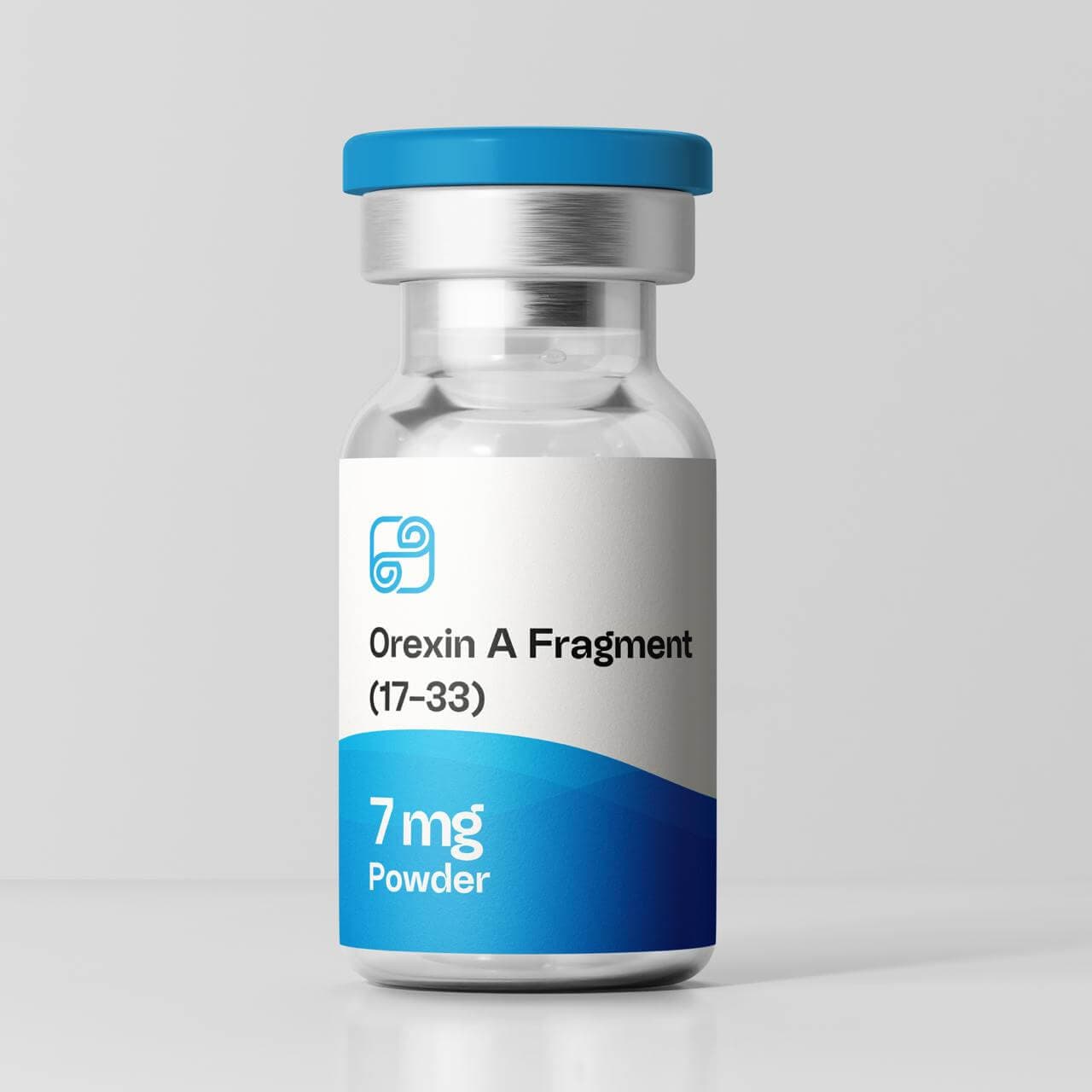
Vendors carrying Orexin-A Fragment 17-33, with live product details and codes. Links are affiliate links that support the wiki at no cost to you.
Limitless Biochem🌐
Orexin-A Fragment 17-33
Research
- 1998first citedOrexins and orexin receptors: a family of hypothalamic neuropeptides and G protein-coupled rece…
- 2021most recentHypocretin/Orexin Receptor Pharmacology and Sleep Phases.
- 1.Structure-activity analysis of truncated orexin-A analogues at the orexin-1 receptor.
- 2.Orexins and orexin receptors: a family of hypothalamic neuropeptides and G protein-coupled receptors that regulate feeding behavior.
- 3.Hypocretin/Orexin Receptor Pharmacology and Sleep Phases.
3 listed here; entry last updated August 2026
Reviews
My notesprivate to this device
FAQ
How is this different from full Orexin-A?
It is just the active C-terminal tail; it leans toward the OX1 receptor while full orexin-A hits both OX1 and OX2 strongly.
Why use a fragment at all?
A shorter peptide is easier to make and handy for teasing apart which receptor drives a given effect.
Is it well studied in people?
No; it is a research and reference tool with little to no human data.
Notes and cautions
- This is a synthetic research peptide, not an approved medicine, so it has no established human side-effect profile
- Its actions mirror part of orexin-A's, so any biological effects would relate to arousal and appetite signaling
- It is generally less potent than the full orexin-A peptide
- Used in laboratory research rather than for human treatment