
spec sheet12 rows
Betahistine is a histamine analog used as an anti-vertigo medication, most often prescribed for Meniere's disease and related balance disorders. Chemically related to histamine, it acts as a weak agonist at histamine H1 receptors and a stronger antagonist at H3 receptors. It is widely used across Europe and many other countries, although controlled trials have produced mixed evidence for its effectiveness, and it is not approved for general sale in the United States [1][2].
- Fewer and milder vertigo attacks for many people
- Prescribed across Europe for Meniere's disease
- Helps a lot of people with balance disorders
- Some report quieter tinnitus and less ear fullness
- Mild and well tolerated, which is most of its case
- Histamine analog acting at H1 and H3 receptors
- Commonly mild; the most frequently reported effects are indigestion, nausea, and headache.
- Because it is related to histamine, caution is generally advised in people with asthma or a history of peptic ulcer disease.
- Allergic skin reactions such as itching or rash occur rarely.
Overview
Betahistine is a synthetic analog of histamine, classified pharmacologically as an anti-vertigo or antivertiginous agent [3]. It is most commonly supplied as betahistine dihydrochloride and is taken by mouth. Because its structure resembles the natural signaling molecule histamine, it interacts directly with histamine receptors, behaving as a weak partial agonist at the H1 receptor and a more potent antagonist at the H3 receptor [3][4].
The drug is prescribed chiefly for Meniere's disease, an inner-ear disorder marked by recurring attacks of vertigo, ringing in the ears (tinnitus), a sense of fullness in the ear, and fluctuating hearing loss [1]. It is used mainly to reduce the frequency and severity of vertigo episodes, particularly during the quieter phases between acute attacks, and it is also given for other forms of vertigo and balance disturbance [3]. Its effect on hearing loss and tinnitus is generally considered weak or unclear [3].
The evidence base for betahistine is mixed. A Cochrane systematic review found the available trials too small or methodologically limited to conclude whether the drug meaningfully affects Meniere's disease, while noting that it appeared well tolerated [1]. A later large, multicenter, placebo-controlled study known as the BEMED trial reported that betahistine did not reduce the rate of vertigo attacks any more than placebo over nine months [2]. Despite these inconclusive findings, expert consensus panels continue to recommend it during the intercritical phase of the disease to lessen the number and severity of attacks, citing its low risk of serious side effects [3]. Comparative studies have also weighed it against other anti-vertigo drugs such as cinnarizine [4].
Betahistine was introduced in the 1960s. In the United States it received Food and Drug Administration approval in 1966 on the strength of a single study, but that approval was withdrawn in 1972 after the agency judged the supporting evidence inadequate; as a result it is not marketed there and can be obtained only through compounding pharmacies [1]. In Europe it was first registered around 1970 and has since become a widely used treatment, and it is now approved in well over a hundred countries under brand names such as Serc [1]. It is generally dispensed as oral tablets.
The rationale for using betahistine rests on its ability to increase blood flow in the inner ear and to modulate histamine signaling in the vestibular system, which is thought to aid the natural process of vestibular compensation after balance is disturbed [3]. It is usually well tolerated, with mild gastrointestinal upset and headache among the more common complaints; because it is a histamine-like compound, caution is generally advised in people with asthma or a history of peptic ulcer [3].
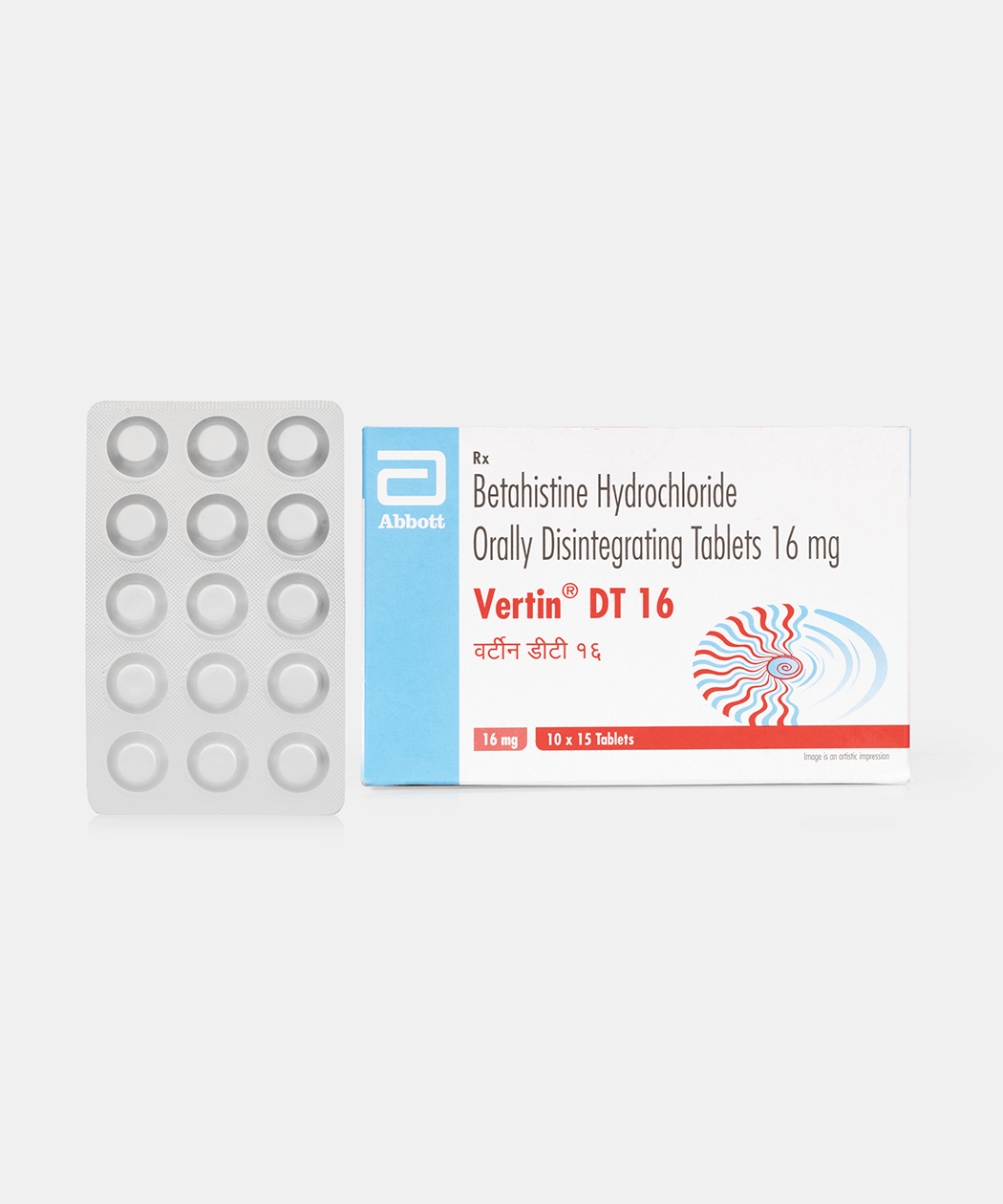
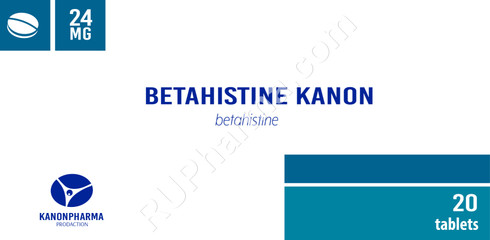
- Betahistine is a close chemical cousin of histamine itself, and it is one of the few medicines designed to treat vertigo by nudging the body's histamine system rather than blocking it.
- Although it is among the most prescribed vertigo drugs in Europe and Asia, it has not been approved for general sale in the United States since a regulatory review in the early 1970s.
Mechanism
Betahistine works through the system in two complementary ways. It acts as a weak partial at postsynaptic histamine H1 receptors, an action linked to dilation of blood vessels, including those supplying the inner ear, which is proposed to improve microcirculation in the cochlea and vestibular apparatus [3][4]. More importantly, it is a potent at presynaptic H3 autoreceptors; by blocking these inhibitory receptors it raises the turnover and release of and, indirectly, of other neurotransmitters within the central and peripheral vestibular pathways [3]. Taken together, these actions are believed to enhance inner-ear blood flow and to promote vestibular compensation, the brain's adaptation to an imbalance in signals from the two ears, which underlies the drug's use in reducing vertigo [3].
receptor fingerprint
H3 receptorantagonist
H1 receptoragonist
Inner ear microcirculationactivates
Vestibular nucleimodulates
Endolymphatic pressuremodulates
Dosingtypical ranges, not medical advice
interested in protocols and clinical dosages? make an account to see them! ^_^
Safetyrisks and cautions, not medical advice
Betahistine is generally well tolerated. The most common effects are headache, nausea and mild stomach upset. Because it is histaminergic, it should be used cautiously in people with active peptic ulcer disease or asthma, and it is not recommended in pheochromocytoma. It should not be combined with antihistamines, which act on the same receptors and can cancel its effect. It is not FDA approved in the United States, and the overall evidence for benefit is mixed, with some trials showing clear improvement in vertigo and others showing little difference from placebo.
History
Betahistine was first synthesized in the 1960s and introduced by the pharmaceutical company Unimed, reaching the market as an anti-vertigo agent under brand names such as Serc. Chemically a close analog of the neurotransmitter histamine, it was developed on the rationale that improving inner-ear blood flow could relieve the vertigo of Meniere's disease. Over the following decades it became one of the most widely prescribed vertigo treatments across Europe, Asia, and many other regions. It was voluntarily withdrawn from the United States market in the early 1970s after regulators concluded the evidence of efficacy at the time was insufficient, and it is not approved for general sale there, though it remains in broad use internationally.
Reputation
Betahistine is one of the most familiar and widely prescribed treatments for Meniere's disease and vestibular vertigo across much of the world, valued by clinicians for its long track record and generally good tolerability. Patients often appreciate that, unlike some vestibular sedatives, it is not associated with heavy drowsiness and may support the brain's own process of vestibular compensation. Its dual action on the histamine system, mild H1 agonism paired with stronger H3 antagonism, keeps it of continuing scientific interest. In the spirit of honesty, it should be noted that controlled trials have produced mixed results and high-quality evidence remains limited, which is one reason it is used routinely in many countries yet is not approved in the United States.
Subjective profileweighing the evidence above
Worth a supervised trial for Meniere's vertigo, where it is widely prescribed and helps a lot of people, though controlled evidence is honestly mixed. It is mild and well tolerated, which is most of its case; caution belongs with asthma or a history of peptic ulcer.
Where to buy
1 other outlet

Suppliers
Vendors carrying Betahistine, with live product details and codes. Links are affiliate links that support the wiki at no cost to you.
PCT.Zone
Betahistine
RUPharma🌐
Betahistine
Research
- 2001first citedBetahistine for Menière's disease or syndrome.
- 2016controlled trialEfficacy and safety of betahistine treatment in patients with Meniere's disease: primary result…
- 2020most recentVestibular Disorders
- 1.Betahistine for Menière's disease or syndrome.
- 2.Efficacy and safety of betahistine treatment in patients with Meniere's disease: primary results of a long term, multicentre, double blind, randomised, placebo controlled, dose defining trial (BEMED trial).
- 3.Report from a Consensus Conference on the treatment of Ménière's disease with betahistine: rationale, methodology and results.
- 4.Betahistine or Cinnarizine for treatment of Meniere's disease.
- 5.Vestibular Disorders
5 listed here; entry last updated August 2026
Reviews
My notesprivate to this device
FAQ
What is betahistine used for?
Mainly Meniere's disease and vertigo, to cut how often and how hard the spinning attacks hit.
Is it approved in the United States?
No; it was withdrawn from the US market and is used widely in Europe and elsewhere, sometimes through compounding pharmacies.
Does it work right away?
No; it is taken regularly over weeks to months to reduce attack frequency, not as a fast rescue for a single spell.
Can I take it with antihistamines?
It is best avoided; antihistamines block the same receptors and can cancel betahistine's effect.
Does the evidence support it?
Results are mixed; some trials show benefit for vertigo while others show little difference from placebo.
Adverse effects
- Commonly mild; the most frequently reported effects are indigestion, nausea, and headache.
- Because it is related to histamine, caution is generally advised in people with asthma or a history of peptic ulcer disease.
- Allergic skin reactions such as itching or rash occur rarely.
Notes and cautions
- Clinical trials have generally found it well tolerated, with side effect rates similar to placebo [1][2].