
spec sheet12 rows
Roxadustat is a landmark oral hypoxia-inducible factor prolyl hydroxylase inhibitor (HIF-PHI), the first-in-class agent approved to treat the anemia of chronic kidney disease. By stabilizing the body's own low-oxygen signaling, it raises endogenous erythropoietin and improves iron handling to rebuild red blood cell mass without injections. Backed by large Phase 3 trials, it offers a convenient, physiology-based alternative to traditional erythropoiesis-stimulating agents, and its capacity to lift oxygen-carrying capacity has made it a compound of keen interest for endurance performance.
- Raises your own natural EPO
- Builds red blood cell mass without injections
- Mimics the oxygen signal of altitude training
- First in class oral HIF-PH inhibitor
- Approved for the anemia of chronic kidney disease
- Backed by large Phase 3 trials
- Can raise blood pressure
- Elevated clotting and thrombosis risk, so monitoring is advised
- Gastrointestinal upset such as nausea
Overview
Roxadustat, known in development as FG-4592, is a small-molecule, orally active inhibitor of the hypoxia-inducible factor prolyl hydroxylase domain enzymes (HIF-PHDs) and the first-in-class member of the HIF-PHI category [1]. Chemically it is an isoquinoline glycinamide derivative that competes with 2-oxoglutarate at the catalytic site of the prolyl hydroxylases, the oxygen-sensing enzymes that normally tag HIF-alpha subunits for destruction. By blocking these enzymes, roxadustat mimics the physiological response to mild hypoxia even under normal oxygen conditions [1].
The compound was developed by FibroGen with partners AstraZeneca and Astellas, and it reached market as the first oral therapy in its class, gaining approval in China, Japan, the European Union, and several other regions for anemia associated with chronic kidney disease, in both dialysis and non-dialysis patients [2][3]. Its clinical program is among the largest ever assembled for renal anemia, with pivotal Phase 3 studies such as ROCKIES establishing efficacy against established comparators [2] and network meta-analyses summarizing the broader HIF-PHI evidence base [3][4].
Beyond renal anemia, roxadustat has attracted growing research interest across a range of conditions tied to the HIF pathway, including anemia of inflammation, iron-refractory anemia, chemotherapy-related anemia, tissue and organ injury, and fibrosis [1][7]. Preclinical work has explored its effects on renal fibrosis [6] and intestinal iron absorption [7], while reviewers have also flagged pathway-linked considerations such as vascular calcification that merit monitoring [8]. Because HIF stabilizers raise erythropoiesis through the body's native machinery, they are prohibited in competitive sport by the World Anti-Doping Agency; roxadustat is supplied as an oral tablet and remains a prescription medicine rather than a supplement [5].
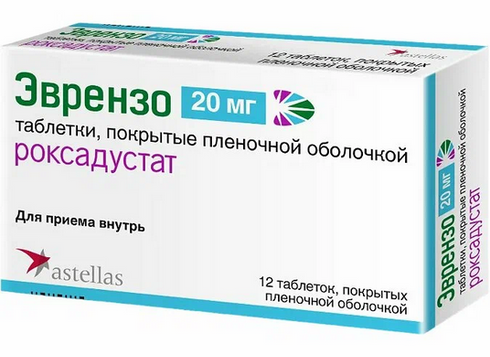
- Roxadustat exploits the same oxygen-sensing biology that won the 2019 Nobel Prize in Physiology or Medicine.
- It was the first drug of its entirely new class, and in a rare reversal of the usual pattern it launched first in China before Japan and Europe.
- By raising the body's own erythropoietin rather than injecting it, the drug mimics the physiology of altitude adaptation, which is also why it is banned in competitive sport.
Mechanism
Roxadustat works by reversibly inhibiting the HIF prolyl hydroxylase enzymes that, in the presence of oxygen, hydroxylate proline residues on -inducible factor alpha subunits and mark them for rapid degradation [1]. When these enzymes are blocked, HIF-alpha (particularly HIF-2alpha) is stabilized, accumulates, and partners with HIF-beta to switch on a coordinated genetic program [1]. The most prominent downstream effect is transcription of the erythropoietin gene in the kidney and liver, which raises circulating erythropoietin toward levels seen with natural altitude adaptation rather than the supraphysiological spikes of injected agents [1][5].
The benefits extend past erythropoietin alone. HIF signaling also improves iron availability by increasing intestinal iron transporters and lowering hepcidin, the master hormone that otherwise locks iron away, so more iron reaches the bone marrow to support hemoglobin synthesis [7]. In the pivotal ROCKIES Phase 3 trial in dialysis patients, roxadustat produced a mean hemoglobin rise of about 0.77 g/dL from baseline, meeting non-inferiority against epoetin alfa [2]. Network meta-analyses of chronic kidney disease populations found hemoglobin responses comparable to, and in some analyses modestly greater than, conventional erythropoiesis-stimulating agents [3][4].
Because the same pathway governs angiogenesis, energy metabolism, and iron regulation, roxadustat has demonstrable effects beyond red cells. Animal studies show attenuation of renal fibrosis in salt-sensitive hypertension [6] and activation of intestinal HIF2alpha to correct iron-refractory anemia regardless of hepcidin status [7]. The breadth of the HIF program also underlies its cautions; stabilizing HIF can influence vascular smooth muscle and has been linked in mechanistic reviews to vascular calcification, so cardiovascular and thrombotic risk are tracked closely in practice [8].
receptor fingerprint
HIF prolyl hydroxylaseinhibits
Erythropoietin (EPO)raises
Iron availabilityimproves
Dosingtypical ranges, not medical advice
interested in protocols and clinical dosages? make an account to see them! ^_^
Safetyrisks and cautions, not medical advice
Roxadustat is a hypoxia-inducible factor prolyl-hydroxylase inhibitor used in some countries for anemia of chronic kidney disease; it is not approved for performance or recovery use. It carries documented risks of thrombosis, including vascular access clotting and venous thromboembolism, along with hypertension and, in regulatory review, signals of increased cardiovascular events and mortality in certain groups. Because HIF activation is broadly biologically active, concerns also exist about effects on tumor growth, and off-label use in healthy people is not supported by safety data.
History
Roxadustat was developed by the American biotechnology company FibroGen as a first-in-class oral inhibitor of the HIF prolyl hydroxylase enzymes, designed to treat anemia by stabilizing the body's own hypoxia-inducible factor signaling. The concept drew directly on the Nobel Prize-winning biology of oxygen sensing, harnessing the same pathway that adapts the body to high altitude to raise endogenous erythropoietin and improve iron handling. FibroGen partnered with AstraZeneca and, in other territories, with Astellas to carry the drug through a large global Phase 3 program in patients with the anemia of chronic kidney disease.
In December 2018 it was approved in China, making it the first drug of an entirely new mechanistic class and a rare instance of a novel therapy launching first in that market. Approvals followed in Japan in 2019 and in the European Union in 2021, though the United States Food and Drug Administration declined to approve it in 2021 over cardiovascular safety questions. Its pivotal trials, including ROCKIES in dialysis patients and OLYMPUS in those not yet on dialysis, established that it could raise hemoglobin without injections.
Reputation
Roxadustat is regarded as a genuine scientific milestone, translating the biology of oxygen sensing into a convenient oral pill that can rebuild red blood cell mass without the injections that erythropoiesis-stimulating agents require. Its ability to raise the body's own erythropoietin toward levels seen in natural altitude adaptation, rather than producing the sharp supraphysiological spikes of injected agents, is a mechanistically appealing feature.
Because the same pathway improves iron availability and lowers hepcidin, it can help patients whose anemia is complicated by poor iron handling. This same breadth of the HIF program is also the source of its cautions, since the pathway touches blood vessels and metabolism, and cardiovascular and thrombotic risks have been tracked closely, contributing to a mixed regulatory reception across regions. Its capacity to lift oxygen-carrying capacity has additionally made it a compound of keen and controversial interest in endurance sport, where it is prohibited.
Subjective profileweighing the evidence above
Legitimate for anemia of chronic kidney disease in the countries that approved it, and a bad idea as a training tool despite the altitude comparisons. Raising red cells this way brings documented thrombosis, including venous clots and vascular access clotting, plus higher blood pressure. Performance use means taking that risk unmonitored.
Where to buy

1 other outlet

Suppliers
Vendors carrying Roxadustat, with live product details and codes. Links are affiliate links that support the wiki at no cost to you.
RUPharma🌐
Roxadustat
Kimera Chems
Roxadustat
Research
- 2018first citedHypoxia-inducible factor prolyl hydroxylase inhibitor roxadustat (FG-4592) protects against cis…
- 2019most active year3 papers
- 2020meta-analysisEfficacy and safety of HIF prolyl-hydroxylase inhibitor vs epoetin and darbepoetin for anemia i…
- 2026most recentRoxadustat for renal anemia: current clinical experience
- 1.The prolyl hydroxylase inhibitor roxadustat: Paradigm in drug discovery and prospects for clinical application beyond anemia.
- 2.Roxadustat Versus Epoetin Alfa for Treating Anemia in Patients with Chronic Kidney Disease on Dialysis: Results from the Randomized Phase 3 ROCKIES Study.
- 3.Efficacy and safety of HIF prolyl-hydroxylase inhibitor vs epoetin and darbepoetin for anemia in chronic kidney disease patients not undergoing dialysis: A network meta-analysis.
- 4.Safety of HIF prolyl hydroxylase inhibitors for anemia in dialysis patients: a systematic review and network meta-analysis.
- 5.Whether Prolyl Hydroxylase Blocker-Roxadustat-In the Treatment of Anemia in Patients with Chronic Kidney Disease Is the Future?
- 6.Hypoxia-inducible factor-prolyl hydroxylase inhibitor Roxadustat (FG-4592) reduces renal fibrosis in Dahl salt-sensitive rats.
- 7.Activation of Intestinal HIF2α Ameliorates Iron-Refractory Anemia.
- 8.Role of prolyl hydroxylase/HIF-1 signaling in vascular calcification.
- 9.Roxadustat for Anemia in Patients with Kidney Disease Not Receiving Dialysis
- 10.Roxadustat Treatment for Anemia in Patients Undergoing Long-Term Dialysis
- 11.Roxadustat for the treatment of anemia in chronic kidney disease patients not on dialysis: a Phase 3, randomized, double-blind, placebo-controlled study (ALPS)
- 12.Roxadustat: First Global Approval
21 listed here; entry last updated August 2026
Reviews
My notesprivate to this device
FAQ
How does roxadustat work?
It inhibits HIF-prolyl hydroxylase, mimicking a low-oxygen state so the body makes more of its own erythropoietin. This raises red blood cell production.
What is it approved for?
It is used in some regions for anemia associated with chronic kidney disease. Its use is oral, unlike injected EPO.
Why is it discussed for endurance?
Because it raises red blood cells, some are interested in it for oxygen delivery. It is prohibited in sport by anti-doping agencies.
What are the main safety concerns?
Raised blood pressure and clotting risk are notable concerns tied to higher red cell counts. Medical monitoring is important where it is prescribed.
Adverse effects
- Can raise blood pressure
- Elevated clotting and thrombosis risk, so monitoring is advised
- Gastrointestinal upset such as nausea
- Peripheral swelling in some users
- Hyperkalemia reported in trials