
spec sheet12 rows
Pirfenidone is an orally administered antifibrotic and anti-inflammatory drug used to treat idiopathic pulmonary fibrosis, a progressive scarring disease of the lungs. Chemically it is a small pyridinone molecule (5-methyl-1-phenylpyridin-2-one) that slows the loss of lung function by dampening the growth factors and collagen production that drive fibrosis. First approved in Japan in 2008 and later cleared across Europe, North America and elsewhere, it is sold under brand names such as Esbriet and Pirespa.
- Treats idiopathic pulmonary fibrosis, a scarring lung disease
- Slows the loss of lung function
- Dampens the growth factors that drive fibrosis
- Genuinely disease modifying, not just symptom cover
- Backed by large phase 3 trials
- Taken at home as pills, no infusions
- Nausea and indigestion
- Sensitivity to sunlight and skin rash
- Fatigue
Overview
Pirfenidone is a synthetic small molecule of the pyridinone class, formally named 5-methyl-1-phenylpyridin-2-one, with antifibrotic, anti-inflammatory and antioxidant properties [1][2]. It is one of only two oral therapies (alongside nintedanib) that are approved specifically to slow idiopathic pulmonary fibrosis (IPF), a chronic condition in which lung tissue is progressively replaced by scar tissue, stiffening the lungs and impairing gas exchange [1][2].
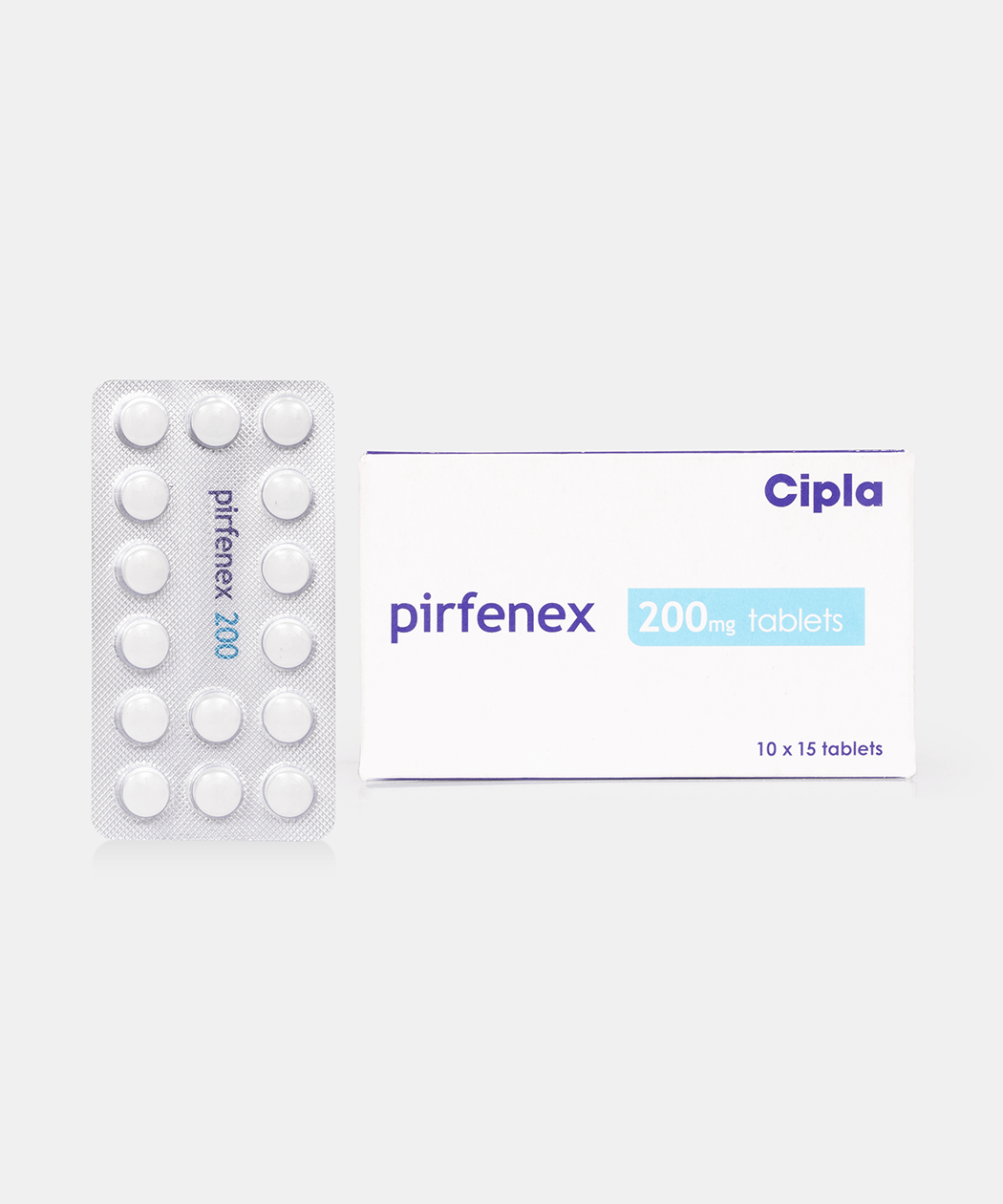
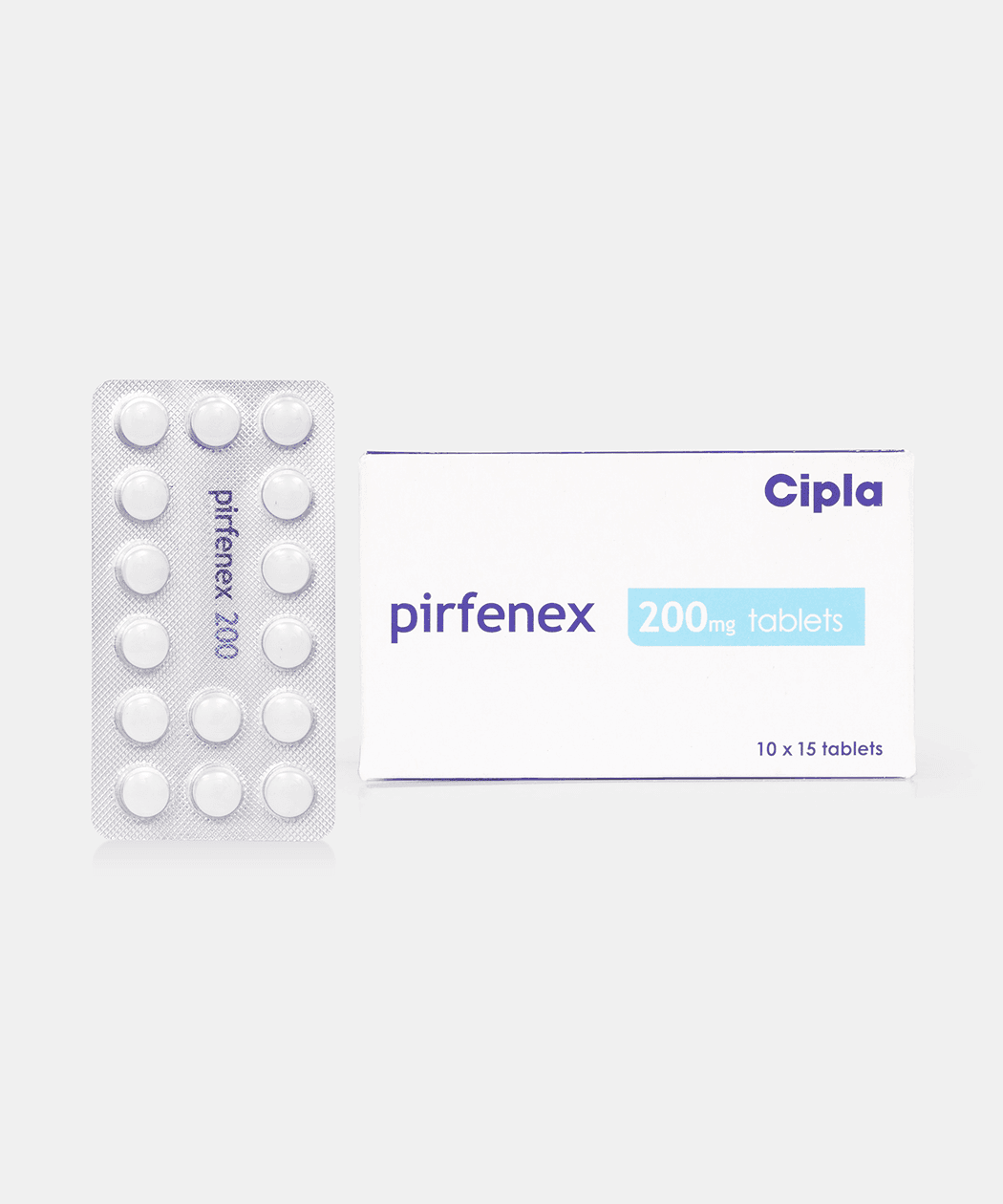
The compound was first developed and studied in Japan, where it received marketing approval in 2008 for IPF; subsequent approvals followed in India in 2010, the European Union in 2011, and the United States in 2014, with a tablet formulation added in later years [2]. Across markets it is marketed under names including Esbriet, Pirespa, Etuary and Pirfenex.
Much of the clinical evidence rests on randomised controlled trials. A Japanese phase III study reported that pirfenidone slowed the decline in vital capacity relative to placebo [3], and the two international CAPACITY trials together supported a reduction in the rate of functional decline, forming a basis for regulatory approval in several regions [4]. Reviews of IPF therapeutics describe pirfenidone as improving progression-free survival and slowing symptom worsening, though it is not curative and does not reverse existing scarring [1][2].
Pirfenidone is taken by mouth, usually with food to reduce stomach upset, and is available as capsules and coated tablets; a topical gel formulation has been marketed in a small number of countries for other uses [2]. It is a prescription medicine rather than a supplement, and its use is generally overseen by respiratory specialists because of the need for liver-function monitoring and dose management [2]. The most common tolerability issues involve the gastrointestinal tract, the skin (notably photosensitivity) and the liver [1][2].
- It was one of the first two drugs ever proven to slow idiopathic pulmonary fibrosis, a disease that previously had no effective treatment.
- It is cleared by the liver enzyme CYP1A2, so cigarette smoking, which induces that enzyme, can lower its blood levels.
- It causes marked sun sensitivity, so patients are advised to use sunscreen and protective clothing while taking it.
Mechanism
Pirfenidone acts on several of the signalling pathways that drive lung scarring. In laboratory and animal models it reduces the activity of transforming growth factor beta (TGF-beta), a central regulator of fibrosis, and lowers the proliferation of fibroblasts along with their synthesis of collagen types I and III [5][1]. It also shows anti-inflammatory and antioxidant effects, tempering the release of pro-inflammatory mediators such as tumour necrosis factor alpha and reducing within lung tissue [1][2]. The overall result is a slowing of extracellular matrix deposition rather than a reversal of established fibrosis, which is reflected clinically in a more gradual loss of lung function over time [3][4]. The drug is cleared largely by the liver through the CYP1A2 enzyme, which underlies several of its notable drug and smoking interactions [2].
receptor fingerprint
Transforming growth factor beta signalinginhibits
Fibroblast proliferation and myofibroblast changeinhibits
Collagen and extracellular matrix synthesisinhibits
Tumor necrosis factor alpha and inflammatory cytokinesmodulates
Reactive oxygen species and modulates
Dosingtypical ranges, not medical advice
interested in protocols and clinical dosages? make an account to see them! ^_^
Safetyrisks and cautions, not medical advice
Pirfenidone is prescription only. The most common problems are stomach related, including nausea, indigestion, loss of appetite and weight loss, and a notable skin sensitivity to sunlight that can cause rashes, so strict sun protection is advised. It can also cause fatigue, dizziness and rises in liver enzymes, so liver function is monitored. It is a strong substrate of the liver enzyme CYP1A2, which means the antidepressant fluvoxamine is contraindicated and ciprofloxacin can push levels up, while smoking lowers them. It is not used in severe liver impairment.
Interactionsdocumented pairs only, not exhaustive
Pirfenidone is one of the few drugs whose interaction profile is dominated by CYP1A2. Human liver microsome work attributes roughly 73% of pirfenidone 5-hydroxylation to CYP1A2, with CYP2C19 and CYP2D6 contributing under a fifth between them, and regulatory review classes it as a sensitive CYP1A2 substrate.
The consequences are large. Fluvoxamine, a strong CYP1A2 inhibitor, raises pirfenidone exposure roughly four fold and the pairing is contraindicated; the excess shows up as nausea, anorexia, fatigue, photosensitivity and raised transaminases. Ciprofloxacin at higher doses is a moderate inhibitor and pushes exposure close to two fold. Drugs that inhibit CYP1A2 alongside one of the minor pathways, amiodarone and propafenone among them, compound the effect.
Induction runs the other way and is easy to miss. Cigarette smoking is a potent CYP1A2 inducer and roughly halves pirfenidone exposure, so a smoker can be underexposed on a standard regimen, and concentrations climb again if smoking stops during treatment.
Checking a whole stack? Run it through interactions + stacks.
History
Pirfenidone is a small synthetic pyridinone molecule, chemically 5-methyl-1-phenylpyridin-2-one, that was first synthesized in the 1970s and initially investigated for antipyretic and analgesic and anti-inflammatory activity before its striking antifibrotic properties came to attention. Over the following decades laboratory and animal work showed that it dampened transforming growth factor beta signaling, curbed fibroblast proliferation, and reduced collagen deposition, pointing toward a use in fibrotic disease.
It reached the market first in Japan, where it was approved in 2008 under the name Pirespa for idiopathic pulmonary fibrosis, a relentless scarring disease of the lungs that previously had no proven pharmacologic treatment. Approval in the European Union followed in 2011 for the brand Esbriet, and in 2014 the United States Food and Drug Administration approved it on the strength of the ASCEND trial together with the earlier CAPACITY studies. Its arrival, alongside the antifibrotic nintedanib, marked the beginning of an era in which idiopathic pulmonary fibrosis could at last be treated rather than merely observed.
Reputation
Pirfenidone is regarded as a genuine milestone in pulmonary medicine, one of the first two drugs ever shown to slow the otherwise inexorable decline of idiopathic pulmonary fibrosis, a disease that for decades had no effective therapy. In the pivotal ASCEND trial and a pooled analysis of the CAPACITY studies it significantly reduced the rate at which forced vital capacity declined and showed a favorable effect on progression-free survival, and a prespecified analysis across the trials pointed to reduced mortality.
For patients facing a progressive and life-limiting illness, the ability to meaningfully slow lung function loss is a substantial benefit. It is honest to note that pirfenidone slows fibrosis rather than reversing it, and that it commonly causes gastrointestinal upset, photosensitivity, and skin rash, so sun protection and dose management matter. Even with those limitations, it stands as a valued and evidence-backed treatment that changed the outlook for a once-untreatable disease.
Subjective profileweighing the evidence above
For idiopathic pulmonary fibrosis this is a genuine disease-modifying option, slowing the loss of lung function on large phase 3 data and taken at home as pills. The nausea, appetite loss and severe sun sensitivity are real and worth planning around, and liver enzymes get monitored.
Where to buy
Suppliers
Vendors carrying Pirfenidone, with live product details and codes. Links are affiliate links that support the wiki at no cost to you.
PCT.Zone
Pirfenidone
Research
- 2010first citedPirfenidone in idiopathic pulmonary fibrosis.
- 2022most recentIdiopathic pulmonary fibrosis: Current and future treatment
- 1.Idiopathic pulmonary fibrosis: Disease mechanisms and drug development
- 2.Idiopathic pulmonary fibrosis: Current and future treatment
- 3.Pirfenidone in idiopathic pulmonary fibrosis.
- 4.Pirfenidone in patients with idiopathic pulmonary fibrosis (CAPACITY): two randomised trials
- 5.Antifibrotic activities of pirfenidone in animal models
- 6.Pirfenidone: a review of its use in idiopathic pulmonary fibrosis
6 listed here; entry last updated August 2026
Reviews
My notesprivate to this device
FAQ
Does pirfenidone cure pulmonary fibrosis?
No, it does not reverse the disease, but it slows the scarring and the decline in lung function over time.
Why do I need sun protection?
Pirfenidone makes skin much more sensitive to sunlight, so cover up and use sunscreen to avoid rashes and burns.
Should I take it with food?
Yes, taking it with meals reduces the nausea and stomach upset that are common, especially early on.
Why are liver tests needed?
It can raise liver enzymes, so your clinician checks liver function regularly and may adjust the dose if needed.
Does smoking affect it?
Yes, smoking speeds its breakdown and lowers its levels, which can reduce how well it works.
Adverse effects
- Nausea and indigestion
- Sensitivity to sunlight and skin rash
- Fatigue
- Reduced appetite and weight loss
- Raised liver enzymes