
spec sheet13 rows
Paroxetine is an antidepressant of the selective serotonin reuptake inhibitor (SSRI) class, first approved in the early 1990s and sold under brand names including Paxil. It raises serotonin activity in the brain by strongly blocking its reuptake, and it is used for depression and a range of anxiety-related disorders. Among the SSRIs it is noted for a relatively high rate of discontinuation symptoms when stopped.
- Among the strongest anxiety options in the SSRI class
- Blocks serotonin reuptake more powerfully than most SSRIs
- Used for depression and a range of anxiety related disorders
- Calming rather than activating, a fit for agitated anxiety
- Approved in the early 1990s and still sold as Paxil
- One of the most studied antidepressants ever prescribed
- Nausea, especially early in treatment
- Drowsiness or fatigue
- Dry mouth and constipation
Overview
Paroxetine is a selective serotonin reuptake inhibitor of the phenylpiperidine chemical class, used mainly as an antidepressant [1]. It was first approved in 1992 and marketed by GlaxoSmithKline as Paxil, and a low-dose version was later approved for hot flashes associated with menopause [1]. It is a widely prescribed medicine, available generically, and appears on the World Health Organization's list of essential medicines [1].
Paroxetine is approved for major depressive disorder and for several anxiety-spectrum conditions, including panic disorder, social anxiety disorder, generalized anxiety disorder, obsessive-compulsive disorder, and post-traumatic stress disorder [1]. Comparative analyses of drug treatments for panic disorder rank it among the effective options [4]. It is also used for premenstrual dysphoric disorder and, off-label, for problems such as premature ejaculation and menopausal hot flashes [1].
Compared with other members of its class, paroxetine is one of the most potent inhibitors of the serotonin transporter and has a comparatively short duration of action, features linked to its notably high rate of discontinuation, or withdrawal, symptoms if the drug is stopped abruptly [1][3]. Like other antidepressants it carries warnings about a possible increase in suicidal thinking in younger patients, and its use in pregnancy has been associated with a higher risk of certain birth defects [1]. It is a prescription medicine, and, as with the SSRI class generally, guidance emphasizes gradual dose reduction when treatment is ended [3].
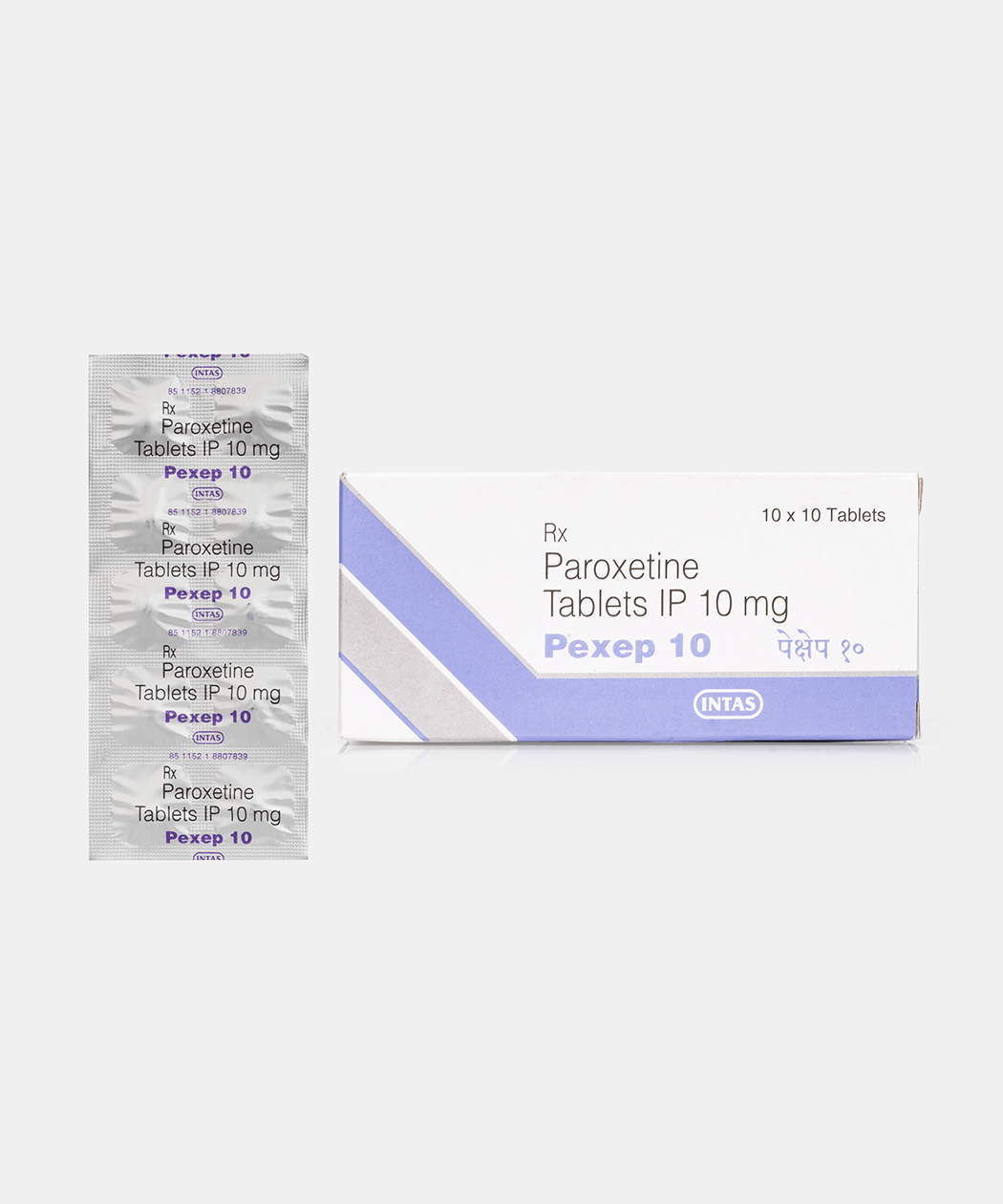
- Paroxetine is one of the most potent and selective of all SSRIs at blocking the serotonin transporter.
- Because it is short-acting and binds its target tightly, it has one of the highest rates of discontinuation symptoms among antidepressants when stopped suddenly.
- A single molecule, it carries an unusually wide range of approvals, spanning depression and several distinct anxiety-related disorders.
Mechanism
Paroxetine works by blocking the transporter (SERT), the protein that normally carries the neurotransmitter serotonin back into nerve terminals after it is released [1]. By inhibiting this reuptake, paroxetine increases the amount of available in the to act on receptors, an effect thought to underlie its antidepressant and anti-anxiety benefits, which typically develop over weeks of treatment as the brain adapts [1][3]. It is among the most potent and selective of the SSRIs at the transporter, with only weak effects on the reuptake of , and it also has mild anticholinergic activity [1]. Because it is short-acting and strongly bound to its target, stopping it suddenly can trigger a discontinuation syndrome as signaling readjusts [3].
receptor fingerprint
transporter (SERT)potent inhibitor
receptorsantagonist
synthaseinhibits
Safetyrisks and cautions, not medical advice
Paroxetine is an SSRI with a notably high rate of discontinuation syndrome (dizziness, flu-like symptoms, and electric-shock sensations) if stopped abruptly, owing to its short half-life, so it should be tapered under supervision. Common effects include sexual dysfunction, weight gain, sedation, and anticholinergic symptoms, and it carries class warnings for increased suicidal thinking in people under 25 and for serotonin syndrome when combined with other serotonergic drugs or MAOIs. It is associated with a higher risk of birth defects than other SSRIs and increases bleeding risk, especially alongside anticoagulants or NSAIDs.
Interactionsdocumented pairs only, not exhaustive
Paroxetine is not merely a CYP2D6 substrate; it is among the strongest CYP2D6 inhibitors in clinical use, and most of its interaction burden comes from what it does to other drugs. Tamoxifen needs CYP2D6 to form endoxifen, its active metabolite, and a population-based cohort of women taking both reported higher breast cancer mortality as the overlap between the two lengthened. Metoprolol exposure rises roughly three to four fold with its half life doubled, giving deeper and longer beta blockade. Risperidone, tricyclics, atomoxetine, and codeine and tramadol, whose analgesic effect depends on CYP2D6 activation, are all affected.
Monoamine oxidase inhibitors are contraindicated, along with linezolid and intravenous methylene blue, because of serotonin syndrome; the same risk applies more modestly to triptans, tramadol, fentanyl and St John's wort. Thioridazine and pimozide are contraindicated on QT grounds.
Paroxetine also depletes platelet serotonin, so bleeding risk rises alongside NSAIDs, aspirin, warfarin and direct oral anticoagulants.
Checking a whole stack? Run it through interactions + stacks.
History
Paroxetine was first synthesized in the 1970s by the Danish pharmaceutical company Ferrosan, and its rights were later acquired and developed by Beecham, which through corporate mergers became SmithKline Beecham and ultimately GlaxoSmithKline. As one of the early selective serotonin reuptake inhibitors, it was engineered for potent and selective blockade of the serotonin transporter, and it reached the United States market in 1992 under the brand name Paxil for major depression.
Over the following years it earned a broad set of approvals spanning anxiety-related conditions, including panic disorder, obsessive-compulsive disorder, social anxiety disorder, generalized anxiety disorder, post-traumatic stress disorder, and premenstrual dysphoric disorder, making it one of the most widely indicated antidepressants of its era. Its history also includes notable controversy, particularly a debate over the interpretation and reporting of a trial of the drug in adolescents. It remains in wide use worldwide as an inexpensive generic.
Reputation
Paroxetine is a well-established and effective antidepressant and anti-anxiety medicine, and a large network meta-analysis of 21 antidepressants placed it among the more efficacious options in head-to-head comparisons for major depressive disorder. Its breadth of approved uses across depression and multiple anxiety disorders reflects genuine versatility, and decades of clinical experience and low generic cost keep it a practical choice. Patients and clinicians appreciate that its strong, calming serotonergic effect can be particularly helpful where anxiety features prominently.
The honest tradeoffs are real and characteristic of this drug: it is among the shortest-acting and most anticholinergic of the SSRIs, so abrupt discontinuation can trigger a notably uncomfortable withdrawal syndrome, and tapering slowly is important. It is more prone than some peers to weight gain and sexual side effects, and it is generally avoided in pregnancy. Weighed overall, it remains a valuable, evidence-backed medicine when its profile is matched thoughtfully to the individual.
Subjective profileweighing the evidence above
It works, particularly for anxiety, but among the SSRIs it is the one most likely to make you pay on the way out; the short half-life gives it the roughest discontinuation syndrome of the class. Sedation, weight gain and sexual side effects also run higher here, which is why other SSRIs are usually tried first.
Where to buy
1 other outlet

Suppliers
Vendors carrying Paroxetine, with live product details and codes. Links are affiliate links that support the wiki at no cost to you.
PCT.Zone
Paroxetine
RUPharma🌐
Paroxetine
Research
- 1993first citedParoxetine: an overview of the efficacy and safety of a new selective serotonin reuptake inhibi…
- 2023meta-analysisPharmacological treatments in panic disorder in adults: a network meta-analysis
- 2024most recentMechanisms of SSRI Therapy and Discontinuation
- 1.Paroxetine
- 2.Paroxetine: an overview of the efficacy and safety of a new selective serotonin reuptake inhibitor in the treatment of depression
- 3.Mechanisms of SSRI Therapy and Discontinuation
- 4.Pharmacological treatments in panic disorder in adults: a network meta-analysis
- 5.Comparative efficacy and acceptability of 21 antidepressant drugs for the acute treatment of adults with major depressive disorder: a systematic review and network meta-analysis
5 listed here; entry last updated August 2026
Reviews
My notesprivate to this device
FAQ
What is paroxetine?
It is a potent selective serotonin reuptake inhibitor (SSRI) used for anxiety and mood conditions.
Why is discontinuation notable?
It has a relatively short half-life and strong effects, which can make stopping it harder than some newer SSRIs; taper only under medical guidance.
Does it cause sedation?
Compared with some other SSRIs it tends to be more sedating and more associated with weight gain.
Is it a prescription medication?
Yes, it is a prescription antidepressant and should be used under a clinician's care.
Adverse effects
- Nausea, especially early in treatment
- Drowsiness or fatigue
- Dry mouth and constipation
- Sexual dysfunction
- Discontinuation symptoms if stopped abruptly
- Weight gain with longer-term use