
spec sheet12 rows
Fluoxetine is an antidepressant of the selective serotonin reuptake inhibitor (SSRI) class, best known by the brand name Prozac. Developed by Eli Lilly and approved in the United States in 1987, it was the first of the SSRIs to become a commercial success and helped make this class the leading treatment for depression. It is prescribed for major depression, obsessive-compulsive disorder, panic disorder, bulimia nervosa, and premenstrual dysphoric disorder, and it appears on the World Health Organization's List of Essential Medicines. A distinctive feature is its unusually long stay in the body, owing partly to a long-lived active breakdown product.
- The original blockbuster SSRI, still standard issue
- Long half-life self-tapers; gentler coming off
- Slightly activating; lift rather than sedation
- Direct TrkB action, feeding BDNF-driven plasticity
- Backed by decades of clinical evidence
- On the WHO essential medicines list
- Nausea, sleep disturbance, and headache are common early on
- Sexual difficulties, which occasionally persist after stopping
- Can be activating, causing restlessness or insomnia
Overview
Fluoxetine is a medicine of the selective serotonin reuptake inhibitor family, a group of antidepressants that raise the availability of the neurotransmitter serotonin in the brain [1][2]. Chemically it is a fluorinated compound, sold as a racemic mixture of two mirror-image forms, with the molecular formula C17H18F3NO [1]. It is well absorbed by mouth and is broken down in the liver into an active metabolite called norfluoxetine; both the parent drug and this metabolite linger for a long time, with elimination measured in days to weeks rather than hours, which gives fluoxetine one of the longest durations of action among antidepressants and makes withdrawal symptoms less abrupt when it is stopped [3].
The drug grew out of research begun at the American company Eli Lilly around 1970, as the idea took hold that boosting serotonin signalling could relieve depression [2]. Chemists including Bryan Molloy and Ray Fuller, together with the pharmacologist David Wong, identified fluoxetine as the most selective serotonin reuptake inhibitor in their series [2]. First reported in the mid-1970s and given the trade name Prozac, it was approved by the United States Food and Drug Administration in 1987 and reached the American market the following year [1][2]. It went on to become one of the most widely prescribed medications in the world and a cultural landmark, and it remains on the World Health Organization's List of Essential Medicines [1].
Fluoxetine is approved for a broad range of psychiatric conditions, including major depressive disorder in adults and in children from the age of eight, obsessive-compulsive disorder, panic disorder, bulimia nervosa, and premenstrual dysphoric disorder [1]. A large network meta-analysis comparing twenty-one antidepressants found that all of them, fluoxetine included, were more effective than placebo for acute depression in adults, and that fluoxetine was among the better-tolerated options, with relatively few patients stopping treatment [4]. It is also used off-label for other anxiety-related conditions [1].
Common side effects include nausea, sleep disturbance, headache, and sexual difficulties, and fluoxetine is often regarded as one of the more activating SSRIs, sometimes causing restlessness or insomnia [1][3]. Combining it with other serotonin-raising drugs, especially monoamine oxidase inhibitors, can trigger a potentially dangerous reaction known as serotonin syndrome, and because it strongly inhibits the liver enzymes CYP2D6 and CYP2C19 it can alter the levels of many other medicines [1][3]. Like other antidepressants, its labelling carries a warning that it may increase suicidal thoughts in children, adolescents, and young adults, particularly early in treatment, so use in younger patients calls for close monitoring [1]. It is supplied as capsules, tablets, and a liquid [1].
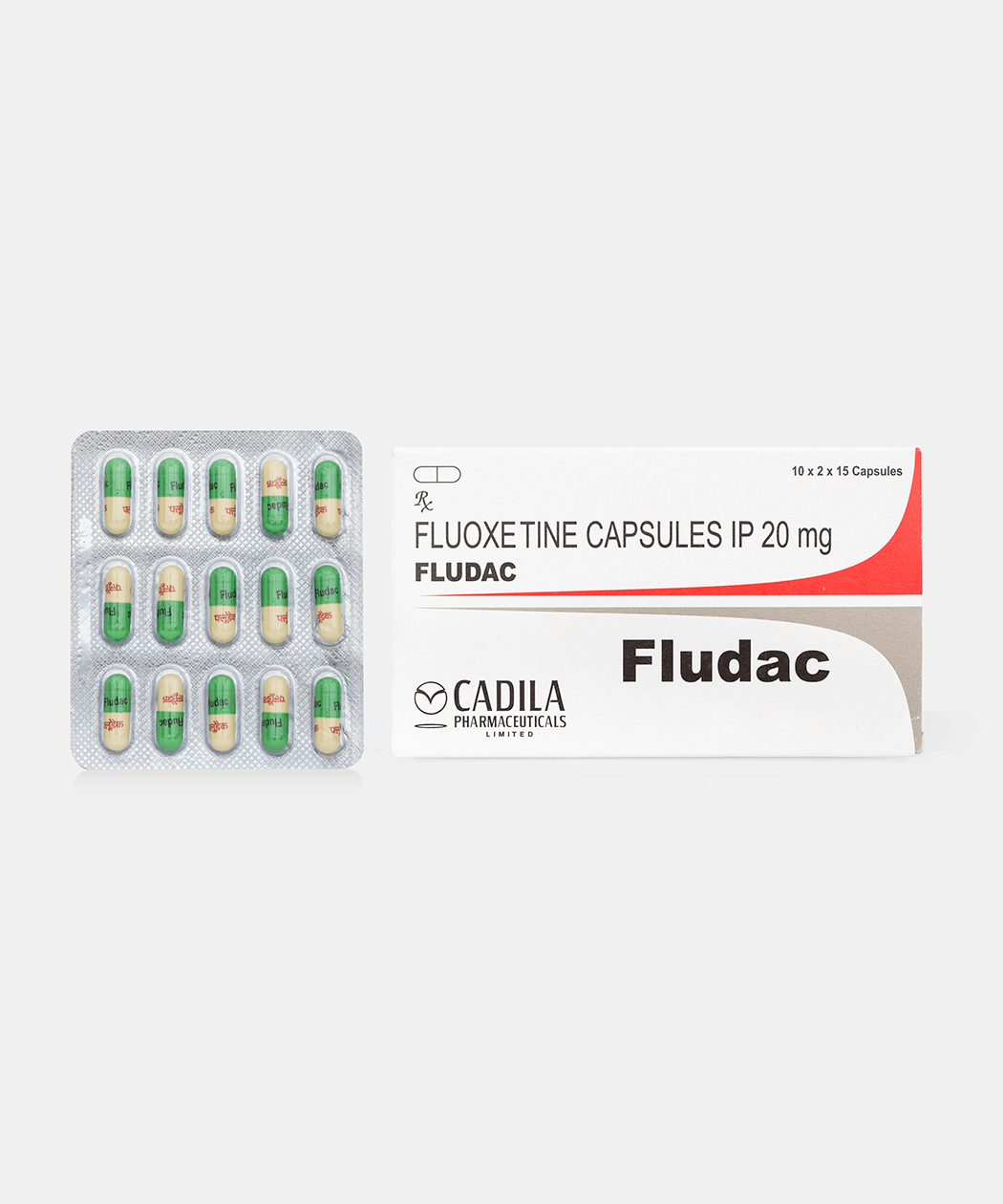
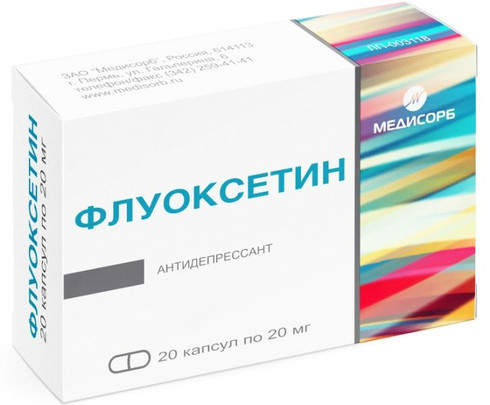
- Fluoxetine's chemical lineage traces back to the common antihistamine diphenhydramine, the starting point for Lilly's serotonin-selective search.
- Its active metabolite norfluoxetine lingers for one to two weeks, giving fluoxetine the longest effective duration of any common SSRI.
- The identical molecule is sold under a separate name, Sarafem, specifically for premenstrual dysphoric disorder.
Mechanism
Fluoxetine works by blocking the transporter, the protein on nerve terminals that normally reabsorbs serotonin from the after it has been released [1][2]. By preventing this reuptake, the drug allows to remain longer in the gaps between neurons, strengthening serotonergic signalling [2].
This immediate effect on levels happens quickly, but the improvement in mood typically takes weeks to appear, which points to slower downstream adaptations; these are thought to include a resetting of the serotonin autoreceptors that initially restrain neuron firing and, over time, changes in gene expression and neurotrophic factors that support the health and plasticity of brain circuits [1]. Fluoxetine is highly selective for the transporter over those for noradrenaline and , which underlies both its therapeutic profile and its comparatively favourable tolerability relative to older antidepressants [2][3].
receptor fingerprint
transporter (SERT)inhibits
5-HT2C receptorantagonist
/ activates downstream
( receptor)proposed direct positive allosteric modulator
Safetyrisks and cautions, not medical advice
Fluoxetine is an SSRI with common effects including nausea, insomnia or activation and anxiety, appetite changes, and sexual dysfunction; its long half-life makes classic discontinuation syndrome less pronounced but prolongs the window for drug interactions. It is a potent CYP2D6 inhibitor and can cause serotonin syndrome when combined with other serotonergic agents or MAOIs. Like all antidepressants it carries a boxed warning for increased suicidal thinking in children and young adults, so mood changes warrant monitoring early in treatment.
Interactionsdocumented pairs only, not exhaustive
Fluoxetine inhibits cytochrome P450 2D6 and 3A4, causing significant pharmacokinetic interactions with many drugs. The combination of fluoxetine with warfarin increases the international normalized ratio; however, large-scale pharmacovigilance analysis suggests the actual bleeding risk in clinical practice is lower than theoretical predictions, though elevation of INR remains a real phenomenon [5].
Fluoxetine is contraindicated with monoamine oxidase inhibitors; the combination produces serotonin syndrome with neuromuscular and autonomic symptoms and has caused severe, life-threatening reactions [6]. Concurrent caffeine consumption alters fluoxetine pharmacokinetics by decreasing renal clearance and prolonging drug action, potentially augmenting antidepressant effects [7]. Most common pairings with other selective serotonin reuptake inhibitors, atypical antipsychotics, and anticonvulsants have not been systematically studied for interaction magnitude.
Checking a whole stack? Run it through interactions + stacks.
History
Fluoxetine was developed at Eli Lilly and Company in the early 1970s by a research team that included David Wong, Bryan Molloy, Ray Fuller, and Klaus Schmiegel, who were searching for a compound that would block serotonin reuptake without the broad receptor activity of the older tricyclic antidepressants. Working from a chemical scaffold related to the antihistamine diphenhydramine, they identified the molecule then known as LY110140 in 1972 and confirmed its selective action on the serotonin transporter.
After a lengthy development and review process it was approved in the United States in 1987 and launched the following year under the brand name Prozac. It became the first genuinely successful selective serotonin reuptake inhibitor and a cultural landmark, inspiring books such as Listening to Prozac and helping to make the SSRIs the dominant treatment for depression. It is now a widely available generic and appears on the World Health Organization's List of Essential Medicines.
Reputation
Fluoxetine is widely credited with transforming the treatment of depression, offering comparable efficacy to the older tricyclics while being far safer in overdose and generally easier to tolerate, a combination that helped bring antidepressant treatment into mainstream practice. It carries a strong evidence base across major depression, obsessive-compulsive disorder, bulimia, and premenstrual dysphoric disorder, and its unusually long half-life gives it a practical advantage: missed doses matter less and discontinuation symptoms are milder than with shorter-acting SSRIs.
Honest discussion acknowledges that it can take several weeks to reach full effect, that sexual side effects and early activation or restlessness are common complaints, and that regulators require a warning about suicidal thinking in younger patients. Even so, decades of clinical experience have made it one of the most trusted and thoroughly studied psychiatric medicines, and for many prescribers it remains a sensible first choice.
Subjective profileweighing the evidence above
Still a sensible first SSRI, and the long half-life makes coming off it far gentler than most of the class. It can be activating early, sexual side effects are common, and it inhibits CYP2D6 strongly enough that the rest of your medication list matters; prescription and follow-up, not self-management.
Where to buy
1 other outlet

Suppliers
Vendors carrying Fluoxetine, with live product details and codes. Links are affiliate links that support the wiki at no cost to you.
PCT.Zone
Fluoxetine
RUPharma🌐
Fluoxetine
Research
- 1994first citedClinical pharmacokinetics of fluoxetine
- 2004meta-analysis"Wish bias" in antidepressant drug trials?
- 2026most recentAbsence of pharmacovigilance signals for bleeding events associated with warfarin-SSRI drug int…
- 1."Wish bias" in antidepressant drug trials?
- 2.Case history: the discovery of fluoxetine hydrochloride (Prozac)
- 3.Clinical pharmacokinetics of fluoxetine
- 4.Comparative efficacy and acceptability of 21 antidepressant drugs for the acute treatment of adults with major depressive disorder: a systematic review and network meta-analysis
- 5.Absence of pharmacovigilance signals for bleeding events associated with warfarin-SSRI drug interactions: a comparative analysis of FAERS and CVARD databases.
- 6.Drug interactions with selective serotonin reuptake inhibitors, especially with other psychotropics.
- 7.An Exploration of the Interplay Between Caffeine and Antidepressants Through the Lens of Pharmacokinetics and Pharmacodynamics.
7 listed here; entry last updated August 2026
Reviews
My notesprivate to this device
FAQ
What is fluoxetine?
It is one of the original SSRIs, widely used for depression, anxiety, and OCD.
Why is it taken in the morning?
It tends to be slightly activating, so morning dosing helps avoid sleep disruption.
Why is discontinuation easier?
Its long half-life and long-acting metabolite mean levels taper gradually, softening withdrawal effects.
How long until it works?
Full mood benefits usually take several weeks to develop.
How does fluoxetine work beyond serotonin?
A striking study suggests fluoxetine, like most antidepressants, binds directly to the TrkB receptor as a positive allosteric modulator, potentiating BDNF and the plasticity behind its antidepressant effect. In that view the serotonin reuptake block is not the whole story for the mood benefit.
Adverse effects
- Nausea, sleep disturbance, and headache are common early on
- Sexual difficulties, which occasionally persist after stopping
- Can be activating, causing restlessness or insomnia
- Serotonin syndrome risk when combined with other serotonergic drugs
- Labeled warning of increased suicidal thoughts in younger patients