
spec sheet6 rows
Hypoxen is a Russian synthetic polyphenolic antihypoxant sold to improve tolerance of low oxygen and of heavy physical or mental load; it is registered only in Russia and neighbouring states and has never been tested in a trial meeting international standards.
- Russian antihypoxant built for low oxygen tolerance
- Aimed at heavy physical and mental load
- Proposed artificial electron carrier, a genuinely novel idea
- Direct radical scavenging alongside that carrier role
- Registered in Russia and neighbouring states
- A polyphenolic chemistry with no Western equivalent
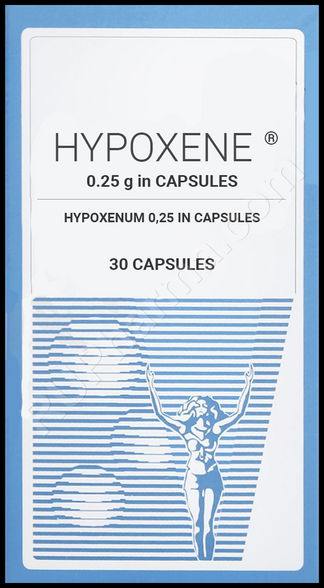
- Hypoxen, previously registered as Olifen, is sodium polydihydroxyphenylene thiosulfonate; its 2025 review states plainly that human studies are limited and NO clinical trial following international standards is available [1].
- WADA added Hypoxen to its Monitoring Program in 2023 after documented athlete use, and laboratories have since identified eight urinary metabolites establishing administration [3].
- CONTRADICTION: in rat liver mitochondria Hypoxen SLOWED both phosphorylating and uncoupled respiration and significantly decreased malate, glutamate and succinate dehydrogenase activity [2].
- It is a polydisperse polymer, not a single molecule: LC-HRMS resolved 1 to 6 repeats of the 2,4-dihydroxyphenylene unit, each with multiple isomers [4].
- Hypoxen 20 mg/kg intraperitoneally cut dioxidine-induced chromosome aberrations in mouse bone marrow by 35%, though oral pretreatment at 70 mg/kg did not [6].
Mechanism
It is a polymeric hydroquinone-like thiosulfonate proposed to act as an artificial electron carrier that shunts electrons into the respiratory chain, and as a direct radical scavenger, so tissue needs less oxygen for the same ATP output. That account comes from Russian laboratory work; there is no independent human pharmacokinetic or mechanistic study behind it.
receptor fingerprint
respiratory chain (phosphorylating and uncoupled respiration)Reduces the rate of both phosphorylating and uncoupled oxygen consumption in isolated rat liver mitochondria, the opposite of the advertised effect
Succinate dehydrogenase (Complex II)Significant inhibition of enzyme activity in isolated mitochondria
Malate dehydrogenase and dehydrogenaseBoth significantly decreased in rat liver mitochondria
ATP-sensitive potassium channel (mitoKATP)Proposed activation in skeletal muscle and myocardium; asserted in review, not demonstrated by direct measurement
Safetyrisks and cautions, not medical advice
Hypoxen is a single molecule in the antioxidant class. A full adverse effect profile has not been compiled for this entry yet, so nothing here should be read as evidence that it is well tolerated; the absence is missing work rather than a finding. What is documented is what the compound is and what it is used for.
Subjective profileweighing the evidence above
Antihypoxants are a drug class that barely exists outside Russian pharmacology, and Hypoxen is the purest example of the problem: a plausible electron carrier story, a registration in a handful of countries, and no independent human pharmacokinetics behind any of it. The mechanism is not absurd, it is simply untested by anyone outside the tradition that produced it. Whoever buys this is buying a hypothesis and should price it accordingly.
Where to buy
Suppliers
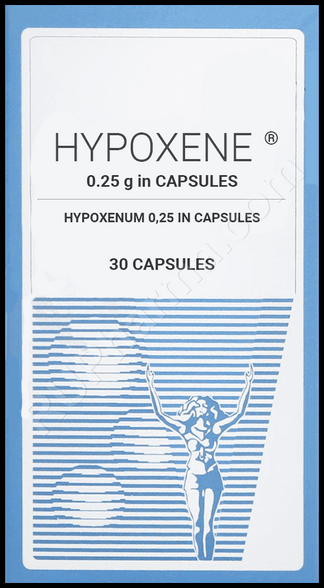
Vendors carrying Hypoxen, with live product details and codes. Links are affiliate links that support the wiki at no cost to you.
RUPharma🌐
Hypoxen
Research
- 2002first cited[Antimutagenic hypoxen activity in vivo].
- 2025most recentA Review of Hypoxen Pharmacology and Potential to Enhance Sports Performance.
- 1.A Review of Hypoxen Pharmacology and Potential to Enhance Sports Performance.
- 2.[The drug hypoxen--a new inhibitor of mitochondrial respiration and mitochondrial dehydrogenases].
- 3.Urinary metabolites indicative of the administration of hypoxen monitored by liquid chromatography-high resolution/accurate mass tandem mass spectrometry.
- 4.Analysis of the polymeric mixture in hypoxen, using high-performance liquid chromatography coupled with high-resolution mass spectrometry.
- 5.Changes in chemiluminescence of whole blood of COPD patients treated with Hypoxen and effects of C₆₀ fullerenes on blood chemiluminescence.
- 6.[Antimutagenic hypoxen activity in vivo].
6 listed here; entry last updated August 2026
Reviews
My notesprivate to this device
Notes and cautions
- Hypoxen has no FDA or EMA approval and no published clinical trial meeting international standards, so its human safety profile is essentially uncharacterised [1].
- The mechanistic finding that matters is that it inhibits mitochondrial dehydrogenases and slows respiration in isolated mitochondria, the opposite of the advertised effect, and in vitro work has compared its influence on oxidative phosphorylation to the uncoupler 2,4-dinitrophenol, which WADA prohibited in 2024 and which has killed users through hyperthermia (PMID 40223246, PMID 20799641).
- Because it is a polymeric mixture rather than a defined molecule, batch-to-batch composition is not guaranteed, and competitive athletes should note that validated urinary markers now make use detectable (PMID 39327714, PMID 38654556).