
spec sheet11 rows
Cagrilintide is a next-generation, long-acting amylin analogue engineered for once-weekly dosing and sustained appetite control. In clinical trials it has driven substantial weight loss on its own and even greater results when paired with semaglutide, placing it among the most promising agents in modern metabolic medicine. For those pursuing serious, science-backed weight management, cagrilintide represents a genuinely novel and powerful mechanism.
- Drives real, clinically measured weight loss
- Appetite stays quiet across a full week
- Slows digestion so fullness lasts longer
- Stacks even harder with semaglutide
- Engineered for once weekly convenience
- Next generation amylin, a genuinely novel mechanism
- Gastrointestinal effects such as nausea, constipation, or diarrhea
- Injection-site reactions
- Reduced appetite that can lower overall food intake
Overview
Cagrilintide is a synthetic, long-acting analogue of amylin, a 37 amino acid pancreatic peptide hormone co-secreted with insulin from the beta cells of the pancreas in response to food intake [5]. Native amylin is prone to forming amyloid fibrils, which makes it difficult to develop as a drug; cagrilintide was engineered through lipidation and sequence modification to create a stable, soluble molecule with a long half-life suitable for once-weekly subcutaneous administration [3]. It acts as a dual agonist at amylin and calcitonin receptors, and it was developed by Novo Nordisk as a weight-management agent [4].
Amylin physiology places cagrilintide within the gut-brain axis of appetite regulation. The hormone signals satiety through both homeostatic and hedonic regions of the brain, slows gastric emptying, and reduces food intake [4][5]. Cagrilintide extends these effects across a full week, and it is frequently studied in combination with the GLP-1 receptor agonist semaglutide, a pairing known as CagriSema that targets two complementary satiety pathways at once [2][4].
Research applications center on obesity and overweight, with clinical programs also examining metabolic and glycemic parameters [1][6]. In the pharmacology of obesity, cagrilintide is regarded as part of a new wave of combination and multi-target therapies that aim to close the gap between lifestyle intervention and bariatric surgery [6]. Regulatory status is investigational; cagrilintide is not yet an approved standalone medicine and remains in clinical development, typically supplied as a subcutaneous solution for research and trial use [3][4].
- In an early phase 1b trial, combining cagrilintide with semaglutide 2.4 mg produced roughly 17% body-weight loss over 20 weeks, illustrating the additive power of pairing an amylin analogue with a GLP-1 agonist.
- Its engineered half-life of roughly 159 to 195 hours, about seven to eight days, is what makes convenient once-weekly dosing possible.
Mechanism
Cagrilintide's central benefit is durable appetite suppression that translates into meaningful weight loss. As a long-acting amylin analogue it engages amylin and calcitonin receptors in the hindbrain and , reinforcing signals of fullness, slowing gastric emptying, and reducing both homeostatic hunger and reward-driven eating [4][5]. Because native amylin also complements the action of on glucose control, cagrilintide can favorably influence glycemic parameters alongside its effect on body weight [1].
The quantitative evidence is striking. In a multicentre phase 2 dose-finding trial, once-weekly cagrilintide produced mean weight reductions of up to 10.8% at 26 weeks compared with 3.0% for placebo, and the highest dose outperformed once-daily liraglutide 3.0 mg (10.8% versus 9.0%) [1]. In an earlier phase 1b study, combining cagrilintide with semaglutide 2.4 mg drove weight loss of about 17.1% over 20 weeks, illustrating the additive power of pairing an amylin analogue with a -1 [2]. Its engineered pharmacokinetics give a in the range of roughly 159 to 195 hours, which underpins convenient once-weekly dosing [2].
Mechanistically, the molecule's lipid side chain promotes reversible binding to albumin, extending circulation time, while structural modifications prevent the amyloid aggregation that limited earlier amylin peptides [3]. The result is a stable that maintains steady receptor engagement across the dosing interval. Reported effects are consistent across trials: reduced caloric intake, progressive weight reduction, and improvements in metabolic markers, with the most common tolerability issues being gastrointestinal [1][2].
receptor fingerprint
Amylin receptors (brain)long-acting agonist
Body weightlowers
Gastric emptyingslows
Dosingtypical ranges, not medical advice
interested in protocols and clinical dosages? make an account to see them! ^_^
Safetyrisks and cautions, not medical advice
Cagrilintide is a long-acting amylin analogue in clinical development for weight management; the most common reported effects are gastrointestinal, including nausea, vomiting, constipation and reduced appetite, along with injection-site reactions. As an investigational drug that is not yet approved, its long-term safety is still being established, and because it slows gastric emptying and can affect blood glucose, caution is warranted alongside other glucose-lowering or gastrointestinal-active medications.
Reconstitutionarithmetic only, not dosing advice
arithmetic only; not medical or dosing advice.
History
Cagrilintide, also designated AM833, is a long-acting amylin analogue engineered by Novo Nordisk as part of its metabolic pipeline, with its side-chain acylation and sequence modifications designed to extend circulation time and prevent the amyloid aggregation that hampered earlier amylin peptides. It advanced through early clinical development in the late 2010s, and a randomized phase 1b trial combining cagrilintide with semaglutide 2.4 mg was published in The Lancet in 2021. The combination, subsequently branded CagriSema, progressed to phase 2 evaluation in type 2 diabetes reported in 2023 and into large phase 3 obesity programs. As a purpose-built modern peptide, its history is well documented in the peer-reviewed clinical literature rather than in older pharmacology.
Reputation
Cagrilintide is regarded as one of the most promising agents in contemporary metabolic medicine, praised for delivering durable appetite control and meaningful weight loss through a mechanism distinct from GLP-1 drugs. Its standout appeal is additivity: paired with semaglutide it has driven weight reductions substantially greater than either agent alone, which has generated considerable excitement among clinicians and researchers. The once-weekly dosing enabled by its engineered pharmacokinetics adds to its practicality. Discussion generally acknowledges that, like other incretin-class therapies, its most common tolerability issues are gastrointestinal, and that longer phase 3 outcomes continue to define its ultimate place in treatment.
Subjective profileweighing the evidence above
A genuinely strong mechanism with real trial weight behind it, especially paired with semaglutide. It is still investigational rather than approved, so obtaining it means going around the supervision a titrated injectable actually needs, and the gut effects are the usual price.
Where to buy


Suppliers
Vendors carrying Cagrilintide, with live product details and codes. Links are affiliate links that support the wiki at no cost to you.
| supplier | size | price | $/mg |
|---|---|---|---|
| Moglabslowest | 10mg | $82.00 | $8.20/mg |
| RUO | 10mg | $84.00 | $8.40/mg |
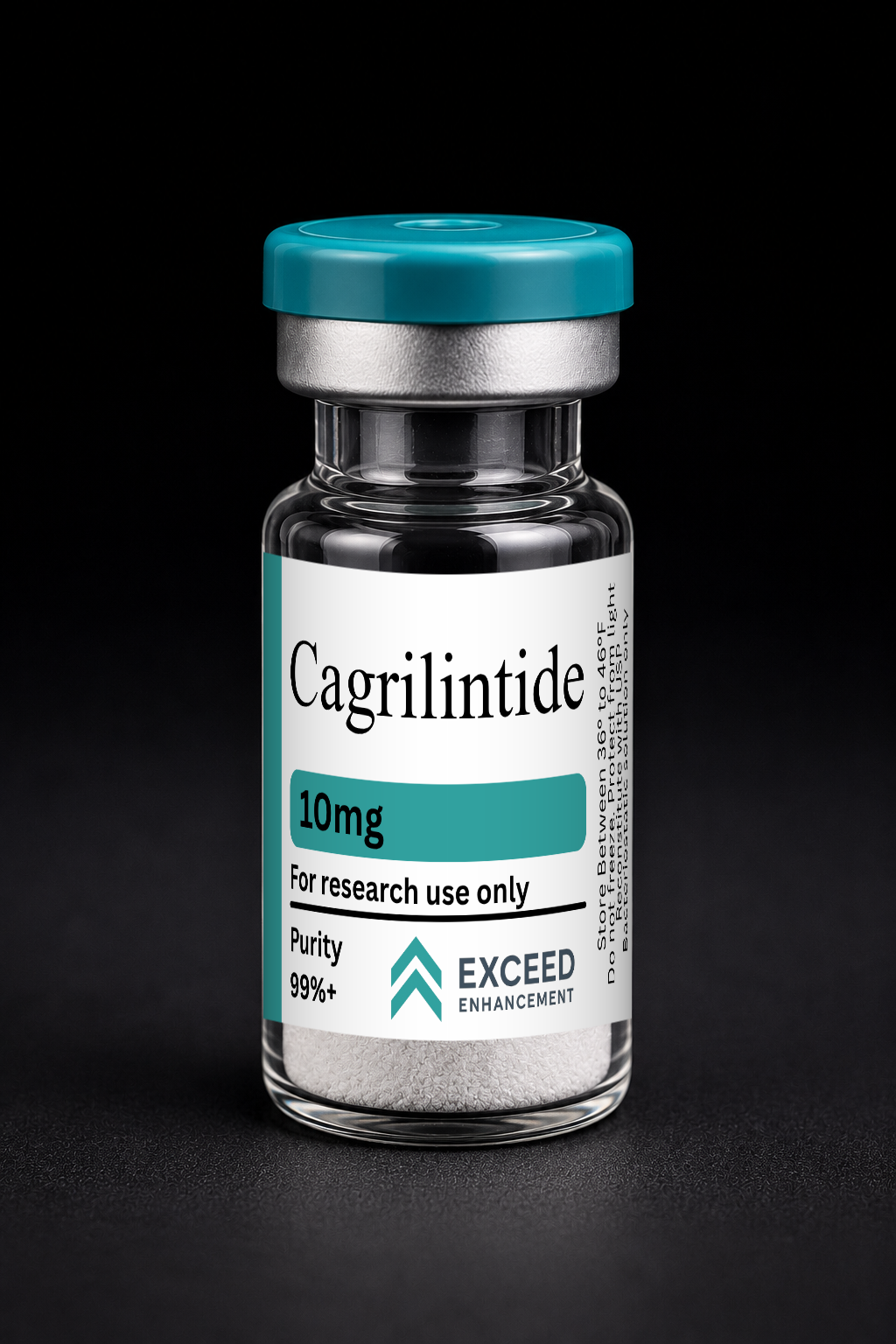
Exceed Enhancement
Cagrilintide
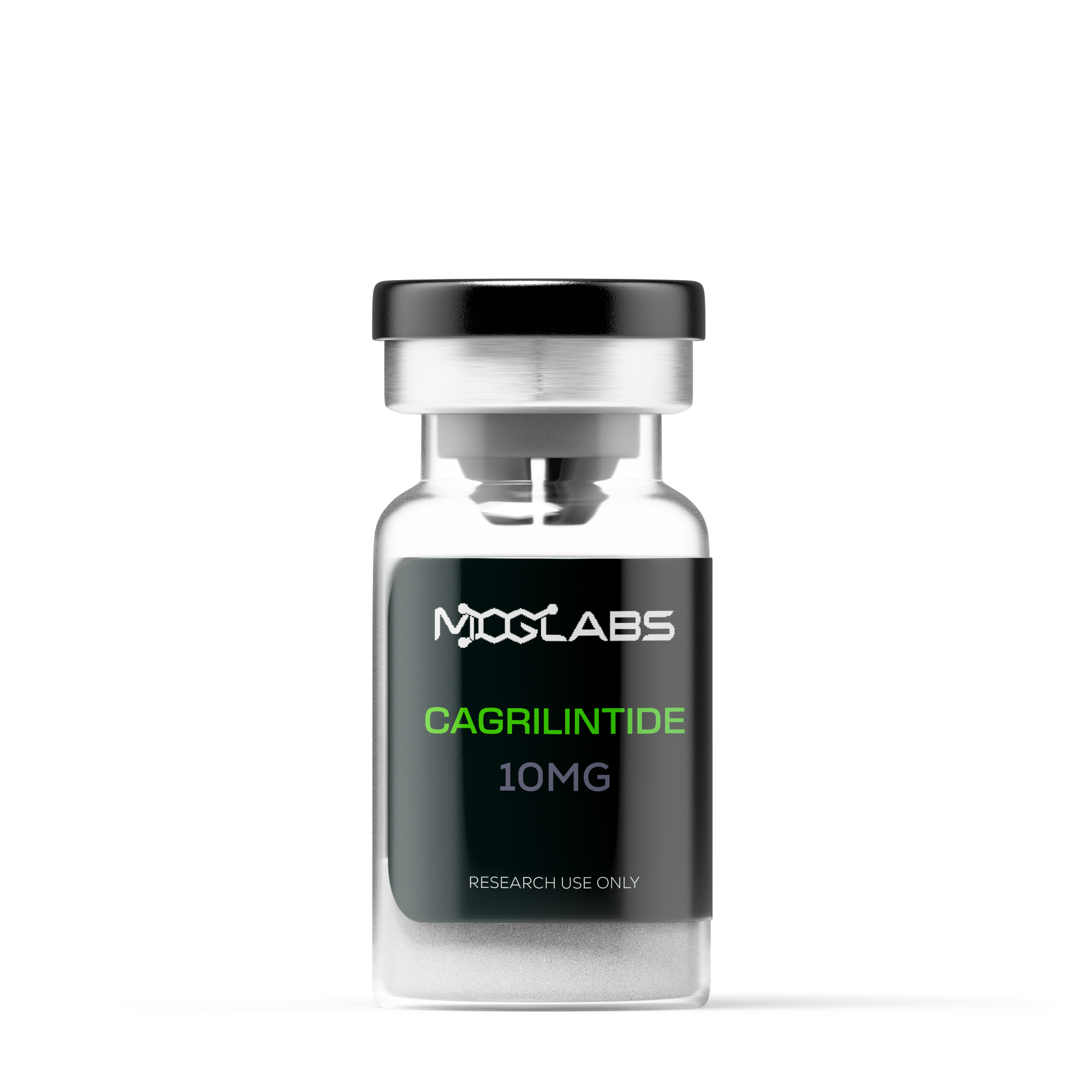
Moglabs
Cagrilintide
RUO
Cagrilintide
Research
- 2021first citedOnce-weekly cagrilintide for weight management in people with overweight and obesity: a multice…
- 2024most recentAmylin, Another Important Neuroendocrine Hormone for the Treatment of Diabesity
- 1.Once-weekly cagrilintide for weight management in people with overweight and obesity: a multicentre, randomised, double-blind, placebo-controlled and active-controlled, dose-finding phase 2 trial
- 2.Safety, tolerability, pharmacokinetics, and pharmacodynamics of concomitant administration of multiple doses of cagrilintide with semaglutide 2.4 mg for weight management: a randomised, controlled, phase 1b trial
- 3.Development of Cagrilintide, a Long-Acting Amylin Analogue
- 4.Cagrilintide: A Long-Acting Amylin Analog for the Treatment of Obesity
- 5.Amylin, Another Important Neuroendocrine Hormone for the Treatment of Diabesity
- 6.Drugs for Treating Obesity
- 7.Efficacy and safety of co-administered once-weekly cagrilintide 2.4 mg with once-weekly semaglutide 2.4 mg in type 2 diabetes: a multicentre, randomised, double-blind, active-controlled, phase 2 trial
7 listed here; entry last updated August 2026
Reviews
My notesprivate to this device
FAQ
What is amylin?
Amylin is a hormone released with insulin that helps signal fullness and slows how fast the stomach empties.
Why is it long-acting?
It is engineered to stay active for roughly a week, which supports once-weekly dosing schedules in research.
Why pair it with a GLP-1?
Amylin and GLP-1 pathways work through different mechanisms, so combining them is studied for greater appetite and weight effects.
How should it be stored?
Like most peptide injectables it is generally kept refrigerated and protected from light.
Adverse effects
- Gastrointestinal effects such as nausea, constipation, or diarrhea
- Injection-site reactions
- Reduced appetite that can lower overall food intake
Notes and cautions
- Effects continue to be characterized in ongoing clinical trials