
data + articles · 4 listed
newest 2015spec sheet12 rows
Toremifene is a selective estrogen receptor modulator (SERM) of the triphenylethylene class, used to treat metastatic breast cancer in postmenopausal women whose tumors are estrogen receptor-positive [1][3]. A close chemical relative of tamoxifen, it blocks estrogen's effects in breast tissue while acting like estrogen in some other tissues [2]. Introduced in the United States in 1997, it is marketed under the brand name Fareston.
- Used to treat metastatic breast cancer in postmenopausal women
- Blocks estrogen in breast tissue, a proven SERM
- May help preserve bone density
- Can raise testosterone in men, a real off label use
- Favorable effects on some blood lipids
- Introduced in the United States in 1997 as Fareston
- Common effects include hot flashes, sweating, nausea, and vaginal discharge
- It can prolong the QT interval, so it is used cautiously in people with heart rhythm risk factors
- Venous blood clots are an uncommon but serious risk
Overview
Toremifene is an antiestrogen medication classified as a selective estrogen receptor modulator, a group of drugs that bind the estrogen receptor and behave as estrogen blockers in some tissues and estrogen mimics in others [2]. Chemically it is a chlorinated triphenylethylene and a very close analogue of tamoxifen, differing by a single chlorine substitution, which is why it is sometimes called 4-chlorotamoxifen [1]. It belongs to the same first-generation SERM family as tamoxifen and clomifene [2].
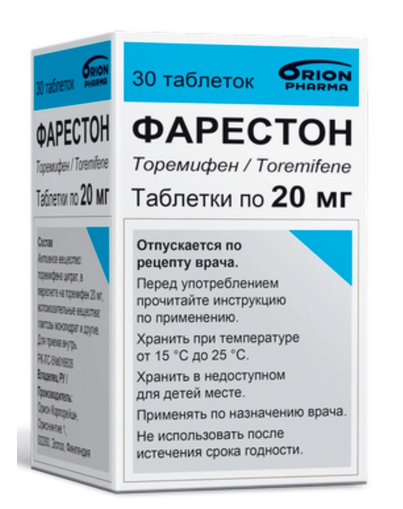
Toremifene is approved for the treatment of metastatic breast cancer in postmenopausal women with estrogen receptor-positive or receptor-unknown tumors [1][3]. It was introduced in the United States in 1997, becoming the first new antiestrogen marketed there since tamoxifen arrived in the late 1970s, and it is now available generically [3]. In clinical comparisons it has shown efficacy broadly similar to tamoxifen, along with a high degree of cross-resistance, so a cancer that stops responding to one may not respond to the other [3]. Off-label, toremifene has been used for benign breast pain and for gynecomastia, including breast changes caused by antiandrogen therapy, and it has drawn unapproved use among bodybuilders seeking to counter the estrogenic side effects of anabolic steroids. It is taken by mouth as tablets, marketed chiefly under the name Fareston.
Toremifene is almost completely absorbed after oral dosing, is extensively bound to plasma proteins, and is metabolized in the liver by cytochrome P450 enzymes before being eliminated mainly in the feces; its long half-life of about five days means steady levels are reached only after several weeks [1]. Common side effects reflect its antiestrogen action and include hot flashes, sweating, nausea, and vaginal discharge [1]. More serious concerns include prolongation of the QT interval on the electrocardiogram, which can predispose to abnormal heart rhythms, along with venous blood clots, cataracts, and stimulation of the uterine lining that can raise the risk of endometrial overgrowth or cancer [4]. Because of the cardiac effect, it is used cautiously in people with QT-related risk factors.
Mechanism
Toremifene works by competing with the hormone for binding to the estrogen receptor, and once bound it produces different effects depending on the tissue, which is the defining feature of a selective estrogen receptor modulator [2]. In breast tissue it behaves as an , blocking the signaling that drives the growth of hormone-sensitive breast tumors, so estrogen receptor-positive cancers are deprived of a key proliferative stimulus [3]. In other tissues such as bone, liver, and the uterine lining it acts more like , an behavior that accounts for both some favorable effects on bone and lipids and unfavorable effects such as endometrial stimulation [2][4].
Its antitumor activity is reinforced by active metabolites, notably 4-hydroxytoremifene, which bind the receptor with high affinity [1]. Because its structure so closely resembles tamoxifen, toremifene shares a similar mixed and profile and a comparable spectrum of clinical effects [1][3]. Separately from receptor binding, its prolongation of the QT interval arises from effects on cardiac ion channels, an action unrelated to its antiestrogen mechanism [4].
receptor fingerprint
receptor (breast)antagonist
receptor (bone)partial agonist
Hypothalamic-pituitary feedbackblocks
Hepatic lipid metabolismmodulates
Cardiac potassium channels (QT)affects
Dosingtypical ranges, not medical advice
interested in protocols and clinical dosages? make an account to see them! ^_^
Safetyrisks and cautions, not medical advice
Common side effects include hot flashes, sweating, nausea, and vaginal discharge or dizziness. More serious risks include blood clots and, like other SERMs, it carries a warning about QT prolongation affecting heart rhythm, so it's avoided in people with certain cardiac conditions. It should only be used under medical supervision, and off-label use carries these same risks without oversight.
Interactionsdocumented pairs only, not exhaustive
Toremifene prolongs the QT interval in a dose and concentration dependent way, and that single property drives most of its interaction risk. Combining it with other QT prolonging drugs, such as class IA and class III antiarrhythmics, methadone, ondansetron, macrolides or fluoroquinolones, compounds the effect and the endpoint is torsades de pointes. Pharmacovigilance data show selective oestrogen receptor modulators including toremifene reported with long QT and ventricular arrhythmia several times more often than aromatase inhibitors.
Because toremifene is cleared principally by CYP3A4, the same danger is reachable pharmacokinetically. Ketoconazole raised toremifene AUC roughly three fold in healthy subjects, and clarithromycin, ritonavir, itraconazole and voriconazole behave similarly; strong inducers including rifampin, carbamazepine, phenytoin and St John's wort lower concentrations enough to threaten efficacy.
Toremifene also affects CYP2C9 substrates, so exposure to warfarin and phenytoin can rise, and thiazide diuretics, which reduce renal calcium excretion, raise the risk of hypercalcaemia in patients with bone metastases.
Checking a whole stack? Run it through interactions + stacks.
Where to buy

Suppliers
Vendors carrying Toremifene, with live product details and codes. Links are affiliate links that support the wiki at no cost to you.
RUPharma🌐
Toremifene
Research
- 2000first citedClinical pharmacokinetics of toremifene.
- 2015most recentSelective estrogen receptor modulators and the combination therapy conjugated estrogens/bazedox…
- 1.Clinical pharmacokinetics of toremifene.
- 2.Selective estrogen receptor modulators.
- 3.Treatment of Postmenopausal Breast Cancer with Selective Estrogen Receptor Modulators (SERMs).
- 4.Selective estrogen receptor modulators and the combination therapy conjugated estrogens/bazedoxifene: A review of effects on the breast.
4 listed here; entry last updated August 2026
Reviews
My notesprivate to this device
FAQ
What is toremifene approved for?
Certain hormone-receptor-positive breast cancers.
How is it related to tamoxifen?
It's a close chemical relative and a SERM with similar behavior.
Does it boost immunity?
No; there's no basis for that. It's an estrogen receptor modulator, not an immune drug.
Why do some men use it off-label?
SERMs can raise testosterone by blocking estrogen feedback, but this use is off-label and risky.
Adverse effects
- Common effects include hot flashes, sweating, nausea, and vaginal discharge
- It can prolong the QT interval, so it is used cautiously in people with heart rhythm risk factors
- Venous blood clots are an uncommon but serious risk
- Long-term use can stimulate the uterine lining, raising the risk of endometrial overgrowth or cancer
- Cataracts and dizziness have also been reported