
spec sheet10 rows
Pioglitazone + Metformin Pioglitazone plus metformin is a fixed-dose combination tablet that unites two oral diabetes medicines with complementary actions: pioglitazone, a thiazolidinedione that makes tissues more sensitive to insulin, and metformin, a biguanide that mainly reduces the amount of glucose released by the liver. It is used to improve blood sugar control in adults with type 2 diabetes whose condition is not adequately managed on metformin alone. Combining the two drugs in a single pill is intended to lower blood sugar more fully while simplifying treatment, and it is marketed under names such as ACTOplus Met and Competact.
- one tablet hitting insulin resistance from two directions
- lowers blood glucose and HbA1c beyond metformin alone
- little risk of low blood sugar on its own
- metformin keeps the combination weight neutral
- durable glucose control over the long haul
- may improve blood lipids alongside sugar control
- From the metformin component, gastrointestinal effects such as nausea, diarrhea, and abdominal discomfort are common, especially when starting
- Metformin carries a rare but serious risk of lactic acidosis, mainly in people with significant kidney disease or other conditions that reduce lactate clearance, and long-term use can lower vitamin B12
- From the pioglitazone component, weight gain and fluid retention can occur, and the fluid retention can worsen heart failure, so the combination is avoided in significant heart failure
Overview
Pioglitazone plus metformin is a single-tablet, fixed-dose combination of two established oral antidiabetic drugs from different classes: pioglitazone, a thiazolidinedione that acts as a PPAR-gamma agonist and insulin sensitizer, and metformin, a biguanide [1][2]. The combined tablet is approved for adults with type 2 diabetes whose blood sugar is inadequately controlled on metformin alone, as well as for those already taking both agents, and it has been shown to be bioequivalent to taking the two drugs separately [1]. It is sold under brand names including ACTOplus Met in the United States and Competact in Europe, among others [2].
The rationale for combining these particular drugs is that they lower blood sugar through complementary mechanisms, attacking the problem of insulin resistance from two directions [2]. Pioglitazone improves the sensitivity of peripheral tissues to insulin, while metformin mainly reduces the liver's production of glucose and improves glucose uptake; together they reduce both high blood sugar and high insulin levels and may help protect the insulin-producing beta cells [2]. The pairing also brings complementary effects on blood fats [2]. Fixed-dose combinations of this kind are used to simplify complex diabetes regimens, and by reducing the number of separate pills they can improve adherence, which may in turn improve glucose control [3].
In clinical trials, pioglitazone plus metformin provided significantly better control of both glucose and blood lipids than metformin with placebo, and it was at least as effective as a sulfonylurea plus metformin while offering superior lipid control, with higher HDL cholesterol and lower triglycerides [1]. The combination was generally well tolerated, with adverse events broadly similar to those of metformin alone [1].
Because it contains two active drugs, the combination carries the side-effect profiles of both. The pioglitazone component can cause weight gain and fluid retention and is associated with heart failure risk, fractures, and a debated link to bladder cancer, while the metformin component brings gastrointestinal effects and a rare risk of lactic acidosis; on the other hand, because neither drug directly stimulates insulin secretion, the combination on its own carries a low risk of hypoglycemia [1]. It is a prescription oral tablet [1].
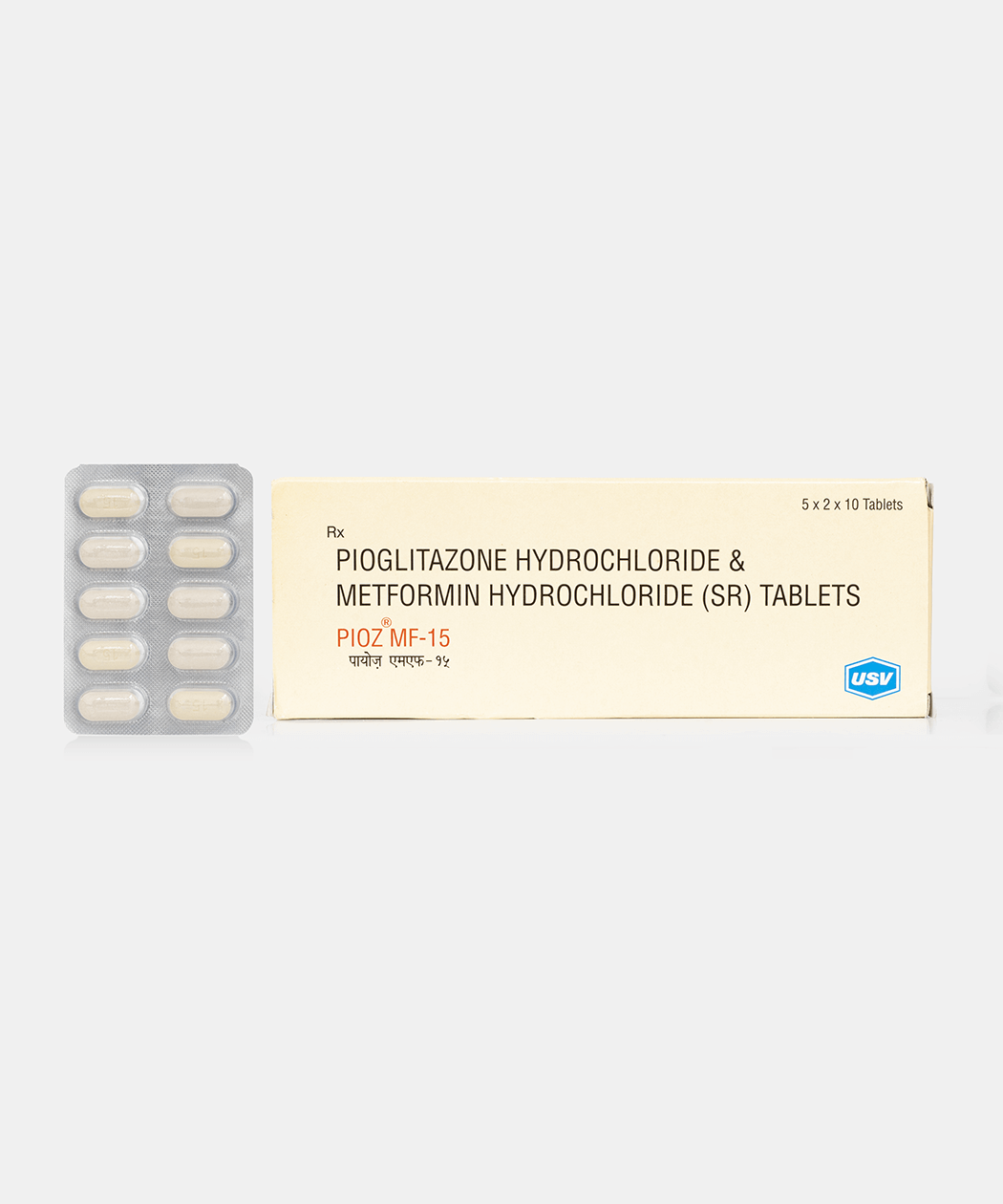
- The two ingredients work in different organs; metformin acts mainly on the liver, while pioglitazone acts mainly on fat and muscle.
- Neither component pushes the pancreas to release more insulin, so the combination rarely causes low blood sugar on its own.
- Metformin's ancestry traces to guanidine compounds found in the French lilac plant, used in folk medicine centuries ago.
Mechanism
The two ingredients lower blood sugar by different, complementary routes [2]. Pioglitazone activates the nuclear receptor PPAR-gamma, chiefly in fat tissue, which improves the body's sensitivity to so that muscle and fat take up glucose more effectively and fatty acids are directed into storage rather than circulating [2][4].
Metformin, a biguanide, works mainly in the liver, where it reduces the production of new glucose, and it also improves the uptake of glucose by peripheral tissues and lowers glucose absorption from the intestine, effects linked to activation of the energy-sensing enzyme [2]. Because pioglitazone addresses resistance in the peripheral tissues while metformin curbs the liver's glucose output, using the two together attacks high blood sugar from two directions, and since neither drug forces the pancreas to release more insulin, the combination by itself carries a low risk of hypoglycemia [1][2].
receptor fingerprint
PPAR-gamma nuclear receptor (pioglitazone)agonist
Hepatic gluconeogenesis (metformin)inhibits
complex I and cell energy balance (metformin)inhibits
AMP activated protein kinase (metformin)activates
Adipose free fatty acid handling (pioglitazone)modulates
Peripheral muscle glucose uptakeactivates
Dosingtypical ranges, not medical advice
interested in protocols and clinical dosages? make an account to see them! ^_^
Safetyrisks and cautions, not medical advice
Both parts are prescription only. Metformin commonly causes stomach upset, nausea and diarrhea, can lower vitamin B12 over time and, very rarely, can cause lactic acidosis, so it is avoided in significant kidney impairment and paused around contrast scans or serious illness. Pioglitazone causes weight gain and fluid retention, can worsen or unmask heart failure so it is avoided in moderate to severe heart failure, raises the risk of bone fractures and carries a small, debated signal for bladder cancer. The combination has low risk of low blood sugar by itself, but that risk rises if insulin or a sulfonylurea is added.
History
The combination of pioglitazone and metformin is a fixed-dose tablet whose history is really that of its two long-established components. Metformin, a biguanide descended from compounds found in the French lilac, has been used to treat diabetes since the late 1950s and is today the most widely prescribed first-line oral drug for type 2 diabetes, acting chiefly on the liver to reduce glucose production. Pioglitazone, a thiazolidinedione developed by Takeda and approved in the United States in 1999, works by a complementary route, activating the nuclear receptor PPAR-gamma to improve the body's sensitivity to insulin in fat and muscle.
Recognizing that the two drugs attack high blood sugar from different directions, manufacturers combined them into a single pill; the fixed-dose product ACTOplus Met was approved by the Food and Drug Administration in 2005, with the European equivalent marketed as Competact. The pairing was designed for patients already taking metformin whose blood sugar remained inadequately controlled, offering fuller glucose lowering while simplifying the daily regimen.
Reputation
This combination is well regarded for pairing two of the most complementary oral diabetes drugs available: metformin, the trusted first-line agent that curbs the liver's glucose output, and pioglitazone, an insulin sensitizer that improves how muscle and fat respond to insulin. Because the two act on different tissues by different mechanisms, using them together attacks high blood sugar from two directions, and since neither forces the pancreas to secrete more insulin, the pair carries a low intrinsic risk of hypoglycemia.
Consolidating them into one tablet also simplifies treatment and can improve adherence, a practical advantage that patients and physicians value. The candid caveats belong mainly to the pioglitazone component, which can cause fluid retention, weight gain, and other class effects, and to metformin's gastrointestinal upset and rare cautions in kidney impairment. For the right patient, however, the combination offers robust, well-understood glucose control in a convenient form.
Subjective profileweighing the evidence above
A sensible prescription combination when metformin alone is not holding blood sugar, hitting insulin resistance from two directions with little hypoglycemia risk on its own. Pioglitazone's fluid retention rules it out in significant heart failure, and metformin needs adequate kidney function.
Where to buy
Suppliers
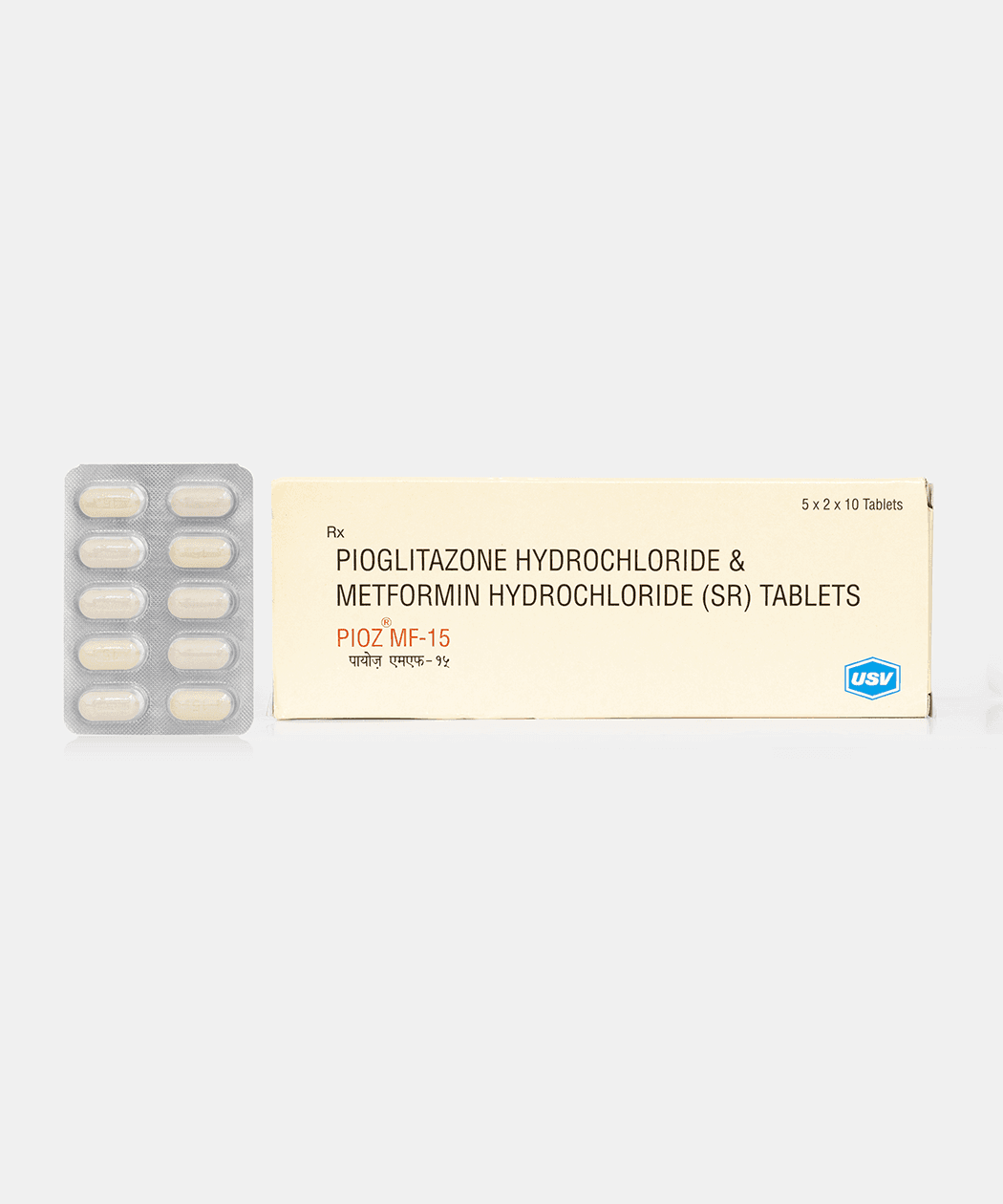
Vendors carrying Pioglitazone + Metformin, with live product details and codes. Links are affiliate links that support the wiki at no cost to you.
PCT.Zone
Pioglitazone + Metformin
Research
- 2002first citedNovel insulin sensitizers: pharmacogenomic aspects.
- 2015most recent[Fixed-dose combination].
- 1.Pioglitazone/metformin.
- 2.A fixed-dose combination of pioglitazone and metformin: A promising alternative in metabolic control.
- 3.[Fixed-dose combination].
- 4.Novel insulin sensitizers: pharmacogenomic aspects.
4 listed here; entry last updated August 2026
Reviews
My notesprivate to this device
FAQ
Why take two drugs at once?
Metformin cuts the liver's sugar output while pioglitazone makes tissues respond better to insulin, so together they control glucose more fully.
Will this cause low blood sugar?
On their own the risk is low because neither forces insulin release, but it rises if you also take insulin or a sulfonylurea.
Why does pioglitazone cause weight gain?
It promotes fluid retention and fat storage as part of how it improves insulin sensitivity, so some weight gain and swelling are common.
Who should avoid it?
People with significant kidney disease should avoid the metformin part, and those with moderate to severe heart failure should avoid pioglitazone.
Do I need vitamin B12 checks?
Long term metformin can lower vitamin B12, so periodic checks are a good idea, especially if you feel tired or notice nerve symptoms.
Adverse effects
- From the metformin component, gastrointestinal effects such as nausea, diarrhea, and abdominal discomfort are common, especially when starting
- Metformin carries a rare but serious risk of lactic acidosis, mainly in people with significant kidney disease or other conditions that reduce lactate clearance, and long-term use can lower vitamin B12
- From the pioglitazone component, weight gain and fluid retention can occur, and the fluid retention can worsen heart failure, so the combination is avoided in significant heart failure
- Pioglitazone also increases fracture risk, particularly in women, and has a debated association with bladder cancer
- On its own the combination rarely causes low blood sugar, but hypoglycemia can occur if it is used with insulin or a sulfonylurea