
spec sheet13 rows
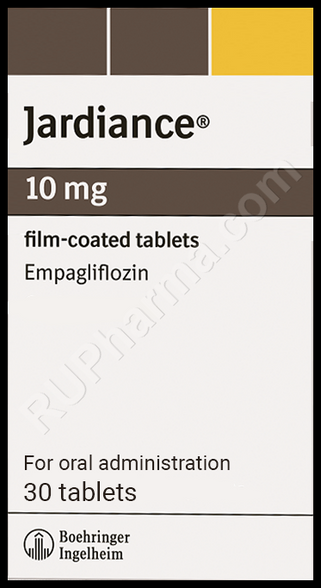
Empagliflozin is an oral medication of the sodium-glucose cotransporter-2 (SGLT2) inhibitor class, used to treat type 2 diabetes, heart failure, and chronic kidney disease. It acts in the kidneys, causing the body to pass excess glucose out in the urine, and in large trials it has reduced cardiovascular death and hospitalizations for heart failure. It is taken once daily and is sold under the brand name Jardiance.
- Flushes excess sugar straight out in urine
- Large trials showed fewer heart failure hospitalizations
- Protects heart and kidneys, not just glucose
- A cornerstone of type 2 diabetes care
- Taken once daily as Jardiance
- Studied for longevity, not only metabolism
- Genital yeast infections
- Urinary tract infections
- Ketoacidosis, sometimes with near-normal blood sugar (uncommon)
Overview
Empagliflozin belongs to the gliflozin family of SGLT2 inhibitors, drugs that lower blood sugar by blocking the reabsorption of glucose in the kidney. Chemically it is a C-glucoside derivative. It was developed by Boehringer Ingelheim together with Eli Lilly and was first approved for type 2 diabetes in the mid-2010s.
Beyond glucose control, empagliflozin turned out to have striking cardiovascular benefits. The EMPA-REG OUTCOME trial, in people with type 2 diabetes and established cardiovascular disease, found that empagliflozin reduced the combined risk of cardiovascular death, heart attack, and stroke, and notably lowered death from cardiovascular causes and hospitalization for heart failure compared with placebo [1]. These results reframed the drug as a cardioprotective agent rather than merely a glucose-lowering one.
Later trials extended its use to people without diabetes. In EMPEROR-Reduced, empagliflozin reduced cardiovascular death and heart-failure hospitalization in patients with heart failure and a reduced ejection fraction, whether or not they had diabetes [2], and companion research showed benefit in heart failure with preserved ejection fraction. The EMPA-KIDNEY trial then demonstrated that empagliflozin slowed the progression of chronic kidney disease and lowered the risk of cardiovascular death across a broad range of patients [3].
Empagliflozin is now approved for type 2 diabetes, heart failure, and chronic kidney disease. Because it raises the amount of glucose in the urine, characteristic side effects include genital yeast infections and urinary tract infections and, uncommonly, a form of diabetic ketoacidosis that can occur even when blood sugar is only modestly elevated. It is taken as a once-daily oral tablet, alone or combined with metformin or other agents [1][2][3].

- Empagliflozin was the first glucose-lowering drug ever shown, in EMPA-REG OUTCOME, to reduce cardiovascular death.
- It now protects the heart and kidneys in patients who do not have diabetes at all, an indication that grew out of the EMPEROR and EMPA-KIDNEY trials.
- It lowers blood sugar by making the kidneys spill excess glucose into the urine, a mechanism that works independently of insulin.
Mechanism
Empagliflozin selectively inhibits sodium-glucose cotransporter-2 (SGLT2), a protein in the proximal tubule of the kidney that reabsorbs most of the glucose filtered out of the blood. By blocking SGLT2, the drug prevents this reabsorption so that surplus glucose is excreted in the urine, lowering blood sugar in a way that does not depend on [1]. The accompanying loss of glucose and sodium in the urine also produces mild diuresis along with modest weight and blood-pressure reduction.
These effects only partly account for its benefits; the marked reductions in heart-failure hospitalization and kidney-disease progression are thought to arise from additional actions, including reduced cardiac and kidney workload, improved cardiac energy metabolism, and lower pressure within the kidney's filtering units [2][3]. Because its glucose-lowering action depends on filtered glucose, empagliflozin carries a low risk of causing hypoglycemia on its own.
receptor fingerprint
SGLT2 (kidney)inhibits
Blood sugarlowers
Heart / kidneyprotects
Body weight / blood pressurelowers
Dosingtypical ranges, not medical advice
interested in protocols and clinical dosages? make an account to see them! ^_^
Safetyrisks and cautions, not medical advice
Empagliflozin is an SGLT2 inhibitor and commonly causes genital yeast and urinary tract infections and increased urination, and it can produce volume depletion and low blood pressure. Less common but serious risks include euglycemic diabetic ketoacidosis (which can occur with near-normal glucose), rare necrotizing perineal infection (Fournier's gangrene), and hypoglycemia when used with insulin or sulfonylureas. Adequate hydration and awareness of ketoacidosis symptoms are important, especially around illness, fasting, or surgery.
Interactionsdocumented pairs only, not exhaustive
Empagliflozin, an SGLT2 inhibitor, interacts with drugs that modulate organic anion transporters and breast cancer resistance protein. Telmisartan, an angiotensin receptor blocker, increases empagliflozin plasma exposure (AUC and Cmax) through inhibition of BCRP and organic anion transporting polypeptide transporters [23]; this is a pharmacokinetic transporter-mediated interaction where telmisartan reduces empagliflozin's renal and hepatic clearance. The effect is directional; telmisartan changes empagliflozin levels more than empagliflozin affects telmisartan. Dorzagliatin, a glucokinase activator, shows no clinically significant pharmacokinetic interaction with empagliflozin despite both being transporter substrates [24]. Interactions with other BCRP inhibitors (such as certain antiretrovirals or cyclosporine) have not been systematically studied in humans.
Checking a whole stack? Run it through interactions + stacks.
History
Empagliflozin was developed jointly by Boehringer Ingelheim and Eli Lilly and Company as a selective inhibitor of the sodium-glucose cotransporter-2 (SGLT2), a protein in the kidney that reclaims filtered glucose back into the blood. It received United States approval in 2014 under the brand name Jardiance for the treatment of type 2 diabetes. Its profile was transformed in 2015 when the EMPA-REG OUTCOME trial reported that the drug reduced cardiovascular death in people with type 2 diabetes and established cardiovascular disease, the first time a glucose-lowering agent had shown such a benefit and a finding that reoriented the entire field toward cardiovascular and renal protection.
Subsequent landmark trials broadened its reach far beyond diabetes: the EMPEROR program demonstrated benefit in heart failure across the spectrum of ejection fraction, and the EMPA-KIDNEY trial showed slowing of chronic kidney disease progression. On the strength of this evidence its approved uses now encompass type 2 diabetes, heart failure, and chronic kidney disease.
Reputation
Empagliflozin is widely viewed as one of the most consequential cardiometabolic medicines of the past decade, a drug that began as a diabetes treatment and became a cornerstone therapy for heart failure and chronic kidney disease in patients with and without diabetes. Its clinical trial record is unusually deep and consistent, with large randomized studies showing reductions in cardiovascular death, heart-failure hospitalizations, and the progression of kidney disease.
Physicians value that it is taken once daily by mouth and carries a low risk of causing hypoglycemia on its own, since its glucose-lowering action depends on filtered glucose rather than on driving insulin. The honest cautions include an increased risk of genital fungal infections, volume depletion, and the rare but serious possibility of euglycemic diabetic ketoacidosis. Weighed against its documented protection of the heart and kidneys, it stands as a genuinely landmark therapy.
Subjective profileweighing the evidence above
One of the genuinely important drugs of the past decade; the heart and kidney protection seen in large trials is why it now reaches far past diabetes. Prescription only, not a longevity supplement to grab. Genital and urinary infections are common, and ketoacidosis can occur at near-normal glucose.
Where to buy
2 other outlets

Suppliers
Vendors carrying Empagliflozin, with live product details and codes. Links are affiliate links that support the wiki at no cost to you.
| supplier | size | price | $/mg |
|---|---|---|---|
| PCT.Zonelowest | 25MG | $10.55 | $0.422/mg |
| PCT.Zone | 25MG | $19.28 | $0.771/mg |
PCT.Zone
Empagliflozin
PCT.Zone
Empagliflozin
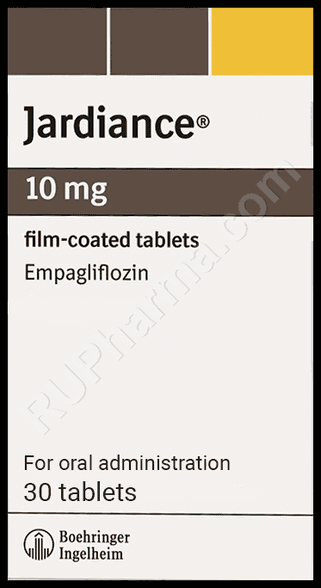
RUPharma🌐
Empagliflozin
Research
- 2012first citedEmpagliflozin, a novel selective sodium glucose cotransporter-2 (SGLT-2) inhibitor: characteris…
- 2015controlled trialEmpagliflozin, Cardiovascular Outcomes, and Mortality in Type 2 Diabetes (EMPA-REG OUTCOME)
- 2024most active year5 papers
- 2026most recentA pharmacokinetic and pharmacodynamic drug-drug interaction study of dorzagliatin and empaglifl…
- 1.Empagliflozin, Cardiovascular Outcomes, and Mortality in Type 2 Diabetes (EMPA-REG OUTCOME)
- 2.Cardiovascular and Renal Outcomes with Empagliflozin in Heart Failure (EMPEROR-Reduced)
- 3.Empagliflozin in Patients with Chronic Kidney Disease (EMPA-KIDNEY)
- 4.SGLT2 inhibitor promotes ketogenesis to improve MASH by suppressing CD8T cell activation
- 5.Cardioprotective mechanism of SGLT2 inhibitor against myocardial infarction is through reduction of autosis
- 6.SGLT2 inhibition with empagliflozin attenuates myocardial oxidative stress and fibrosis in diabetic mice heart
- 7.The SGLT2 inhibitor empagliflozin exerts neuroprotective effect against hydrogen peroxide-induced toxicity on primary neurons
- 8.Empagliflozin in Heart Failure with a Preserved Ejection Fraction
- 9.Empagliflozin in heart failure with preserved ejection fraction with and without atrial fibrillation
- 10.Empagliflozin after Acute Myocardial Infarction
- 11.Effect of Empagliflozin on Heart Failure Outcomes After Acute Myocardial Infarction: Insights From the EMPACT-MI Trial
- 12.Sodium Glucose Co-Transporter 2 Inhibition Following Acute Myocardial Infarction: The DAPA-MI and EMPACT-MI Trials
24 listed here; entry last updated August 2026
Reviews
My notesprivate to this device
FAQ
How does empagliflozin work?
It is an SGLT2 inhibitor that causes the kidneys to remove excess glucose through the urine.
What is it approved for?
It is used for type 2 diabetes and has established heart and kidney protective benefits.
Why is it studied for longevity?
Its metabolic and cardio-renal protective effects have drawn interest for healthy aging research.
What side effects are common?
Genital and urinary infections and increased urination are among the more common effects.
Adverse effects
- Genital yeast infections
- Urinary tract infections
- Ketoacidosis, sometimes with near-normal blood sugar (uncommon)
- Low blood pressure or dizziness
Notes and cautions
- Increased urination and mild dehydration