
spec sheet11 rows
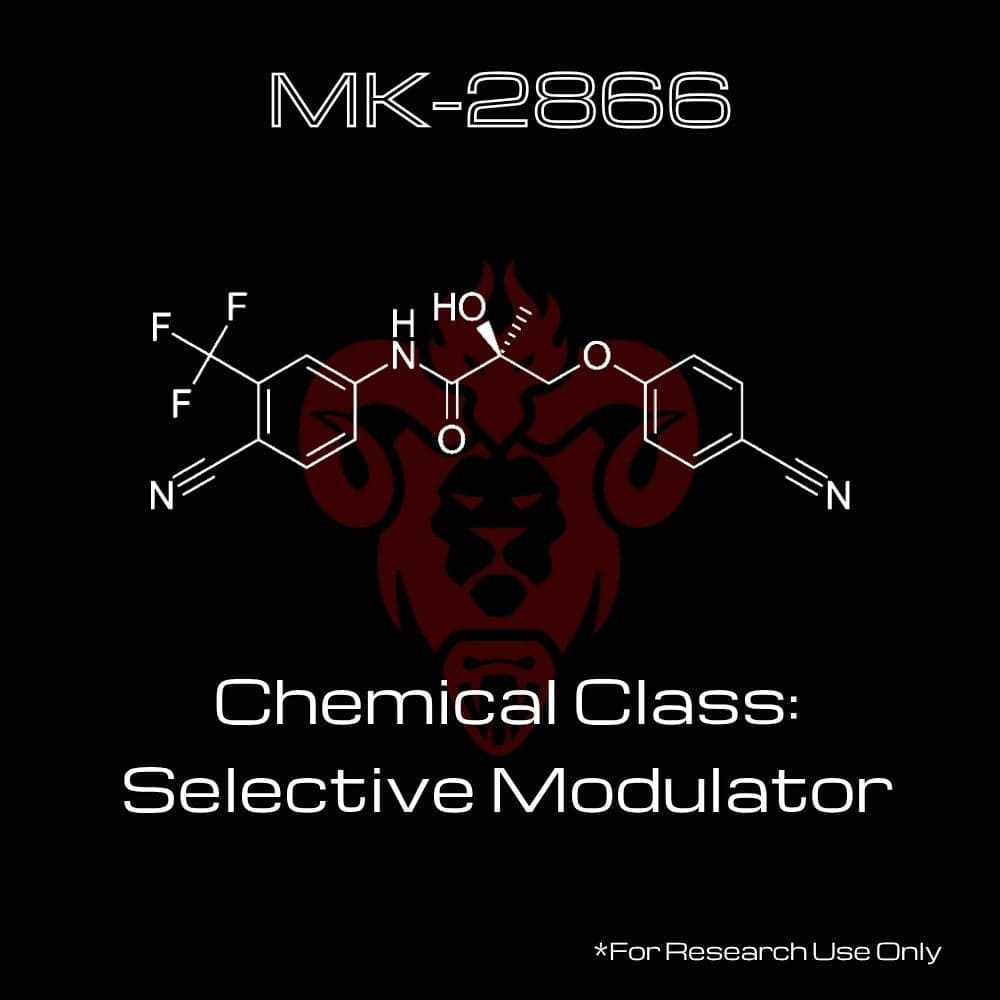
Ostarine, known in drug development as enobosarm or MK-2866, is an investigational selective androgen receptor modulator (SARM). SARMs are compounds designed to stimulate the androgen receptor in a tissue-selective way, aiming to build muscle and bone like anabolic steroids but with fewer effects on organs such as the prostate. Ostarine has been studied mainly for the muscle wasting associated with cancer and related conditions, but it is not approved as a medicine anywhere; it is prohibited in sport and has been the subject of regulatory warnings over its sale in bodybuilding and supplement products.
- Builds muscle selectively, sparing the prostate
- Holds lean tissue through a hard cut
- The go-to for cutting and recomp
- Bone support comes with the muscle
- Milder androgenic profile than anabolic steroids
- Carried into human research for muscle wasting
- Reported effects include suppression of the body's own testosterone and changes in hormone levels
- Changes in blood lipids, such as lowered HDL cholesterol, have been observed
- Elevated liver enzymes and cases of drug-induced liver injury have been reported with SARM use
Overview
Ostarine is a nonsteroidal selective androgen receptor modulator, a class of compounds abbreviated SARM [1][2]. Like anabolic steroids, SARMs act on the androgen receptor, the same receptor that responds to testosterone, but they are designed to do so selectively, producing anabolic (tissue-building) effects in muscle and bone while having weaker effects in tissues such as the prostate [2][3]. Ostarine, developed under the code name MK-2866 and the drug name enobosarm, is the most extensively studied compound of its type [3].
Enobosarm was developed by the pharmaceutical company GTx and advanced into human trials for the loss of muscle and physical function that accompanies serious illness [1][3]. It is taken by mouth and, unlike testosterone, is not converted to estrogen and does not carry the same virilizing profile, which was part of the rationale for developing it as an anabolic agent with a cleaner side-effect profile [3].
The main clinical focus for ostarine has been muscle wasting, including cancer cachexia and age-related muscle loss [1][2][3]. In a randomized phase 2 trial in patients with cancer, enobosarm increased lean body mass compared with placebo [1], and it was carried into large phase 3 trials, the POWER studies, in people with non-small-cell lung cancer [3]. Across these programs the drug reliably increased lean mass, but it did not consistently improve measures of physical function such as muscle strength, and development for muscle wasting was ultimately discontinued [1][3]. More recently the compound has been studied for androgen receptor-positive breast cancer.
Ostarine is not an approved drug and is not available as a licensed medicine [3]. Despite this, it is widely sold through unregulated online channels for muscle building and athletic performance, often at doses well above those used in trials. It has been prohibited in sport by the World Anti-Doping Agency since 2008, and a number of athletes have tested positive for it, in some cases traced to contaminated supplements. Drug regulators have warned that SARMs sold this way carry real risks, including liver injury and effects on hormones and the cardiovascular system, and that the consequences of the high doses used outside clinical trials are not well understood [3].
- Enobosarm is the most clinically studied SARM, having reached large Phase 3 trials for cancer-related muscle wasting.
- Ostarine has been on the World Anti-Doping Agency prohibited list since 2008 and is among the SARMs most often found contaminating over-the-counter supplements.
- In a Phase 2 cancer trial, a 1 mg daily dose raised lean body mass by a median of about 1.5 kg, while placebo produced no significant change.
Mechanism
Ostarine produces its effects by binding to the , the intracellular receptor normally activated by testosterone and other androgens [2][3]. When an androgen binds this receptor, the receptor moves into the cell nucleus and switches on genes that drive the growth of muscle and bone; ostarine engages the same receptor and triggers these anabolic programs [3].
What sets SARMs apart is tissue selectivity: because of their chemical structure and the way they shape the receptor, they behave as strong agonists in muscle and bone but only weak or partial agonists in tissues such as the prostate, which in principle separates the muscle-building effect from some of the androgenic effects [2][3]. This selectivity is relative rather than absolute, and at higher doses effects on hormones, cholesterol, and the liver can appear, which is part of the safety concern with unsupervised use [3].
receptor fingerprint
(skeletal muscle)Agonist (tissue-selective)
(bone)Agonist
HPG axis (LH, FSH, testosterone)Suppresses
SHBG and HDL cholesterolLowers
(prostate and skin)Weak partial agonist
Safetyrisks and cautions, not medical advice
Ostarine (MK-2866) is a selective androgen receptor modulator that suppresses natural testosterone production, lowers HDL cholesterol, and has been linked to elevated liver enzymes and cases of drug-induced liver injury. Despite investigational study it is not an approved drug for any indication, is banned in sport, and products sold as ostarine are frequently mislabeled or contaminated. Long-term cardiovascular and hormonal consequences are not well defined.
History
Ostarine, developed under the names MK-2866 and enobosarm, emerged from selective androgen receptor modulator research led by James Dalton and Duane Miller, whose work on nonsteroidal androgens at the University of Tennessee was advanced commercially by the Memphis biotechnology company GTx. The goal was to reproduce the muscle- and bone-building effects of testosterone through a tissue-selective molecule that spared the prostate and avoided the liver toxicity and virilization of anabolic steroids.
Enobosarm became the most clinically studied SARM: a randomized, double-blind, placebo-controlled Phase 2 trial published in The Lancet Oncology in 2013 showed significant gains in lean body mass in patients with cancer, and GTx then ran the large Phase 3 POWER trials in muscle wasting associated with non-small-cell lung cancer. Despite this substantial program, ostarine has never been approved as a medicine in any country. It has been prohibited in sport by the World Anti-Doping Agency since 2008, and regulators including the FDA have warned against its sale in bodybuilding and supplement products.
Reputation
Among selective androgen receptor modulators, ostarine enjoys unusual credibility because it is backed by the deepest clinical dataset in its class, including randomized controlled trials and two Phase 3 programs, a rarity for compounds that circulate in the performance community. In those studies it consistently increased lean body mass with a side-effect profile far milder than traditional androgens, which is the core of its appeal to researchers and athletes seeking muscle gains without full steroidal burden.
Its oral activity and tissue selectivity made it a template for the entire SARM field. That said, the honest picture includes real caveats: strength gains in trials were more variable than lean-mass gains, the drug suppresses natural testosterone and can lower HDL cholesterol, and it is neither approved nor quality-controlled when sold as a research chemical. It also carries genuine regulatory and anti-doping risk, and it has repeatedly turned up as an undeclared adulterant in supplements.
Subjective profileweighing the evidence above
Not the clean shortcut it is sold as. It suppresses your own testosterone, drops HDL, and has been linked to raised liver enzymes and drug-induced liver injury; it is approved nowhere, and products sold under the name are frequently mislabeled or outright contaminated.
Where to buy
Suppliers
Vendors carrying Ostarine, with live product details and codes. Links are affiliate links that support the wiki at no cost to you.
Kimera Chems
Ostarine
Research
- 2013first citedEffects of enobosarm on muscle wasting and physical function in patients with cancer: a double-…
- 2016most recentStudy Design and Rationale for the Phase 3 Clinical Development Program of Enobosarm, a Selecti…
- 1.Effects of enobosarm on muscle wasting and physical function in patients with cancer: a double-blind, randomised controlled phase 2 trial.
- 2.Study Design and Rationale for the Phase 3 Clinical Development Program of Enobosarm, a Selective Androgen Receptor Modulator, for the Prevention and Treatment of Muscle Wasting in Cancer Patients (POWER Trials).
- 3.Selective androgen receptor modulators for the prevention and treatment of muscle wasting associated with cancer.
3 listed here; entry last updated August 2026
Reviews
My notesprivate to this device
FAQ
What is a SARM?
A selective androgen receptor modulator aims to build muscle and bone through the androgen receptor with fewer androgenic effects than steroids.
Does ostarine suppress testosterone?
Yes, even though it is considered mild, it can still suppress natural testosterone production.
Is it approved for human use?
No, it is investigational and is banned in competitive sport by anti-doping agencies.
Why do people use it for cutting?
It is popular for preserving lean mass during a calorie deficit, though this is not an endorsement of its use.
Limitations of the evidence
- Ostarine is not an approved medicine, and the full range of its effects, especially at high doses, is not well characterized
Adverse effects
- Reported effects include suppression of the body's own testosterone and changes in hormone levels
- Changes in blood lipids, such as lowered HDL cholesterol, have been observed
- Elevated liver enzymes and cases of drug-induced liver injury have been reported with SARM use
Notes and cautions
- Banned in sport by the World Anti-Doping Agency; products sold online may be mislabeled or contaminated