
spec sheet11 rows
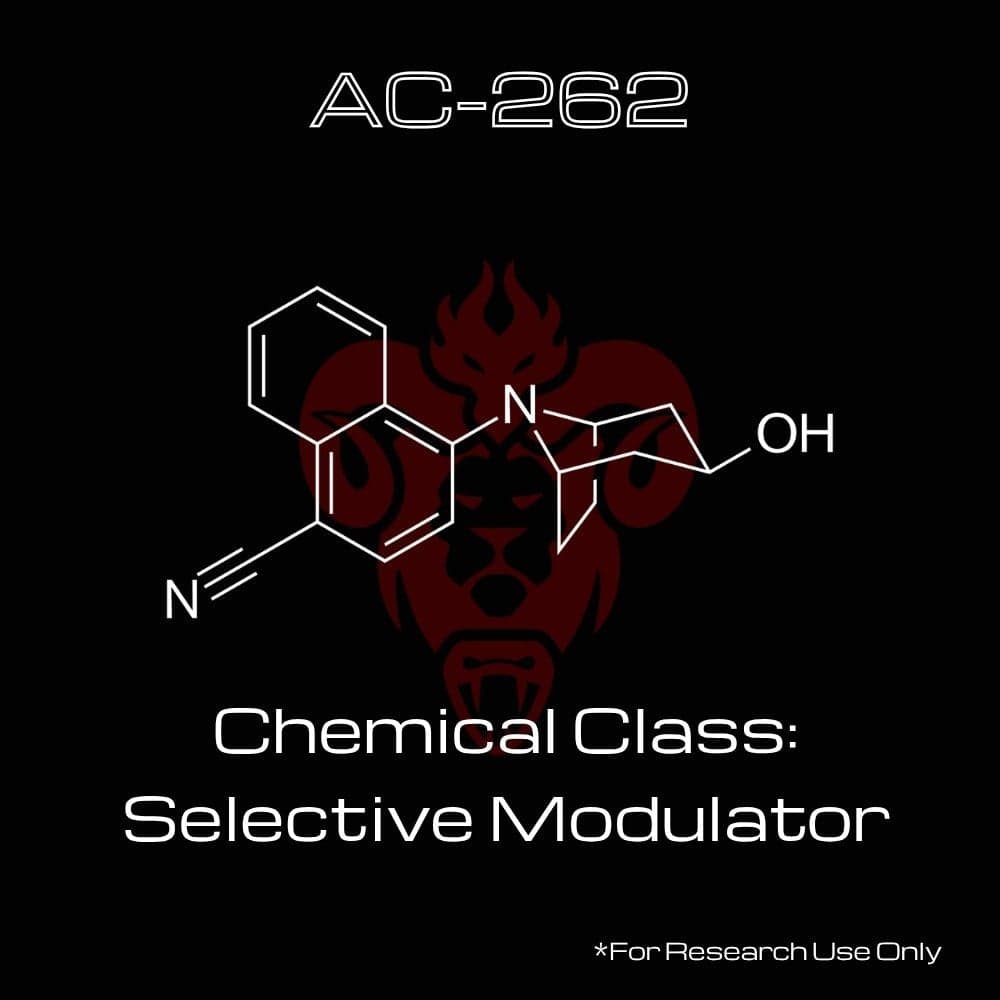
AC-262536, also written AC-262,536, is a nonsteroidal selective androgen receptor modulator (SARM) first characterized by Acadia Pharmaceuticals. It acts as a partial agonist of the androgen receptor and was studied preclinically for its tissue-selective anabolic profile, producing muscle-building effects while showing comparatively weak activity on reproductive tissue such as the prostate.
- Muscle and bone anabolism without a steroid
- Tissue-selective by design; muscle over prostate
- Nonsteroidal androgen signaling, orally active
- Partial agonist at the androgen receptor
- Characterized preclinically by Acadia Pharmaceuticals
- As an androgen receptor agonist it may affect hormonal balance
Overview
AC-262536 belongs to the SARM class, a group of nonsteroidal compounds designed to activate the androgen receptor selectively in some tissues while acting weakly in others [1]. Chemically it is a bicyclic, tropane-type molecule, and pharmacological interest centers on the observation that it binds the androgen receptor with high affinity yet behaves as a partial agonist rather than a full agonist like testosterone [1]. It was identified and reported by researchers at Acadia Pharmaceuticals in the late 2000s [1].
In the defining preclinical study, a two-week course in castrated male rats improved anabolic measures, notably stimulating growth of the levator ani muscle and suppressing elevated luteinizing hormone, while producing only weak androgenic effects as judged by prostate and seminal vesicle weights [1]. This dissociation between muscle and prostate activity is the central rationale of the SARM concept and the reason such compounds have been explored for indications such as muscle wasting, osteoporosis, and androgen-related conditions [1]. AC-262536 did not progress to established clinical use, and human efficacy or safety data are essentially absent [1].
Like other SARMs, AC-262536 is not approved for any medical use and is not a licensed pharmaceutical, yet it has appeared as an ingredient in unregulated products sold online, sometimes marketed for physique or performance purposes [2]. Because of this misuse, analytical chemists have developed methods to detect the compound and its metabolites in blood, urine, and hair, and anti-doping laboratories classify it among the SARMs monitored under sport and livestock testing programs [2][3]. It is best regarded as an experimental research chemical rather than a therapeutic product [1][2].
Mechanism
AC-262536 binds directly to the , the same nuclear receptor activated by testosterone and dihydrotestosterone, but it functions as a partial , switching the receptor on to a lesser maximal degree than the natural hormones [1]. The defining feature of SARMs is tissue selectivity: the compound was shown to drive anabolic responses in muscle, increasing levator ani weight, and to suppress luteinizing hormone through feedback at the pituitary, while producing much weaker stimulation of androgen-sensitive reproductive tissues such as the prostate and seminal vesicles [1]. This separation is thought to arise from tissue-specific differences in receptor conformation and cofactor recruitment. Because it is a partial , in the presence of stronger androgens it can also compete for the receptor and blunt their fuller effect [1].
receptor fingerprint
partial agonist
Skeletal musclestimulates
Endogenous testosteronesuppresses
Prostate tissueweakly stimulates
Dosingtypical ranges, not medical advice
interested in protocols and clinical dosages? make an account to see them! ^_^
Safetyrisks and cautions, not medical advice
There is no established human safety profile. Like other SARMs it can be expected to suppress natural testosterone production, and it may affect cholesterol and liver markers. Products sold online are unregulated, frequently mislabeled, and banned by sports anti-doping agencies. Given the lack of human data, the risk-to-reward here is poor.
Where to buy
Suppliers
Vendors carrying AC-262536, with live product details and codes. Links are affiliate links that support the wiki at no cost to you.
Kimera Chems
AC-262
Research
- 2008first citedPharmacological characterization of AC-262536, a novel selective androgen receptor modulator
- 2021most recentEquine metabolism of the selective androgen receptor modulator AC-262536 in vitro and in urine,…
- 1.Pharmacological characterization of AC-262536, a novel selective androgen receptor modulator
- 2.Equine metabolism of the selective androgen receptor modulator AC-262536 in vitro and in urine, plasma and hair following oral administration
- 3.Simultaneous detection of different chemical classes of selective androgen receptor modulators in urine by liquid chromatography-mass spectrometry-based techniques
3 listed here; entry last updated August 2026
Reviews
My notesprivate to this device
FAQ
What is AC-262536?
An obscure selective androgen receptor modulator that acts as a partial agonist and never advanced far in development.
Is it safe for humans?
There is essentially no human safety data, so its safety is unknown and it is not recommended.
Will it suppress my testosterone?
Like other SARMs it is expected to suppress natural testosterone production.
How is it different from stronger SARMs?
As a partial agonist its anabolic effect is milder, and it can even blunt stronger androgens by competing at the receptor.
Can athletes use it?
No; SARMs are banned by anti-doping agencies and it would cause a failed test.
Limitations of the evidence
- No human clinical safety data; characterized mainly in rodents
Adverse effects
- As an androgen receptor agonist it may affect hormonal balance
Notes and cautions
- Not approved for any medical use and not a licensed medicine
- Found in unregulated products sold online, with uncertain purity and content
- Prohibited in sport and detectable by anti-doping testing