
spec sheet16 rows
Melatonin is a hormone best known as the body's circadian signal for darkness, produced by the pineal gland to help govern the sleep-wake cycle; taken as a supplement it can shorten the time to fall asleep and is particularly useful for jet lag and shifted schedules. Less familiar is its other identity: melatonin is synthesized inside the mitochondria of virtually every cell, with under five percent of the body's total coming from the pineal gland, and there it acts as a potent, amphiphilic antioxidant whose own breakdown products are also radical scavengers, giving it a cascade effect. It is thought to be one of the oldest antioxidants in biology, predating its later role as a sleep and circadian signal, and it is generally regarded as safe and non-habit-forming for most adults.
- Fall asleep faster, sleep longer
- Better sleep quality, measured in trials
- The gold standard for jet lag and shift work
- Your body's own darkness signal
- Powerful antioxidant made inside every cell
- Benefits hold up with continued use
- A little morning grogginess can occur if taken too late or in excess
- Vivid dreams are reported by some
- Occasional headache or dizziness is possible
Overview
Melatonin is a hormone synthesized primarily by the pineal gland in the brain from the amino acid tryptophan, by way of serotonin. Its release follows a daily rhythm governed by the light-dark cycle: levels rise in the evening as darkness falls, peak overnight, and fall toward morning, which is why melatonin functions as the body's internal timing signal for sleep [1][2]. As a supplement, it is one of the most widely used and thoroughly studied sleep aids in the world.
Taken as a supplement, melatonin acts less like a sedative and more like a chronobiotic, a signal that nudges the body clock. Meta-analyses of randomized controlled trials show that it reduces the time needed to fall asleep, increases total sleep time, and improves overall sleep quality in people with primary sleep disorders [1][2]. It is particularly useful for circadian problems such as jet lag and shift-work schedules, where the aim is to shift the clock rather than simply to sedate; a systematic review found melatonin remarkably effective at preventing or reducing jet lag when taken near the target bedtime after crossing several time zones [3].
Melatonin is available over the counter in many countries as a dietary supplement, while in some jurisdictions it is regulated as a medicine, and it is sold in immediate-release and prolonged-release forms. It is generally regarded as safe and non-habit-forming for most adults, and its benefits do not appear to fade with continued use [1]. Beyond sleep, melatonin is also an antioxidant and has been studied for other roles, including neuroprotective effects in laboratory models [4]. The main practical consideration is timing, because taken at the wrong hour it can shift the body clock in an unhelpful direction [3].
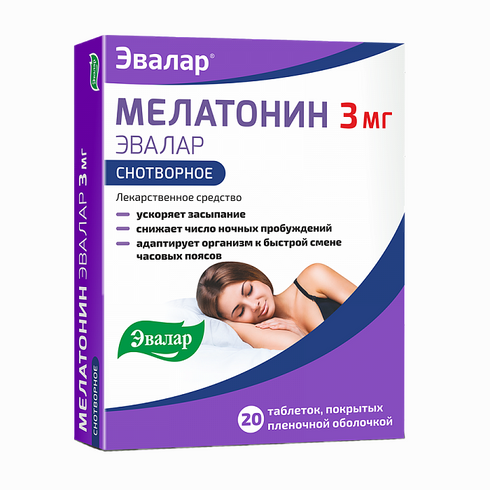
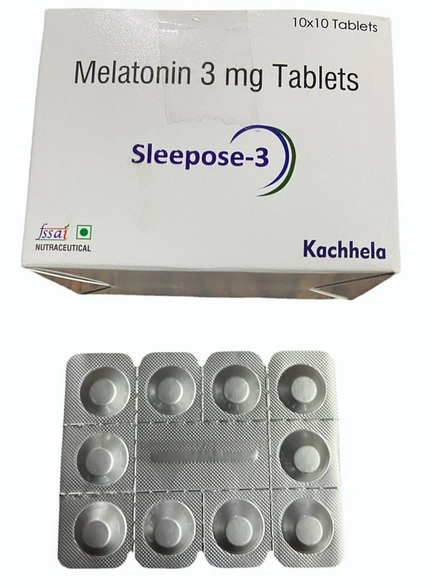

- Melatonin owes its name to frog skin; the hormone lightens amphibian coloring, which is how its discoverer detected it in 1958.
- Fewer than five percent of the body's melatonin comes from the pineal gland; most is made inside the mitochondria of cells throughout the body, where it acts as an antioxidant.
- Because timing shapes its effect, research suggests a dose taken around three hours before bedtime may promote sleep better than one taken right before lights out.
Mechanism
Melatonin works chiefly as a timekeeping signal rather than a sedating drug. It is secreted in darkness and acts on MT1 and MT2 melatonin receptors concentrated in the suprachiasmatic nucleus of the , the brain's master circadian clock; through these receptors it communicates biological night to the body, promoting the onset of sleep and helping to align the sleep-wake rhythm with the environment [1][2]. Because it shifts the phase of the clock, the timing of a dose determines its effect, which is central both to its use for jet lag and to the caution that mistimed use can move the clock the wrong way [3].
The measured benefits on sleep are consistent but modest in size. A meta-analysis of nineteen randomized trials in primary sleep disorders found that melatonin significantly reduced the time to fall asleep by about 7 minutes on average, increased total sleep time by roughly 8 minutes, and improved overall sleep quality, and importantly these effects did not dissipate with continued use [1]. An independent meta-analysis similarly reported reductions in sleep-onset latency of about 4 minutes, along with increased sleep efficiency and longer total sleep [2]. For jet lag, a systematic review concluded that melatonin taken near the destination bedtime after crossing five or more time zones was highly effective, with a low number needed to treat [3].
Melatonin also has antioxidant activity and interacts with other systems; for example, in an animal study chronic melatonin administration induced tyrosine-hydroxylase expression in neurons of the midbrain, one of several findings underlying interest in its neuroprotective potential [4]. For everyday use, however, its value rests on the circadian, receptor-mediated signaling that helps people fall asleep sooner and re-align disrupted schedules, with a benign side-effect profile relative to conventional hypnotics [1].
receptor fingerprint
MT1 and MT2 melatonin receptorsAgonist, signaling nighttime to the circadian clock
Suprachiasmatic nucleus (master clock)Shifts circadian phase depending on timing
Free radicals and Directly scavenges reactive species
Dosingtypical ranges, not medical advice
interested in protocols and clinical dosages? make an account to see them! ^_^
Safetyrisks and cautions, not medical advice
Melatonin is generally well tolerated but can cause next-morning grogginess, headache, dizziness, and vivid dreams, and it should not be taken before activities requiring alertness such as driving. It may interact with anticoagulants, immunosuppressants, and sedatives, and because it is a hormone its long-term effects, particularly in children and during pregnancy, are not well characterized. Potency also varies widely between over-the-counter products.
Interactionsdocumented pairs only, not exhaustive
The best-documented melatonin interaction is with fluvoxamine, a strong CYP1A2 inhibitor that markedly raises melatonin plasma concentrations (multi-fold increases in exposure) by blocking its primary metabolic pathway; other CYP1A2 inhibitors and, conversely, inducers such as smoking can shift melatonin levels similarly. Melatonin can add to the effects of CNS depressants and sedatives (benzodiazepines, alcohol, other hypnotics), increasing drowsiness. Several reports describe altered anticoagulant response, including raised INR and bleeding, when melatonin is taken with warfarin, so caution with anticoagulants is advised. It may also modestly affect blood pressure and glucose control, potentially interacting with antihypertensive and antidiabetic regimens. This is research information, not medical advice.
Checking a whole stack? Run it through interactions + stacks.
History
Melatonin was discovered in 1958 by Aaron Lerner, a dermatologist at Yale University, who isolated the hormone from bovine pineal glands while searching for a substance that might affect skin pigmentation. He named it melatonin because it lightened the color of frog skin by aggregating the pigment within melanocytes, and its chemical identity as N-acetyl-5-methoxytryptamine was established soon after.
In the decades that followed, researchers uncovered its central role as the body's chemical signal of darkness, secreted by the pineal gland at night to help govern the sleep-wake cycle and other circadian rhythms. From the late twentieth century onward it became widely available as a dietary supplement, studied and used for insomnia, jet lag, and shifted sleep schedules. More recent research has revealed a deeper biology; melatonin is synthesized inside the mitochondria of nearly every cell and behaves as a potent antioxidant, a role thought to predate its later function as a sleep and timing signal.
Reputation
Melatonin is one of the best-regarded sleep aids in the supplement world, prized for being effective in its niche, non-habit-forming, and remarkably gentle compared with conventional hypnotics. Its greatest strengths are as a circadian tool; systematic reviews and meta-analyses of randomized trials confirm that it modestly shortens the time to fall asleep, lengthens total sleep, and improves overall sleep quality, and that these benefits do not fade with continued use.
It is especially valued for jet lag and for realigning disrupted schedules, where correct timing of the dose matters as much as the amount. Honesty requires keeping expectations realistic; the effects on sleep are real but modest in size, and because melatonin shifts the clock, mistimed use can nudge the rhythm the wrong way. Dose-response research even suggests that taking it a few hours before the desired bedtime may work better than the usual bedtime dose. Beyond sleep, its antioxidant biology continues to intrigue researchers.
Subjective profileweighing the evidence above
Genuinely useful, just not as a sleeping pill. Treat it as a clock signal where timing beats dose: 0.5 to 1 mg an hour before bed, moving up only if that does nothing. For jet lag and shifted schedules it is the cheapest thing that reliably works.
Where to buy



Suppliers
Vendors carrying Melatonin, with live product details and codes. Links are affiliate links that support the wiki at no cost to you.
RUPharma🌐
Melatonin
RUPharma🌐
Melatonin
Amazon
Melatonin
Kimera Chems
Melatonin
iHerb
Melatonin
Research
- 1985first citedPlasma concentrations of melatonin in man following oral absorption of different preparations
- 2002most active year3 papers
- 2013meta-analysisMeta-analysis: melatonin for the treatment of primary sleep disorders
- 2024most recentOptimizing the Time and Dose of Melatonin as a Sleep-Promoting Drug: A Systematic Review of Ran…
- 1.Meta-analysis: melatonin for the treatment of primary sleep disorders
- 2.Effects of exogenous melatonin on sleep: a meta-analysis
- 3.Melatonin for the prevention and treatment of jet lag
- 4.Melatonin induces tyrosine hydroxylase mRNA expression in the ventral mesencephalon but not in the hypothalamus
- 5.Pharmacology of ramelteon, a selective MT1/MT2 receptor agonist: a novel therapeutic drug for sleep disorders
- 6.Melatonin acts through MT1/MT2 receptors to activate hypothalamic Akt and suppress hepatic gluconeogenesis in rats
- 7.Excitotoxicity, oxidative stress, and the neuroprotective potential of melatonin
- 8.Therapeutic actions of melatonin in cancer: possible mechanisms
- 9.Comparative effects of pharmacological interventions for the acute and long-term management of insomnia disorder in adults: a systematic review and network meta-analysis
- 10.Optimizing the Time and Dose of Melatonin as a Sleep-Promoting Drug: A Systematic Review of Randomized Controlled Trials and Dose-Response Meta-Analysis
- 11.The Comparative Effectiveness and Safety of Insomnia Drugs: A Systematic Review and Network Meta-Analysis of 153 Randomized Trials
- 12.Neurocognitive effects of melatonin treatment in healthy adults and individuals with Alzheimer's disease and insomnia: A systematic review and meta-analysis of randomized controlled trials
30 listed here; entry last updated August 2026
Reviews
My notesprivate to this device
FAQ
Is more melatonin better?
No; smaller amounts often work as well as large ones, and overdoing it tends to cause next-day grogginess without better sleep. It is a signal, not a sedative you push harder.
Is it safe to take every night?
Short to medium term it appears safe and non-habit-forming for most adults, and the meta-analysis data suggest benefits persist. Still, occasional use or checking with a clinician for chronic insomnia is sensible.
When should I take it for jet lag?
Aim for the evening of your destination time zone; timing is what makes it work for resetting your clock.
Can I get melatonin from food?
A little; melatonin occurs naturally in foods like tart cherries, grapes, and some nuts, but in far smaller amounts than a supplement provides. A food source is unlikely to shift your clock much on its own, though it is a harmless part of a good wind-down routine.
Does my body make less melatonin as I get older?
Generally yes; natural nighttime melatonin output tends to decline with age, which is one reason older adults often notice lighter, more easily interrupted sleep. That is part of why supplemental melatonin is studied more in older sleepers.
Adverse effects
- A little morning grogginess can occur if taken too late or in excess
- Vivid dreams are reported by some
- Occasional headache or dizziness is possible
- Timing matters, since mistiming can shift the body clock unhelpfully