
spec sheet6 rows
Maritupirdine is a multi-receptor antagonist approved in Russia in 2023 as Aviandr for generalised anxiety disorder; it was originally developed by Avineuro as a 5-HT6 antagonist for Alzheimer's disease.
- A 2023 Russian approval for generalised anxiety disorder
- Developer claims mirtazapine's calm without the weight gain
- High affinity at 5-HT6 and 5-HT7 receptors
- Real antihistamine load, so calm arrives early
- Sold as Aviandr; genuinely new pharmacology to try
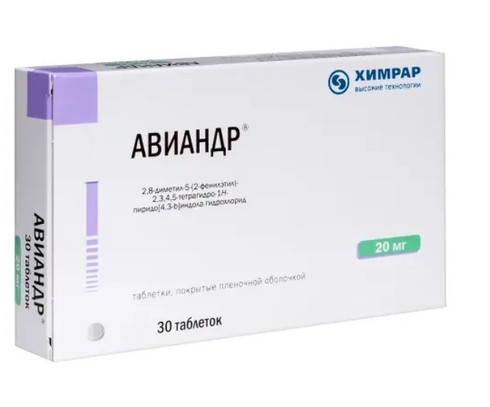
- Maritupirdine is AVN-101, from Avineuro/ChemRar, marketed in Russia as Aviandr; ChEMBL records it as CHEMBL592752 at maximum clinical phase 2 with the INN stem '-pirdine' for 5-HT6 inhibitors.
- It is deliberately multi-target: Ki 153 pM at 5-HT7, 1.2-2.0 nM at 5-HT6, 5-HT2A and 5-HT2C, 0.58 nM at histamine H1, and 0.41-3.6 nM at adrenergic alpha-2A/2B/2C [1].
- In Phase I it was well tolerated orally up to 20 mg daily and did not prolong the QT interval [1].
- In a 288-patient randomised placebo-controlled trial in moderate panic disorder, Aviandr 40 mg/day cut PDSS score by 4.99 versus 2.28 for placebo (p=0.047), with adverse events at 44.4% versus 50% for paroxetine [2].
- That result is the first stage of a multi-stage study with a marginal p-value, so the effect is provisional; a 2026 BMJ review lists maritupirdine among novel anxiolytics awaiting further testing (PMID 41524364, PMID 41839508).
Mechanism
AVN-101 is a tetracyclic compound with high affinity at 5-HT6 and 5-HT7 receptors and substantial antagonism at , 5-HT2C, alpha-2 and H1 and H2 receptors, a binding profile close to mirtazapine's. The developer reports that unlike mirtazapine it does not produce weight gain, increased appetite or daytime drowsiness at therapeutic doses; that claim rests on the same phase I and phase II programme that produced the approval and has not been replicated by anyone else.
receptor fingerprint
5-HT7 receptorVery potent antagonist; the highest-affinity interaction in the panel
H1 receptorHigh-affinity antagonist
alpha-2A, alpha-2B and alpha-2C receptorsHigh-affinity antagonist across all three subtypes
5-HT6, and 5-HT2C receptorsAntagonist at all three; 5-HT6 is the receptor the INN stem '-pirdine' designates
Safetyrisks and cautions, not medical advice
a prescription drug approved in Russia alone in 2023, with the entire clinical record coming from that single regulatory programme and no independent post-marketing data
Subjective profileweighing the evidence above
Strip the marketing and the receptor profile is close to mirtazapine, which makes the developer's headline claim essentially mirtazapine without the weight gain and the daytime drowsiness. That claim comes from the same programme that produced the 2023 Russian approval and from nobody else, so this is an early drug being sold as a finished one. The antihistamine and 5-HT2 load is real regardless of the marketing, so anyone trying it should expect sedation until their own experience says otherwise.
Where to buy
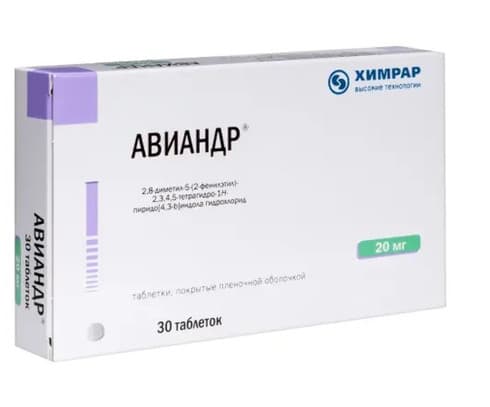
Suppliers
Vendors carrying Maritupirdine, with live product details and codes. Links are affiliate links that support the wiki at no cost to you.
RUPharma🌐
Maritupirdine
Research
- 2016first citedAVN-101: A Multi-Target Drug Candidate for the Treatment of CNS Disorders.
- 2025most active year3 papers
- 2026most recentNew and emerging treatments for anxiety disorders.
- 1.AVN-101: A Multi-Target Drug Candidate for the Treatment of CNS Disorders.
- 2.[Efficacy and safety of AVIANDR in the treatment of panic disorder: results of the first stage of the multicenter, randomized, placebo-controlled study].
- 3.[Basic and complex therapy of non-segmental vitiligo with comorbid anxiety and anxiety-depressive adjustment disorders].
- 4.Mathematical processing of the questionnaire of subjective perception of anxiety as a tool for selecting treatment.
- 5.New and emerging treatments for anxiety disorders.
5 listed here; entry last updated August 2026
Reviews
My notesprivate to this device
Notes and cautions
- Maritupirdine is approved and marketed only in Russia, with no FDA or EMA approval and therefore no boxed warning.
- Reported adverse events were comparable to placebo at 44.4% and lower than paroxetine at 50% with no serious events [2], and only mild drowsiness, headache and dizziness in a small vitiligo add-on study [3].
- The pharmacology predicts risks the trials were too small to detect: sub-nanomolar H1 affinity implies sedation and weight effects and alpha-2 antagonism at 0.41-3.6 nM implies blood-pressure consequences, and total published human exposure is a few hundred patients on trials where the sponsor's staff are co-authors [1].