
spec sheet10 rows
FOX-04-DRI is one of the most elegantly targeted ideas in longevity science, a peptide senolytic engineered to seek out and clear senescent "zombie" cells while sparing healthy ones. It works by breaking the FOXO4-p53 grip that keeps worn-out cells alive and inflammatory, freeing them to self-destruct. In aged animals this has produced genuine signs of rejuvenation, from restored vitality to recovered testosterone, making FOX-04-DRI a captivating frontier tool for anyone following the biology of aging.
- Hunts down and clears zombie cells
- Spares healthy cells; targets only the worn out
- Restored vitality and fitness in aged animals
- Brought back age-lost testosterone in mice
- Kidney and hair recovery in aged models
- One of longevity science's most elegant ideas
- Human safety data is still limited
- Mild injection site reactions
- Clearing protective senescent cells may carry context-dependent risks
Overview
FOX-04-DRI, more precisely written FOXO4-DRI, is a synthetic senolytic peptide built from a D-retro-inverso sequence derived from the FOXO4 forkhead protein, fused to a cell-permeable carrier segment. It was introduced by researchers at University Medical Center Utrecht as a designed disruptor of the FOXO4-p53 interaction, a partnership that keeps senescent cells alive [1].
Cellular senescence, in which damaged cells stop dividing yet persist and secrete an inflammatory senescence-associated secretory phenotype, is a central driver of tissue aging. FOXO4-DRI belongs to the senolytic class, meaning it aims to selectively eliminate these cells rather than merely quiet them [1].
Its research applications have expanded quickly. Structural work has mapped how the disordered FOXO4-DRI peptide binds the p53 transactivation domain, providing a molecular basis for its selectivity [1]. In naturally aged mice, FOXO4-DRI cleared senescent Leydig cells, improved the testicular microenvironment, and relieved age-related testosterone insufficiency, reframing late-onset hypogonadism partly as a senescent-cell problem [2]. In human tissue models it drove apoptosis of senescent keloid fibroblasts by promoting nuclear exclusion of phosphorylated p53 [3]. Notably, the field has also documented context-dependent risks; clearing senescent endothelial cells with senolytics including FOXO4-DRI worsened pulmonary hypertension in animal models, a reminder that senescent cells are not uniformly harmful [4].
FOXO4-DRI is not an approved therapy and remains an experimental peptide used in preclinical research; its evidence base is entirely animal and cell-based, and its human safety and long-term effects have not been established. It is supplied as a research-grade lyophilized peptide.
- FOXO4-DRI works not by poisoning cells but by cutting the molecular tie that lets worn-out senescent cells dodge their own self-destruct program.
- In naturally aged mice, clearing senescent cells with the peptide restored fur density and kidney function, visible signs of rejuvenation.
Mechanism
The concept behind FOX-04-DRI is beautifully specific; instead of poisoning fast-dividing cells, it exploits the survival trick that senescent cells use to avoid dying. In aged animals, sweeping out those cells has restored vitality, aided kidney and hair recovery, and rebounded age-related testosterone, all downstream of one molecular intervention.
The mechanism turns on the FOXO4-p53 axis. In a senescent cell, the FOXO4 protein holds p53 in the nucleus and prevents it from triggering apoptosis, so the damaged cell lingers and continues to pump out inflammatory signals. FOXO4-DRI competes for the disordered p53 transactivation domain and disrupts that interaction; structural NMR models show the forming a transient folded complex with p53, with both the FOXO4-derived region and the cationic permeability segment contributing to binding, and p53 phosphorylation strengthening the interaction [1]. Once the tie is broken, p53 is excluded from the nucleus and the senescent cell finally undergoes apoptosis [3].
The most striking application is in the aging gonad. FOXO4 is strongly expressed in human Leydig cells, and its nuclear translocation with age tracks with declining testosterone synthesis; by selectively inducing p53 nuclear exclusion and apoptosis in senescent Leydig cells, FOXO4-DRI improved the testicular microenvironment and alleviated age-related testosterone insufficiency in naturally aged mice [2]. In human keloid fibroblasts it likewise promoted apoptosis and reduced the senescent fraction by driving nuclear exclusion of p53 phosphorylated at serine 15 [3]. The evidence is preclinical and comes with a genuine caveat; because some senescent cells are protective, indiscriminate clearance carried risks such as aggravated pulmonary hypertension in one model [4], so selectivity and context remain active questions.
receptor fingerprint
FOXO4-p53 interactiondisrupts
p53 nuclear exclusion / apoptosistriggers
Vascular / tissue agingdelays
Senescent Leydig cellsinduces p53 nuclear exclusion and apoptosis in them
Safetyrisks and cautions, not medical advice
FOX-04-DRI (FOXO4-DRI) is a senolytic peptide studied only in preclinical models; there are no human safety data, and considerations are inferred from animal work and its mechanism of triggering apoptosis in senescent cells. Effective dose, off-target toxicity, and long-term effects in humans are unknown, and injection-related reactions cannot be ruled out. It should be regarded strictly as an experimental research chemical.
History
FOXO4-DRI was introduced in a landmark 2017 Cell paper from the laboratory of Peter L. J. de Keizer at Erasmus University Medical Center in Rotterdam, working with collaborators including Judith Campisi at the Buck Institute. The team asked how senescent cells manage to avoid apoptosis and identified the FOXO4 protein as a pivot that holds the tumor suppressor p53 in the nucleus, keeping damaged cells alive and inflammatory.
They then designed a D-retro-inverso peptide, FOXO4-DRI, engineered to disrupt the FOXO4-p53 interaction, causing p53 nuclear exclusion and selective apoptosis in senescent cells. In their experiments the peptide neutralized doxorubicin-induced chemotoxicity and, under conditions where it was well tolerated, restored fitness, fur density, and kidney function in both fast-aging and naturally aged mice, establishing FOXO4-DRI as a founding example of a targeted peptide senolytic.
Reputation
FOXO4-DRI is celebrated in longevity science as one of the most elegantly targeted ideas in the field, a peptide that seeks out senescent zombie cells and clears them while sparing healthy tissue. The original demonstration of restored vitality and organ function in aged mice generated considerable excitement, and later work extended the concept to age-related testosterone decline and other tissues, deepening its appeal to researchers following the biology of aging. Its rational, structure-guided design continues to make it a captivating frontier tool. At the same time, honest discussion stresses that all evidence is preclinical, that some senescent cells are protective and indiscriminate clearance carried real risks such as aggravated pulmonary hypertension in one model, and that questions of selectivity, dosing, and human safety remain wide open.
Subjective profileweighing the evidence above
A standout senolytic idea, and this adds a concrete hook: in aged mice it cleared senescent Leydig cells and restored flagging testosterone. If that carries to humans, it reframes age-related low testosterone as partly a senescent-cell issue you could treat at the source. Still early-stage research, so it is a concept to watch rather than a protocol.
Where to buy



Suppliers
Vendors carrying FOX-04-DRI, with live product details and codes. Links are affiliate links that support the wiki at no cost to you.
| supplier | size | price | $/mg |
|---|---|---|---|
| RUOlowest | 10mg | $100.00 | $10.00/mg |
| Limitless Biochem | 10mg | $209.97 | $21.00/mg |
RUO
FOX-04-DRI
Exceed Enhancement
FOX-04-DRI
Kimera Chems
FOX-04-DRI
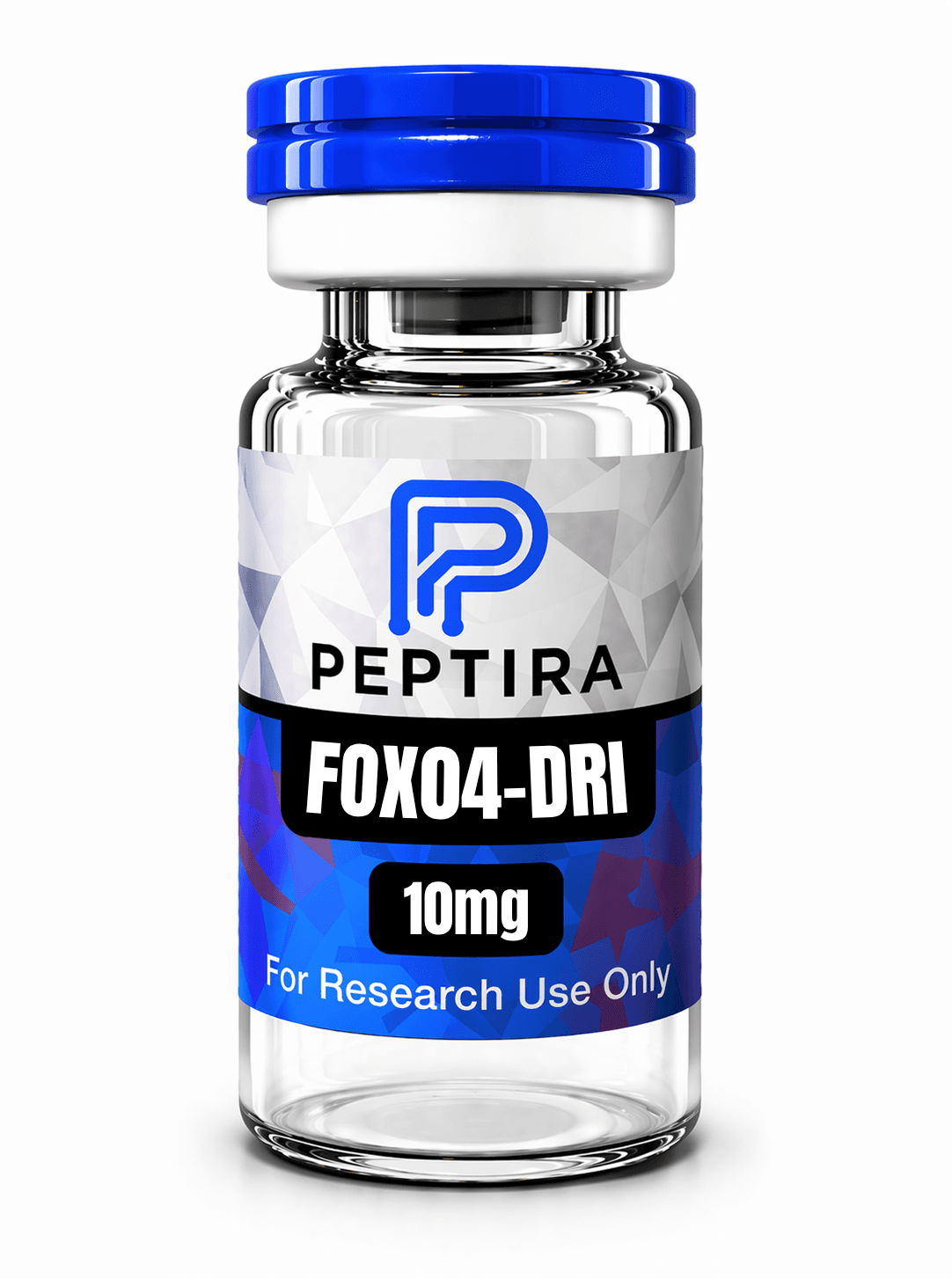
Peptira
FOX04-DRI
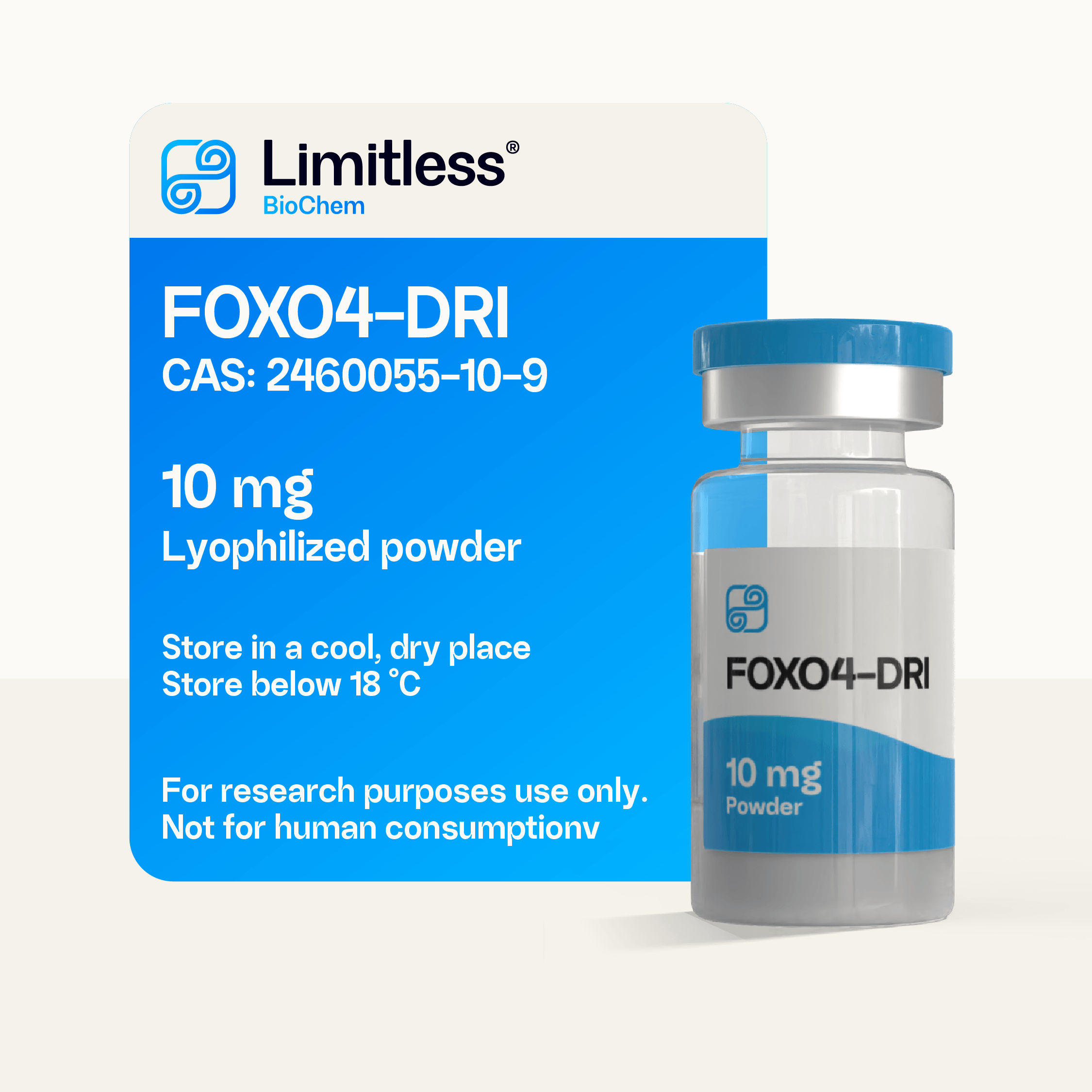
Limitless Biochem🌐
FOX-04-DRI
Research
- 2017first citedTargeted Apoptosis of Senescent Cells Restores Tissue Homeostasis in Response to Chemotoxicity…
- 2026most recentTargeting the FOXO4-p53 axis by retro-inverso peptide senolytic agents: a pharmacological strat…
- 1.The disordered p53 transactivation domain is the target of FOXO4 and the senolytic compound FOXO4-DRI
- 2.FOXO4-DRI alleviates age-related testosterone secretion insufficiency by targeting senescent Leydig cells in aged mice
- 3.FOXO4-DRI induces keloid senescent fibroblast apoptosis by promoting nuclear exclusion of upregulated p53-serine 15 phosphorylation
- 4.Eliminating Senescent Cells Can Promote Pulmonary Hypertension Development and Progression
- 5.Targeted Apoptosis of Senescent Cells Restores Tissue Homeostasis in Response to Chemotoxicity and Aging
- 6.Rejuvenation by Therapeutic Elimination of Senescent Cells
- 7.Targeting the FOXO4-p53 axis by retro-inverso peptide senolytic agents: a pharmacological strategy to mitigate brain aging and cognitive decline
- 8.FOXO4-DRI regulates endothelial cell senescence via the P53 signaling pathway
- 9.FOXO4-DRI improves spermatogenesis in aged mice through reducing senescence-associated secretory phenotype secretion from Leydig cells
- 10.FOXO4-D-Retro-Inverso targets extracellular matrix production in fibroblasts and ameliorates bleomycin-induced pulmonary fibrosis in mice
- 11.FOXO4 peptide targets myofibroblast ameliorates bleomycin-induced pulmonary fibrosis in mice through ECM-receptor interaction pathway
- 12.Senolytic Peptide FOXO4-DRI Selectively Removes Senescent Cells From in vitro Expanded Human Chondrocytes.
12 listed here; entry last updated August 2026
Reviews
My notesprivate to this device
FAQ
What is FOXO4-DRI?
It is a senolytic peptide designed to selectively clear senescent, or worn-out, cells.
What are senescent cells?
They are aged cells that stop dividing but linger and can contribute to tissue aging and inflammation.
Is there human evidence?
Data comes mainly from animal studies, and human safety and efficacy are not established.
Is it an approved therapy?
No; it remains an experimental research compound.
Could FOXO4-DRI help age-related low testosterone?
That is the intriguing finding here. FOXO4 keeps senescent Leydig cells alive, and those failing cells drive age-related testosterone decline. Clearing them with FOXO4-DRI restored testosterone in aged mice. It is preclinical, so promising rather than proven.
Limitations of the evidence
- Long-term effects still being studied
Adverse effects
- Human safety data is still limited
- Mild injection site reactions
- Clearing protective senescent cells may carry context-dependent risks