
spec sheet7 rows
Cyanamide is an aldehyde dehydrogenase inhibitor prescribed for alcohol dependence; drinking while it is active produces a rapid and unpleasant acetaldehyde reaction that is meant to deter the next drink.
- A prescribed deterrent used in alcohol dependence
- Aldehyde dehydrogenase blockade makes the next drink unpleasant
- Onset within about an hour of the dose
- Effect fades within roughly a day, unlike disulfiram
- Narrower enzyme interference than disulfiram
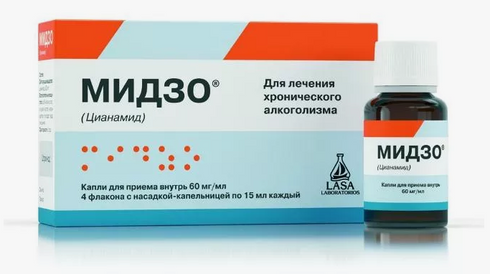
- Cyanamide (calcium carbimide, marketed as Cyanamide or Colme) is an alcohol-aversion agent used mainly in Japan and Spain; it is not licensed in the United States or the United Kingdom, where disulfiram is the equivalent drug.
- Like disulfiram it works by inhibiting mitochondrial aldehyde dehydrogenase, so drinking on it causes acetaldehyde accumulation and an unpleasant flushing reaction; unlike disulfiram it is a fast, short-acting inhibitor with an effect lasting around 24 hours rather than up to two weeks.
- Cyanamide is a prodrug in the toxicological sense: it needs oxidative bioactivation, described via catalase and hepatic microsomes, and cyanide is released as a by-product of that activation (PMID 3426683, PMID 1680656).
- The hepatotoxicity concern is specific and well documented: cyanamide produces ground-glass inclusion bodies in hepatocytes at high incidence, which can be associated with portal inflammation and fibrosis, and the picture is worse if the patient relapses into drinking while taking it [1].
- In a review of 408 alcoholics, ALT re-elevation after detoxification occurred in 19.4% of those on cyanamide versus 5.9% on disulfiram (P<0.001), and re-elevation was more frequent in those with prior cyanamide exposure (31.1% vs 16.4%, P<0.05) [1].
- Cyanamide also carries a real haematological signal, with published cases of aplastic anaemia and granulocytopenia (PMID 15991038, PMID 9313109, PMID 1559576).
Mechanism
It blocks aldehyde dehydrogenase, so ethanol is oxidised to acetaldehyde faster than acetaldehyde can be cleared and the acetaldehyde itself causes the flushing, nausea and palpitations. Compared with disulfiram the block starts within about an hour and fades within roughly a day, and it lacks disulfiram's broader enzyme inhibition.
receptor fingerprint
aldehyde dehydrogenase 2 (ALDH2, the low-Km isozyme)Irreversible inactivation after bioactivation; the parent cyanamide is not itself the inhibitor
Cytosolic aldehyde dehydrogenase 1A1 (ALDH1A1)Relatively spared; the inhibition is selective for the low-Km mitochondrial isozyme
Catalase / hydrogen-peroxide-dependent bioactivation (also described via hepatic microsomal metabolism)Required metabolic step converting cyanamide to the active ALDH-inactivating species, with cyanide released as a by-product
Blood acetaldehyde on ethanol exposureAccumulates sharply, producing flushing, throbbing headache, tachycardia, hypotension, nausea and vomiting
Safetyrisks and cautions, not medical advice
an alcohol aversion agent whose designed reaction with ethanol can be severe, so it belongs with medical supervision and informed consent
Subjective profileweighing the evidence above
Aversion therapy only works when the person taking it wants the deterrent, and it turns dangerous the moment somebody else decides that for them; covert dosing is the classic misuse of this class, and a severe reaction in someone with heart disease is not a small event. Set against disulfiram the short action is a genuine advantage, since the block fades within roughly a day rather than lingering for a week, and it avoids disulfiram's wider enzyme interference. It remains a drug whose entire therapeutic effect is a deliberate poisoning reaction, so it belongs with a prescriber, a plan, and a person who has agreed to both.
Where to buy

Suppliers
Vendors carrying Cyanamide, with live product details and codes. Links are affiliate links that support the wiki at no cost to you.
RUPharma🌐
Cyanamide
Research
- 1976first citedInhibition of aldehyde dehydrogenase in brain and liver by cyanamide.
- 2005most recentCyanamide-induced aplastic anemia.
- 1.Comparison of cyanamide and disulfiram in effects on liver function.
- 2.Inhibition of aldehyde dehydrogenase in brain and liver by cyanamide.
- 3.Studies in vitro on the inactivation of mitochondrial rat-liver aldehyde dehydrogenase by the alcohol-sensitizing compounds cyanamide, 1-aminocyclopropanol and disulfiram.
- 4.Metabolism of cyanamide to cyanide and an inhibitor of aldehyde dehydrogenase (ALDH) by rat liver microsomes.
- 5.Inactivation mechanism of low-KM rat liver mitochondrial aldehyde dehydrogenase by cyanamide in vitro.
- 6.Specificity of hepatic aldehyde dehydrogenase inhibition by calcium carbimide (calcium cyanamide) in the rat.
- 7.Cyanamide-induced aplastic anemia.
- 8.Cyanamide-induced granulocytopenia.
8 listed here; entry last updated August 2026
Reviews
My notesprivate to this device
Notes and cautions
- The defining hazard is the cyanamide-ethanol reaction itself: flushing, throbbing headache, tachycardia, hypotension, nausea and vomiting, which in people with cardiovascular disease can be dangerous rather than merely aversive, and which can be triggered by hidden alcohol in sauces, mouthwash, cough syrups and topical preparations.
- Hepatotoxicity is the drug-specific concern: cyanamide causes ground-glass hepatocyte inclusions with portal inflammation and fibrosis, and produces ALT re-elevation roughly three times as often as disulfiram in matched patients, worse in those with repeat courses [1], so liver function must be monitored and the drug avoided in established liver disease.
- Aplastic anaemia and granulocytopenia have both been reported (PMID 15991038, PMID 9313109).
- Cyanamide bioactivation releases cyanide as a by-product, and it is contraindicated in pregnancy, in severe cardiac disease and in psychosis.
- It should only ever be used with the patient's informed consent and never covertly.