
Loading…
for educational and safety purposes
sci-wiki~$open stack natural-mood
an acute serotonergic nudge plus a slower stress-axis change
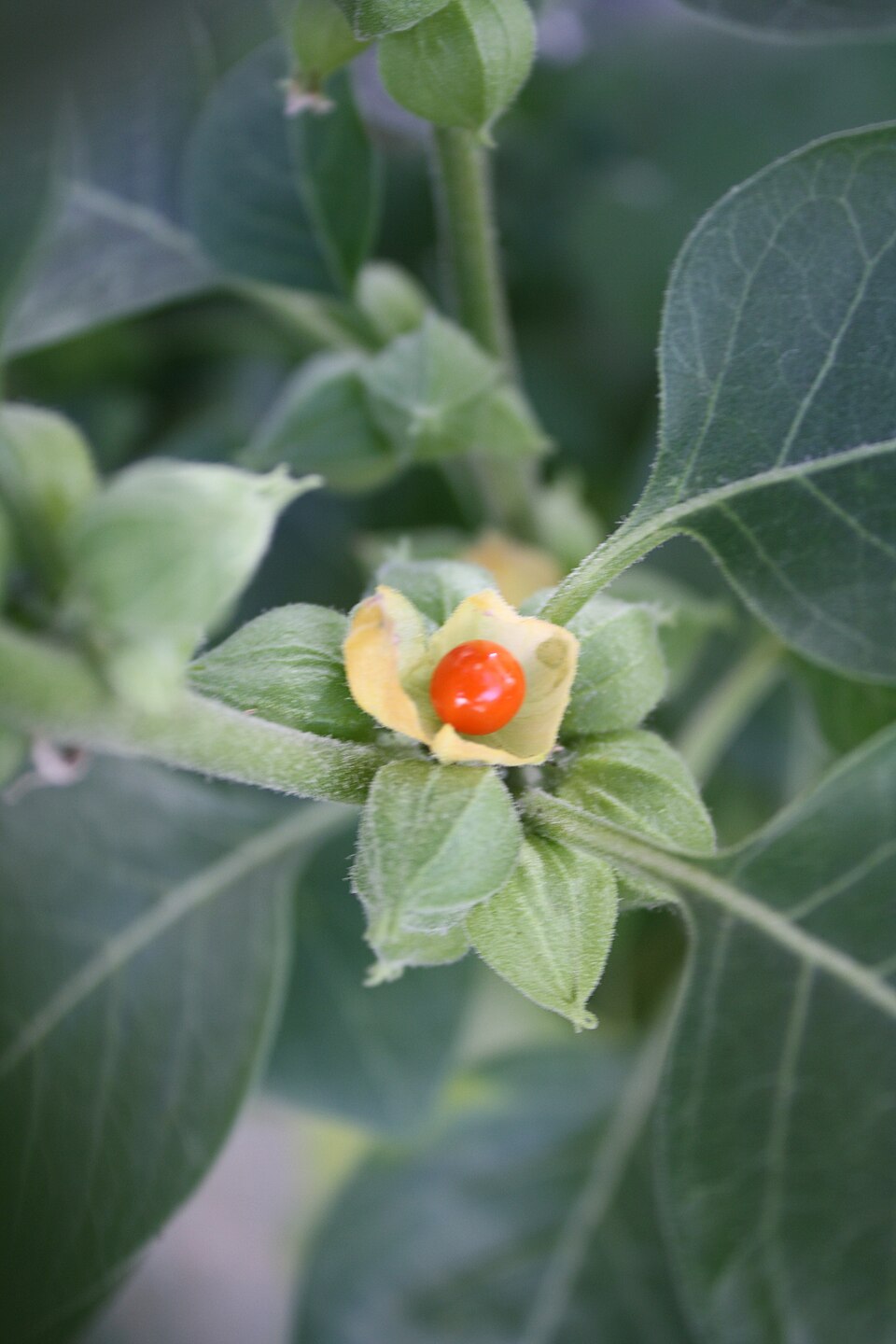 Ashwagandhathe slow half; cortisol and perceived stress over weekswith food, daily
3 items; 3 structures drawn from pubchem.
The natural label here is honest rather than decorative: all three are plant-derived or are ordinary human metabolites, and all three can be bought in a shop.
5-HTP is the direct precursor to serotonin and skips tryptophan hydroxylase, which is the rate-limiting step in serotonin synthesis. That is a real advantage over supplementing tryptophan and it is also the source of the compound's main limitation.
⚠️ DECARBOXYLATION HAPPENS PERIPHERALLY TOO, so a meaningful fraction of a 5-HTP dose becomes serotonin outside the brain rather than inside it. That is the honest reason the effect is less clean than the mechanism suggests, and it is also why nausea is the most common complaint.
P5P is pyridoxal-5-phosphate, the active form of vitamin B6, which matters because the decarboxylase that turns 5-HTP into serotonin depends on it. ⚠️ It is one of the few vitamins with a genuine dose ceiling: high-dose B6 sustained over time causes sensory peripheral neuropathy, and the fact that it usually improves after stopping does not make it a non-issue.
Ashwagandha is Withania somnifera and has the best human trial data of any adaptogen, mostly on cortisol and on perceived stress scales. ⚠️ Two real cautions come with it: liver injury case reports exist and are not merely theoretical, and it is thyroid-active, which matters for anyone with thyroid disease or on thyroid medication.
The synergy in this one is partly temporal rather than molecular, and saying which is most of its value. 5-HTP acts on a timescale of hours; ashwagandha acts on a timescale of weeks. They are not touching the same pathway and describing them as though they were would be inventing pharmacology.
The genuinely molecular pairing is 5-HTP with P5P. 5-HTP becomes serotonin through aromatic L-amino acid decarboxylase, and that enzyme requires pyridoxal-5-phosphate as its cofactor. Supplying the precursor without the cofactor is a mechanism with a missing step, and P5P is the active form of vitamin B6 rather than pyridoxine hydrochloride, so it does not need a conversion of its own.
Ashwagandha works on the stress axis instead, with most of its human data on cortisol and perceived stress. Its contribution is that a serotonergic nudge lands differently in someone whose stress load has come down than in someone whose has not.
5-HTP is same-day and is most noticeable on sleep onset, which is why it is placed at night. The mood effect, where it appears, is mild and is better described as a floor than as a lift.
Ashwagandha takes four to eight weeks in most of its trials, and what it produces is a reduction in the feeling of being under pressure rather than an improvement in mood as such. People frequently report it as things bothering them less.
Neither of these is an antidepressant, and expecting the trajectory of one is the most likely way to be disappointed by this stack.
⚠️ 5-HTP WITH ANY SEROTONERGIC DRUG IS A NAMED-MECHANISM RISK: adding a precursor on top of an SSRI, SNRI, MAOI, triptan, tramadol or St John's wort raises synaptic serotonin by a second route and is the pathway to serotonin syndrome. Ashwagandha carries liver injury case reports and is thyroid-active. Sustained high-dose B6 causes sensory peripheral neuropathy.
nothing flaggedcurated roster
every pair here reads as compatible on the mechanisms the site holds. that is the absence of a known conflict, not a clearance.
all in one basketAmazon
3 of 3 priced
no overlap found
no two of these share a primary class or a listed receptor. every item is pulling a different lever.
interested in protocols? join the discord; that is where dosing, timing and the practical side get discussed.
the sci-wiki publishes this as a description of what these compounds do together, not as a recommendation to take them. Nothing here is medical advice.