
spec sheet10 rows
Sunifiram (DM-235) is a synthetic nootropic structurally related to piracetam but dramatically more potent, active at very low doses. It enhances learning and memory by acting on the glycine site of the NMDA receptor and strengthening AMPA-mediated signaling through the CaMKII and PKC pathways, the molecular basis of long-term potentiation. In animal studies it improves cognition and reverses drug-induced amnesia at doses roughly a thousandfold lower than classic racetams, making it one of the most potent research nootropics of its kind.
- Ampakine grade memory and learning push
- Wildly potent next to classic racetams
- Fires up NMDA and AMPA signaling
- Improves learning across animal studies
- Adds a cholinergic edge
- One of the sharpest research nootropics going
- Possible overstimulation
- Occasional headache
Overview
Sunifiram, known by its development code DM-235, is a synthetic nootropic of the piperazine-amide class, structurally related to piracetam and to its sibling compound unifiram (DM-232) [1][3]. It emerged from medicinal chemistry work at the University of Florence aimed at designing ampakine-like cognition enhancers, and it is characterized in the literature as a novel antiamnesic and procognitive agent of exceptionally high potency [3][4].
Its research profile is built on animal models of learning and memory. In its foundational description, sunifiram prevented amnesia induced by scopolamine and several other agents in passive avoidance and Morris water maze tasks, with efficacy comparable to well-known nootropics such as piracetam, aniracetam, and rolipram but at far lower doses [3]. Later work showed that it improves cognitive deficits and restores hippocampal long-term potentiation in olfactory bulbectomized mice, a model of memory impairment [2], and structure-activity studies have generated analogues while confirming procognitive potency exceeding that of piracetam [1].
Sunifiram is an investigational research chemical with no regulatory approval and no established human clinical use; it is neither a licensed medicine nor an approved supplement [3][4]. It is typically supplied as a research-grade powder. Because it is active at very low doses and engages glutamatergic plasticity pathways, it has attracted interest as a potent cognitive enhancer, but its profile in humans is not well characterized, and its appeal rests on the striking potency and the clear mechanistic link to the molecular machinery of memory demonstrated in preclinical studies [1][2][3].
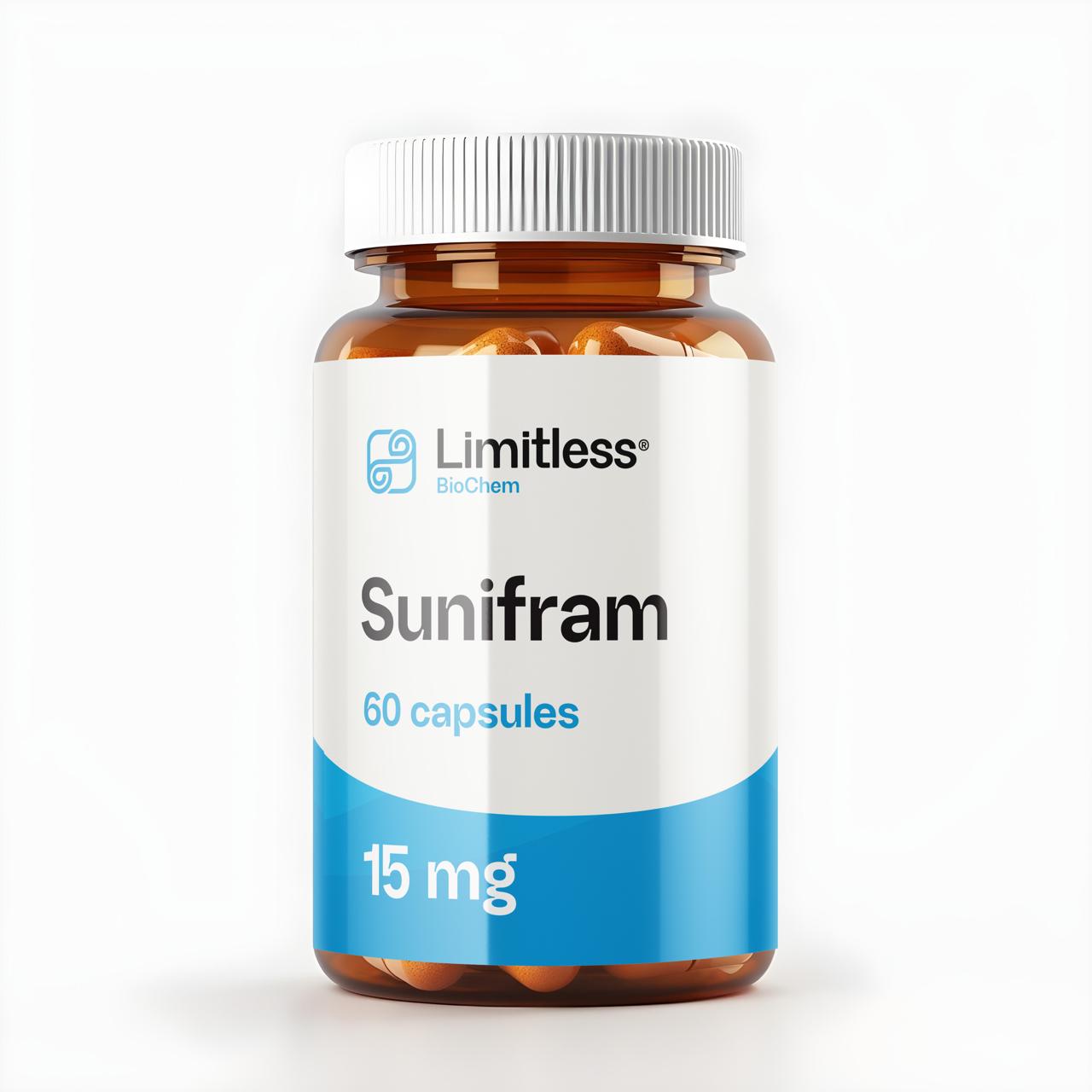
- In hippocampal slice experiments, sunifiram enhanced long-term potentiation along a bell-shaped dose-response curve that peaked at just 10 nanomolar, underscoring how little of the compound is needed to act.
- Chemists have used sunifiram as a scaffold for hybrid molecules, including carbamate variants intended to combine NMDA glycine-site activity with acetylcholinesterase inhibition for Alzheimer's research.
Mechanism
Sunifiram enhances the signaling that underlies learning and memory, working at the interface of the and systems. Mechanistic studies show that it acts on the glycine-binding site of the ; its procognitive effects and its stimulation of downstream signaling are blocked by gavestinel, a glycine-site inhibitor, confirming that this site is central to its action [2]. Engagement of the then drives the intracellular cascades that consolidate strength [2].
The compound also enhances -mediated neurotransmission, which is why it is described as ampakine-like. Both sunifiram and its analogue unifiram reversed the amnesia produced by the NBQX, and electrophysiology showed that the class increases excitatory transmission in the , effects abolished by AMPA receptor blockade [4]. Downstream, sunifiram restores the key plasticity signaling nodes; in olfactory bulbectomized mice it reinstated autophosphorylation of CaMKII and phosphorylation of the subunit GluR1, as well as PKC-alpha autophosphorylation and NR1 phosphorylation, thereby rescuing in the hippocampal CA1 region [2]. These pathways, CaMKII and PKC acting on and receptors, are the canonical molecular substrate of , the cellular basis of memory [2].
The most striking quantitative feature of sunifiram is its potency. In the original characterization, its antiamnesic potency was reported to be about one thousand times higher than that of the most active piracetam-like compounds, producing cognitive protection at doses in the range of hundredths to tenths of a milligram per kilogram in rodents while leaving motor coordination and spontaneous activity unaffected [3]. This combination of high potency, a clear glycine-site and mechanism, and reversal of multiple forms of induced amnesia defines its preclinical evidence base [1][2][3][4]. Human quantitative data are not available, so these rodent findings represent the strongest defensible evidence.
receptor fingerprint
glycine siteactivates
CaMKII / PKCastimulates downstream
receptors (indirect)facilitates
Dosingtypical ranges, not medical advice
interested in protocols and clinical dosages? make an account to see them! ^_^
Safetyrisks and cautions, not medical advice
Sunifiram is a potent research compound with a reputation for a strong, fast cognitive kick at very small amounts. It's genuinely early-stage: it hasn't been through formal toxicology or human trials, so there's no long-term safety picture yet, and that's the main thing to keep in mind. Because it works at the NMDA glycine site, it's sensible to be cautious stacking it with other glutamate compounds or NMDA modulators. Legal status varies by country. Treat it as promising but experimental, with moderation as the smart default given how little formal data exists so far.
History
Sunifiram, also designated DM-235, was developed by researchers at the University of Florence around the year 2000 as part of a program to design piracetam-related cognition enhancers of far greater potency. Early pharmacological characterization reported antiamnesic activity roughly a thousand times higher than that of the most active piracetam-like compounds, active at doses in the hundredths-to-tenths of a milligram per kilogram range in rodents. Subsequent electrophysiology in 2013 clarified its mechanism, showing that it enhances hippocampal long-term potentiation through the glycine-binding site of the NMDA receptor with downstream CaMKII and PKC-alpha signaling. It has remained an experimental research compound and has never undergone clinical development, so no human efficacy or safety data exist.
Reputation
Sunifiram enjoys a strong reputation among nootropic researchers precisely because of its potency: the finding that it can protect against amnesia at doses roughly a thousandfold lower than classic racetams made it one of the most striking piracetam derivatives ever reported. Its mechanism is unusually well mapped for a research chemical, with the glycine-site NMDA action and AMPA-facilitating, LTP-enhancing signaling documented in careful rodent studies. The honest caveat is that all of this evidence comes from animals and cell systems; there are no human trials, and its long-term safety is simply unknown. That combination of clear mechanism and high potency keeps it a compound of enduring scientific curiosity.
Subjective profileweighing the evidence above
Potent at milligram doses and genuinely impressive in animal learning tasks, which makes it one of the more interesting nootropics on paper. It has also never been through formal toxicology or a human trial, so the long-term picture is blank; overstimulation is the usual complaint. An experiment, not a staple.
Where to buy

1 other outlet
Suppliers
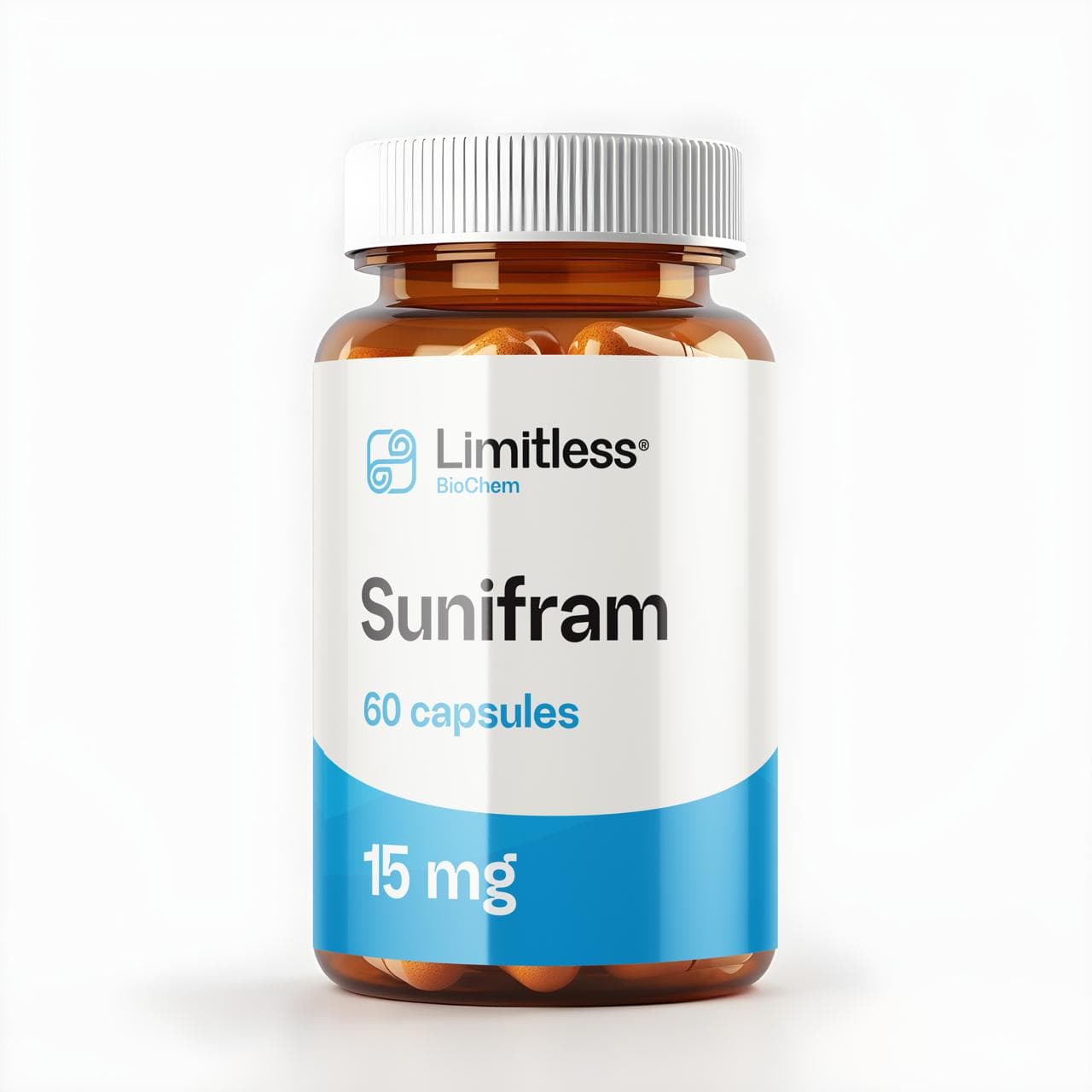
Vendors carrying Sunifiram, with live product details and codes. Links are affiliate links that support the wiki at no cost to you.
Kimera Chems
Sunifiram
Limitless Biochem🌐
Sunifiram
Research
- 2000first citedMolecular simplification of 1,4-diazabicyclo[4.3.0]nonan-9-ones gives piperazine derivatives th…
- 2022most recentNovel Sunifiram-carbamate hybrids as potential dual acetylcholinesterase inhibitor and NMDAR co…
- 1.DM235 (sunifiram): a novel nootropic with potential as a cognitive enhancer.
- 2.Novel nootropic drug sunifiram improves cognitive deficits via CaM kinase II and protein kinase C activation in olfactory bulbectomized mice.
- 3.Design, synthesis and preliminary pharmacological evaluation of new analogues of DM232 (unifiram) and DM235 (sunifiram) as cognition modulators.
- 4.AMPA-receptor activation is involved in the antiamnesic effect of DM 232 (unifiram) and DM 235 (sunifiram).
- 5.Pharmacological characterization of DM232 (unifiram) and DM235 (sunifiram), new potent cognition enhancers.
- 6.Unifi nootropics from the lab to the web: a story of academic (and industrial) shortcomings.
- 7.Novel Sunifiram-carbamate hybrids as potential dual acetylcholinesterase inhibitor and NMDAR co-agonist: simulation-guided analogue design and pharmacological screening.
- 8.Novel nootropic drug sunifiram enhances hippocampal synaptic efficacy via glycine-binding site of N-methyl-D-aspartate receptor.
- 9.Substituted piperazines as nootropic agents: 2- or 3-phenyl derivatives structurally related to the cognition-enhancer DM235.
- 10.Design, synthesis and preliminary pharmacological evaluation of new piperidine and piperazine derivatives as cognition-enhancers.
- 11.Piperazines as nootropic agents: New derivatives of the potent cognition-enhancer DM235 carrying hydrophilic substituents.
- 12.Structure-activity relationship studies on unifiram (DM232) and sunifiram (DM235), two novel and potent cognition enhancing drugs.
16 listed here; entry last updated August 2026
Reviews
My notesprivate to this device
FAQ
What is sunifiram?
It is an ampakine-type research compound studied mainly in animals for memory and learning. It is active at very small amounts.
Is there human evidence?
Human data is essentially nonexistent, so its effects and safety in people are unknown. It should be treated as experimental.
How does it relate to racetams?
It is structurally distinct but shares an interest in enhancing glutamate signaling. Research on it is far more limited than on established racetams.
Is it approved anywhere?
No, it is a research chemical without approval for human use. Long-term safety is unstudied.
Adverse effects
- Possible overstimulation
- Occasional headache
Notes and cautions
- Not yet well characterized in humans
- Long term effects unknown