
spec sheet10 rows
IDRA-21 is a small synthetic molecule derived from the blood pressure drug diazoxide. It does not switch brain receptors on by itself; instead it makes the AMPA receptor, which handles the brain's main fast excitatory signal, stay open longer once that natural signal arrives. Oral dosing improved memory scores in rats and in three separate monkey studies, which is why it is sold as a research chemical marketed for cognition. The evidence stops there; no person has ever been studied in a published trial, no clinical trial is registered, and no dose, blood level or side effect profile in humans has ever been reported. One rat study found it made hippocampal cell death after a stroke-like insult worse rather than better, so the safety picture is genuinely open.
- Keeps the brain's main signal firing longer
- Boosted memory scores across monkey studies
- Ampakine power aimed at faster learning
- Rare enough to cross into the brain
- Slows AMPA receptor fade at GluA2
- Strong AMPA activation could, in theory, lower seizure threshold
- May worsen neuronal injury after stroke or seizure in animal models
Overview
IDRA-21 is a benzothiadiazine, chemically 7-chloro-3-methyl-3,4-dihydro-2H-1,2,4-benzothiadiazine 1,1-dioxide, and belongs to the class of drugs known as ampakines, or positive AMPA receptor modulators. It is structurally related to aniracetam, an earlier cognition-enhancing compound, and to benzothiadiazide diuretics such as diazoxide and hydrochlorothiazide, although it lacks their diuretic use. The molecule is chiral, and its cognition-enhancing activity resides almost entirely in the (+)-enantiomer [1].
IDRA-21 was developed as a research tool and candidate cognition enhancer, and most of what is known about it comes from animal studies. In rats given the compound by mouth, it improved performance on water-maze and passive-avoidance memory tasks and reversed the cognitive impairment caused by drugs such as the benzodiazepine alprazolam and the anticholinergic scopolamine, proving roughly 20 to 30 times more potent than aniracetam in these tests [1]. In non-human primates, oral IDRA-21 significantly improved performance on delayed matching-to-sample and visual recognition memory tasks in both young and aged animals, with effects that could persist for up to about 48 hours after a single dose [3][4]. Reviews of positive AMPA modulators place IDRA-21 among the early representatives of a class explored for memory disorders and also for possible roles in schizophrenia, depression and neuroprotection [2].
IDRA-21 has never been approved for human use and remains an investigational compound; newer ampakines with more favorable safety margins, such as the benzoylpiperidine CX-series, have since been preferred for clinical development [2]. Although it appears not to cause neurotoxicity under ordinary conditions, experimental work suggests that strong AMPA-receptor potentiation could worsen neuronal injury after events such as stroke or seizure, a general caution for this drug class. It is encountered mainly as a research chemical and is sometimes sold in the nootropic gray market, where purity and safety are not assured.
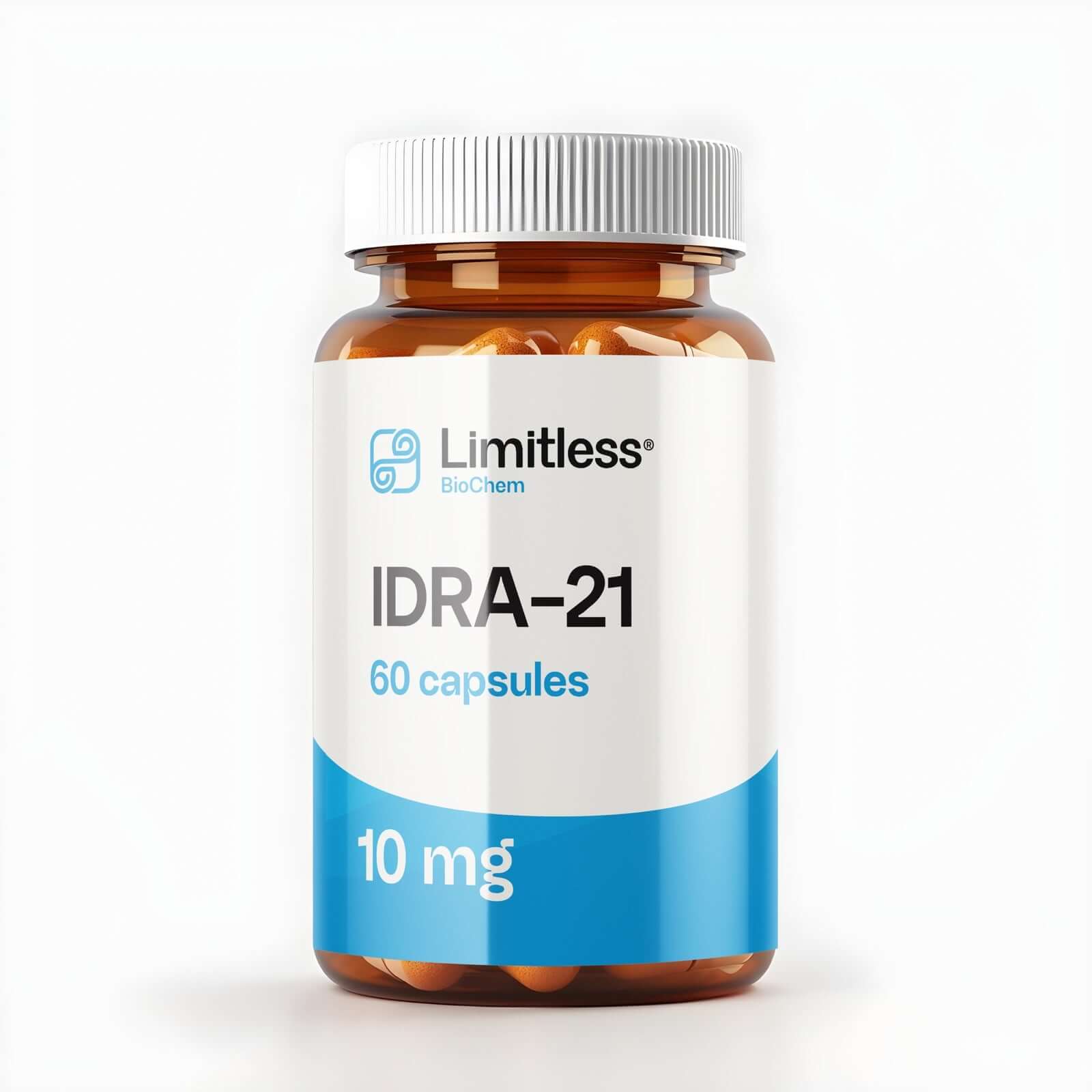
- In monkey studies, IDRA-21 was estimated to be about ten times more potent than the classic nootropic aniracetam at reversing learning deficits.
- It is chemically related both to aniracetam and, more surprisingly, to diazoxide, a drug used to relax blood vessels and raise blood sugar.
- Its behavioral effects outlast its presence in the bloodstream by a puzzling margin, a discrepancy researchers have never fully explained.
Mechanism
IDRA-21 works by positively modulating receptors, the fast excitatory receptors that carry most rapid signaling between neurons. When glutamate binds an the channel opens briefly and then quickly desensitizes, limiting the size of the excitatory signal; IDRA-21 binds an site on the receptor and slows this desensitization, so each pulse of glutamate produces a larger and more sustained current [1]. In recombinant human receptors the compound roughly doubled the charge carried through the channel, confirming that it strengthens excitatory transmission [3].
By boosting -mediated currents at synapses, IDRA-21 lowers the threshold for , the lasting strengthening of connections widely regarded as a cellular basis of learning and memory, which is thought to underlie its procognitive effects [1][2]. Because it has no activity of its own and only amplifies the response to released , its action is confined to circuits that are already active, a property shared across the ampakine class [2]. The unusually long duration of its behavioral effects relative to how long it stays in the body is not fully explained.
receptor fingerprint
receptorspositive modulator
facilitates
(via co-activation)boosts calcium
(ionotropic receptor GluA1-4; flip splice variants preferred)Positive allosteric modulator. Slows agonist-dependent desensitization and deactivation, increasing steady-state current and synaptic charge transfer. Partial (low-efficacy) modulator relative to cyclothiazide.
GluA2 (GRIA2) -binding-domain dimer interface; the cyclothiazide/benzothiadiazide siteBinds within the LBD dimer interface and stabilises the agonist-bound dimer against dissociation. Hydrogen-bonds to Ser754, which underlies the partial selectivity of benzothiadiazides for the flip splice form.
, GluN2B-preferring (GRIN1/GRIN2B)Negative modulator. Reduces whole-cell NMDA currents non-competitively and voltage-independently, shortens NMDA-mediated mEPSC decay, and is more effective at GluN1a/GluN2B than GluN1a/GluN2A. Effect is stronger at low glycine, suggesting interaction with the glycine site.
-A receptorMixed and modest. Inhibits currents evoked by exogenous GABA while slightly prolonging autaptic GABAergic currents; net direction depends on the preparation.
Dosingtypical ranges, not medical advice
interested in protocols and clinical dosages? make an account to see them! ^_^
Safetyrisks and cautions, not medical advice
Human safety data: none. No clinical trial, no case report, no poison centre series, no toxicology publication involving a human subject was found. Anything stated about human tolerability is extrapolation.
Animal and in vitro findings that a reader should weigh:
1. Worsened excitotoxic injury. Oral IDRA 21 at 12 and 24 mg/kg increased CA1 hippocampal neuron loss after 10 min of global ischemia in rats, and glutamate plus IDRA 21 killed cultured hippocampal neurons through AMPA receptor activation (PMID 9585363). The authors explicitly warned against use where excessive AMPA receptor activation may occur, naming stroke and seizures.
2. Concentration-dependent neurotoxicity. IDRA-21 up to 100 uM was not neurotoxic in cerebellar granule cells where cyclothiazide was highly toxic at 5 to 25 uM (PMID 9192690), but at 1 mM with AMPA it was cytotoxic, and that toxicity was blocked by GYKI 53655 and NBQX, confirming it is AMPA-receptor-mediated (PMID 11041540). The safety margin is real but finite.
3. Seizure risk is a class concern, not a measured IDRA-21 property. AMPA potentiation lowers seizure threshold, and high-impact ampakines produce convulsions at or near therapeutic doses. That convulsion literature belongs to the CX-series compounds and cyclothiazide, not to IDRA-21, which has never been formally seizure-tested. IDRA-21 also promotes LTP induction at 500 uM in hippocampal slices (PMID 8930991), consistent with increased excitability.
4. Off-targets that compound the risk. It inhibits GABA-evoked currents by about 41% at 200 uM (PMID 9848091), so it can reduce inhibitory tone at the same time as it amplifies excitation; and it negatively modulates GluN2B-containing NMDA receptors (PMID 15111017), an effect of unknown clinical direction.
5. Not established. No LD50, no repeat-dose toxicology, no reproductive or genotoxicity data, no drug interaction data. IDRA-21 is a 3,4-dihydrobenzothiadiazine, structurally in the diazoxide and thiazide diuretic family; whether it retains any diuretic, hypotensive or K-ATP channel activity was not tested in any paper retrieved, so cardiovascular and electrolyte effects are simply unknown rather than absent.
Regulatory status: - Not approved for human use by any regulator anywhere. openFDA returns no drug label for IDRA-21. - Not a United States controlled substance. It does not appear on the DEA alphabetical list of controlled substances. - Not a lawful US dietary supplement ingredient; it is a synthetic drug with no history of use in the food supply, and is sold only as a research chemical. - WADA: not named anywhere on the 2026 Prohibited List (full text searched; zero hits for IDRA, ampakine, AMPA or benzothiadiazine). However it is captured by category S0, Non-approved Substances, which prohibits at all times "any pharmacological substance which is not addressed by any of the subsequent sections of the List and with no current approval by any governmental regulatory health authority for human therapeutic use". IDRA-21 meets that definition exactly, so it is prohibited in and out of competition, as a Specified Substance. Athletes should treat it as banned.
History
IDRA-21 is a benzothiadiazine compound that emerged from research into positive modulators of AMPA-type glutamate receptors, a field pioneered in part by the neuroscientists Erminio Costa and Alessandro Guidotti and their collaborators in the 1990s. Structurally a congener of aniracetam and related to the vasodilator diazoxide, it was singled out because, unusually for its class, it crossed the blood-brain barrier well enough to be active after oral dosing.
A landmark 1995 study in patas monkeys showed that IDRA-21 reversed drug-induced learning deficits and was roughly ten times more potent than aniracetam, marking it as an early behavioral lead among the so-called ampakines. Later work in young macaques confirmed that it could improve performance on demanding visual memory tasks. Despite this promising profile, IDRA-21 was never developed into an approved medicine and has remained an experimental research compound, valued mainly as a pharmacological tool and a reference point in the ampakine field.
Reputation
Among students of cognitive pharmacology, IDRA-21 holds a certain historical prestige as one of the compounds that demonstrated the ampakine concept could translate into real behavioral gains in primates. Its appeal lies in a clean, activity-dependent mechanism: it amplifies signaling only where glutamate is already being released, in principle strengthening the synaptic plasticity that underlies learning without broadly overstimulating the brain.
Enthusiasts in the nootropic community cite its notable potency relative to the racetams. Candor is essential here, though; IDRA-21 was never taken through human clinical development, so there are no controlled human safety or efficacy data, and its long-lasting behavioral effects relative to how briefly it persists in the body remain unexplained. It is best understood as an interesting research chemical and a proof of concept rather than an established cognitive enhancer.
Subjective profileweighing the evidence above
For people who understand what they are doing with glutamate, and nobody else. The learning data is among the more convincing in the ampakine literature, but human safety is essentially unstudied, the seizure threshold concern is real, and it stacks badly with racetams and other potentiators. Occasional use at most.
Where to buy
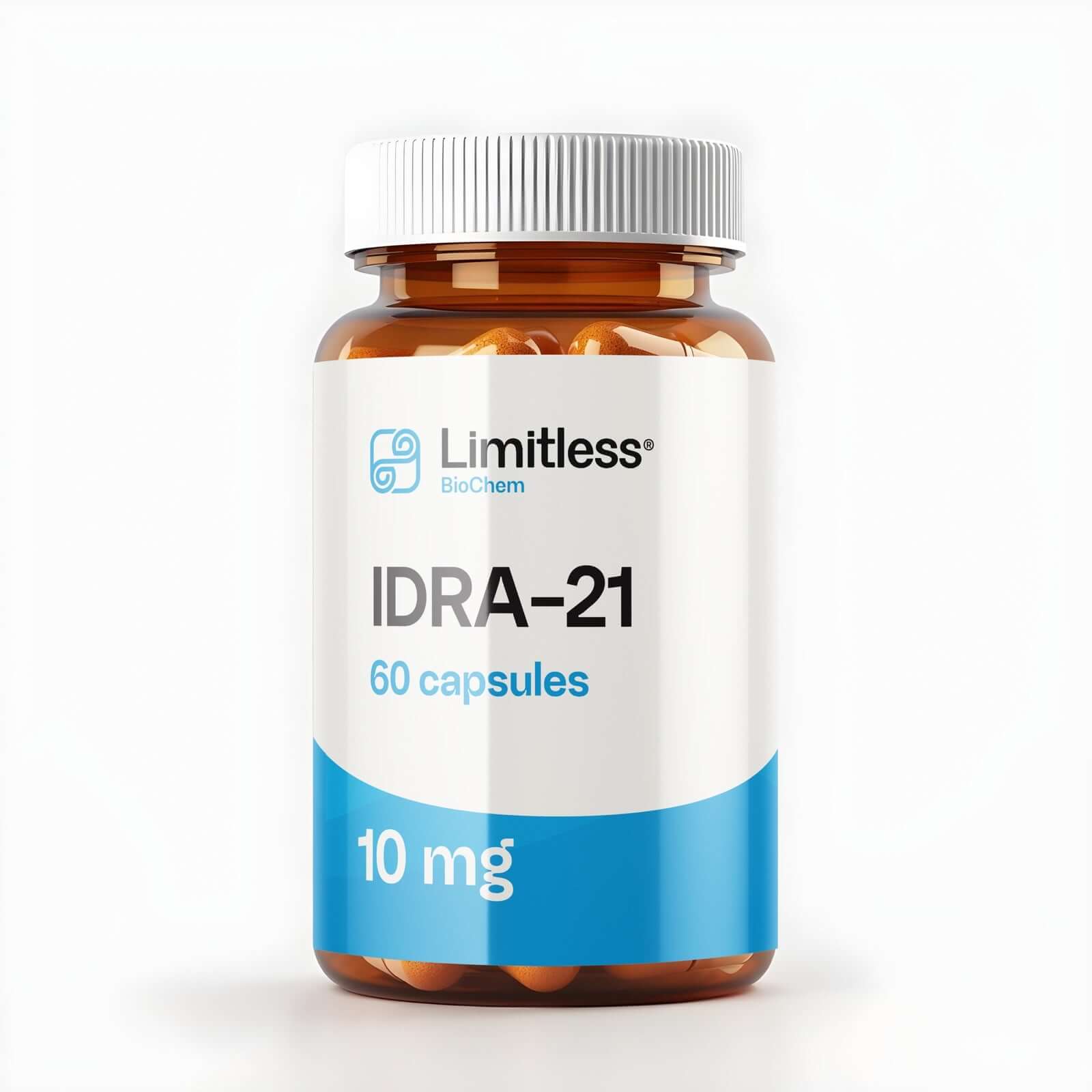
Suppliers
Vendors carrying IDRA-21, with live product details and codes. Links are affiliate links that support the wiki at no cost to you.
Limitless Biochem🌐
IDRA-21
Research
- 1993first citedModulation of AMPA/kainate receptors by analogues of diazoxide and cyclothiazide in thin slices…
- 1998most active year3 papers
- 2012most recentEffects of positive modulators of α-amino-3-hydroxy-5-methyl-4-isoxazolepropionic acid (AMPA)-t…
- 1.7-Chloro-3-methyl-3-4-dihydro-2H-1,2,4 benzothiadiazine S,S-dioxide (IDRA 21): a benzothiadiazine derivative that enhances cognition by attenuating DL-alpha-amino-2,3-dihydro-5-methyl-3-oxo-4-isoxazolepropanoic acid (AMPA) receptor desensitization.
- 2.Therapeutic potential of positive AMPA modulators and their relationship to AMPA receptor subunits: a review of preclinical data
- 3.The effects of IDRA 21, a positive modulator of the AMPA receptor, on delayed matching performance by young and aged rhesus monkeys
- 4.The effects of huperzine A and IDRA 21 on visual recognition memory in young macaques
- 5.IDRA-21, a positive AMPA receptor modulator, inhibits synaptic and extrasynaptic NMDA receptor mediated events in cultured cerebellar granule cells.
- 6.Effect of the AMPA receptor modulator IDRA 21 on LTP in hippocampal slices.
- 7.Benzothiadiazines derivatives as novel allosteric modulators of kainic acid receptors.
- 8.The diazoxide derivative IDRA 21 enhances ischemic hippocampal neuron injury.
- 9.7-Chloro-3-methyl-3,4-dihydro-2H-1,2,4-benzothiadiazine S,S-dioxide (IDRA 21), a congener of aniracetam, potently abates pharmacologically induced cognitive impairments in patas monkeys.
- 10.Modulation of kainate--activated currents by diazoxide and cyclothiazide analogues (IDRA) in cerebellar granule neurons.
- 11.Modulating excitatory synaptic neurotransmission: potential treatment for neurological disease?
- 12.A novel class of allosteric modulators of AMPA/Kainate receptors.
23 listed here; entry last updated August 2026
Reviews
My notesprivate to this device
FAQ
What is an ampakine?
Ampakines modulate AMPA-type glutamate receptors to enhance excitatory signaling. They're studied for learning and memory.
What does the research show?
Most evidence comes from animal studies suggesting improved learning. Human data are very limited.
Is it an approved drug?
No, it remains an older investigational research compound. It isn't an established medication.
How does AMPA relate to memory?
AMPA receptors are central to fast excitatory transmission and synaptic plasticity. Enhancing them is a target for cognitive effects.
Limitations of the evidence
- Human safety is essentially unstudied; it is an experimental compound
Adverse effects
- Strong AMPA activation could, in theory, lower seizure threshold
- May worsen neuronal injury after stroke or seizure in animal models
Notes and cautions
- Overstimulation or agitation is plausible with excessive AMPA potentiation
- Purity and dosing of gray-market material are unreliable