
spec sheet11 rows
Sodium Valproate + Valproic Acid Sodium valproate combined with valproic acid is the formulation known as valproate semisodium or divalproex sodium, sold chiefly under the brand name Depakote. It is a stable one-to-one complex of the two forms that dissociates in the gut to release the same active valproate ion. It is used as an anticonvulsant and mood stabilizer, most notably for the manic episodes of bipolar disorder, and is often chosen for its gentler effect on the stomach.
- an effective mood stabiliser and anticonvulsant in one pill
- steadies manic and mixed episodes in bipolar disorder
- broad spectrum seizure control with once daily dosing
- Treats bipolar disorder as a proven mood stabilizer
- smoother blood levels than plain valproate
- gentler on the stomach than older valproate forms
- risk of serious birth defects and developmental harm if used in pregnancy
- generally milder stomach upset than other valproate forms, though nausea can still occur
- weight gain, tremor, or drowsiness
Overview
The pairing of sodium valproate with valproic acid describes a single pharmaceutical entity, a coordination complex in which equal molar amounts of the salt and the free acid are held together in a stable one-to-one ratio. This substance is called valproate semisodium or, more commonly in North America, divalproex sodium, and its best known trade name is Depakote [1]. Once swallowed, the complex separates into valproate ions, so it ultimately delivers the same active drug as plain sodium valproate or valproic acid.
The main practical reason for combining the two forms is tolerability. Divalproex is generally believed to cause fewer gastrointestinal side effects than the other preparations, and it is frequently supplied with an enteric coating or as a once-daily extended-release tablet to further improve comfort and convenience [1]. These formulation advantages can help people stay on treatment, which matters in the long-term management of chronic conditions, and its overall side effects are considered mild and manageable [1][2].
Divalproex is an anticonvulsant with well-documented use in bipolar disorder, where it is effective for acute manic and mixed episodes and has been studied across a broader range of presentations, including rapid cycling and impulsive aggression [1][2]. It is also used to control certain seizure types and to prevent migraine. In treatment guidelines it sits alongside lithium and other agents as an established option for mania, and it is sometimes favored in more severe or mixed illness [2][3].
As a form of valproate, divalproex carries the same serious safety profile as the wider drug class. It can cause major birth defects and neurodevelopmental problems when used in pregnancy, and it is subject to the same regulatory warnings and restrictions on use in people who may become pregnant [2]. Labeling also cautions about liver injury, pancreatitis, weight gain, and interactions with other medicines such as lamotrigine [2]. It is a prescription-only medicine used under medical supervision.
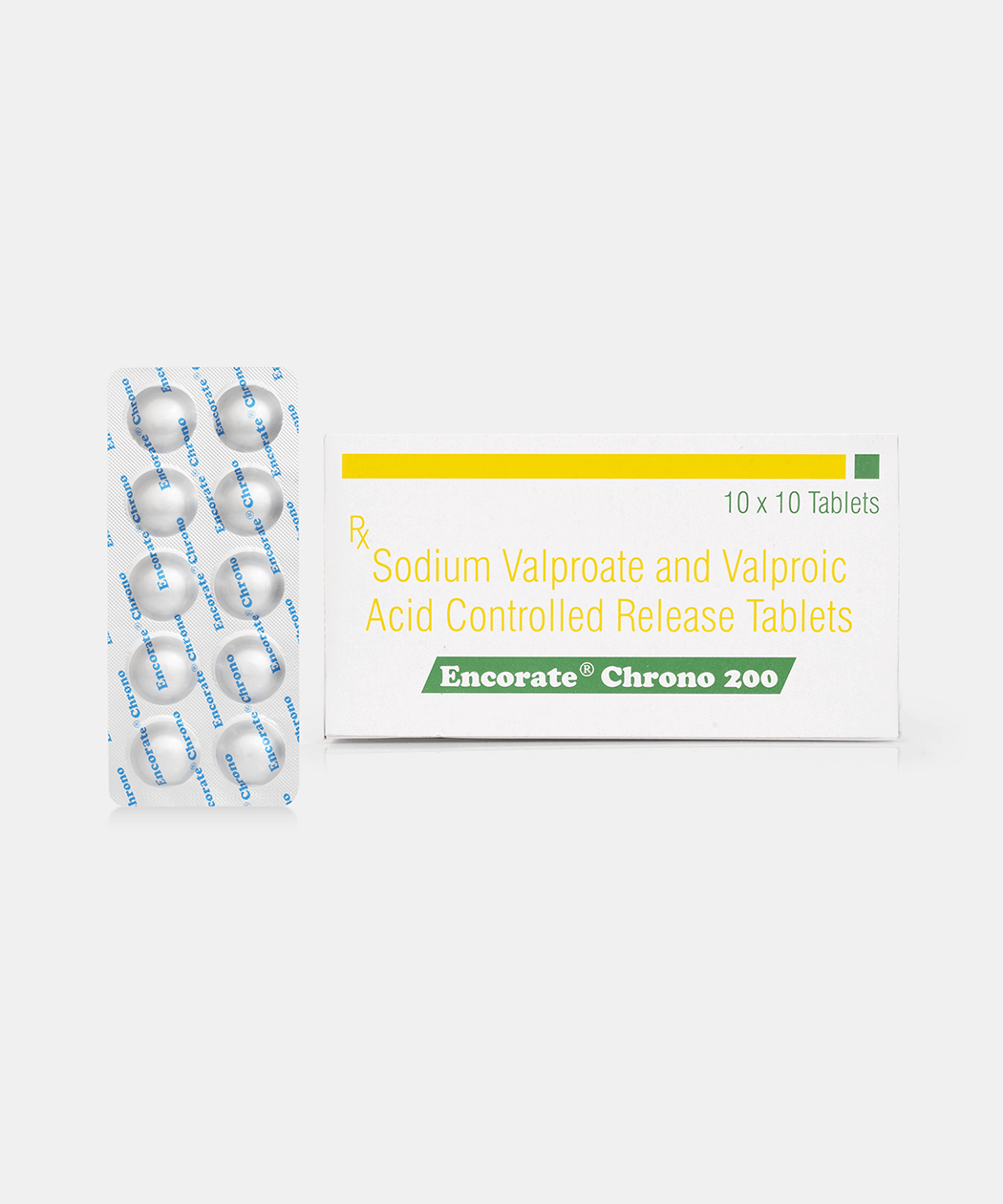
- Divalproex sodium is essentially a chemical marriage of two forms of valproate that splits apart in the gut to release the identical active drug.
- The combined formulation was engineered chiefly to be easier on the stomach, not to change how the medicine works in the brain.
- An extended-release version, Depakote ER, lets the same drug be taken just once a day.
Mechanism
Because divalproex breaks down into the valproate ion, its mechanism of action is identical to that of valproate in its other forms. The drug is thought to work through several pathways rather than one, including raising brain levels of the inhibitory neurotransmitter , dampening electrical excitability by acting on voltage-gated sodium channels, and modulating intracellular signaling and gene expression [2][3]. The combined salt-and-acid formulation does not change these actions; its purpose is to improve gastrointestinal tolerability and absorption rather than to alter how the active drug behaves in the brain [1].
receptor fingerprint
transaminase (GABA-T)inhibits
Voltage gated sodium channelsblocks
Histone deacetylase ()inhibits
T type calcium channelsmodulates
Glutamic acid decarboxylase (GAD)activates
Dosingtypical ranges, not medical advice
interested in protocols and clinical dosages? make an account to see them! ^_^
Safetyrisks and cautions, not medical advice
Divalproex is prescription only and shares every safety concern of valproate. Expect possible tremor, weight gain, hair thinning, drowsiness, and stomach upset. Serious risks include liver toxicity, pancreatitis, low platelets, and raised blood ammonia. It causes birth defects and lowered IQ in exposed pregnancies and is avoided in anyone who may conceive. Do not use it in POLG related mitochondrial disorders or urea cycle disorders, and monitor liver function, blood counts, and drug levels during treatment.
Interactionsdocumented pairs only, not exhaustive
Valproic acid inhibits the uridine diphosphate glucuronosyltransferase (UGT) enzyme system, particularly UGT1A4, and significantly reduces the clearance of lamotrigine through pharmacokinetic inhibition. Lamotrigine plasma concentrations are roughly doubled in the presence of valproate; a study of 331 patients found steady-state lamotrigine troughs were 8.82 micrograms per milliliter with valproate compared to 4.43 without [5]. This interaction increases the risk of lamotrigine-induced rash; the combination is a known risk factor for severe cutaneous adverse reactions [6].
Benzodiazepines like flunitrazepam may also be affected; one recent study identified flunitrazepam as significantly increasing lamotrigine concentrations and rash risk through an additional, as-yet-uncharacterized mechanism, suggesting potential additive UGT inhibition [6]. Valproate's interactions with other UGT substrates (such as some glucuronidated anticonvulsants and NSAIDs) remain incompletely studied. The interaction with novel anticonvulsants that rely on UGT metabolism has not been formally characterized.
Checking a whole stack? Run it through interactions + stacks.
History
This formulation, known as valproate semisodium or divalproex sodium, is a stable one-to-one coordination compound of sodium valproate and valproic acid that dissociates in the gut to release the same active valproate ion. It was developed by Abbott Laboratories to improve gastrointestinal tolerability relative to the older forms of the drug, and it was approved by the United States Food and Drug Administration under the brand name Depakote. Its indications expanded over time, covering epilepsy, the manic episodes of bipolar disorder, and the prevention of migraine, with approval for bipolar mania granted in the mid-1990s.
An extended-release version, Depakote ER, was later introduced to allow once-daily dosing and smoother blood levels. Because the active moiety is identical to that of other valproate products, the combined salt-and-acid design changes only the drug's tolerability and absorption, not its underlying pharmacology. The parent molecule's own history traces back to the accidental 1962 discovery of valproic acid's anticonvulsant activity in France.
Reputation
The combined sodium valproate and valproic acid formulation, best known as Depakote, is well regarded for delivering the proven benefits of valproate with gentler effects on the stomach, which improves adherence for many patients. It shares the parent drug's broad effectiveness in epilepsy, acute mania, and migraine prevention, and it is frequently chosen when gastrointestinal tolerability is a concern. The availability of an extended-release version adds the convenience of once-daily dosing and steadier drug levels.
Its long clinical track record and familiarity give prescribers confidence. The same serious cautions apply as for all valproate products; it can cause major birth defects and developmental harm in pregnancy and demands careful monitoring, so it must be used judiciously, particularly in women of childbearing potential. For appropriately selected patients, it remains an effective and well-established mood stabilizer and anticonvulsant.
Subjective profileweighing the evidence above
A genuinely effective mood stabilizer and anticonvulsant, and this formulation is the easier way to take it, with smoother levels and less stomach upset. The birth-defect and developmental risk in pregnancy is severe and completely unchanged by the formulation, so it is avoided in anyone who might conceive, with liver, blood counts and levels monitored throughout.
Where to buy

Suppliers
Vendors carrying Sodium Valproate + Valproic Acid, with live product details and codes. Links are affiliate links that support the wiki at no cost to you.
PCT.Zone
Sodium Valproate + Valproic Acid
Research
- 2003first citedValproate (review of use in bipolar disorder)
- 2021meta-analysisMood stabilizers and/or antipsychotics for bipolar disorder in the maintenance phase: a systema…
- 2026most recentEffect of transporter gene polymorphisms and valproate co-medication on the steady-state dispos…
- 1.Divalproex sodium in the treatment of adults with bipolar disorder
- 2.Valproate (review of use in bipolar disorder)
- 3.Bipolar disorders.
- 4.Mood stabilizers and/or antipsychotics for bipolar disorder in the maintenance phase: a systematic review and network meta-analysis of randomized controlled trials
- 5.Effect of transporter gene polymorphisms and valproate co-medication on the steady-state disposition of lamotrigine and their effect on efficacy in adults with epilepsy.
- 6.Flunitrazepam increases the risk of lamotrigine-induced cutaneous adverse reactions: Combined analysis of medical big data and clinical research.
6 listed here; entry last updated August 2026
Reviews
My notesprivate to this device
FAQ
How is divalproex different from sodium valproate?
They deliver the same active valproate ion; divalproex pairs valproate with valproic acid and, in the extended release form, releases it slowly for steadier levels and once daily dosing.
Can I crush the extended release tablet?
No; crushing breaks the slow release design and can cause a spike in drug level, though some tablets may be split if the label allows.
Is it safe in pregnancy?
No; like all valproate products it carries a high risk of birth defects and developmental harm and is avoided when pregnancy is possible.
Why did my dose change when I switched from regular valproate?
Extended release is absorbed slightly less completely, so doctors often adjust the total daily dose when switching.
How long until it helps my mood?
Antimanic effects often begin within a few days to two weeks once an adequate blood level is reached.
Adverse effects
- risk of serious birth defects and developmental harm if used in pregnancy
- generally milder stomach upset than other valproate forms, though nausea can still occur
- weight gain, tremor, or drowsiness
- potential liver toxicity and, rarely, pancreatitis