
spec sheet12 rows
L-serine is a proteinogenic alpha-amino acid that the body can normally synthesize, which classifies it as non-essential, though this label is increasingly viewed as conditional. Built mainly from an intermediate of glucose metabolism, it sits at a hub of one-carbon metabolism, supplying building blocks for proteins, the amino acids glycine and cysteine, cell-membrane lipids, and nucleotides, as well as the NMDA-receptor co-agonist D-serine. When L-serine is scarce, the enzyme serine palmitoyltransferase incorporates alanine in its place and produces neurotoxic 1-deoxysphingolipids, the biochemical cause of hereditary sensory and autonomic neuropathy type 1; oral L-serine reduces their formation and is used as a treatment for that disorder. It is also under study for a range of other neurological conditions and is available as a dietary supplement.
- Amino acid at the hub of one carbon metabolism
- Feeds brain phospholipids, glycine, cysteine and nucleotides
- Supplies D-serine, a key partner at NMDA receptors
- Real human trials at high doses in ALS and HSAN1
- Stops toxic deoxysphingolipids forming in HSAN1 nerve disease
- Cheap, very well tolerated, and easy to trial
- Mild gastrointestinal upset in some people
- Nausea at higher intakes
- Headache reported occasionally
Overview
L-Serine is one of the twenty amino acids used to build proteins and is classified as non-essential because healthy people can synthesize it, although researchers increasingly describe it as conditionally non-essential, since the body cannot always make enough to meet every demand across the lifespan [1]. It is produced in the central nervous system and elsewhere from 3-phosphoglycerate, an intermediate of glycolysis, and it in turn serves as a precursor for the amino acids glycine and cysteine [1]. Serine was first obtained in the nineteenth century from silk protein, which is unusually rich in it, and its name traces back to the Latin word for silk [1].
The amino acid sits at a metabolic crossroads. Through one-carbon metabolism it donates units used to make nucleotides and to support methylation reactions, and it is a starting material for the phospholipids and sphingolipids that make up cell membranes [1]. A distinct and much-studied role is played by its mirror-image form, D-serine, which the enzyme serine racemase produces from L-serine; D-serine acts as a co-agonist at the NMDA subtype of glutamate receptor, a receptor central to learning, memory, and synaptic signaling [2].
Rare inherited disorders of the enzymes that build serine cause serious neurological problems, including an abnormally small head and severe developmental delay, and some of these respond to supplementation with L-serine, sometimes given alongside glycine [1]. Beyond these deficiency states, L-serine has been investigated as a possible neuroprotective agent; a phase I clinical trial reported that oral L-serine was generally safe in people with amyotrophic lateral sclerosis, and laboratory work has connected the amino acid to protection against the misincorporation of the environmental toxin BMAA into proteins [3][4]. D-serine and related compounds are separately being explored in conditions such as anxiety and schizophrenia because of their action at NMDA receptors [2].
L-Serine occurs naturally in many protein-containing foods and is also sold as a dietary supplement; regulators in the United States have regarded it as generally recognized as safe, and it remains under study rather than established as a treatment for the neurological conditions noted above [1][3].

Mechanism
L-Serine influences the nervous system through several routes. It is the direct precursor of glycine, itself an inhibitory neurotransmitter, and of D-serine, which serine racemase generates from L-serine; D-serine then binds the glycine modulatory site of the receptor, where it works together with glutamate to let the receptor open, a step important for plasticity, learning, and memory [1][2]. By feeding one-carbon metabolism, serine also supplies the units needed to synthesize nucleotides and to sustain methylation, linking it to cell growth and repair [1].
Its proposed neuroprotective effects are thought to reflect both this metabolic support and its ability to compete with the non-protein amino acid BMAA, reducing the misincorporation of that toxin into proteins and the misfolding that follows [1][4]. Because astrocytes make L-serine and hand it to neurons for conversion to D-serine, the availability of the parent amino acid can shape how strongly receptors are activated [2].
receptor fingerprint
Phospholipid and sphingolipid synthesisSupplies serine backbone for phosphatidylserine and sphingolipids
co- pool (D-serine, glycine)Serves as precursor to co-agonists
One-carbon / folate metabolismDonates carbon units via serine hydroxymethyltransferase
Dosingtypical ranges, not medical advice
interested in protocols and clinical dosages? make an account to see them! ^_^
Safetyrisks and cautions, not medical advice
L-serine is generally very well tolerated. At higher intakes some people get mild stomach upset, loose stools, or an occasional headache, but human trials at 15 to 30 grams a day have reported a clean safety record over months. Most of the strong human data is in ALS, hereditary neuropathy, and rare pediatric serine-synthesis disorders rather than healthy cognition, so treat the everyday brain benefit as unproven but low-risk. As a normal dietary amino acid it has no scheduling issues; those with kidney impairment should be thoughtful about very large amino-acid loads.
Interactionsdocumented pairs only, not exhaustive
The interaction literature on L-serine is thin, and honestly so; it is an amino acid the body makes and consumes in gram quantities daily, and no clinical pharmacokinetic interaction study has been published on it.
What has been observed comes from the trial setting. An early phase trial in amyotrophic lateral sclerosis gave doses up to 15 g twice daily alongside participants' usual medication and reported no interaction signal; the limiting problem was gastrointestinal upset rather than anything pharmacological.
The plausible mechanisms are pharmacodynamic. L-serine is the precursor of glycine and, through serine racemase, of D-serine, both co-agonists at the NMDA receptor glycine site, so an additive effect with other glycine site agents such as D-cycloserine or sarcosine is reasonable to expect but has not been measured. Serine also feeds one carbon metabolism alongside folate. Neither pathway involves cytochrome P450 enzymes, and no transporter mediated interaction has been described.
Checking a whole stack? Run it through interactions + stacks.
Subjective profileweighing the evidence above
Cheap, very well tolerated, and backed by real human trials at high doses in ALS and hereditary neuropathy. The everyday cognitive benefit in healthy people is unproven, so treat it as a low-risk experiment rather than a sure thing; mild stomach upset is usually the limiting factor.
Where to buy
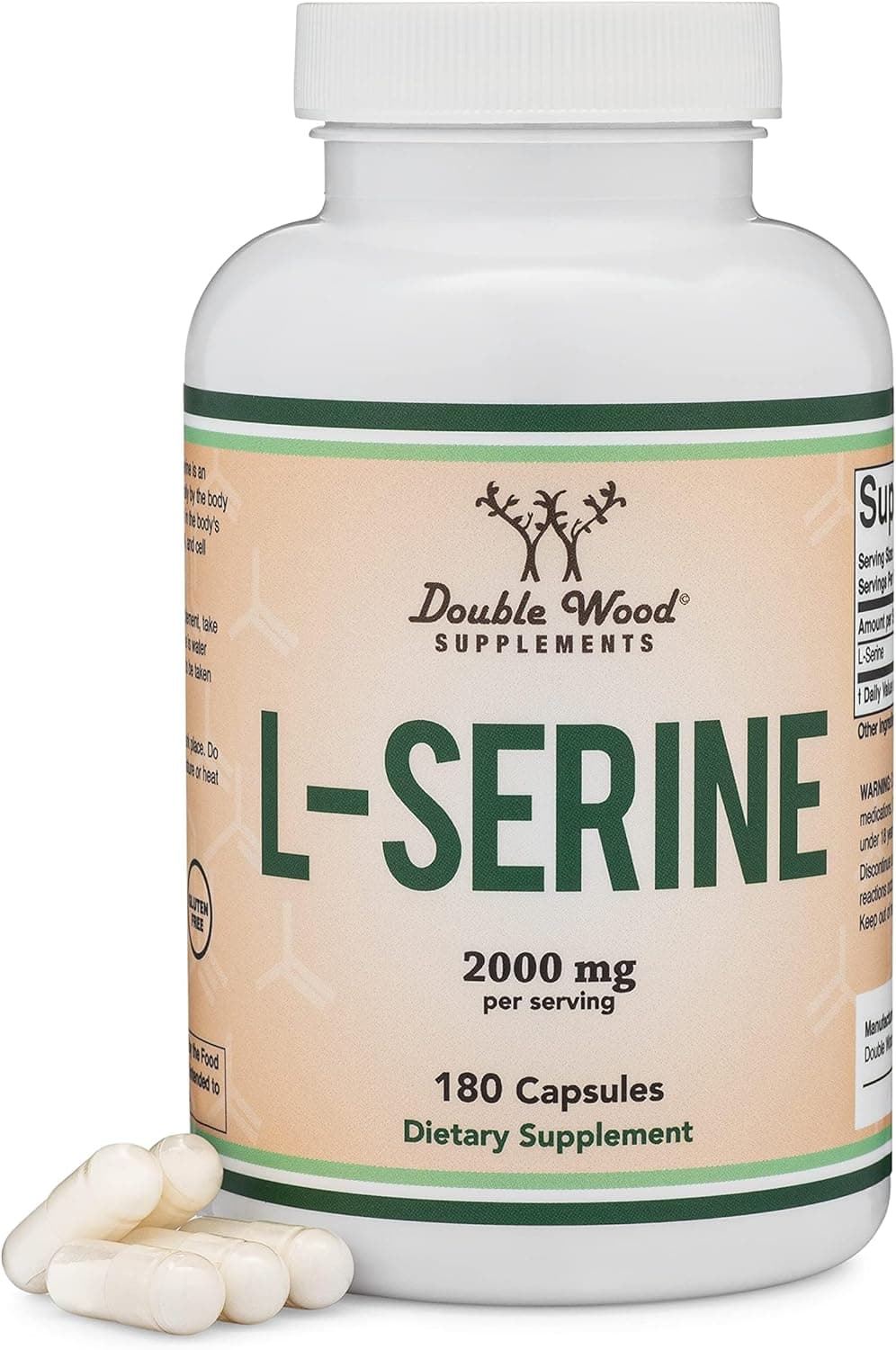
1 other outlet

Suppliers
Vendors carrying L-Serine, with live product details and codes. Links are affiliate links that support the wiki at no cost to you.
Amazon
L-Serine
iHerb
L-Serine
Research
- 2011first citedOral L-serine supplementation reduces production of neurotoxic deoxysphingolipids in mice and h…
- 2017most active year3 papers
- 2025most recentSphingoid Base Diversity
- 1.L-Serine: a Naturally-Occurring Amino Acid with Therapeutic Potential.
- 2.D-Serine as the gatekeeper of NMDA receptor activity: implications for the pharmacologic management of anxiety disorders.
- 3.Phase I clinical trial of safety of L-serine for ALS patients.
- 4.The non-protein amino acid BMAA is misincorporated into human proteins in place of L-serine causing protein misfolding and aggregation.
- 5.Serine and Lipid Metabolism in Macular Disease and Peripheral Neuropathy
- 6.Oral L-serine supplementation reduces production of neurotoxic deoxysphingolipids in mice and humans with hereditary sensory autonomic neuropathy type 1
- 7.Randomized trial of l-serine in patients with hereditary sensory and autonomic neuropathy type 1
- 8.An iPSC model of hereditary sensory neuropathy-1 reveals L-serine-responsive deficits in neuronal ganglioside composition and axoglial interactions
- 9.Serine restriction alters sphingolipid diversity to constrain tumour growth
- 10.Sphingoid Base Diversity
- 11.Structural insights into the substrate recognition of serine palmitoyltransferase from Sphingobacterium multivorum
- 12.Serine, glycine and one-carbon units: cancer metabolism in full circle
19 listed here; entry last updated August 2026
Reviews
My notesprivate to this device
FAQ
Is L-serine the same as phosphatidylserine?
No; L-serine is the free amino acid, while phosphatidylserine is a phospholipid that contains a serine head group. L-serine is one raw material the body can use to build it.
Will it noticeably boost my memory today?
Probably not in the way a stimulant would. It works as slow metabolic support, and the human cognition evidence in healthy people is still thin.
Why is it studied in ALS?
Some research links a plant-derived toxin to motor neuron damage, and L-serine may compete with it; trials have looked at safety and disease progression rather than everyday use.
Limitations of the evidence
- Limited long-term safety data
Adverse effects
- Mild gastrointestinal upset in some people
- Nausea at higher intakes
- Headache reported occasionally
Notes and cautions
- Generally well tolerated