
data + articles · 7 listed
newest 2024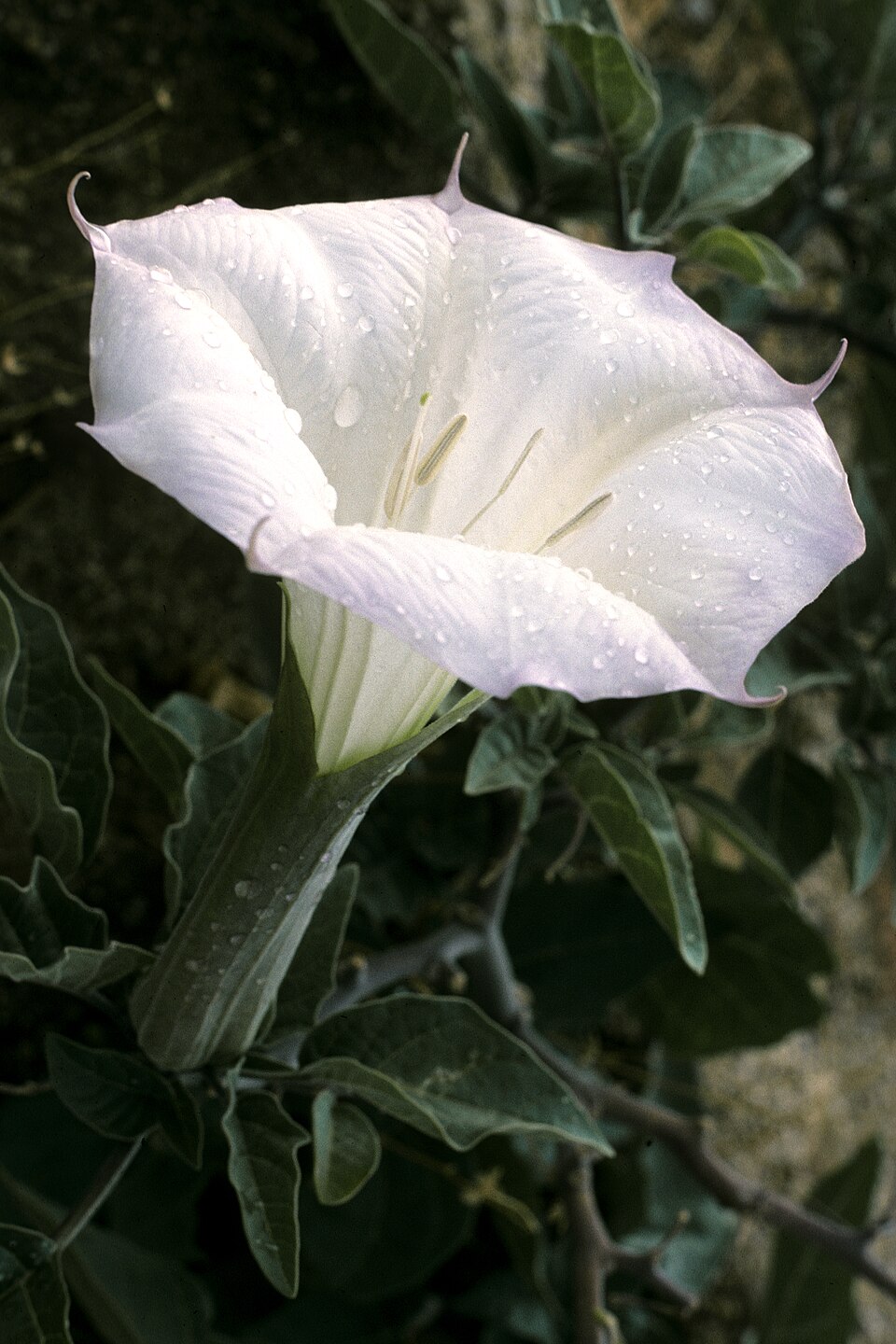
spec sheet10 rows
Datura is a genus of Solanaceae plants, most notably Datura stramonium (jimsonweed or thornapple), whose seeds and foliage contain the tropane alkaloids scopolamine, atropine (hyoscyamine), and related compounds. These alkaloids are potent competitive antagonists of muscarinic acetylcholine receptors, so the plant acts as a deliriant, producing peripheral anticholinergic signs such as mydriasis and tachycardia alongside central confusion, agitation, and vivid hallucinations. Datura is regarded as especially hazardous because alkaloid content varies widely between plants, plant parts, and seasons, so that the toxic and lethal thresholds lie close to the doses that produce delirium; forensic and clinical reports document severe poisonings and deaths, including from accidental exposure and from contamination of food crops. Analytical methods based on liquid chromatography-mass spectrometry and rapid immunoassays are used to confirm atropine and scopolamine exposure.
- Historically used in folk and traditional medicine and as a source of tropane alkaloids
- No safe recreational use; medical value belongs to the purified, dose-controlled alkaloids rather than the plant
- Tropane alkaloids antagonize muscarinic acetylcholine receptors
- Realistic hallucinations mistaken for reality and severe confusion
- Memory loss lasting well beyond the experience
- Dangerous overheating, flushing, and rapid heartbeat
- Seizures, coma, and death
Mechanism
Datura's effects come entirely from its tropane alkaloids; scopolamine, atropine, and hyoscyamine are competitive antagonists at receptors (M1-M5). All three cross the , so they block central muscarinic signaling and produce the anticholinergic delirium, alongside the peripheral toxidrome from blocking muscarinic receptors in the heart, glands, gut, and eyes. The key hazard is pharmacological roulette; the ratio and total amount of alkaloids differ enormously from one plant to the next, so there is no reliable relationship between how much you take and how strong or toxic the effect will be.
receptor fingerprint
receptors (M1-M5)Antagonist (via scopolamine, atropine, hyoscyamine)
Safetyrisks and cautions, not medical advice
Datura is one of the most dangerous deliriants precisely because you cannot know how much alkaloid you are getting; the gap between a strong effect and a lethal one can vanish. It produces a full anticholinergic delirium with realistic hallucinations mistaken for reality, confusion, and memory loss, plus the classic toxidrome (blurred vision, delirium, flushing, dangerous overheating, dry mouth), racing heart, urinary retention, seizures, and death. The experience is by nearly all accounts terrifying rather than pleasant, and hospitalizations and fatalities are well documented. Never combine it with other anticholinergics or antihistamines, which stacks the burden. Not medical advice.
Subjective profileweighing the evidence above
Do not. There is no safe recreational dose, the alkaloid content of a given plant is unknowable, and the experience is terrifying and amnesic before you reach the overheating, seizures and deaths. Whatever value the tropanes hold belongs to purified, dose-controlled medicines.
Resources
This entry is here for reference.
Research
- 2002first citedAccidental mydriasis from exposure to Angel's trumpet (Datura suaveolens).
- 2024most recentUnveiling the Dark Side of Datura in Pediatric Poisoning With Insights From Jordanian Experienc…
- 1.Unveiling the Dark Side of Datura in Pediatric Poisoning With Insights From Jordanian Experience : A Retrospective Clinical Study
- 2.Determination of tropane alkaloids atropine and scopolamine by liquid chromatography-mass spectrometry in plant organs of Datura species
- 3.Tropane alkaloid contamination of agricultural commodities and food products in relation to consumer health: Learnings from the 2019 Uganda food aid outbreak.
- 4.Acute Datura stramonium poisoning in an emergency department.
- 5.Fatal Datura poisoning: identification of atropine and scopolamine by high performance liquid chromatography/photodiode array/mass spectrometry.
- 6.Accidental mydriasis from exposure to Angel's trumpet (Datura suaveolens).
- 7.Intra- and inter-laboratory validation of a dipstick immunoassay for the detection of tropane alkaloids hyoscyamine and scopolamine in animal feed.
7 listed here; entry last updated July 2026
Reviews
My notesprivate to this device
FAQ
Why is Datura considered so dangerous?
Because the alkaloid content is wildly unpredictable. Two seeds from the same pod can differ in potency, so the dose that causes a strong effect and the dose that kills can be nearly the same.
Is the trip enjoyable?
Overwhelmingly reported as no. People describe frightening, realistic hallucinations they cannot tell from reality, severe confusion, and days of memory loss, often followed by regret.
What makes Datura work?
Its tropane alkaloids; scopolamine, atropine, and hyoscyamine. They block muscarinic acetylcholine receptors in the brain and body, producing the anticholinergic delirium and toxidrome.
Adverse effects
- Realistic hallucinations mistaken for reality and severe confusion
- Memory loss lasting well beyond the experience
- Dangerous overheating, flushing, and rapid heartbeat
- Seizures, coma, and death