
Tenoten
modulators · reduces subjective anxiety in russian clinical trials class / modulatorsspec sheet5 rows
Tenoten is one of the stranger entries in this archive because it is a real, currently marketed Russian pharmaceutical built on a technology most Western pharmacology would not expect to work at all. Developed by the Russian company Materia Medica Holding, it consists of ultra-high-dilution "release-active" antibodies to S100B, a calcium-binding brain protein, manufactured using methods descended from homeopathic dilution practice but sold and studied as a conventional anxiolytic drug rather than a homeopathic remedy. It has been registered and sold over the counter in Russia since the mid-2000s, in both an adult formulation and a pediatric one marketed for attention and behavioral issues in children, backed by a body of Russian-language randomized trials claiming efficacy comparable to benzodiazepines. Outside Russia it has essentially no regulatory recognition, the dose-response logic behind ultra-dilute preparations remains scientifically contested, and at least one high-profile English-language randomized trial supporting this drug class was subsequently retracted from Scientific Reports.
- Sold over the counter in Russia since the mid 2000s
- Russian randomized trials report anxiety relief comparable to benzodiazepines
- Marketed as free of dependence and withdrawal
- Pediatric version marketed for attention and behaviour in children
- A genuinely unusual mechanism, unlike anything on Western shelves
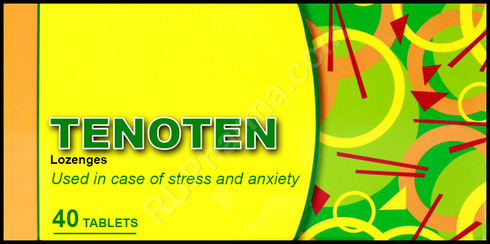
- Tenoten is sold over the counter in Russian pharmacies, including a formulation marketed specifically for children's attention and behavior.
- A 2021 randomized controlled trial supporting this release-active antibody drug technology was later retracted from the journal Scientific Reports.
Mechanism
Proposed to alter the conformation or extracellular availability of S100B, secondarily modulating , serotonergic, dopaminergic and sigma-receptor signaling; the underlying "release-active" ultra-dilution manufacturing technology is disputed and has no mechanism accepted in mainstream Western pharmacology.
Safetyrisks and cautions, not medical advice
Direct toxicity is close to a non-issue, and that follows from the manufacturing rather than any virtue of the molecule: an ultra-dilute preparation has very little in it to be toxic with, and reported adverse events amount to occasional hypersensitivity, with lactose in the tablets worth knowing if you react to it. The risk that matters is substitution. Treating real anxiety, or a child's attention and behaviour problems, with something whose supporting trials are almost entirely manufacturer-linked and never independently replicated outside Russia means postponing treatment that has been.
History
Developed by Materia Medica Holding (Russia); registered and marketed in Russia from the mid-2000s as Tenoten (adult) and Tenoten for Children; supported by a series of Russian-language randomized trials; a 2021 English-language RCT tied to this release-active antibody technology was later retracted from Scientific Reports; never filed for FDA or EMA approval.
Subjective profileweighing the evidence above
A real, revenue-generating Russian drug with a mechanism that sits well outside conventional dose-response pharmacology; documented here, not endorsed.
Where to buy

Suppliers
Vendors carrying Tenoten, with live product details and codes. Links are affiliate links that support the wiki at no cost to you.
RUPharma🌐
Tenoten
Research
- 1.[Developmental disorders of academic skills in children: the efficacy and safety of Tenoten for children in the multicenter double-blind placebo-controlled randomized study]
- 2.[Farmacological effects of anti-S 100 in release-active form and mechanisms of their realization].
2 listed here; entry last updated August 2026
Reviews
My notesprivate to this device
FAQ
Is Tenoten homeopathic?
Its manufacturer describes the "release-active" technology as distinct from classical homeopathy, but it uses similar ultra-high-dilution manufacturing, and this distinction is disputed by critics.
Does Tenoten actually work?
Russian industry-linked randomized trials report anxiolytic benefit comparable to benzodiazepines, but there is no independent Western replication, and a related 2021 trial in this drug family was retracted, so meaningful skepticism is warranted.
Limitations of the evidence
- no independent Western replication of its claimed effects
Notes and cautions
- essentially no reported side effects, which is consistent with an ultra-dilute preparation having little pharmacological activity
- a 2021 randomized trial supporting this drug technology was retracted from Scientific Reports
- mechanism of action is not accepted by mainstream pharmacology