
spec sheet10 rows
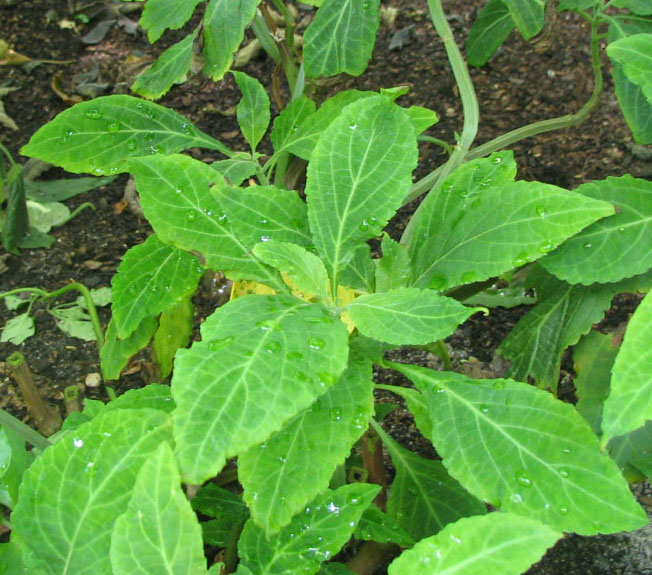
Salvia divinorum is a psychoactive member of the mint family, traditionally used by the Mazatec people of Oaxaca, Mexico in divinatory and healing rituals. Its active principle, salvinorin A, is a neoclerodane diterpene and is the most potent naturally occurring hallucinogen identified to date, active in humans at microgram doses. Uniquely among the major hallucinogens, salvinorin A contains no nitrogen atom, yet it is a highly selective and efficacious agonist at the kappa-opioid receptor, a molecular target entirely distinct from the serotonin 5-HT2A receptor of classical psychedelics. This unusual pharmacology produces an intense, disorienting, and typically very short dissociative state, and has made salvinorin A an important template for kappa-opioid research.
- Brief, extremely intense altered state
- A clean pharmacological probe of the kappa-opioid system
- Salvinorin A is the most potent natural hallucinogen and, uniquely, contains no nitrogen
- Sudden dissociation and loss of contact with surroundings
- Loss of motor control and fall or injury risk
- Anxiety, fear, and dysphoria
- Confusion and disorientation
- Possible lasting psychological distress
Mechanism
Salvinorin A exerts its effects through potent, selective agonism at the kappa-opioid receptor (KOR), a G-protein coupled receptor whose endogenous ligands are the dynorphin peptides. It was the first known naturally occurring non-nitrogenous full at this receptor, and mutagenesis studies show it occupies the KOR binding pocket through interactions with tyrosine residues in helices 2, 3, and 7 rather than through the salt bridge used by conventional nitrogen-containing opioids. Because it does not appreciably engage mu or delta opioid receptors, its behavioral signature is dominated by kappa activation, which is strongly counter-modulatory to dopaminergic reward and typically aversive.
The drug's remarkable speed and brevity have a pharmacokinetic basis. Positron emission tomography in primates shows extremely rapid brain uptake, peaking within about a minute of exposure and clearing with a near eight minutes, closely mirroring the fast onset and short duration reported by humans who smoke the plant. Salvinorin A is also being explored as a scaffold for novel analgesic and antipruritic agents, and analogues such as its mesylate derivative and the related mushroom compound collybolide illustrate efforts to retain kappa activity while reducing aversive side effects.
receptor fingerprint
Kappa-opioid receptor (KOR)Selective full agonist
Mu and delta opioid receptorsNegligible activity
receptorPartial agonist (reported)
Safetyrisks and cautions, not medical advice
Salvinorin A is extraordinarily potent, active at doses below ten micrograms in the brain, so the margin between a threshold and an overwhelming experience is very narrow, especially with concentrated extracts. The kappa-opioid state can include sudden loss of contact with surroundings, impaired motor control, falls and injury risk, frightening dissociation, and short-lived but marked anxiety or dysphoria, and durable psychological distress has been described. Kappa-opioid activation is generally aversive and pro-depressive in preclinical models, which distinguishes it sharply from serotonergic psychedelics. It should never be used alone, while standing, or near hazards. Not medical advice.
Subjective profileweighing the evidence above
Not a recreational drug in any useful sense. The kappa-opioid state is brief but so disorienting that loss of motor control and injury are ordinary outcomes, the experience is more often frightening than pleasant, and concentrated extracts leave almost no margin. Most people do not repeat it.
Resources
No suppliers are provided for compounds like this. This entry is here for reference.
Research
- 2003first citedSalvinorin A: the "magic mint" hallucinogen finds a molecular target in the kappa opioid recept…
- 2021most recentSalvia divinorum increases alcohol intake and tonic immobility whilst decreasing food intake in…
- 1.Salvinorin A: the "magic mint" hallucinogen finds a molecular target in the kappa opioid receptor.
- 2.Salvinorin A, an active component of the hallucinogenic sage salvia divinorum is a highly efficacious kappa-opioid receptor agonist: structural and functional considerations.
- 3.Identification of the molecular mechanisms by which the diterpenoid salvinorin A binds to kappa-opioid receptors.
- 4.Pharmacokinetics of the potent hallucinogen, salvinorin A in primates parallels the rapid onset and short duration of effects in humans.
- 5.Salvinorin A, a kappa-opioid receptor agonist hallucinogen: pharmacology and potential template for novel pharmacotherapeutic agents in neuropsychiatric disorders.
- 6.Chemical syntheses of the salvinorin chemotype of KOR agonist.
- 7.Kappa Opioid Receptor Agonist Mesyl Sal B Attenuates Behavioral Sensitization to Cocaine with Fewer Aversive Side-Effects than Salvinorin A in Rodents.
- 8.Salvinorin A reduces neuropathic nociception in the insular cortex of the rat.
- 9.Collybolide is a novel biased agonist of κ-opioid receptors with potent antipruritic activity.
- 10.Salvia divinorum increases alcohol intake and tonic immobility whilst decreasing food intake in Wistar rats.
10 listed here; entry last updated August 2026
Reviews
My notesprivate to this device
FAQ
Is Salvia like other psychedelics?
No. It works through the kappa-opioid receptor rather than the serotonin 5-HT2A receptor, so the experience is more dissociative, disorienting, and often unpleasant than a classic serotonergic trip.
Why are the effects so short?
Salvinorin A enters and leaves the brain very quickly, with a brain half-life of only about eight minutes when smoked, which matches the brief duration users report.
Why is salvinorin A considered so unusual?
It is a non-nitrogenous diterpene, unlike almost every other opioid or hallucinogen, and despite lacking the usual chemistry it is a highly selective, extremely potent kappa-opioid agonist.
Adverse effects
- Sudden dissociation and loss of contact with surroundings
- Loss of motor control and fall or injury risk
- Anxiety, fear, and dysphoria
- Confusion and disorientation
- Possible lasting psychological distress