
spec sheet15 rows
Memantine (brand names Namenda and Ebixa) is an NMDA receptor antagonist approved for moderate to severe Alzheimer's disease; it calms excess glutamate signaling to protect neurons while leaving the normal signaling needed for memory and learning intact [1][2]. What makes it unusual is its voltage-dependent, fast-off-rate binding; it blocks the constant, low-level 'noise' of glutamate but steps aside when a real learning signal arrives, so it doesn't cloud cognition the way stronger blockers (like ketamine) do. It is also more than a pure NMDA blocker; at or near therapeutic brain concentrations it reaches a spread of remote targets, agonizing the high-affinity state of the dopamine D2 receptor, antagonizing 5-HT3 serotonin receptors and several nicotinic acetylcholine receptors (alpha-7, alpha-4/beta-2, alpha-3/beta-4 and alpha-9/alpha-10), and weakly engaging sigma-1 receptors; see the affinity table below for the full fingerprint. Beyond Alzheimer's it is being investigated for a range of conditions; it shows the most promise for the negative symptoms of schizophrenia (social withdrawal, apathy, blunted motivation) and as a mood stabilizer in bipolar disorder, with earlier signals in ADHD (often as an adjunct to a stimulant), anxiety and OCD, and autism.
- Approved for Alzheimer's cognition and daily function
- Shields neurons from glutamate overload
- Blocks the noise, keeps the signal
- No cognitive fog like stronger blockers
- Pairs cleanly with donepezil
- Widely studied well beyond memory
- Dizziness or headache
- Confusion or drowsiness in some people
- Constipation
Overview
Memantine is a low-affinity, uncompetitive antagonist of the N-methyl-D-aspartate (NMDA) receptor, a channel activated by the excitatory neurotransmitter glutamate. It is licensed for moderate to severe Alzheimer's disease, a stage at which the other main class of dementia drugs, the acetylcholinesterase inhibitors, is often less suitable or is better combined with memantine [1][3]. It was approved in Europe in the early 2000s and in the United States in 2003, and it is available generically under many names, taken by mouth [1].
Clinical trials show that memantine can modestly slow deterioration in people with moderate to severe Alzheimer's disease. In a 28-week placebo-controlled study, memantine significantly reduced the rate of decline in outpatients with moderate to severe disease, and other trials reported benefits on measures of cognition, daily functioning, and behavior [1]. Its effects are generally small, and it does not halt or reverse the underlying disease; together with the acetylcholinesterase inhibitors, memantine is one of the only medicines licensed for the symptomatic treatment of dementia [3]. Evidence for benefit in mild Alzheimer's disease is weak [1].
The rationale for memantine rests on the theory of glutamate excitotoxicity, in which chronic overactivation of NMDA receptors allows excessive calcium to enter neurons and contributes to their dysfunction and death in Alzheimer's disease [2]. Memantine is unusual among NMDA blockers in being clinically useful and generally well tolerated, unlike agents such as ketamine, a difference attributed to its particular way of interacting with the receptor channel [2]. This distinctive pharmacology is the focus of considerable research into how it achieves benefit without the serious effects of other NMDA antagonists [2].
Memantine is a prescription medicine with a favorable tolerability profile relative to many central nervous system drugs [1]. Reported side effects, generally uncommon, include dizziness, headache, confusion, constipation, and, less often, drowsiness, agitation, or hallucinations [1]. It is cleared largely unchanged by the kidneys, has a long duration of action, and has few interactions through the liver's drug-metabolizing enzymes, so doses are typically reduced in significant kidney impairment [1]. Beyond dementia, it has been investigated for other neurological and psychiatric conditions, though the evidence for most of these uses remains limited [1].
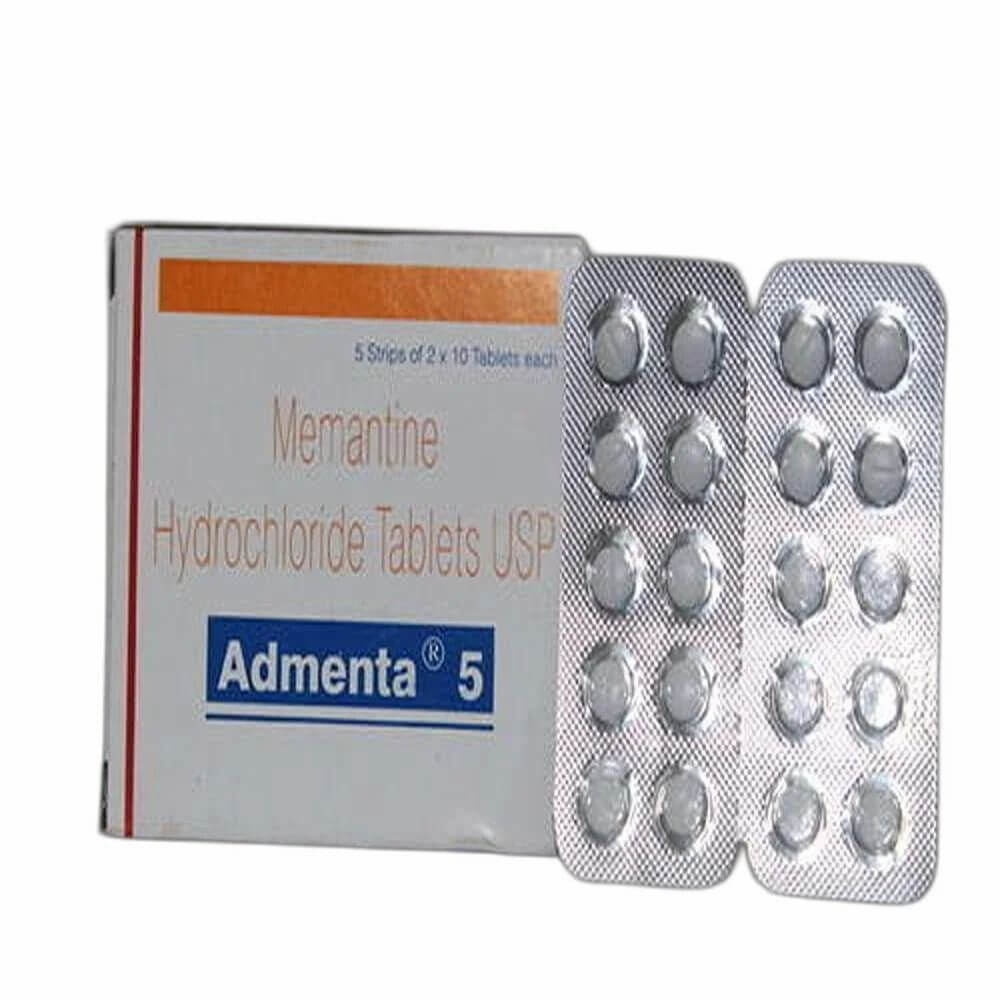
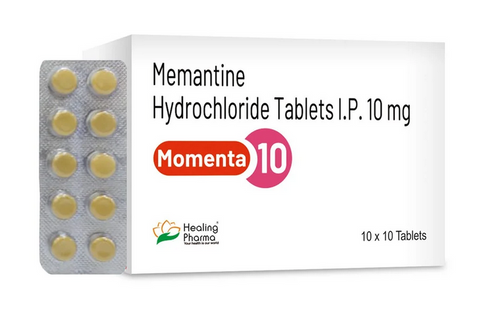
- Memantine shares its adamantane cage structure with the antiviral drug amantadine, yet the two are used for entirely different purposes.
- Its whole therapeutic trick is speed; it clings to the NMDA channel only loosely and lets go almost instantly, so a real memory signal can push it aside while it still blocks the damaging background noise.
- It was in clinical use for dementia in Germany well before it earned United States approval in 2003.
- Despite its Alzheimer's label, memantine is not a cholinesterase inhibitor at all; it barely touches the acetylcholine-degrading enzyme and works purely on the glutamate side, which is why it pairs so cleanly with donepezil.
- One of its stronger off-target actions is at the high-affinity state of the dopamine D2 receptor, where its potency (around 137 nM) actually rivals or exceeds its grip on the NMDA channel itself.
Mechanism
Memantine acts on the , a -gated ion channel that normally opens briefly during learning-related signaling to admit calcium and other ions. In Alzheimer's disease and related conditions, a persistent, low-level excess of glutamate is thought to hold these channels open too much, allowing a damaging chronic influx of calcium, a process termed [2]. Memantine enters and blocks the open channel, but it does so with low affinity and strong voltage dependence and leaves the receptor quickly [1][2].
That kinetic profile is central to how it works. Because it binds loosely and is displaced when the receptor is strongly activated by the large, brief bursts that carry meaningful signals, it lets normal transmission proceed; but during the weak, sustained glutamate leak of disease it stays in the channel and suppresses the ongoing, pathological calcium entry [2]. So it reduces excitotoxic stress while sparing the physiological signaling needed for memory and learning, which sets it apart from high-affinity blockers like ketamine that impair normal function [2].
Memantine is not only an blocker, though; at relevant concentrations it also behaves as an at the receptor, an at the 5-HT3 receptor, and an antagonist at the alpha-7 receptor. This wider fingerprint is part of why interest has moved beyond dementia; the combined dopaminergic and effects are a plausible route to easing the negative symptoms of schizophrenia (apathy, social withdrawal, low motivation) and to stabilizing mood in bipolar disorder, and the same NMDA modulation that protects neurons may also dampen the disordered signaling seen in those conditions [1].
receptor fingerprint
(open channel; GluN2C/GluN2D-preferring)uncompetitive, voltage-dependent open-channel antagonist
receptor (high-affinity D2High state)agonist
5-HT3 receptornon-competitive antagonist
Alpha-9/alpha-10 ACh receptorantagonist
Alpha-7 ACh receptornon-competitive open-channel antagonist
Alpha-4/beta-2 ACh receptorantagonist
Alpha-3/beta-4 (ganglionic) ACh receptorantagonist
Sigma-1 receptoragonist
negligible inhibitor
Organic cation transporters (OCT1, OCT2, MATE1)substrate and weak inhibitor
Dosingtypical ranges, not medical advice
interested in protocols and clinical dosages? make an account to see them! ^_^
Safetyrisks and cautions, not medical advice
The common side effects are dizziness, headache, confusion, and constipation, usually mild and helped by slow titration. It is cleared largely by the kidneys, so doses are lowered in renal impairment, where it can otherwise accumulate. It is a prescription medication and should be used under medical supervision, not casually self-dosed for tolerance experiments. Combining it with other NMDA-active drugs or with amantadine is generally avoided. Overall it is well tolerated for its approved use, but it is a real drug, not a supplement.
Interactionsdocumented pairs only, not exhaustive
The memantine label warns that combining it with other NMDA antagonists such as amantadine, ketamine, and dextromethorphan has not been formally studied and may increase the risk of pharmacotoxic CNS effects, so these combinations should be avoided or used cautiously. Because memantine is eliminated largely unchanged by active renal tubular secretion, drugs and conditions that alkalinize the urine, including carbonic anhydrase inhibitors like acetazolamide and sodium bicarbonate, reduce its renal clearance and can raise plasma levels.
It shares the renal cationic transport system with drugs such as hydrochlorothiazide, triamterene, cimetidine, ranitidine, quinidine, and nicotine, giving a potential for altered plasma levels of either agent. Memantine is not an appreciable CYP450 substrate or inhibitor, so hepatic metabolic interactions are unlikely. This is research information, not medical advice.
Checking a whole stack? Run it through interactions + stacks.
History
Memantine is a derivative of adamantane, the same chemical scaffold behind the antiviral amantadine, and it was first synthesized in the 1960s by Eli Lilly, which patented the molecule for other purposes. Its potential in neurology emerged later under the German company Merz, which developed it for dementia after recognizing that its action on the NMDA glutamate receptor might counter the excitotoxic damage implicated in Alzheimer's disease.
It was used in Germany for dementia for years before rigorous trials established its benefit, and the United States Food and Drug Administration approved it in 2003 under the brand name Namenda for moderate to severe Alzheimer's disease; it is also sold as Ebixa. What set memantine apart was its unusual binding kinetics, a low-affinity, voltage-dependent, fast-off-rate block that suppresses pathological glutamate signaling while sparing the normal transmission needed for memory. Interest has since broadened to investigational uses in other neuropsychiatric conditions.
Reputation
Memantine is respected as a distinctive and well-tolerated option in the management of moderate to severe Alzheimer's disease, valued for a mechanism unlike the cholinesterase inhibitors it is often combined with. Its reputation rests on an elegant kinetic property; it blocks the constant, low-level glutamate noise that drives excitotoxic stress yet steps aside when a genuine learning signal arrives, so it protects neurons without clouding cognition the way stronger blockers such as ketamine do.
Meta-analyses of randomized, placebo-controlled trials confirm modest improvements in cognition and stabilization of function, and it is generally well tolerated, which keeps it a standard part of dementia care alongside newer amyloid-targeting therapies. It is honest to acknowledge that its benefits are supportive rather than curative and modest in magnitude. Its broad receptor fingerprint has also fueled research interest beyond dementia, most notably for the negative symptoms of schizophrenia and as a mood stabilizer, though these remain investigational.
Subjective profileweighing the evidence above
Does what it claims and not more. In moderate to severe Alzheimer's it gives modest, real gains in cognition and daily function and pairs cleanly with a cholinesterase inhibitor because it works on a different system. There is no case for it as a nootropic in a healthy brain, and kidney function sets the dose.
Where to buy

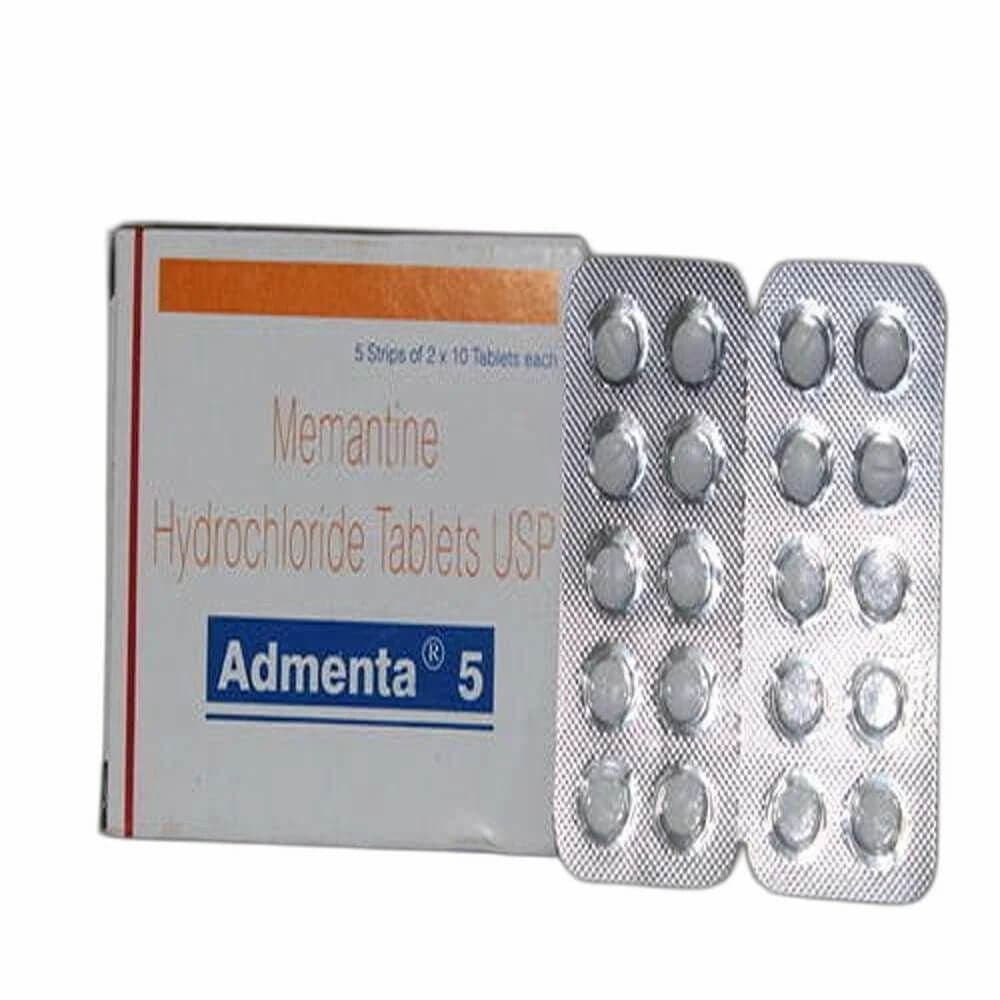
Suppliers
Vendors carrying Memantine, with live product details and codes. Links are affiliate links that support the wiki at no cost to you.
PCT.Zone
Memantine
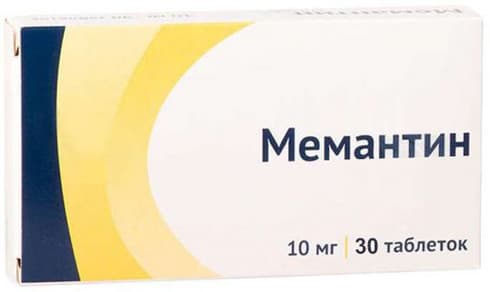
RUPharma🌐
Memantine

RUPharma🌐
Memantine
RUPharma🌐
Memantine
Research
- 2001first citedThe N-methyl-D-aspartate receptor channel blockers memantine, MRZ 2/579 and other amino-alkyl-c…
- 2017meta-analysisA Meta-Analysis of Memantine for Depression.
- 2024most active year4 papers
- 2026most recentEfficacy and safety of memantine as adjunctive treatment for manic episodes in bipolar disorder…
- 1.Memantine (Drugs & Aging review of pharmacology and clinical trials)
- 2.Mechanism of action of memantine
- 3.Memantine agonist action at dopamine D2High receptors.
- 4.The N-methyl-D-aspartate receptor channel blockers memantine, MRZ 2/579 and other amino-alkyl-cyclohexanes antagonise 5-HT(3) receptor currents in cultured HEK-293 and N1E-115 cell systems in a non-competitive manner.
- 5.Memantine blocks alpha7* nicotinic acetylcholine receptors more potently than n-methyl-D-aspartate receptors in rat hippocampal neurons.
- 6.Memantine: a NMDA receptor antagonist that improves memory by restoration of homeostasis in the glutamatergic system--too little activation is bad, too much is even worse.
- 7.Dementia (review of diagnosis and treatment)
- 8.Memantine as an Augmentation Treatment for Schizophrenia
- 9.A Meta-Analysis of Memantine for Depression.
- 10.Memantine for dementia.
- 11.Efficacy and safety of memantine as adjunctive treatment for manic episodes in bipolar disorder (BD): a randomized, double-blind, placebo-controlled clinical trial
- 12.Therapeutic Efficacy and Safety of Memantine for Children and Adults With ADHD With a Focus on Glutamate-Dopamine Regulation: A Systematic Review
19 listed here; entry last updated August 2026
Reviews
- good except the A7 antagonism
good for excitotoxicity, i think 5mgs ED or EOD is perfect for like 90% of users
0
My notesprivate to this device
FAQ
What is it approved for, and what else is it studied for?
It's approved for moderate to severe Alzheimer's, where it protects neurons from excess glutamate. Beyond that it's being investigated for the negative symptoms of schizophrenia, as a mood stabilizer in bipolar disorder, as an ADHD adjunct, and in anxiety, OCD, and autism.
Why doesn't it fog cognition like ketamine?
Both block the NMDA receptor, but memantine binds loosely and is voltage-dependent; it blocks the constant background glutamate 'noise' yet steps aside when a strong, real learning signal arrives, so normal memory and learning carry on.
How might it help schizophrenia's negative symptoms?
Alongside NMDA modulation it acts on dopamine (D2), serotonin (5-HT3), and nicotinic (alpha-7) receptors; that wider fingerprint is the plausible route to easing apathy, social withdrawal, and blunted motivation, which current antipsychotics struggle with.
Is it well researched?
For Alzheimer's, yes; it's a long-approved drug. For the other uses the evidence is earlier stage; there are promising signals from small trials and reviews, but nothing settled yet.
Is it a prescription drug?
Yes; it's a prescription medication and should be used under medical supervision.
Is memantine only an NMDA blocker, or does it hit other receptors?
It is best known as a low-affinity, voltage-dependent NMDA channel blocker, but it is genuinely polypharmacological. At or near therapeutic brain concentrations it also blocks 5-HT3 serotonin receptors (in fact a touch more tightly than NMDA), antagonizes several nicotinic acetylcholine receptors (alpha-7, alpha-4/beta-2, alpha-3/beta-4 and alpha-9/alpha-10), acts as an agonist at the high-affinity state of the dopamine D2 receptor, and weakly engages sigma-1 receptors. That wider fingerprint is likely part of why its effects reach past pure glutamate blockade into mood, dopamine and cholinergic signaling.
Does memantine boost acetylcholine like donepezil?
No. The cholinesterase inhibitors used in Alzheimer's (donepezil, rivastigmine, galantamine) raise acetylcholine by blocking the enzyme that breaks it down. Memantine barely touches acetylcholinesterase and works by a different route entirely, calming excess glutamate signaling at NMDA receptors. That is exactly why the two classes are often combined; they act on separate systems rather than competing.
Adverse effects
- Dizziness or headache
- Confusion or drowsiness in some people
- Constipation
- Uncommonly, agitation or hallucinations