
spec sheet12 rows
Magnesium N-Acetyl Taurinate is a magnesium salt where the mineral is paired with N-acetyltaurine, which is an acetylated (chemically capped) version of the amino acid taurine. The pitch behind it is delivery; the makers claim it is a more membrane-friendly form (one they say slips across cell membranes more easily) meant to carry both magnesium and its taurine partner across the blood-brain barrier (the tight filter that guards the brain) and into the central nervous system. Once inside, magnesium does its usual double job; it sits in the NMDA glutamate receptor like a natural gatekeeper that keeps that excitatory channel from firing too easily, and it works as a cofactor (helper molecule) for hundreds of enzymes. The taurine that is thought to be freed after the acetyl cap is cleaved (a release step that is not well characterized in people) is a calming neuromodulator (a molecule that gently tunes nerve signaling) that nudges GABA-A and glycine receptors and helps keep cellular calcium and water balance in check. People reach for it for stress, relaxation, sleep, and general cognitive support. Straight talk here; this is a newer, branded form and the human clinical evidence is early and thin, so most of the story is still mechanistic or preclinical rather than proven in large human trials.
- magnesium and taurine in one calming package
- designed as a membrane friendly delivery form
- magnesium is the natural gatekeeper on the NMDA channel
- taurine leans on GABA-A and glycine to settle things
- an easy top up for a mineral most people lack
- both components carry long safety track records
- Loose stools or diarrhea, the classic magnesium side effect when unabsorbed mineral pulls water into the gut
- General GI upset, cramping, or nausea, especially on an empty stomach
- Drowsiness or grogginess, which can be a plus at night but unwanted during the day
Overview
Magnesium acetyl-taurate is a combined salt of magnesium and acetyltaurine, an acetylated form of the amino acid taurine. The idea behind pairing the two in a single molecule is that each contributes a complementary action: magnesium can block overactive NMDA-type glutamate receptors, while taurine has antioxidant and nerve-protecting properties [1].
Most of what is known about the compound comes from laboratory studies of the retina. In rats, magnesium acetyl-taurate given before an injection of NMDA, a substance that overstimulates glutamate receptors and mimics excitotoxic injury, reduced the loss of retinal ganglion cells and helped preserve retinal function, with treatment before the injury proving more effective than giving it at the same time as or after the injury [1]. Later studies tied this protection to lower oxidative and nitrosative stress in the retina and to reduced activity of cell-death signaling pathways, including the transcription factors NF-κB, p53, and AP-1 [2][3].
These results position magnesium acetyl-taurate as an experimental neuroprotective agent, of particular interest for conditions that involve glutamate excitotoxicity, such as glaucoma. The findings so far come from animal and cell studies, and human clinical data are lacking.
The compound is also sold in some markets as a magnesium supplement, promoted for relaxation or general brain support. Its specific effects in humans have not been established, and like other magnesium salts it primarily functions as a source of magnesium.


- The 'N-acetyl' part is the whole selling point; the makers say acetylating taurine makes it more membrane-friendly, which is their chemistry-based rationale for claiming it slips into the brain more readily than plain mineral salts, though taurine's strongly polar nature makes that more of a hopeful pitch than proven chemistry.
- Magnesium acts like a physical plug in the NMDA receptor; it literally sits in the channel and pops out only when the cell is sufficiently activated, which is why it is described as a natural gatekeeper of excitatory signaling.
- This form is pitched as delivering two calming actors at once; the magnesium itself plus the taurine that is thought to be released after the acetyl cap is cleaved inside cells, though that release step is not well characterized in people.
Mechanism
Two active pieces travel together here. Magnesium is the workhorse; it acts as a natural gatekeeper of the (an excitatory channel), physically blocking it so that glutamate signaling stays measured rather than runaway, and it serves as a required cofactor for hundreds of enzymes, including ones tied to energy production and nerve function.
The claimed clever part of this particular salt is the carrier; N-acetyltaurine is an acetylated form of taurine, and the makers' rationale is that capping it this way makes the molecule more membrane-friendly so the whole thing can slip across membranes and the more readily than plain mineral salts do. It is worth flagging that taurine carries a strongly polar sulfonate group, so this added membrane-friendliness is a marketing premise more than settled chemistry.
Once it is inside cells, the acetyl group is thought to be cleaved and taurine released, though this release step is not well characterized in humans. Taurine is an inhibitory (calming) neuromodulator (a molecule that gently tunes nerve signaling); it acts at -A and glycine receptors, which are the brain's main "settle down" channels, and it helps regulate intracellular calcium and the cell's osmotic (water and salt) balance.
So the intended combined effect is more magnesium reaching central tissue plus a calming amino acid delivered alongside it. One honest caveat; the "crosses into the brain better" claim is the marketing rationale for the form, and it is more a matter of chemistry-based reasoning than something backed by solid human pharmacokinetic data.
receptor fingerprint
receptorMagnesium sits in the channel as a voltage-dependent gatekeeper (it only pops out once the cell is sufficiently activated), dampening excessive excitatory signaling
Magnesium-dependent enzymes (ATP-utilizing kinases and others)Magnesium serves as an essential cofactor for hundreds of enzymatic reactions
Brain magnesium levelsraises (brain-penetrant)
Glycine receptorTaurine activates this inhibitory receptor, especially in brainstem and spinal circuits, and this is its stronger calming target
Intracellular calcium handlingBoth magnesium and taurine help buffer and regulate cellular calcium levels
Nervous system excitabilitylowers
Taurine synergyadds calming
-A receptorReleased taurine acts as a weak, low-affinity agonist/modulator at this inhibitory channel
Cellular osmotic balanceTaurine acts as an osmolyte (a molecule that helps regulate cell water and volume) under cellular stress
Evidencehow good the literature is
Early and limited. The individual building blocks are well studied; magnesium's role at the NMDA receptor and as an enzyme cofactor is textbook, and taurine's calming activity at GABA-A and glycine receptors is well described. What is thin is direct human clinical evidence on this specific salt, Magnesium N-Acetyl Taurinate, as a finished product. Most of the support you will see is mechanistic reasoning or preclinical (cell and animal) work, plus general magnesium literature borrowed by association. Any claim that this particular form beats older magnesium types in people is best treated as preliminary and largely unproven for now; the rationale is plausible, but plausible is not the same as demonstrated.
Dosingtypical ranges, not medical advice
interested in protocols and clinical dosages? make an account to see them! ^_^
Safetyrisks and cautions, not medical advice
Magnesium supplements are generally well tolerated by healthy people, and taurine has a long, reassuring safety record too, so the pieces here are familiar. The most common issue with any magnesium form is digestive; unabsorbed magnesium pulls water into the gut, so loose stools, cramping, or general GI upset are the usual complaints, and some people notice drowsiness, which can be welcome at night and less so during the day. Because taurine and magnesium both lean calming, pairing this with other sedatives could add up.
The bigger safety caution is not about the compound so much as the person; magnesium is cleared by the kidneys, so anyone with reduced kidney function, heart rhythm issues, or on medications like certain diuretics or antibiotics should talk to a clinician before adding a magnesium supplement, since magnesium can build up or interact. Pregnancy, nursing, and existing medical conditions all warrant a professional's sign-off. And a plain-honest note; because this is a newer branded form, long-term human safety data specific to it is limited, even though its two components are well characterized on their own.
History
Magnesium N-Acetyl Taurinate is a relatively recent, branded entry in the crowded field of "next-generation" magnesium forms, often sold under the shorthand ATA Mg. It arrived on the back of two long-standing ideas; that many people are low in magnesium, and that the form you choose might change how much reaches the brain. Older chelated (mineral bound to an organic carrier molecule) forms like magnesium taurate and magnesium L-threonate paved the way by marketing brain-targeted delivery, and this compound extends that lineage by swapping in N-acetyltaurine as the carrier. Its history is therefore more commercial than clinical so far; it grew out of formulation chemistry and mechanistic reasoning rather than a landmark human trial.
Reputation
In supplement circles it carries a reputation as a premium, brain-oriented magnesium, and enthusiasts like that it bundles taurine's calming reputation with magnesium in one molecule. That said, more careful voices point out the caveat that keeps coming up; the enthusiasm is running ahead of the human data, and the standout claims about superior brain uptake are mostly mechanistic rather than clinically demonstrated for this specific form. So the fair read is cautious interest; a sensible-sounding, well-tolerated form whose real advantages over cheaper magnesium options remain to be proven in people.
Subjective profileweighing the evidence above
Fine as a magnesium, oversold as an upgrade. Magnesium and taurine are both worth having and both lean calming, but no human evidence shows this particular salt beating cheaper forms, and the cognitive angle is a pitch. Buy it if the price is close to glycinate, not at a premium.
Where to buy
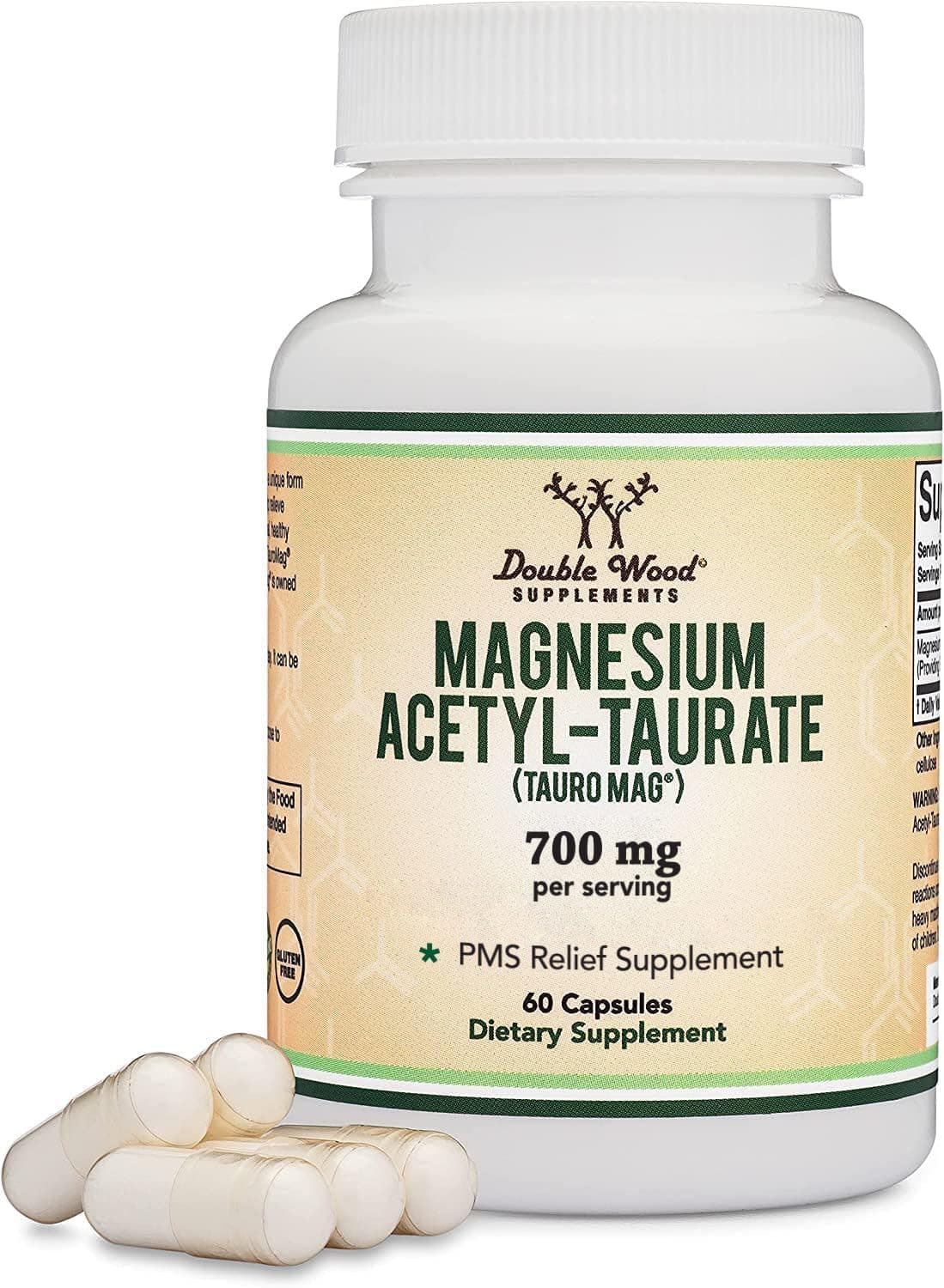
1 other outlet
Suppliers
Vendors carrying Magnesium N-Acetyl Taurinate, with live product details and codes. Links are affiliate links that support the wiki at no cost to you.
Amazon
Magnesium Acetyl-Taurate
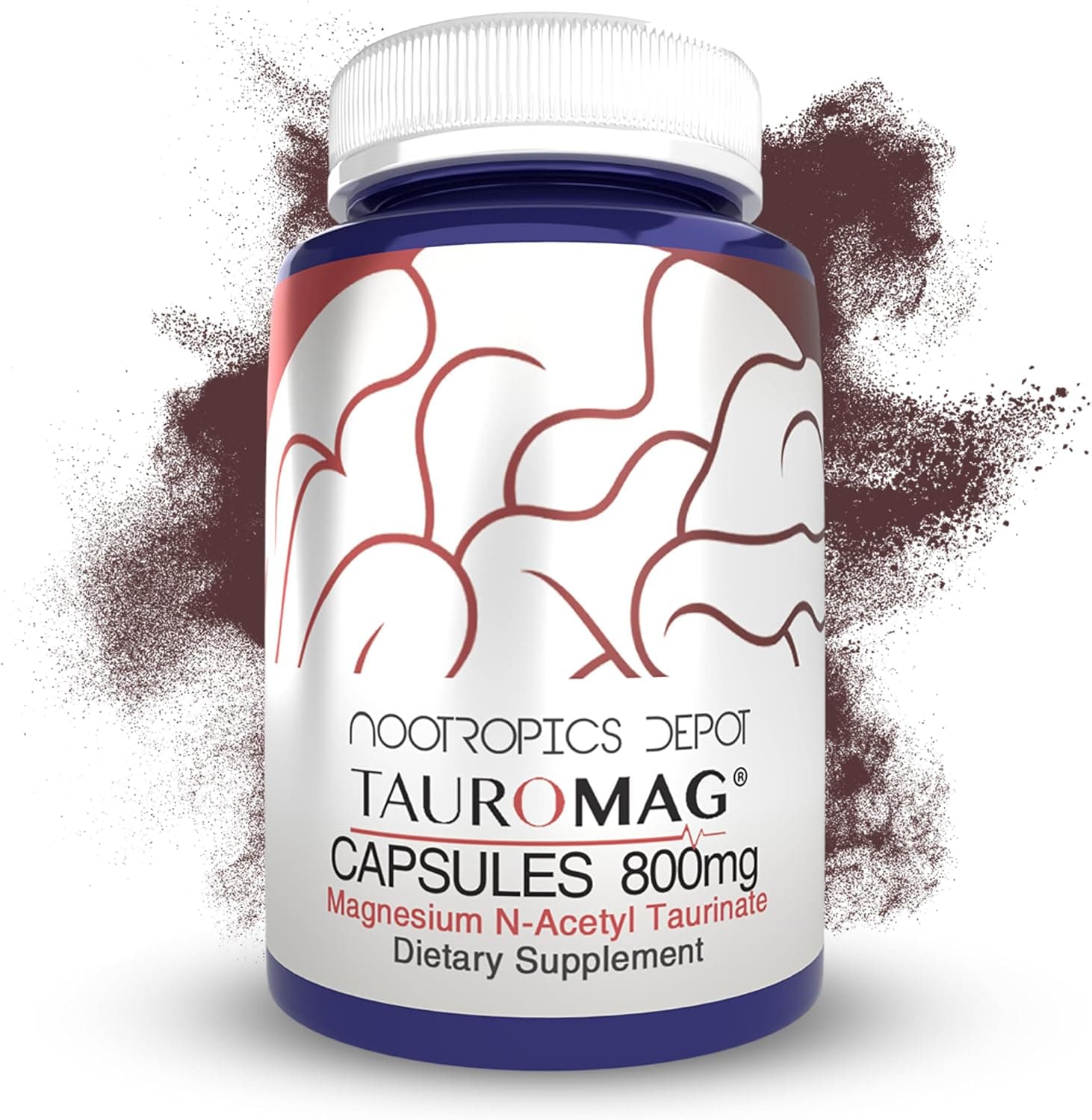
Amazon
Magnesium N-Acetyl Taurinate
Research
- 2016first citedProtective effect of magnesium acetyltaurate against endothelin-induced retinal and optic nerve…
- 2020most active year3 papers
- 2026most recentCombined Puerarin and Magnesium Acetyl Taurate Intervention Mitigates Autism-Like Pathology Thr…
- 1.Neuroprotective Effect of Magnesium Acetyltaurate Against NMDA-Induced Excitotoxicity in Rat Retina
- 2.Protective effect of magnesium acetyltaurate and taurine against NMDA-induced retinal damage involves reduced nitrosative stress
- 3.Magnesium acetyltaurate prevents retinal damage and visual impairment in rats through suppression of NMDA-induced upregulation of NF-κB, p53 and AP-1 (c-Jun/c-Fos)
- 4.Protective effect of magnesium acetyltaurate against endothelin-induced retinal and optic nerve injury
- 5.Protective effect of magnesium acetyltaurate against NMDA-induced retinal damage involves restoration of minerals and trace elements homeostasis
- 6.Effect of Magnesium Acetyltaurate and Taurine on Endothelin1-Induced Retinal Nitrosative Stress in Rats
- 7.Magnesium acetyltaurate protects against endothelin-1 induced RGC loss by reducing neuroinflammation in Sprague dawley rats
- 8.Magnesium Acetyl Taurate Prevents Tissue Damage and Deterioration of Prosocial Behavior Related with Vasopressin Levels in Traumatic Brain Injured Rats
- 9.Effect of oral administration of Magnesium N-Acetyltaurinate on synaptic plasticity in rodents
- 10.Combined Puerarin and Magnesium Acetyl Taurate Intervention Mitigates Autism-Like Pathology Through Glutamatergic and MAPK Pathway Regulation
- 11.Dose-Dependent Absorption Profile of Different Magnesium Compounds
- 12.Timeline (Bioavailability) of Magnesium Compounds in Hours: Which Magnesium Compound Works Best?
13 listed here; entry last updated August 2026
Reviews
My notesprivate to this device
FAQ
How is it different from magnesium taurate?
They look like cousins, but the chemistry is genuinely distinct. Magnesium taurate is magnesium bound to plain taurine. Magnesium N-Acetyl Taurinate uses N-acetyltaurine instead, which is taurine with an acetyl group added; the makers say that cap makes the molecule more membrane-friendly and helps it cross membranes and the blood-brain barrier more easily before the taurine is thought to be freed inside cells. Keep in mind that taurine is a strongly polar molecule, so that easier-crossing story is a plausible marketing rationale rather than settled fact, and whether it translates into a meaningful real-world advantage in people is still an open question. Do not assume it is simply a better taurate; it is a different, newer form with a plausible delivery story.
Is it well researched in people?
Not yet, honestly. The individual parts, magnesium and taurine, are very well studied, but this specific salt as a finished supplement has only early and limited human evidence. Most of what supports it is mechanism and preclinical work rather than large clinical trials. It is fair to be curious about it while keeping expectations calibrated; the reasoning is sound, but it has not been proven to outperform established magnesium forms in humans.
How is it different from magnesium L-threonate?
Different partner molecule, similar marketing goal. Magnesium L-threonate binds magnesium to threonate and is the form most associated with brain-penetration and memory claims. Magnesium N-Acetyl Taurinate goes for a similar central-delivery angle but does it with N-acetyltaurine, which brings taurine's own calming activity into the mix. They are separate compounds with separate evidence bases, and neither one should be assumed to do what the other does.
What might people take it for?
It is generally positioned for stress, relaxation, sleep, and cognitive support, plus the everyday job of topping up magnesium. The calming lean is attributed to taurine's activity at GABA-A and glycine receptors, and the cognitive angle rests on the idea of getting magnesium into central tissue. Just remember the sleep and stress rationale is more established for magnesium and taurine broadly than for this exact branded form.
Are there any downsides or people who should be careful?
The most common downside is digestive; loose stools or GI upset, like most magnesium products. Some people also feel drowsy. The important caution is for anyone with kidney problems, heart rhythm issues, or on medications like certain diuretics or antibiotics, since magnesium is cleared by the kidneys and can accumulate or interact; those folks should check with a clinician first, as should anyone pregnant or nursing.
What makes this form different?
Binding magnesium to acetyl-taurate is intended to improve its ability to cross into the central nervous system compared with common forms.
Does taurine add anything?
Taurine itself is associated with calming and cardiovascular support, which may complement magnesium's effects.
Is it better for anxiety or sleep?
It's marketed for both calm and sleep, though individual responses vary and evidence is still emerging.
Can I take it in the morning?
Some people use it in the daytime for stress support, though those prone to drowsiness may prefer evening.
Limitations of the evidence
- Limited human safety data
Adverse effects
- Loose stools or diarrhea, the classic magnesium side effect when unabsorbed mineral pulls water into the gut
- General GI upset, cramping, or nausea, especially on an empty stomach
- Drowsiness or grogginess, which can be a plus at night but unwanted during the day
- Additive sedation if combined with other calming supplements, sleep aids, or alcohol
- Risk of magnesium buildup in people with reduced kidney function or on certain medications, which is a reason to check with a clinician first
Notes and cautions
- Neuroprotective effects shown only in preclinical models
- Loose stools possible, as with other magnesium salts