
data + articles · 8 listed
newest 2026spec sheet11 rows
Fladrafinil (CRL-40,941) is a synthetic wakefulness drug from the same French research programme of the 1970s and 1980s that produced modafinil and adrafinil; chemically it is adrafinil with a fluorine atom added to each of its two rings. It was never approved or marketed as a medicine anywhere, and it now circulates online as a research chemical and turns up in products sold as nootropic supplements. The body converts it into flmodafinil, which is what actually produces the effect; that conversion has been demonstrated directly in people, but almost nothing else about the drug has been tested in humans. There are no efficacy trials, no safety studies and no published measurement of what it binds to, so claims that it sharpens focus or that it is several times stronger than adrafinil rest on marketing and a 1984 patent rather than on evidence.
- Fluorinated cousin of modafinil and adrafinil
- Sharp focus that holds all session
- Reputed to hit harder than modafinil
- Mood neutral wakefulness; no emotional swing
- Converts in the body into flmodafinil
- Effects are expected to resemble modafinil, such as headache, insomnia, and anxiety
Overview
Fladrafinil belongs to the eugeroic class of wakefulness-promoting compounds, a small family that also includes modafinil, its prodrug adrafinil, and the closely related flmodafinil [1]. Structurally it is a fluorinated analogue of adrafinil, sometimes described as bisfluoroadrafinil, in which the two phenyl rings of the parent molecule each carry a fluorine atom; its molecular formula is C15H13F2NO3S [1]. Like adrafinil, it is an N-hydroxy compound, carrying a hydroxamic acid group that the body can remove during metabolism [1].
The molecule was developed by the French pharmaceutical company Lafon, the same firm behind adrafinil and modafinil, and was assigned the internal code CRL-40,941 [1]. It was covered by patents filed in the 1980s but was never developed into an approved medicine [1]. In the years since, it has appeared instead on the grey market for cognitive enhancers, sold by online vendors as a research chemical or nootropic rather than dispensed through pharmacies [1][2].
Interest in fladrafinil rests largely on the reputation of its chemical relatives as fatigue-fighting and alertness-boosting agents [2]. In early animal work it was reported to have antiaggressive properties that adrafinil lacked, and to be several times more potent than adrafinil in that respect [1]. Direct human study of the compound is scarce; the most detailed modern investigation was carried out for anti-doping purposes, and it showed that once ingested, fladrafinil behaves as a prodrug that the body converts into flmodafinil, with both parent drugs and their acid and sulfone metabolites detectable in urine and blood over an extended window [3].
Fladrafinil has not been approved as a drug in the United States or elsewhere and is not a scheduled controlled substance, occupying an unregulated space similar to other designer nootropics [1][2]. In sport, however, it is explicitly banned; both fladrafinil and flmodafinil fall under the World Anti-Doping Agency category of S6 stimulants and are prohibited in competition [3]. It is typically encountered as a bulk powder or in capsules supplied by online retailers rather than in any standardized pharmaceutical form [2].
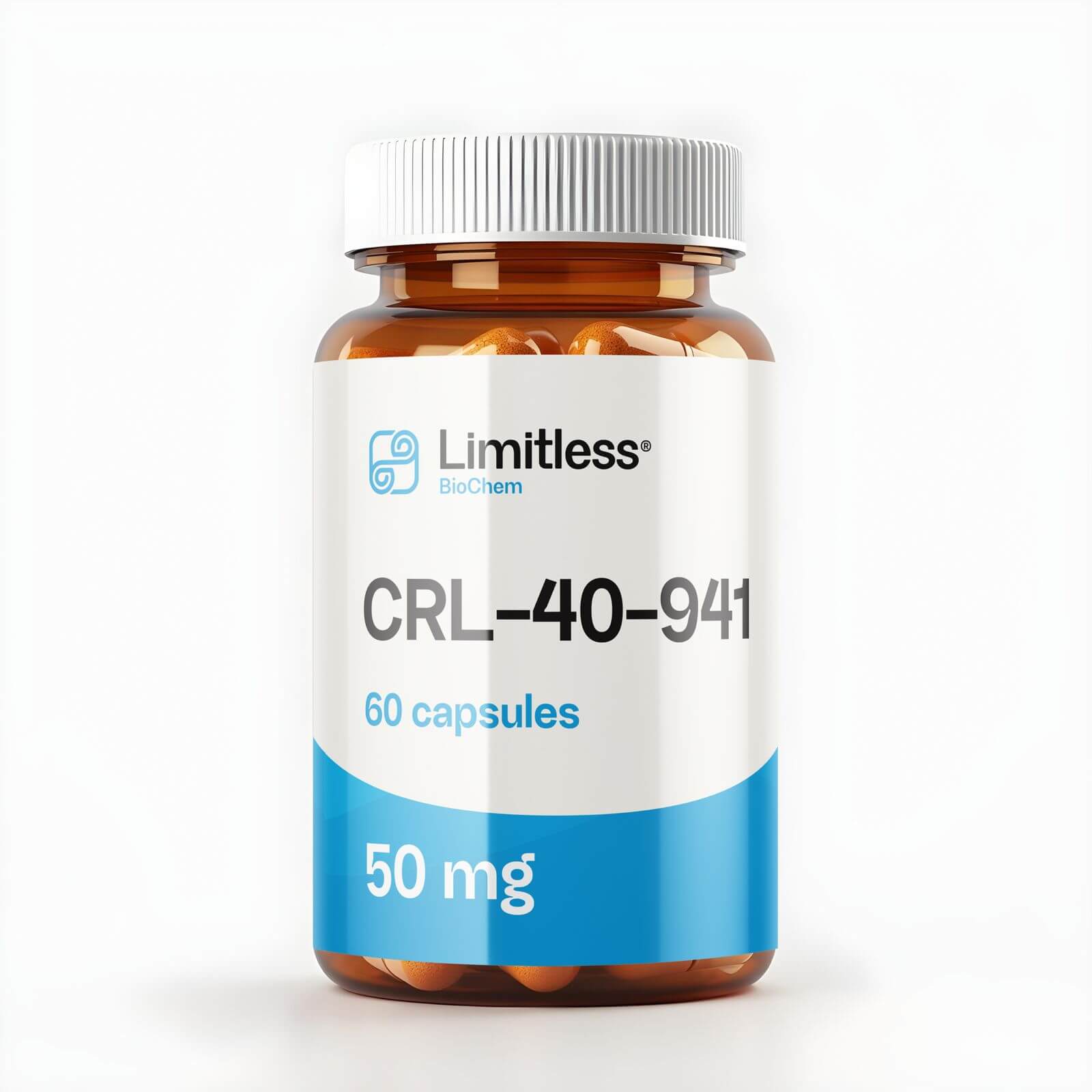
- Fladrafinil is a prodrug; a 2026 controlled study in volunteers showed that after ingestion it is converted in the body into flmodafinil, so the two share the same active metabolites.
- It carries the developmental code CRL-40,941 from Lafon Laboratories, placing it in the same benzhydryl sulfinyl family as modafinil and adrafinil.
Mechanism
The wakefulness-promoting members of the modafinil family, fladrafinil among them, are generally understood to work chiefly by blocking the reuptake of , raising levels of this neurotransmitter in the brain and thereby supporting alertness [1][2]. Broader reviews of modafinil-type drugs note that their effects are not confined to but also touch noradrenergic, serotonergic, , , , and signalling, which may contribute to their arousal-promoting profile [2].
In the specific case of fladrafinil, pharmacokinetic work indicates that it is itself largely inactive until metabolized, functioning as a that is converted into flmodafinil, so that its actions in the body substantially overlap with those of that analogue [3]. The binding shown by this class is comparatively weak and atypical, which is thought to explain why these agents promote alertness without the strong euphoria and abuse potential of conventional psychostimulants [2]. Human data specific to fladrafinil remain sparse, so much of what is said about how it works is extrapolated from the far better studied modafinil and from the measured conversion of fladrafinil into its active analogue [2][3].
receptor fingerprint
()weakly inhibits reuptake
(hypothalamic wake system)increases signaling
(tuberomammillary)increases signaling
hydrolysis to flmodafinil (CRL-40,940)Fladrafinil is a hydroxamic acid that is hydrolysed in vivo to the corresponding amide, flmodafinil, which carries the pharmacological activity
(, SLC6A3)Dopamine reuptake inhibition, attributed to the active metabolite flmodafinil rather than to fladrafinil itself
Dosingtypical ranges, not medical advice
interested in protocols and clinical dosages? make an account to see them! ^_^
Safetyrisks and cautions, not medical advice
Adverse effects are genuinely UNKNOWN for this compound. There is no published safety study, no adverse event profile, no overdose or poisoning case report, no drug interaction study and no long term data specific to fladrafinil; searches for case reports returned nothing. The 2026 study dosed six volunteers at 20 mg without reporting a safety problem, but it was a six person excretion study that did not set out to measure adverse events, and absence of reporting is not evidence of safety.
Risks are frequently assumed from modafinil, which is a different, approved drug carrying specific warnings for serious rash including Stevens-Johnson syndrome and toxic epidermal necrolysis, psychiatric reactions, and CYP3A4 induction that reduces the effectiveness of hormonal contraceptives; NONE of these has been studied for fladrafinil, so extending them is inference rather than established fact.
REGULATORY: WADA added fladrafinil, by exact chemical name 2-[bis(4-fluorophenyl)methylsulfinyl]-N-hydroxyacetamide, to the S6.A non-specified stimulants section of the 2026 Prohibited List, alongside flmodafinil; S6 substances are prohibited in competition, so an athlete taking this faces a positive test, and the 2026 study warns that detection windows for both the parent drugs and their metabolites are long. It is not approved by the FDA or any other regulator for any indication and was never marketed.
It is not a lawful dietary ingredient in the United States and FDA laboratory work treats it as an unapproved drug found in products sold as supplements. It is not specifically listed in any US Controlled Substances Act schedule; the Federal Analogue Act does not reach it, because that statute covers analogues of Schedule I and II substances and modafinil is Schedule IV. Jurisdictions with blanket psychoactive substance laws, such as the UK Psychoactive Substances Act 2016, would likely capture its supply, though no specific determination was located.
History
Fladrafinil was developed by the French pharmaceutical company Lafon Laboratories, the same firm behind adrafinil and modafinil, and was assigned the developmental code CRL-40,941. It was patented in the 1980s as part of Lafon's benzhydryl sulfinyl series but was never advanced into clinical use or brought to market as a medicine. Its close structural relatives modafinil and adrafinil went on to commercial and clinical success, whereas fladrafinil remained an obscure laboratory compound. In more recent years it has resurfaced outside the medical setting, circulating informally as an online research chemical and nootropic. Controlled human data specific to fladrafinil remain sparse, so most of what is known is extrapolated from its better-studied relatives.
Reputation
Fladrafinil is followed with interest by the nootropics community as a fluorinated cousin of modafinil, valued for the clean, non-jittery wakefulness associated with the eugeroic class. A 2026 doping-analysis study confirmed that it behaves as a prodrug, converting in the body to flmodafinil, which grounds community discussion in measured pharmacology rather than speculation. Enthusiasts appreciate that eugeroics tend to promote alertness without the strong euphoria or crash of classical stimulants. It is honest to note that controlled human efficacy and safety trials of fladrafinil itself have not been published, so expectations are largely inferred from modafinil. It is also classified as a prohibited stimulant under anti-doping rules.
Subjective profileweighing the evidence above
Hard to justify over modafinil, which does the same job with a real clinical record. This is an unapproved research chemical with essentially no human safety data and a reputation for feeling edgier. If wakefulness is the goal, buy the studied one.
Where to buy

1 other outlet
Suppliers
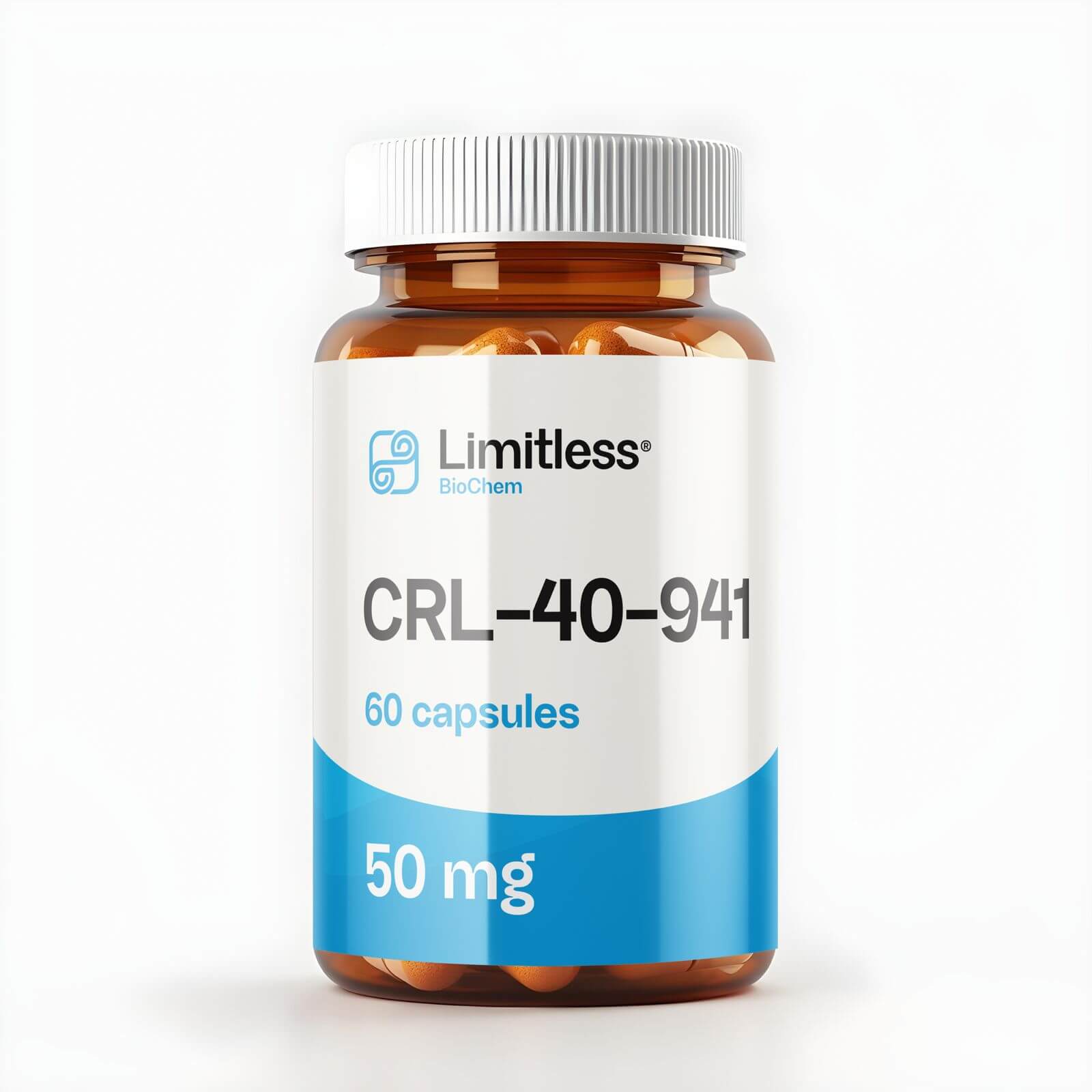
Vendors carrying Fladrafinil, with live product details and codes. Links are affiliate links that support the wiki at no cost to you.
Kimera Chems
Fladrafinil
Limitless Biochem🌐
Fladrafinil
Research
- 2017first citedOutsmarted by nootropics? An investigation into the thermal degradation of modafinil, modafinic…
- 2026most recentInvestigations Into the Metabolism and Elimination of Flmodafinil and Fladrafinil for Sports Dr…
- 1.Fladrafinil (Wikipedia)
- 2.Pharmacokinetic and pharmacodynamic of the cognitive enhancer modafinil: Relevant clinical and forensic aspects
- 3.Investigations Into the Metabolism and Elimination of Flmodafinil and Fladrafinil for Sports Drug Testing Purposes
- 4.Outsmarted by nootropics? An investigation into the thermal degradation of modafinil, modafinic acid, adrafinil, CRL-40,940 and CRL-40,941 in the GC injector: formation of 1,1,2,2-tetraphenylethane and its tetra fluoro analog.
- 5.Development and Validation of an Analytical Method to Identify and Quantitate Novel Modafinil Analogs in Products Marketed as Dietary Supplements.
- 6.The Psychonauts' World of Cognitive Enhancers.
- 7.Lauflumide (NLS-4) Is a New Potent Wake-Promoting Compound.
- 8.Central nervous system stimulants in recreational and medical use.
8 listed here; entry last updated August 2026
Reviews
My notesprivate to this device
FAQ
What is fladrafinil?
It is a fluorinated analog of modafinil used as a wakefulness-promoting agent, or eugeroic.
How does it compare to modafinil?
It is reputed to be somewhat stronger and more mood-neutral, though rigorous human data is lacking.
Why take it early in the day?
Because it promotes wakefulness, late-day use can interfere with sleep.
Is it an approved medication?
No; unlike modafinil it is not an approved drug and remains a research chemical.
Limitations of the evidence
- Human safety data are limited because it has never been formally studied as a medicine
Adverse effects
- Effects are expected to resemble modafinil, such as headache, insomnia, and anxiety
Notes and cautions
- Prohibited in competition by anti-doping authorities
- Sold as an unregulated research chemical, so purity and content are uncertain