
spec sheet15 rows
Armodafinil is the prescription wakefulness drug sold as Nuvigil; it is one of the two mirror-image halves of modafinil, the longer-lasting half, so it does much the same job at a somewhat lower dose. In the United States it is approved only to reduce excessive sleepiness in adults with narcolepsy, obstructive sleep apnea, or shift work disorder, and the evidence for those three uses is genuinely solid; several 12-week placebo-controlled trials show people stay awake longer, though the benefit is measured in a few extra minutes of resisting sleep rather than a cure. Its one well-supported molecular action is weak blockade of the dopamine transporter, which brain scans confirm happens at ordinary doses; the histamine and orexin explanations that circulate online come from studies of modafinil, not of armodafinil itself. Outside the sleep indications the record thins out fast and is often negative, including a clean phase 3 failure for cancer-related fatigue, and this is a Schedule IV controlled drug carrying a pregnancy registry signal for birth defects.
- All day wakefulness, the longer lasting half
- Sharp, sustained focus
- Melts away fatigue
- Clean, jitter free energy
- Serious productivity boost
- Prescription strength with solid trial evidence
- Occasional headache
- Sleep trouble if taken late
- Some jitteriness
Overview
Armodafinil is the R-(minus)-enantiomer of modafinil, a wakefulness-promoting compound (a eugeroic) marketed under the brand name Nuvigil. Modafinil is a racemic mixture of R- and S-enantiomers, and because the R-enantiomer has a substantially longer half-life than the S-form, armodafinil was developed to provide a purified, longer-lasting single-isomer version that maintains higher plasma concentrations later in the day [1]. It is a benzhydryl sulfinyl compound and is chemically and functionally distinct from amphetamine-type stimulants.
Armodafinil is approved by the US Food and Drug Administration to improve wakefulness in adults with excessive sleepiness associated with narcolepsy, obstructive sleep apnea (as an adjunct to airway treatment), and shift work disorder. Its clinical evidence base is substantial; randomized, double-blind trials in sleep apnea patients adherent to nasal continuous positive airway pressure showed that armodafinil significantly increased objective sleep latency on the Maintenance of Wakefulness Test, improved episodic memory and daily functioning, and reduced fatigue [1][2]. Beyond its approved uses it has been studied off-label for cognitive and fatigue-related indications, including radiation-induced fatigue in brain tumor patients, cancer-related fatigue, and as an augmentation agent for the negative symptoms of schizophrenia, with mixed or modest results [3][4][6].
As a scheduled prescription medication, a controlled substance in many jurisdictions, armodafinil is used clinically and also widely off-label as a cognitive enhancer and smart drug. It is supplied as oral tablets and is generally well tolerated, with headache the most commonly reported adverse effect [1].

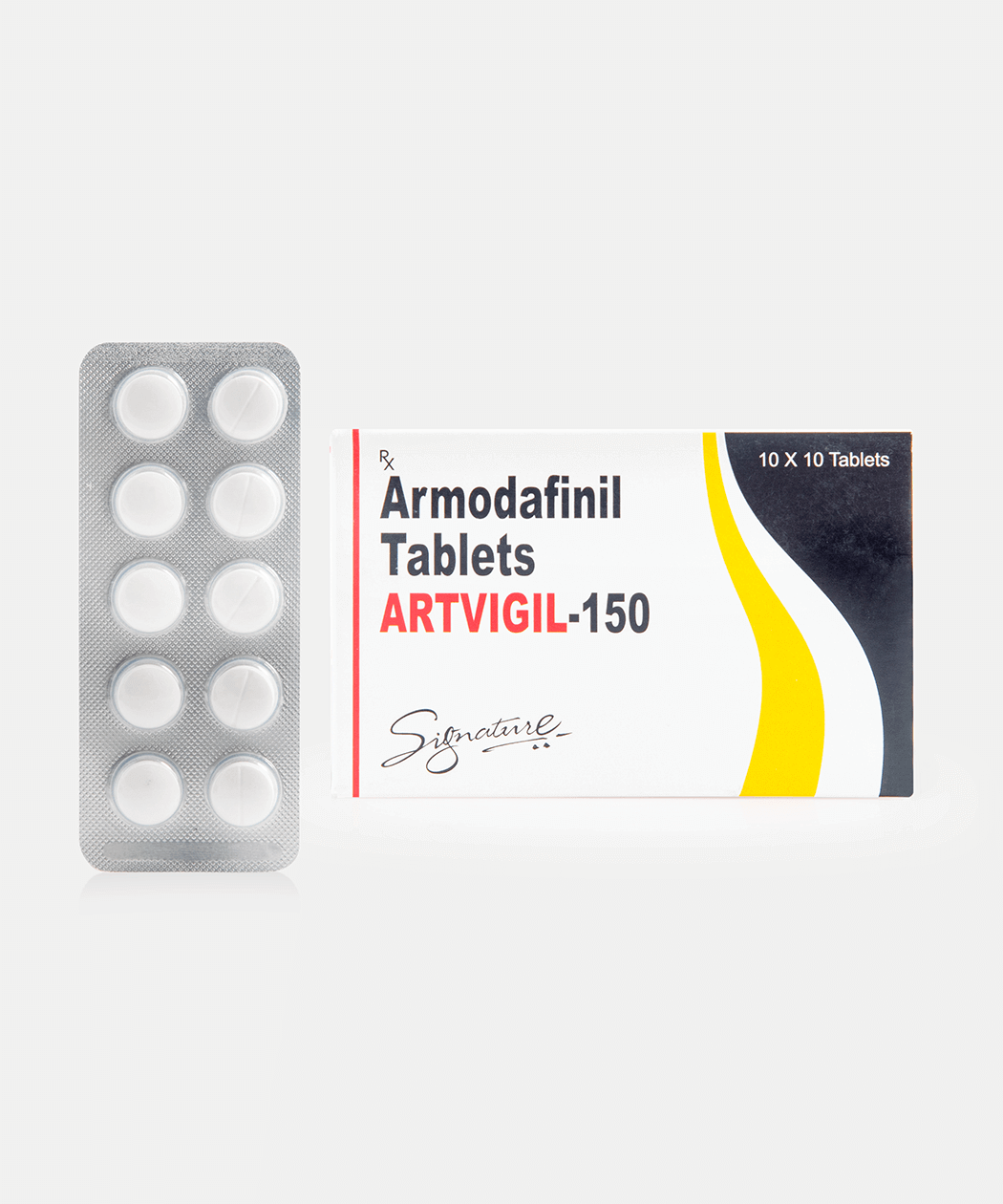
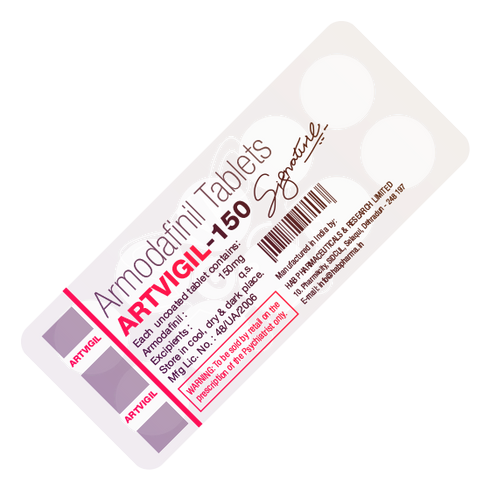
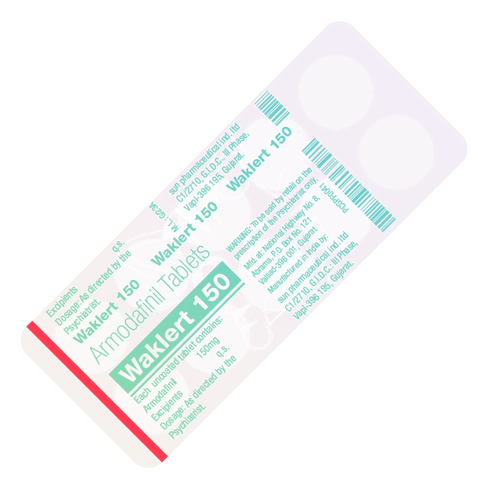
- Armodafinil is essentially one half of modafinil; by purifying the slower-clearing R-enantiomer, chemists produced a drug that keeps plasma levels higher into the afternoon than the racemic parent.
- In shift work disorder, armodafinil has been studied for its effects on simulated night driving and alertness, reflecting how directly its benefits map onto real-world tasks that depend on staying awake.
Mechanism
Armodafinil promotes wakefulness through a mechanism distinct from amphetamine-like stimulants, and although not every detail is settled, its central action is on the brain's system. The best-supported mechanism is inhibition of the (); by blocking dopamine reuptake, armodafinil raises extracellular dopamine in wake-regulating regions, and dopaminergic signaling is now recognized as a primary driver of arousal and the main target of wake-promoting agents, acting in part through antagonistic interplay with signaling [5]. Downstream of this, armodafinil increases activity in the hypothalamic and systems and other ascending arousal pathways, enhancing cortical wakefulness without the strong peripheral sympathetic surge or the pronounced euphoria and crash typical of amphetamines [5].
Because it is the longer-lived of modafinil, armodafinil sustains higher plasma concentrations into the afternoon, which translates into more durable daytime alertness. In randomized controlled trials in sleep apnea patients, armodafinil increased mean Maintenance of Wakefulness Test sleep latency by about 2.3 minutes from baseline while placebo patients worsened by about 1.3 minutes, a significant treatment difference, and a larger share of treated patients were rated clinically improved (about 71% versus 53% on placebo) [1]. Pooled analyses confirmed roughly a 2.0-minute gain in objective wakefulness versus a 1.5-minute decline on placebo, alongside better episodic memory [2].
The practical benefits are sharper, longer-lasting alertness, reduced fatigue, and modest gains in memory and executive function, particularly in sleep-deprived or clinically sleepy people. The trade-offs are the class-typical effects of a stimulant-adjacent drug, including insomnia if taken late, headache, and dry mouth [1].
receptor fingerprint
Wakefulnesspromotes
()weak inhibitor
/ raises
(, SLC6A3)Inhibits dopamine reuptake by binding the central S1 substrate site; it is not a releasing agent and is described as an atypical DAT inhibitor because it favours a more occluded, inward-facing transporter conformation than cocaine does. ChEMBL and the FDA label list DAT inhibition as the only curated mechanism of action.
transporter (NET, SLC6A2)Essentially inactive; no meaningful inhibition at concentrations reachable with human dosing
transporter (SERT, SLC6A4)Essentially inactive; no meaningful inhibition at concentrations reachable with human dosing
receptor (DRD2)No direct binding at relevant concentrations. D2 autoreceptor effects seen in brain slice electrophysiology are secondary to raised extracellular dopamine, not to receptor binding.
D3 receptor (DRD3)Negligible direct binding
Sigma-1 receptor (SIGMAR1)No meaningful binding
Brainstem and hypothalamic arousal nuclei (tuberomammillary nucleus, locus coeruleus, dorsal raphe, pedunculopontine and laterodorsal tegmentum)Indirect downstream activation only; no binding site has been identified for armodafinil at any of these nuclei
CYP3A4/5 (induction) and CYP2C19 (inhibition)Moderate inducer of CYP3A4/5 and moderate inhibitor of CYP2C19; also a CYP3A4/5 substrate for sulfone formation, while amide hydrolysis is the main clearance route. This is the pharmacokinetic basis of the label's contraceptive failure warning.
Dosingtypical ranges, not medical advice
interested in protocols and clinical dosages? make an account to see them! ^_^
Safetyrisks and cautions, not medical advice
Common adverse effects (NUVIGIL label, pooled controlled trials, armodafinil versus placebo): headache 17% versus 9%, nausea 7% versus 3%, dizziness 5% versus 2%, insomnia 5% versus 1%. Headache, rash, depression, dry mouth, insomnia and nausea are dose-related and more frequent at 250 mg than 150 mg. Over 12 months or more (n=743): headache 25%, nasopharyngitis 17%, insomnia 14%; 13% discontinued for adverse events; blood pressure rose a mean 3.6/2.3 mmHg and heart rate 6.7 bpm, most of it within the first 3 months (PMID 20957846).
Serious warnings (label sections 5.1 to 5.7, no boxed warning): serious dermatologic reactions including Stevens-Johnson syndrome and toxic epidermal necrolysis; DRESS and multiorgan hypersensitivity, median onset about 13 days; angioedema and anaphylaxis; persistent sleepiness despite treatment; psychiatric symptoms, with caution advised in anyone with a history of psychosis, mania or depression; impaired ability to drive or operate machinery; cardiovascular events, with the drug to be avoided in mitral valve prolapse patients who have had a prior CNS stimulant syndrome. Any rash is a stop signal until proven unrelated.
Hepatic: in the positive bipolar depression trial, the 200 mg arm produced two serious events, one fatal hepatic failure and one acute hepatitis; investigators did not attribute the death to study drug (PMID 25099397). FDA DILIrank, as mirrored in ChEMBL, classifies armodafinil as ambiguous DILI concern, severity class 3.
Abuse and dependence: DEA Schedule IV in the United States. The label states that abuse has been reported, with euphoric mood and escalating or recurrent use, and that physical dependence can occur, with withdrawal on abrupt cessation including shaking, sweating, chills, nausea, vomiting, confusion, aggression and atrial fibrillation. Preclinically both modafinil enantiomers fully substituted for cocaine in mice trained to discriminate cocaine, but at roughly 8 to 11 times lower potency and with a shallow, slow, low-ceiling dopamine rise rather than cocaine's sharp spike, which is the mechanistic argument for low but non-zero abuse liability (PMID 22537794).
Interactions: moderate CYP3A4/5 induction means hormonal contraceptives can fail; the label directs an additional barrier method or a non-hormonal method during treatment and for one month after stopping. Cyclosporine, midazolam and triazolam exposure falls. Moderate CYP2C19 inhibition raises exposure to omeprazole, phenytoin and diazepam. Carbamazepine and armodafinil each lower the other (carbamazepine AUC down 25%, armodafinil AUC down 37%; PMID 25438721). Monitor prothrombin time and INR with warfarin. Caution with MAO inhibitors.
Pregnancy and lactation: the US label does not contraindicate use, but reports that intrauterine growth restriction and spontaneous abortion have occurred with armodafinil and modafinil, and directs enrolment in the pregnancy exposure registry. The registry's final 14-year analysis found major congenital malformations in 13.1% of prospective live births (18/137, 95% CI 8.0 to 20.0) versus a 3% population rate (PMID 41070135). Regulators in the EU, UK and Australia have since 2019 contraindicated modafinil and armodafinil in pregnancy and in women of childbearing potential not using effective non-hormonal contraception; the FDA has not matched that action. No human milk data appear in the label; a LactMed monograph exists (PMID 30000986).
Anti-doping: modafinil is on the WADA Prohibited List under S6.A, non-specified stimulants, prohibited in-competition only. Armodafinil is R-modafinil and is not separately enumerated; it is covered as modafinil, so a competing athlete needs a Therapeutic Use Exemption. For 2026 WADA newly added flmodafinil and fladrafinil to S6.A as analogues; those are different compounds and are not armodafinil.
Regulatory status: first approved in the US in June 2007 (NUVIGIL, Cephalon, now Teva); prescription-only, generics available; ATC N06BA13. Not approved for ADHD, depression, bipolar disorder, schizophrenia, cancer fatigue or cognitive enhancement in any major jurisdiction.
Interactionsdocumented pairs only, not exhaustive
Armodafinil induces CYP3A4/5 and can reduce the plasma levels and efficacy of CYP3A substrates, most notably steroidal contraceptives; the label advises alternative or additional non-hormonal contraception during use and for one month after discontinuation, and reduced exposure is also expected for cyclosporine and midazolam. It inhibits CYP2C19, which can raise concentrations of substrates such as phenytoin, diazepam, propranolol, and omeprazole and may require dose reduction of those drugs. Armodafinil also suppresses CYP2C9 modestly, so warfarin monitoring is recommended, and induces CYP1A2. These interactions mirror those of racemic modafinil and are documented in the Nuvigil prescribing information. This is research information, not medical advice.
Checking a whole stack? Run it through interactions + stacks.
History
Armodafinil is the longer-lived R-enantiomer of modafinil, isolated and developed by Cephalon as a follow-on wakefulness-promoting agent. Modafinil itself is a racemic mixture of two mirror-image forms, and researchers found that the R-enantiomer persists longer in the blood, sustaining alertness later into the day. The United States Food and Drug Administration approved armodafinil, sold as Nuvigil, in June 2007 for excessive sleepiness associated with narcolepsy, obstructive sleep apnea, and shift work disorder. Since then it has also been investigated off-label and in trials for conditions such as cancer-related fatigue, depression, and jet lag.
Reputation
Armodafinil enjoys a strong reputation as a wakefulness aid that delivers durable daytime alertness with far less of the jittery overstimulation, cardiovascular load, and crash associated with classical stimulants. In controlled trials it reliably improves objective measures of wakefulness along with fatigue and certain memory tasks, which has made it a favored tool both for approved sleep disorders and, more informally, for sustained focus. Users often prefer its single-enantiomer design for smoother, longer-lasting coverage across a working day. It is not without trade-offs, including insomnia if taken too late, headache, and dry mouth, and it carries the caution appropriate to any stimulant-adjacent medication.
Subjective profileweighing the evidence above
Excellent at what it does: durable, jitter-free wakefulness with a stronger trial record than almost anything else in the nootropic conversation. It is a Schedule IV prescription drug, though, it makes hormonal birth control less reliable, and any spreading rash means stop and get seen.
Where to buy
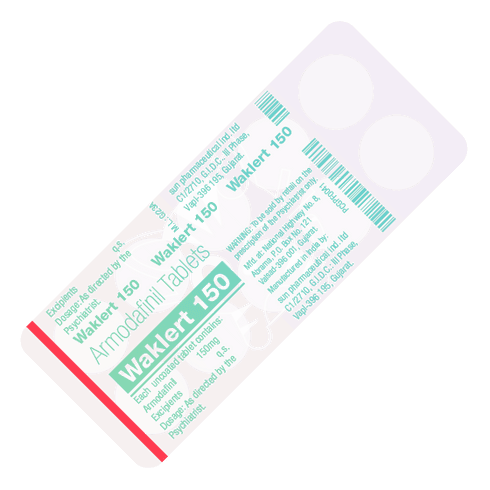

Suppliers
Vendors carrying Armodafinil, with live product details and codes. Links are affiliate links that support the wiki at no cost to you.
| supplier | size | price | $/mg |
|---|---|---|---|
| PCT.Zonelowest | 250MG | $9.64 | $0.039/mg |
| PCT.Zone | 150MG | $7.50 | $0.050/mg |
| PCT.Zone | 150MG | $8.57 | $0.057/mg |
| PCT.Zone | 150MG | $14.00 | $0.093/mg |
| PCT.Zone | 50MG | $6.43 | $0.129/mg |
| PCT.Zone | 150MG | $21.00 | $0.140/mg |
PCT.Zone
Armodafinil

PCT.Zone
Armodafinil
PCT.Zone
Armodafinil
PCT.Zone
Armodafinil
PCT.Zone
Armodafinil
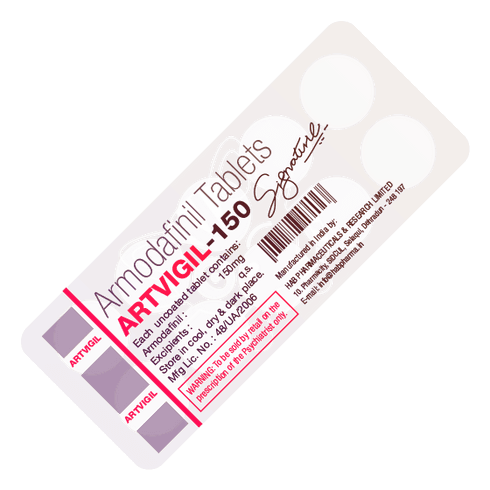
RUPharma🌐
Armodafinil
RUPharma🌐
Armodafinil
PCT.Zone
Armodafinil
RUPharma🌐
Armodafinil
Research
- 2006first citedThe efficacy and safety of armodafinil as treatment for adults with excessive sleepiness associ…
- 2015most active year5 papers
- 2025most recentModafinil/armodafinil for excessive daytime sleepiness after traumatic brain injury: a systemat…
- 1.Adjunct armodafinil improves wakefulness and memory in obstructive sleep apnea/hypopnea syndrome.
- 2.Armodafinil improves wakefulness and long-term episodic memory in nCPAP-adherent patients with excessive sleepiness associated with obstructive sleep apnea.
- 3.Phase II double-blind placebo-controlled randomized study of armodafinil for brain radiation-induced fatigue.
- 4.Antipsychotic augmentation with modafinil or armodafinil for negative symptoms of schizophrenia: systematic review and meta-analysis of randomized controlled trials.
- 5.Dopamine and Wakefulness: Pharmacology, Genetics, and Circuitry.
- 6.Comparison of Pharmaceutical, Psychological, and Exercise Treatments for Cancer-Related Fatigue: A Meta-analysis.
- 7.Armodafinil.
- 8.A positron emission tomography study examining the dopaminergic activity of armodafinil in adults using [¹¹C]altropane and [¹¹C]raclopride.
- 9.Interaction profile of armodafinil with medications metabolized by cytochrome P450 enzymes 1A2, 3A4 and 2C19 in healthy subjects.
- 10.Pharmacokinetics and Safety of Armodafinil in Chinese Healthy Humans After Multiple-Dose Oral Administration.
- 11.Armodafinil for treatment of excessive sleepiness associated with shift work disorder: a randomized controlled study.
- 12.Modafinil/armodafinil in obstructive sleep apnoea: a systematic review and meta-analysis.
30 listed here; entry last updated August 2026
Reviews
My notesprivate to this device
FAQ
What is Armodafinil used for?
It is a wakefulness-promoting agent used for alertness and focus, and medically for sleep disorders.
How does Armodafinil work?
It is the longer-lasting enantiomer of modafinil and promotes wakefulness through effects on dopamine and other wake-regulating systems.
Is Armodafinil well-researched?
It is an approved medication with clinical trial support for conditions involving excessive sleepiness.
What are the main side effects?
Common effects include headache, insomnia, anxiety, and dry mouth.
Adverse effects
- Occasional headache
- Sleep trouble if taken late
- Some jitteriness
- Dry mouth