
data + articles · 4 listed
newest 2024spec sheet12 rows
Tianeptine is an atypical antidepressant, chemically related to the tricyclic antidepressants, that has been used since the 1980s to treat major depressive disorder and anxiety, mainly in parts of Europe, Asia, and Latin America under brand names such as Stablon and Coaxil. Long thought to work by an unusual effect on serotonin, it was later shown to be an agonist at the mu-opioid receptor, with weaker action at the delta-opioid receptor, which is now regarded as central to its effects [1][2]. This opioid activity also underlies a growing problem of misuse; sold in some markets as an unapproved supplement and nicknamed gas station heroin, tianeptine can cause opioid-like euphoria, dependence, and withdrawal, and it is not approved as a medicine in the United States [1].
- Lifts depression and quiets anxiety at its standard dose
- Restores synaptic plasticity worn down by chronic stress
- Far less sexual dysfunction than most SSRIs
- Gentle on alertness and thinking; no daytime fog
- Mild side effects at the usual 12.5 mg three times daily
- Decades of prescription use across Europe, Asia and Latin America
- Headache
- Insomnia or drowsiness
- Dry mouth and constipation
Overview
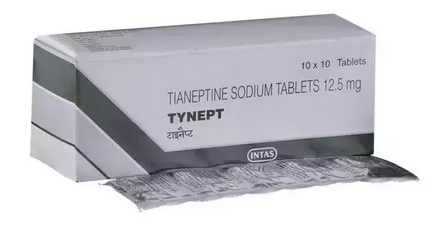
Tianeptine is a small-molecule drug of the tricyclic antidepressant chemical family, though its pharmacology sets it apart from the classic tricyclics. It was developed in France and has been prescribed since the late 1980s, chiefly for major depressive disorder and associated anxiety, and it has also been used for conditions such as irritable bowel syndrome [1]. It is marketed under names including Stablon, Coaxil, and Tatinol in countries across Europe, Asia, and Latin America, but it has never been approved in a number of Western countries, including the United States, Canada, the United Kingdom, and Australia [1]. It is used in the form of salts, most commonly tianeptine sodium in approved medicines, while unregulated products often contain tianeptine sulfate or the free acid.
For decades tianeptine's mechanism was a puzzle. Early descriptions cast it as a serotonin reuptake enhancer, the opposite of the reuptake inhibition of standard antidepressants, but this did not adequately explain its effects. In 2014 researchers identified tianeptine as an efficacious agonist at the mu-opioid receptor and a weaker full agonist at the delta-opioid receptor, with no meaningful activity at the kappa-opioid receptor, proposing that opioid receptor activation is the initial trigger for its antidepressant and anti-anxiety actions [2]. Later studies in mice confirmed that the antidepressant-like effects of tianeptine require the mu-opioid receptor and traced them to specific brain circuits, while noting that its metabolism yields a longer-lasting active product [3][4].
The recognition of tianeptine as an opioid receptor agonist reframed its safety profile. At doses far above those used therapeutically, tianeptine produces opioid-like euphoria and carries a real potential for abuse and dependence, and stopping it after heavy use can provoke a withdrawal syndrome resembling opioid withdrawal [1]. In the United States, where it is not an approved drug, it has been sold in gas stations and convenience stores as a supplement or research chemical, earning the nickname gas station heroin; the Food and Drug Administration has warned about adulterated products and serious harms, and a number of individual states have banned it or placed it under controlled-substance schedules [1]. Regulatory reclassifications and outright bans have been expanding internationally as recreational use grows [1].
At therapeutic doses within approved medical systems, tianeptine has generally been reported to have a favorable tolerability profile compared with older tricyclics, with side effects such as headache, insomnia, dry mouth, and constipation, and rare reports of liver injury [1]. Its dual identity, as an established prescription antidepressant in some countries and an abused, unregulated substance in others, makes it an unusual case in modern pharmacology. Because of the opioid mechanism and the associated risks of dependence and overdose, particularly when combined with other central-nervous-system depressants, its non-medical use is considered hazardous [1][2].

Mechanism
Tianeptine's central action is agonism at opioid receptors. Binding and functional studies established it as an efficacious at the mu-opioid receptor and a full but much weaker agonist at the delta-opioid receptor, while it does not meaningfully engage the kappa-opioid receptor; activation of the mu receptor, alone or together with the delta receptor, is proposed to be the first molecular step that sets off tianeptine's antidepressant, anti-anxiety, and mood effects [2].
This finding overturned the earlier view of the drug as a reuptake enhancer. In animal studies, both the acute and the chronic antidepressant-like effects of tianeptine were abolished when the mu-opioid receptor was removed, showing that this receptor is necessary for its benefit, and one active with a longer reproduced the same mu-dependent effects [3].
Work using cell-type-specific deletions further localized the effect, showing that mu-opioid receptors on particular inhibitory, interneurons in the ventral are critical for tianeptine's antidepressant-like response, and that this circuit is distinct from how a standard works and from tianeptine's other opioid-like effects such as analgesia and reward [4].
Beyond the opioid system, tianeptine is thought to influence signaling and plasticity, including effects on the excitatory neurotransmitter glutamate and on brain-derived neurotrophic factor, which may contribute to its remodeling of neural circuits over time [1]. The same mu-opioid activation that provides therapeutic benefit is responsible for its liability to abuse: at high doses it produces opioid euphoria, and repeated heavy use leads to tolerance-like escalation, dependence, and an opioid-type withdrawal syndrome [1].
receptor fingerprint
Mu-opioid receptoragonist
and signalingmodulates
reuptake / serotonin systemmodulates
and plasticityactivates
Delta-opioid receptoragonist
Dosingtypical ranges, not medical advice
interested in protocols and clinical dosages? make an account to see them! ^_^
Safetyrisks and cautions, not medical advice
Tianeptine is an approved prescription antidepressant across parts of Europe, Asia, and Latin America, but it is not approved by the FDA in the United States, where it is sold unregulated in supplements and gas stations and has earned the nickname gas station heroin. At the normal low dose the side effects are mild: nausea, constipation, dry mouth, dizziness, and trouble sleeping. The real hazard shows up at high, above-label doses, where the mu-opioid activity takes over and can produce euphoria, tolerance, dependence, opioid-style withdrawal, and even slowed breathing and overdose that may need naloxone to reverse. It should never be combined with MAO inhibitors, and it calls for real caution alongside other opioids and central nervous system depressants.
History
Tianeptine was developed in France in the 1960s and brought to market by the pharmaceutical company Servier, becoming available from the late 1980s as an atypical antidepressant under brand names including Stablon, Coaxil, and Tatinol. It was distinctive from the outset because, contrary to prevailing theory, it appeared to enhance rather than block serotonin reuptake, and later research reframed its action around modulation of glutamatergic neurotransmission and neuroplasticity in stress-related brain circuits.
A further pharmacological insight came in the 2010s, when investigators demonstrated that tianeptine is a full agonist at the mu-opioid receptor, a finding that helped explain both its clinical profile and its potential for misuse. It has been prescribed for depression and anxiety in numerous European, Asian, and Latin American countries, but was never approved as a medicine in the United States.
Reputation
Tianeptine has a sharply divided reputation. In the clinical settings where it is approved, it is regarded as an effective and generally well-tolerated antidepressant with an unusual mechanism, sometimes favored for patients with comorbid anxiety. Outside those settings, particularly in the United States where it is unapproved, it has acquired a very different and largely negative image as a substance of abuse, sold in gas stations and online and nicknamed gas station heroin, owing to its mu-opioid agonism and the dependence, escalating use, and dangerous withdrawal that can follow supratherapeutic dosing.
Regulators and poison-control authorities have issued repeated warnings, and several jurisdictions have restricted or banned it. The result is a compound viewed by clinicians in approving countries as a legitimate therapy and by public-health officials elsewhere as a serious risk when taken recreationally.
Subjective profileweighing the evidence above
Effective for depression and anxiety at its prescribed 12.5 mg three times daily, and gentler on alertness and sexual function than most antidepressants at that dose. Above it, the mu-opioid activity takes over, bringing euphoria, dependence, opioid withdrawal and overdose; the unregulated versions sold in the US are why it has a nickname.
Where to buy
2 other outlets

Suppliers
Vendors carrying Tianeptine, with live product details and codes. Links are affiliate links that support the wiki at no cost to you.
| supplier | size | price | $/mg |
|---|---|---|---|
| PCT.Zonelowest | 12.5MG | $2.64 | $0.211/mg |
| PCT.Zone | 12.5MG | $15.00 | $1.20/mg |
PCT.Zone
Tianeptine
RUPharma🌐
Tianeptine
PCT.Zone
Tianeptine
Research
- 2014first citedThe atypical antidepressant and neurorestorative agent tianeptine is a μ-opioid receptor agonis…
- 2024most recentClassics in Chemical Neuroscience: Tianeptine.
- 1.Classics in Chemical Neuroscience: Tianeptine.
- 2.The atypical antidepressant and neurorestorative agent tianeptine is a μ-opioid receptor agonist.
- 3.The Behavioral Effects of the Antidepressant Tianeptine Require the Mu-Opioid Receptor.
- 4.Mu opioid receptors on hippocampal GABAergic interneurons are critical for the antidepressant effects of tianeptine.
4 listed here; entry last updated August 2026
Reviews
My notesprivate to this device
FAQ
Why is it called gas station heroin?
Because it is unregulated in the United States and sold in convenience stores, and at high doses its mu-opioid activity produces opioid-like euphoria, dependence, and withdrawal.
Is tianeptine an opioid?
It is not classed as a traditional opioid, but it is a full agonist at the mu-opioid receptor, so at high doses it behaves much like one.
How is it different from an SSRI?
SSRIs block serotonin reuptake; tianeptine was first described as enhancing it, and its real benefit seems to come from rebalancing glutamate signaling instead.
Can you get addicted to it?
Yes; at high, above-label doses it can cause tolerance, dependence, and a painful opioid-style withdrawal, which is the main reason it is treated with caution.
What happens in an overdose?
Large doses can slow breathing dangerously through the mu-opioid receptor, and naloxone, the opioid reversal drug, may be needed.
Adverse effects
- Headache
- Insomnia or drowsiness
- Dry mouth and constipation
- Opioid-like euphoria and abuse potential at high doses
- Dependence and opioid-type withdrawal with heavy use
- Rare liver injury